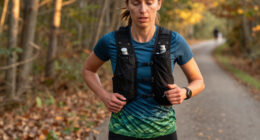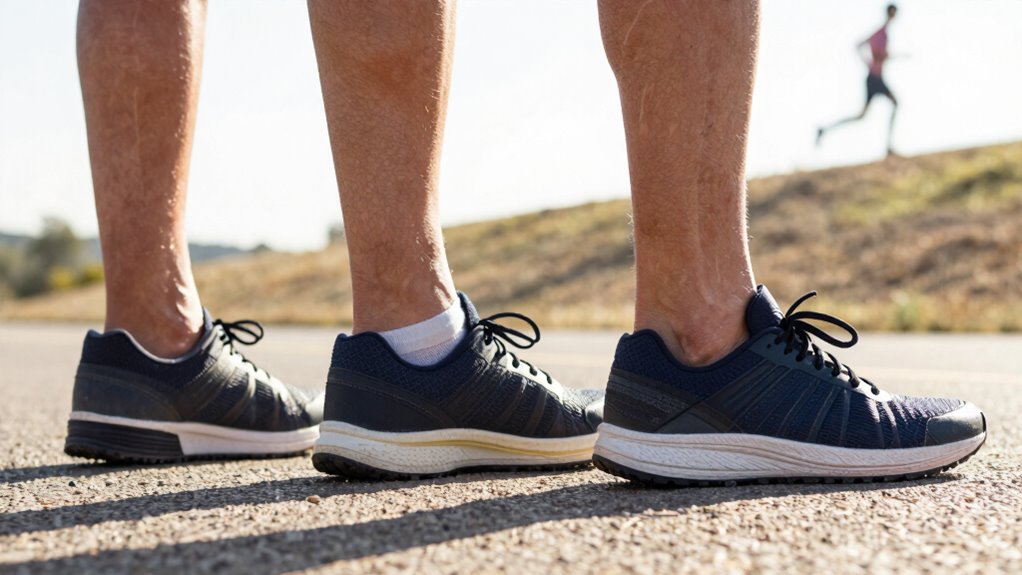

Heel drop considerably changes calf load during your training cycle. A higher heel drop reduces strain on your calves, easing adaptation if you’re new or returning from injury. As you shift to lower heel drop shoes, you’ll engage your calves fully, building strength and improving elasticity. However, be aware that this adjustment may cause initial soreness. By monitoring your body’s signals and making informed footwear choices, you can enhance performance and reduce injury risk. Explore further to discover more strategies for success.

Get workout gear delivered free with Prime
- Fast, free delivery on millions of items
- Prime Video, Amazon Music and more included
- Member-only deals all year
Key Takeaways
- Higher heel drop shoes reduce initial calf strain, aiding new runners and those returning from injury during early training phases.
- Transitioning to lower heel drop footwear engages calves fully, promoting strength and elasticity over time.
- Gradual adjustments in heel drop prevent overwhelming the calves, allowing for effective adaptation and minimizing injury risk.
- Tracking performance changes is essential; lower heel drop can enhance propulsion and speed as calf strength improves.
- Careful footwear selection based on heel drop supports consistent training progression and optimizes overall performance outcomes.
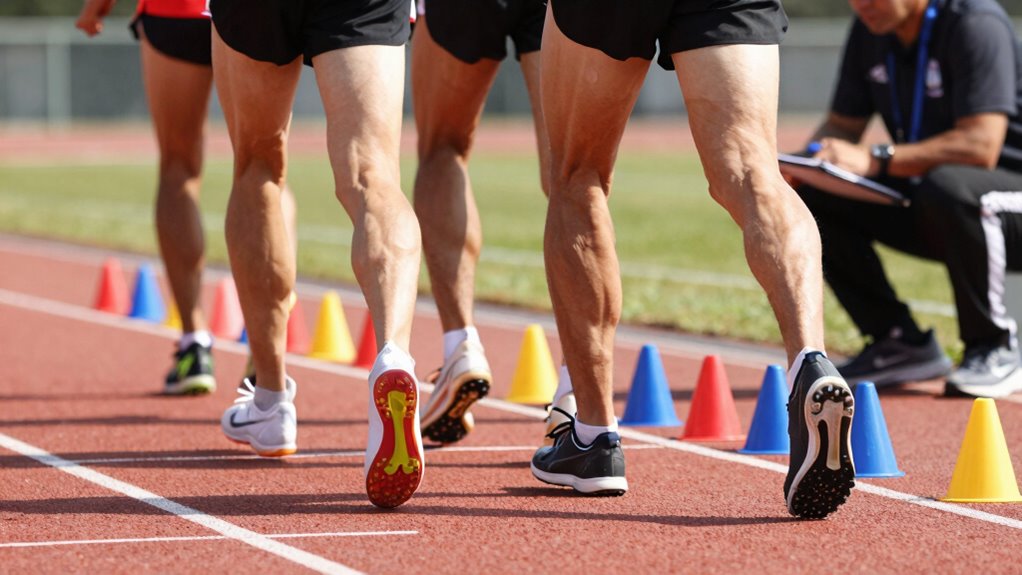
When you think about running or jumping, heel drop and calf load are essential elements that can make or break your performance. A higher heel drop often means less strain on your calves, making it easier for those muscles to adapt as you train. However, if you’re looking to build calf strength and improve running efficiency, understanding how heel drop changes over a training cycle is important.
As you begin your training, you might opt for shoes with a higher heel drop. This footwear impact can help you ease into your routine, especially if you’re new to running or coming back after an injury. With this setup, your calves don’t have to work as hard initially, allowing for a smoother shift into a consistent training regimen. This approach can help you avoid injury while still building a solid foundation for your calf strength. Understanding the impact of heel drop can guide you in selecting appropriate footwear to support your goals.
As your training progresses, you might consider moving to footwear with a lower heel drop. This change forces your calves to engage more fully, promoting adaptations that enhance strength and elasticity over time. The initial shift can be challenging; you may experience soreness as your muscles adapt to the increased load. Yet, this adaptation is significant for improving running efficiency and overall performance. By strengthening your calves, you not only enhance your speed but also improve your ability to absorb shock, which is essential for reducing injury risk. Recognizing the importance of muscle adaptation processes can help you stay patient and consistent during this transition.
Throughout your training cycle, pay attention to how these changes affect your performance. A lower heel drop might lead to improved propulsion and speed, but be cautious. It’s important to gradually adjust to avoid overwhelming your calves. Listen to your body and allow time for adaptation. If you find yourself struggling, it might be worth revisiting your footwear choices or adjusting your training intensity. Additionally, understanding the heel drop concept can help you make more informed decisions about your footwear and training progression. Incorporating training progression strategies that gradually modify load and intensity can further support your development and prevent setbacks. Being aware of the muscle adaptation process can help you set realistic expectations and track your progress more effectively.
Ultimately, heel drop and calf load are interlinked elements that affect your running or jumping efficiency. By understanding how to navigate these factors over your training cycle, you can optimize your performance. Focus on building calf strength, adapt your training as necessary, and choose your footwear wisely. This thoughtful approach will lead to better results in the long run, enhancing both your enjoyment and effectiveness in your chosen sport.
running shoes with adjustable heel drop
As an affiliate, we earn on qualifying purchases.
As an affiliate, we earn on qualifying purchases.
Frequently Asked Questions
How Does Heel Drop Affect Running Speed and Efficiency?
Heel drop affects your running speed and efficiency by altering your running mechanics. A lower heel drop can encourage a more natural gait, enhancing speed adaptation and improving overall biomechanics. This adjustment helps optimize efficiency, allowing you to maintain better form and reduce energy expenditure. By focusing on the heel drop in your footwear, you can fine-tune your stride, leading to faster runs and less fatigue over longer distances.
What Shoe Brands Offer the Best Heel Drop Options?
When you’re looking for the best heel drop options, consider brands like Hoka One One, Nike, and Brooks. Each offers unique shoe technology, such as varying cushioning types that cater to different running styles. Brand comparisons reveal how these options affect your performance metrics, helping you find the right fit for your needs. Experimenting with different heel drops can greatly enhance your comfort and efficiency while running.
Can Heel Drop Influence Injury Recovery Times?
Yes, heel drop can influence injury recovery times. If you choose the right heel drop, you can better align your biomechanics, which aids in healing. Combine this with effective injury prevention strategies, like incorporating proper stretching and strengthening exercises, to enhance your recovery techniques. Adjusting your footwear to optimize heel drop might reduce strain on your calves, allowing you to bounce back quicker and minimize the risk of future injuries.
How Do Different Terrains Impact Calf Load in Relation to Heel Drop?
Different terrain types can greatly impact calf biomechanics and load. When you run on flat surfaces, your calves might experience a more balanced load due to a consistent heel drop. In contrast, uneven or steep terrains can increase calf strain, especially with a lower heel drop, as your calves work harder to stabilize. Adjusting your heel drop while traversing varied terrains can help manage calf load and reduce injury risk, optimizing your performance.
What Are the Signs of Overloading the Calves During Training?
You might notice signs of overloading your calves when you experience calf strain, persistent muscle fatigue, or soreness that lingers beyond your usual recovery time. If your training volume increases without proper adjustments, you’ll feel the effects more intensely. Footwear selection plays a vital role, too; inadequate shoes can exacerbate issues. Incorporating effective stretch routines and recovery techniques, like foam rolling, can help alleviate these symptoms and prevent further injury.
Conclusion
To sum up, understanding how heel drop influences calf load can revolutionize your training. By adjusting your footwear and running style, you can prevent injuries and boost your performance like a rocket taking off! Remember, it’s not just about running; it’s about running smart. Pay attention to your heel drop, and you’ll find a balance that works for you. So lace up those shoes, embrace the journey, and let your calves thrive!
Fall Picks
fall essentials
As an affiliate, we earn on qualifying purchases.