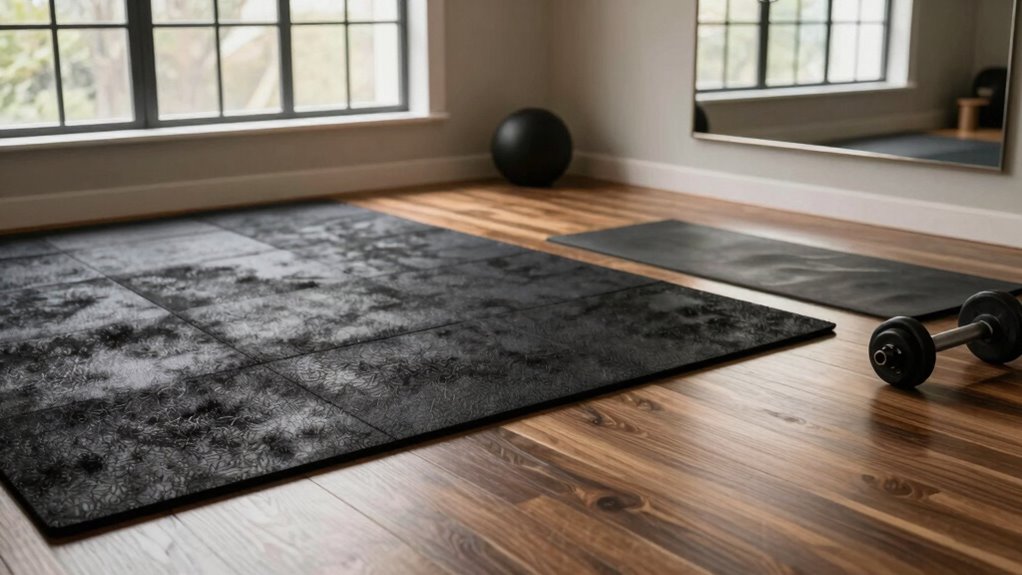

When choosing home gym flooring to keep noise down, you should consider lightweight foam tiles for comfort and easy reconfiguration. Rubber mats are durable and excellent for heavy lifting, effectively dampening sound. Installation matters too; secure edges and lay mats flat to prevent hazards. If you want a cozier feel, indoor/outdoor carpets can work, although they require more maintenance. Exploring soundproofing options can greatly enhance your workout experience, and there’s more to discover on this topic.

Get workout gear delivered free — and shop member deals
- Fast, free delivery on millions of items
- Access to Prime Big Deal Days deals on October 6–7
- Prime Video, Amazon Music and more included
Key Takeaways
- Choose rubber mats for durability and superior noise reduction, especially during heavy lifting workouts.
- Opt for foam tiles for a cushioned surface that absorbs sound and allows easy rearrangement.
- Ensure proper installation of flooring materials to prevent tripping hazards and enhance soundproofing effectiveness.
- Consider specialized carpets for a cozy environment, but be prepared for higher maintenance needs.
- Incorporate additional sound-absorbing materials to improve overall noise control in shared or multi-functional spaces.
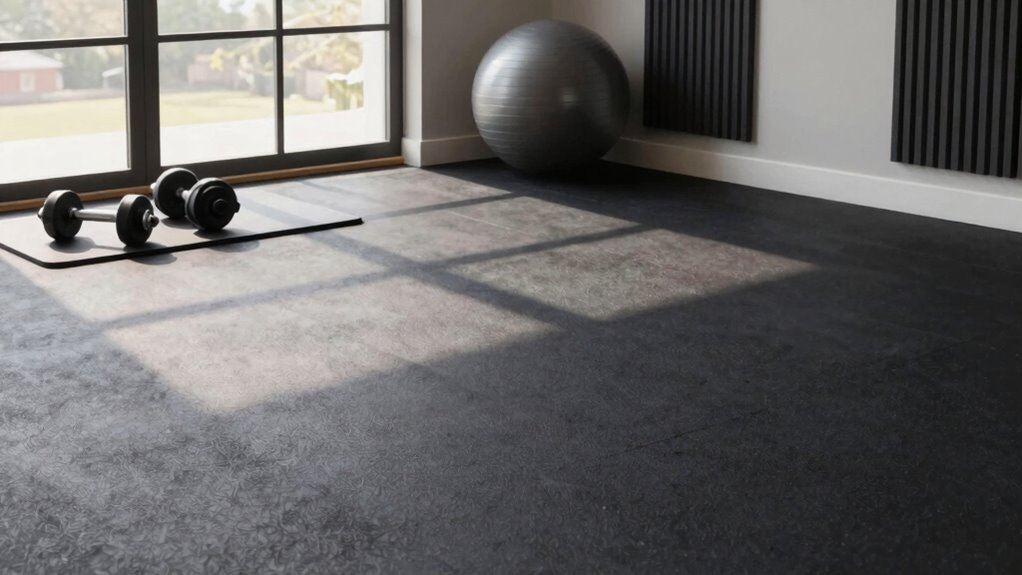
How do you choose the right flooring for your home gym? It’s not just about aesthetics; you want something that dampens noise and keeps your workout environment comfortable. Start by evaluating foam tiles. They’re lightweight, easy to install, and offer a cushioned surface that absorbs sound. Plus, if you decide to rearrange your gym, foam tiles can be easily moved without much hassle.
Next up are rubber mats. These are a popular choice due to their durability and sound-dampening qualities. Rubber’s density helps in reducing noise from weights dropping, making it a great option if you’re lifting heavy. When installing rubber mats, make sure to roll them out flat and secure the edges to prevent any tripping hazards. Proper installation techniques can make a significant difference in the effectiveness of your flooring. Additionally, choosing the right material can influence the overall noise reduction and safety of your workout space. Using soundproofing solutions can further enhance your gym’s noise control. Implementing noise-reducing elements can be particularly beneficial in shared or multi-use spaces.
Rubber mats are an excellent choice for durability and sound dampening, ideal for heavy lifting workouts.
If you prefer a softer feel underfoot, you might want to explore carpet options. While carpet may not be the first choice for a gym, specialized indoor/outdoor carpets can work well, especially in multi-functional spaces. They provide decent noise absorption and can make your gym feel cozier. Just keep in mind that cleaning and maintenance might require a bit more effort compared to rubber or foam. Regular vacuuming and spot cleaning will help keep it fresh. Incorporating sound-absorbing materials can also contribute significantly to a quieter workout area.
As an affiliate, we earn on qualifying purchases.
Frequently Asked Questions
What Materials Are Best for Reducing Noise in Home Gyms?
To reduce noise in your home gym, consider using foam tiles, rubber mats, or cork flooring. Foam tiles provide cushioning and sound absorption, while rubber mats are durable and excellent at dampening sound. Cork flooring naturally absorbs noise, making it a great choice too. You can also add sound barriers or acoustic underlayment beneath your flooring. Interlocking panels can enhance stability and further minimize noise, creating a quieter workout environment for you.
How Thick Should Gym Flooring Be for Effective Noise Reduction?
If you want your gym to feel like a peaceful paradise instead of a thunderstorm, aiming for at least ¾-inch thick flooring is essential! This thickness helps absorb impact factors, keeping noise to a minimum during your workouts. While some may argue that thinner options suffice, thicker materials provide better sound dampening. So, stick to those thickness guidelines and enjoy your workouts without disturbing the entire house!
Can I Install Gym Flooring Over Existing Carpet?
You can install gym flooring over existing carpet, but it’s not ideal. Carpet cushioning can create an uneven surface, making your gym equipment unstable. Plus, flooring compatibility may be an issue, as some materials require a solid, flat base for proper installation. If you decide to go this route, guarantee your gym flooring is specifically designed for such applications to minimize any potential problems and maximize your workout experience.
How Do I Clean and Maintain Noise-Reducing Gym Flooring?
Imagine your gym floor like a well-tuned instrument; it needs care to perform its best. To clean and maintain your noise-reducing gym flooring, use gentle cleaning methods like a damp mop with mild soap. Avoid harsh chemicals that could damage the surface. Regularly check for wear and tear, and consider applying a protective finish for added durability. With these maintenance tips, your flooring will stay in top shape, keeping your workouts noise-free.
Is There a Budget-Friendly Option for Soundproof Gym Flooring?
Yes, there are budget-friendly options for soundproof gym flooring. You can consider affordable solutions like foam tiles, which provide decent sound absorption and cushioning. These tiles come in various thicknesses and colors, making it easy to customize your space. Plus, they’re lightweight and easy to install, so you won’t have to worry about complicated setups. Just make sure to choose high-density foam for better noise reduction and durability in your home gym.
Conclusion
When you’re deciding on home gym flooring, think of the difference between a quiet sanctuary and a noisy battleground. Opt for cushioned options that absorb sound, like rubber or foam, to create a peaceful workout space. Imagine lifting weights without the clatter echoing through your home, or enjoying yoga in a serene atmosphere instead of a cacophony. Your choice can transform your gym from chaotic to calming, ensuring every rep and stretch is an enjoyable experience.
Fall Picks
fall essentials
As an affiliate, we earn on qualifying purchases.