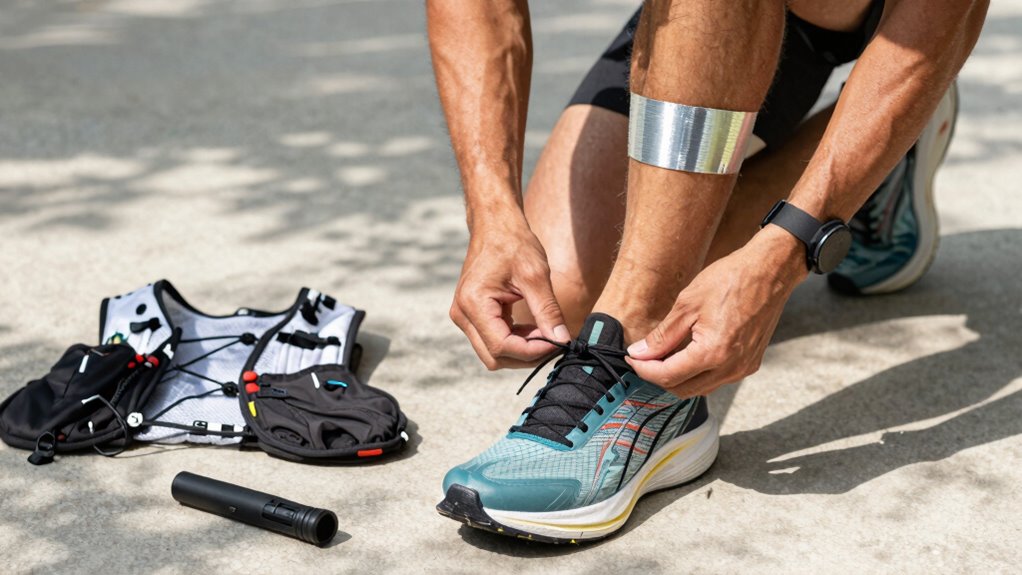

Before you start your run, double-check your gear for any tears or wear to prevent discomfort or injuries. Make sure your hydration supplies are full, leak-free, and comfortably fitted to avoid mid-run hydration issues. Verify your shoes are in good shape, socks are dry, and clothing is appropriate for the weather to prevent chafing or overheating. Don’t forget safety gear like reflective elements or lights, and pack snacks or essentials. Continue below to learn tips that keep your run smooth from start to finish.

Get workout gear delivered free with Prime
- Fast, free delivery on millions of items
- Prime Video, Amazon Music and more included
- Member-only deals all year
Key Takeaways
- Inspect and test all hydration devices for leaks, secure fit, and sufficient water to prevent dehydration issues.
- Verify shoes and socks are in good condition, comfortable, and properly fitted to avoid blisters and discomfort.
- Check that reflective gear, headlamps, or visibility accessories function correctly for safety in low-light conditions.
- Confirm weather-appropriate clothing layers are ready and secure, preventing overheating or cold exposure.
- Pack essential nutrition, electronics, and safety gear the night before to ensure everything is accessible and functional.

Have you ever started a run only to realize your gear isn’t ready? It’s frustrating and can throw off your rhythm before you even hit your stride. That’s why a thorough pre-run gear check is essential. It helps you avoid those mid-run surprises that distract you from enjoying your workout or reaching your goals. The first step is to focus on hydration strategies. You want to make sure you’ve planned how you’ll stay hydrated during your run, whether you’re taking water bottles, hydration packs, or relying on water fountains along your route. If you’re running longer distances, pack enough water and consider bringing electrolyte drinks to replenish lost minerals. Check your bottles or hydration pack to ensure they’re clean and free of leaks. Also, verify that any hydration devices are comfortable and fit well, so they don’t bounce or cause discomfort once you’re on the move. Proper hydration strategies start before you step out the door, so confirm your supplies are sufficient for your planned distance. Remember, hydration is crucial for maintaining your energy levels and preventing fatigue during your run.
Next, turn your attention to clothing selection. The right outfit can make or break your run, especially if the weather changes unexpectedly. Look at the weather forecast and choose moisture-wicking fabrics that keep sweat away from your skin, preventing chafing and discomfort. Make sure your shoes are in good shape—no worn-out soles or loose laces—since footwear is your most critical gear. Socks should be dry, comfortable, and suited for your foot type to avoid blisters. Check your clothing for any tears or signs of wear that might cause chafing or irritation mid-run. If it’s chilly, layer appropriately, but avoid overdressing, which can lead to overheating. Conversely, if it’s hot, opt for lightweight, breathable apparel. Don’t forget accessories like a hat or sunglasses if needed, and ensure they’re secure so they don’t fall off during your run. Additionally, inspecting your running gear beforehand can prevent discomfort or injury, especially if you’ve been using your equipment for a while. It’s also helpful to remember that metaphysical guidance can serve as mental motivation during your runs, keeping you focused and positive. Incorporating a quick check of your visual aids, such as reflective gear or headlamps, can enhance safety during early or late runs. Finally, do a quick mental checklist of all your gear, including your watch, headlamp (if running early or late), and any nutrition you might need. Confirm your playlist or podcasts are ready if that motivates you. Pack your gear the night before, so you’re not scrambling in the morning. By taking these few minutes to verify your hydration strategies and clothing selection, you set yourself up for a smooth, enjoyable run without interruptions. It’s a small effort that pays off by helping you stay comfortable, hydrated, and focused on your run’s rhythm rather than dealing with avoidable gear issues.
As an affiliate, we earn on qualifying purchases.
Frequently Asked Questions
How Often Should I Perform a Pre-Run Gear Check?
You should perform a pre-run gear check every time before you hit the pavement. This guarantees your running accessories are secure and functioning properly, preventing mid-run issues. Regular gear maintenance keeps your gear in top shape, reducing unexpected problems. Make it a habit to quickly inspect your shoes, hydration gear, and electronics before each run, so you can focus on your pace and enjoy your workout without interruptions.
What Are Signs My Gear Needs Replacement?
You’ll notice signs like gear showing excessive wear, tears, or frayed straps, which indicate it’s time for replacement. Decreased gear durability means it won’t perform reliably, risking mid-run failures. Also, if equipment’s lifespan has been exceeded despite proper care, replacing it guarantees safety and comfort. Regularly inspecting your gear helps you catch these signs early, preventing surprises during your run and maintaining peak performance.
How Do I Choose the Right Running Shoes?
Choosing the right running shoes is like finding a trusted dance partner—you want support, flexibility, and comfort in harmony. Focus on running shoe technology that suits your gait and foot shape. Use shoe fitting tips by trying on shoes at the end of the day, ensuring a snug fit without pressure points. Opt for shoes that feel like a natural extension of your stride, turning every run into a smooth, effortless glide.
What Should I Do if My Gear Fails Mid-Run?
If your gear fails mid-run, stay calm and adapt quickly. Use hydration strategies like sipping water or electrolyte drinks to stay energized. If you run out of energy, consider using energy gels if you carry them. Find a safe spot to fix or replace your gear if needed, and slow down if necessary. Remember, staying hydrated and having energy gels on hand helps you push through setbacks smoothly.
Are There Specific Gear Checks for Different Weather Conditions?
Turns out, checking your gear for different weather conditions isn’t just a good idea, it’s essential. You should inspect rain gear to make sure it’s waterproof and fits well, and verify cold weather accessories like gloves and hats offer enough insulation. Don’t assume yesterday’s gear will do; weather changes fast. A quick pre-run check for specific gear helps you stay dry, warm, and comfortable, no matter what Mother Nature throws your way.
Conclusion
Doing a quick pre-run gear check might seem like a hassle, but it’s worth every second. It helps you catch issues before they become major problems, saving you time and frustration mid-run. Some say it’s unnecessary, but imagine being able to enjoy your run without worrying about gear failures or discomfort. Take a moment to check your shoes, electronics, and clothing — your future self will thank you for the smooth, trouble-free run.
Halloween Picks
halloween
As an affiliate, we earn on qualifying purchases.