To build a runner-friendly home gym without wasting floor space, opt for foldable treadmills and compact ellipticals that store easily when not in use. Incorporate lightweight resistance bands and jump ropes for versatility in strength training and cardio. Stability balls and balance boards can enhance core workouts while being simple to store. By keeping everything organized and multi-functional, you’ll create a workout zone that works for you. Stick around to discover more tips for optimizing your space!

Get workout gear delivered free with Prime
- Fast, free delivery on millions of items
- Prime Video, Amazon Music and more included
- Member-only deals all year
Key Takeaways
- Choose foldable treadmills and compact ellipticals that can be easily stored away to save floor space when not in use.
- Utilize lightweight resistance bands for strength training, which can be easily tucked away in drawers or hung on hooks.
- Incorporate jump ropes for effective cardio workouts that require minimal space and can be stored in a corner or on a wall.
- Use stability balls and balance boards to enhance core strength; they can be deflated and stored under the bed for convenience.
- Create an organized workout area with multi-purpose equipment, optimizing space while maintaining a clutter-free environment.

As you embrace your running journey, creating a runner-friendly home gym can make all the difference in your training routine. You don’t need to invest in a massive treadmill that takes up half your living room. Instead, consider treadmill alternatives and space-saving equipment that fit seamlessly into your lifestyle.
First, think about your available space. If you’re short on room, foldable treadmills or compact elliptical machines can be a game changer. These options can be easily stored away when you’re not using them, allowing you to reclaim your space in a flash. Imagine finishing a workout, folding up your equipment, and enjoying an uncluttered living area. It’s a win-win!
Consider foldable treadmills or compact ellipticals to maximize space and keep your home gym clutter-free after workouts.
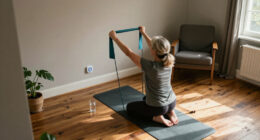
Resistance bands are another fantastic choice. They’re incredibly versatile, lightweight, and can be tucked away in a drawer or hung on a hook. You can use them for strength training to complement your running, helping to build muscle without needing bulky weights. Plus, they’re easy to transport if you ever want to take your workout on the go.
If you love the feel of running but want to mix things up, consider investing in a high-quality jump rope. It’s an excellent cardio workout that doesn’t require much space, and it can greatly improve your agility and coordination. You can easily store it in a small corner or hang it on a wall, making it a brilliant space-saving option.
Don’t forget about stability balls or balance boards. These can be used for core workouts, greatly enhancing your overall stability and strength as a runner. They’re light and can be deflated or stored under your bed when not in use, making them perfect for maximizing your limited space. Incorporating space-efficient equipment can help you optimize your workout area even further.
Additionally, choosing equipment that is space-efficient can help you maintain a functional and organized workout area without sacrificing your living space. Considering compact fitness gear can further enhance your ability to create a versatile workout zone in even the smallest rooms. Incorporating multi-purpose equipment can also reduce clutter and make your workout area more adaptable to different types of training.
foldable treadmill for small spaces
As an affiliate, we earn on qualifying purchases.
As an affiliate, we earn on qualifying purchases.
Frequently Asked Questions
What Equipment Is Essential for a Beginner Runner’s Home Gym?
For a beginner runner’s home gym, focus on essential accessories like resistance bands, a foam roller, and a good pair of running shoes. If you’re short on space, consider treadmill alternatives like jump ropes or stability balls for cardio. A yoga mat can also help with stretching and strength workouts. These items keep your workouts varied and effective without cluttering your space, making it easier to stay motivated and on track.
How Can I Maximize Natural Light in a Small Space?
To flood your space with warmth and energy, embrace natural light sources like windows and mirrors. Position your gym near those sunlit spots, letting the light dance off reflective surfaces. Use space-saving solutions, like wall-mounted shelves, to keep the area airy and open. Clear out clutter and opt for light, bright colors on your walls, creating an inviting atmosphere that inspires you to lace up those running shoes and hit the ground running.
Are There Budget-Friendly Alternatives to Gym Equipment?
You can create a budget-friendly workout space using DIY equipment and minimalist alternatives. Consider making your own weights with filled water bottles or sandbags. Resistance bands are affordable and versatile, perfect for strength training. A sturdy chair can serve for step-ups or tricep dips. Look for online tutorials to craft items like balance boards or stability balls. With a little creativity, you’ll maximize your gym experience without breaking the bank!
How to Maintain a Clean Workout Area?
To maintain a clean workout area, focus on workout organization and clutter reduction. Start by designating specific spots for your gear, like weights and mats. After each session, put everything back in its place. Use storage solutions, like bins or wall racks, to keep items off the floor. Schedule regular clean-ups to tackle dust and dirt. By staying on top of organization, you’ll create an inviting space that motivates you to work out.
What Are Some Effective Stretches for Runners at Home?
To effectively stretch at home, incorporate dynamic stretches like leg swings and walking lunges before your run. For post-run recovery, use foam rolling on your calves, quads, and hamstrings to release tension. These techniques not only enhance flexibility but also help prevent injuries. You’ll feel more prepared and relaxed for your next run. Don’t skip these important steps; they make a significant difference in your overall performance and recovery!
Conclusion
To sum up, creating a runner-friendly home gym doesn’t have to feel like fitting a square peg in a round hole. By choosing versatile equipment and smart storage solutions, you can transform your space into a sanctuary for fitness without sacrificing precious floor area. Remember, it’s not just about running; it’s about crafting an environment that inspires you to lace up and hit the ground running whenever the mood strikes. Your dream gym is just a few choices away!
Fall Picks
fall essentials
As an affiliate, we earn on qualifying purchases.