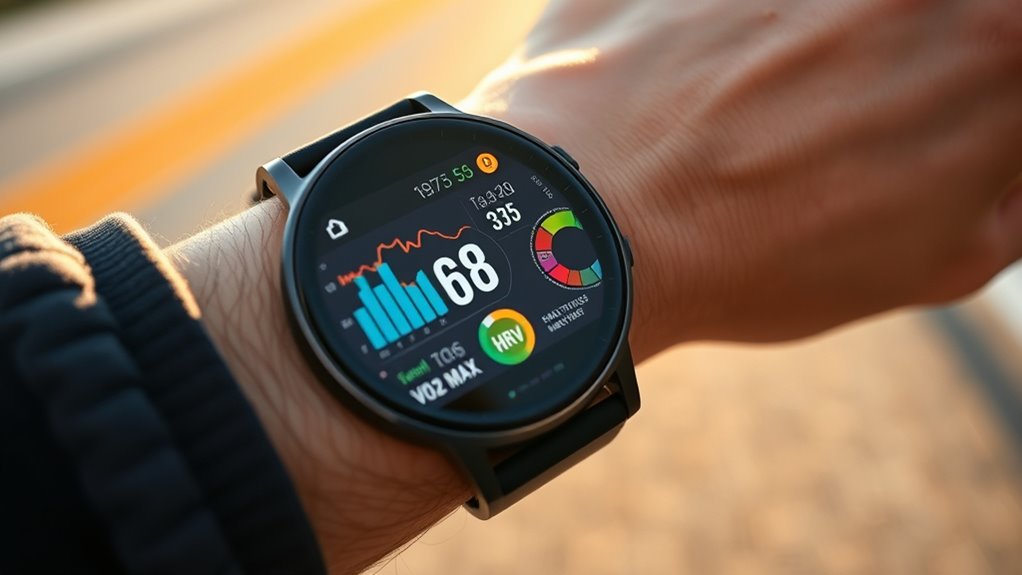

Running watch metrics like pace, heart rate, VO2 max, and HRV help you optimize your training and track progress effectively. Pace shows your speed, while heart rate keeps you in the right intensity zone. VO2 max indicates your aerobic capacity, and HRV reveals your recovery status. By understanding these key data points, you can craft smarter workouts and prevent overtraining. Keep exploring to discover how these metrics work together to boost your running performance.

Get workout gear delivered free with Prime
- Fast, free delivery on millions of items
- Prime Video, Amazon Music and more included
- Member-only deals all year
Key Takeaways
- Pace tracks your running speed and helps structure workouts with targeted intervals for improving speed and endurance.
- Heart Rate (HR) monitoring shows your exertion level, guiding training zones and hydration strategies.
- VO2 Max estimates your maximum oxygen uptake, indicating cardiovascular fitness and helping set realistic training goals.
- Heart Rate Variability (HRV) reflects recovery status and autonomic nervous system health, informing training intensity and rest needs.
- Combining these metrics provides comprehensive insights to optimize training, prevent injury, and track overall fitness progress.

Running watches have become essential tools for athletes and fitness enthusiasts alike, offering a variety of metrics to track performance and progress. These devices help you understand how your body responds during runs, providing insights that can boost your training effectiveness. One key aspect is pacing, which is crucial for interval training. By monitoring your pace, you can structure your workouts into high-intensity bursts followed by recovery periods, ensuring you’re training at the right intensity to improve speed and endurance. Your running watch can alert you when you’re hitting your target pace or falling behind, making interval training more precise and effective.
Another critical metric your watch tracks is heart rate (HR). Knowing your HR during a run helps you stay within specific zones, whether you’re aiming for fat-burning, aerobic, or anaerobic training. Maintaining the right HR zone ensures you’re training efficiently without overexerting yourself. Plus, understanding your heart rate patterns during different types of workouts can guide you in adjusting intensity to optimize recovery and performance. It’s especially useful for managing hydration strategies; by observing how your HR responds to hydration levels, you can learn how well your body is coping with the run. Dehydration can cause HR to rise unexpectedly, signaling you to hydrate sooner rather than later.
VO2 max is another valuable metric that your running watch can estimate. This measures your maximum oxygen consumption during intense exercise and serves as a good indicator of cardiovascular fitness. When you see improvements in your VO2 max, it reflects increased efficiency in your aerobic system, which translates into better endurance. Tracking VO2 max over time helps you set realistic goals and adjust your training plans accordingly, ensuring steady progress.
Heart Rate Variability (HRV) is a less obvious but equally important metric. It measures the variation in time between heartbeats, providing insight into your autonomic nervous system and overall recovery status. A high HRV indicates good recovery and readiness for intense workouts, while a low HRV may suggest fatigue or overtraining. Incorporating HRV data helps you decide whether to push harder or take a rest day, preventing injury and burnout.
Together, these metrics allow you to craft smarter training sessions. Whether you’re fine-tuning interval training, managing hydration strategies, or monitoring recovery, your running watch becomes an indispensable partner. By understanding pace, HR, VO2, and HRV, you can optimize every run—making each step more purposeful and aligned with your fitness goals.
running watch with pace and heart rate monitor
As an affiliate, we earn on qualifying purchases.
As an affiliate, we earn on qualifying purchases.
Frequently Asked Questions
How Accurate Are Running Watch Metrics Compared to Professional Lab Tests?
Your running watch metrics are generally less accurate than professional lab tests, but they can still provide useful insights. Sensor calibration and data consistency play key roles here; if your device is well-calibrated and used consistently, you’ll get more reliable data. Keep in mind that factors like movement and device placement can affect accuracy. While not perfect, your watch offers a convenient way to monitor trends over time.
Can Running Watch Metrics Predict Injury Risk?
Like a crystal ball from the 1800s, running watch metrics can hint at injury risk, but they aren’t definitive. They track biomechanical analysis and nutritional impact, which influence injury chances. If you notice irregular HRV, sudden HR spikes, or pace changes, it’s a sign to rest or seek expert advice. While helpful, these metrics should complement, not replace, professional assessments for injury prevention.
How Should I Interpret Fluctuations in HRV During Training?
Fluctuations in heart rate variability (HRV) during training indicate your body’s response to stress and recovery. If HRV drops, it suggests your body is under strain and needs more rest, while higher HRV signals good training adaptation and readiness. Track these changes consistently to optimize your training plan, ensuring you balance effort and recovery. By monitoring HRV, you can improve performance and reduce injury risk through better training decisions.
What Is the Ideal VO2 Max for Amateur Runners?
Think of VO2 max as your running superpower—aim for 50 to 60 ml/kg/min, which places you in the competitive amateur zone. This level enhances your endurance and efficiency. You should target training zones that challenge your aerobic capacity without overtraining. By focusing on improving your VO2 max, you boost your overall performance and stamina, making each run feel easier and more rewarding.
Do Different Running Watch Brands Use Comparable Metrics?
You’ll find that different running watch brands often use comparable metrics, but there’s variability in how they measure and interpret them. In brand comparison, some manufacturers standardize key metrics like pace, heart rate, and VO2 max, making it easier to compare data across devices. However, always check each brand’s metric standardization, as slight differences can influence your training insights. Opt for watches that prioritize consistent, comparable metrics for the most reliable tracking.
Conclusion
Think of your running metrics as the compass guiding your journey. Just like a sailor relies on the stars to navigate, these metrics help you steer toward your goals, revealing when you’re pushing too hard or holding back. Embrace them as your trusted map, not just numbers—each one telling a story of growth and resilience. With this knowledge, you’ll navigate your running path with confidence, turning every run into a meaningful voyage of self-discovery.
Fall Picks
fall essentials
As an affiliate, we earn on qualifying purchases.