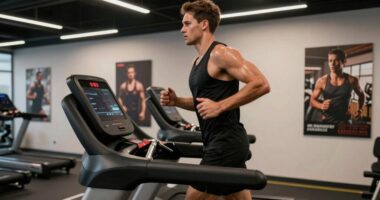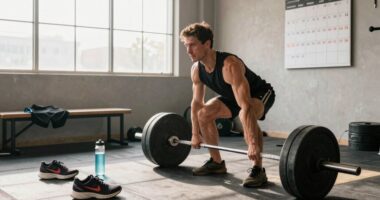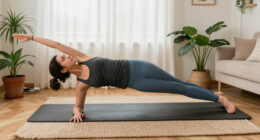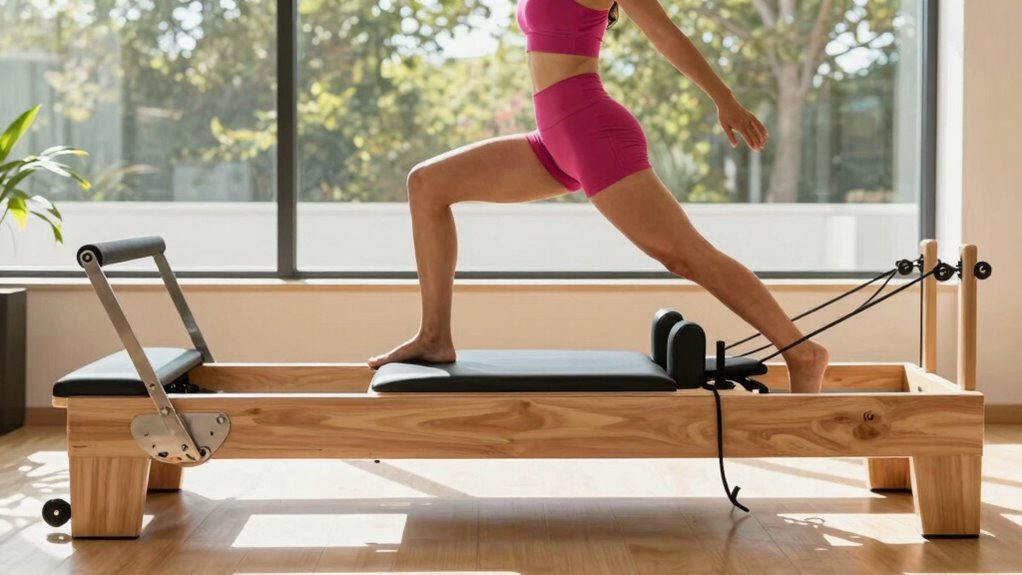

To make Pilates Reformer work complement your running, focus on strengthening your core, improving flexibility, and preventing injuries. These workouts enhance your posture, boost your stride efficiency, and reduce muscle tightness. You’ll also develop better breath control, which helps manage fatigue during long runs. By targeting muscle imbalances and promoting recovery, Reformer sessions can elevate your running experience. Stick around to discover how these elements further transform your training routine.

Get workout gear delivered free with Prime
- Fast, free delivery on millions of items
- Prime Video, Amazon Music and more included
- Member-only deals all year
Key Takeaways
- Incorporate Pilates Reformer workouts to enhance core strength, supporting better posture and alignment during runs.
- Focus on flexibility training to improve your range of motion and alleviate muscle tightness for more efficient running.
- Use targeted exercises to address muscle imbalances, preventing injuries and promoting better movement mechanics while running.
- Practice breath control through Reformer sessions to improve oxygen delivery and endurance during longer runs.
- Utilize low-impact Reformer workouts for effective muscle recovery, promoting blood flow and reducing soreness after running sessions.
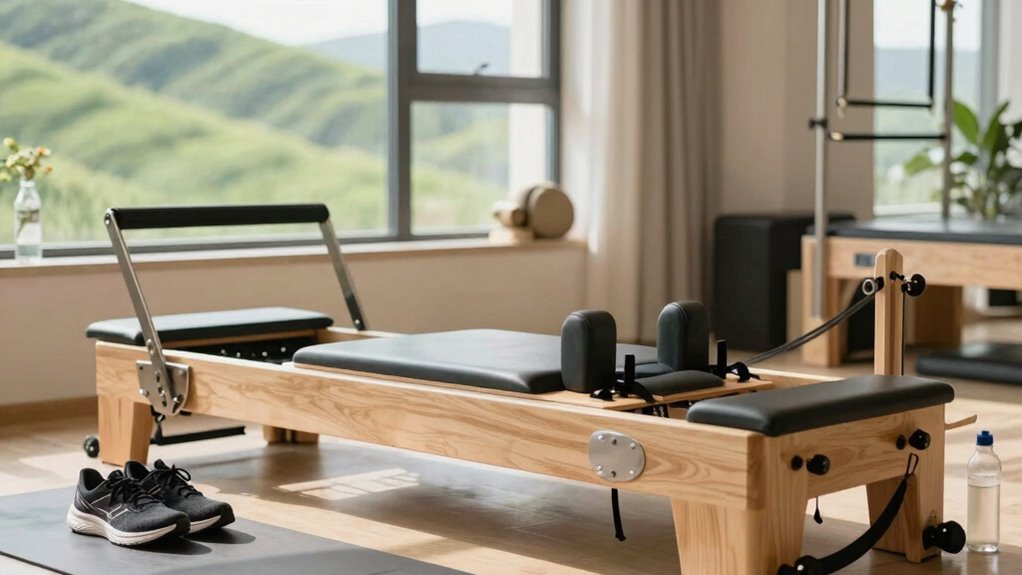
If you’re looking to enhance your running performance, incorporating Pilates Reformer workouts into your routine can make a significant difference. A Pilates Reformer focuses on building core strength, which is important for maintaining stability while you run. A strong core supports your spine and pelvis, helping you maintain proper posture and alignment throughout your runs. This support reduces the risk of injuries that often stem from poor mechanics, allowing you to enjoy your runs without the fear of setbacks.
Incorporating Pilates Reformer workouts enhances core strength, crucial for stability and injury prevention during your runs.
One of the biggest benefits of Pilates is its emphasis on flexibility training. Tight muscles can hinder your stride and lead to discomfort or injury. As you work on the Reformer, you’ll stretch and strengthen various muscle groups, improving your overall flexibility. This increased range of motion allows for a more efficient running form, ultimately enhancing your speed and stamina. Plus, regular flexibility training can alleviate muscle tightness, making your post-run recovery much smoother.
Injury prevention is essential for any runner, and Pilates Reformer workouts can play a significant role in that. By targeting specific muscle imbalances and enhancing your body awareness, you’ll be better equipped to avoid common running injuries. The Reformer encourages controlled movement patterns, helping you develop better alignment techniques. This attention to detail in your workouts translates to your running, making you more aware of how your body moves and reacts during each stride.
Breath control is another key aspect that Pilates brings to your running routine. Learning to control your breath not only supports your core strength but also helps you manage fatigue during long runs. When you practice deep, focused breathing on the Reformer, you’ll find it easier to maintain your breath when you hit the pavement. This improved breath awareness can lead to better oxygen delivery to your muscles, enhancing endurance and performance.
Finally, muscle recovery is important for any athlete, and Pilates can aid in this process. The low-impact nature of Reformer workouts allows you to engage your muscles without overloading them. You’ll promote blood flow and circulation, helping to flush out toxins and accelerate recovery. So, when you integrate Pilates into your routine, you’re not just building strength and flexibility; you’re also setting yourself up for long-term success in your running journey.
As an affiliate, we earn on qualifying purchases.
Frequently Asked Questions
How Often Should I Do Pilates Reformer Alongside Running?
You should aim to do Pilates reformer workouts two to three times a week alongside your running. This frequency allows you to enjoy the cross training benefits, improving your strength and flexibility without overloading your muscles. It’s also perfect for muscle recovery, helping to prevent injuries and enhance your overall performance. Listen to your body and adjust as needed, ensuring you stay balanced and energized for both activities.
Can Pilates Reformer Help With Running Injuries?
Absolutely, Pilates reformer can be a game-changer for running injuries. Think of it as a gentle guide, helping you navigate through rehabilitation techniques. By focusing on core stability, it strengthens your muscles without the harsh impact of running. It enhances flexibility and balance, allowing your body to heal while improving your overall performance. So, as you embrace this supportive practice, you’ll find yourself running stronger and more resilient than ever.
What Should I Wear for Pilates Reformer Sessions?
For Pilates reformer sessions, you should wear comfortable fabrics that allow for a full range of motion. Opt for breathable materials like cotton or moisture-wicking blends to keep you cool. Stick to fitted tops and bottoms, as loose clothing can get in the way. As for footwear options, many prefer grip socks or going barefoot for better stability on the reformer. Choose Pilates gear that makes you feel confident and ready to move!
Is Pilates Reformer Suitable for All Fitness Levels?
Absolutely, Pilates reformers are like a chameleon, adapting to all fitness levels. Whether you’re a newbie or a seasoned athlete, you’ll find Pilates benefits that suit your needs. The instructor’s expertise guarantees you receive fitness modifications tailored to your abilities, allowing you to build strength and flexibility at your own pace. Embrace this versatile practice, and you’ll discover how it enhances your overall fitness journey while keeping you engaged and challenged.
How Long Are Typical Pilates Reformer Classes?
Typical Pilates reformer classes last about 50 to 60 minutes. In that time, you’ll explore various reformer techniques that enhance strength, flexibility, and core stability. You’ll notice the Pilates benefits as you engage different muscle groups, improving your overall fitness. These classes are designed to be accessible, so whether you’re a beginner or more advanced, you can adapt the workout to suit your needs and maximize your results.
Conclusion
As you glide through a Pilates Reformer session, feel the stretch and strength coursing through your muscles, preparing you for the open road. Imagine each controlled movement enhancing your stride, making you lighter on your feet. With every rep, you’re not just toning your body; you’re crafting a runner’s grace and power. Embrace this synergy, and soon enough, your running will feel like a dance, each step fueled by the harmony of reformer and road.
Fall Picks
fall essentials
As an affiliate, we earn on qualifying purchases.