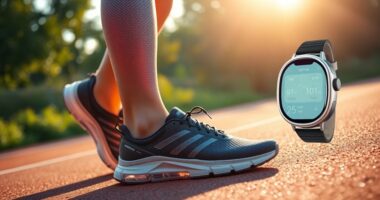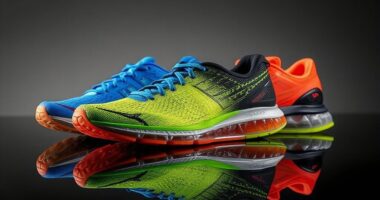
Flat feet change what a running shoe needs to do: without a natural arch, your foot rolls inward on every stride, so structured support and stability features matter more than raw cushioning. My top pick overall is the Brooks Women’s Adrenaline GTS 25, which pairs GuideRails support with plush DNA LOFT cushioning to control overpronation without feeling stiff or clinical. The ASICS Gel-Cumulus 27 stands out for neutral-cushioned comfort with enough rearfoot structure for mild collapse, while the FitVille Cloud Walker V7 wins on value with a genuinely wide, supportive base. The main tradeoff in this category is between motion-control firmness and all-day softness — and budget models often cut corners on the midfoot shanks that flat feet rely on. Keep reading for the full breakdown of all 12 pairs.

Get workout gear delivered free with Prime
- Fast, free delivery on millions of items
- Prime Video, Amazon Music and more included
- Member-only deals all year
Complete the kit


Key Takeaways
- Only the Brooks Adrenaline GTS 25 and ASICS Gel-Excite 11 offer true stability technology built for overpronation — most of the lineup relies on generic arch contouring that may not control inward roll on longer runs.
- Skechers Max Cushioning Endeavour and Mishansha Air Cushion prove that thick foam alone doesn’t equal flat-foot support; the difference is whether the midsole resists compression under the arch.
- The WHIN Barefoot and Nike Revolution 8 sit at opposite ends of the spectrum — one strips away support entirely, the other offers mild structure at an entry price — and neither suits moderate-to-severe collapse.
- Wide toe box designs (FitVille, WHITIN) solved fit complaints that recurred across narrower models, especially for runners whose flat feet splay wider under load.
- The ASICS Gel-Cumulus 27 and New Balance Fresh Foam 680 v9 blurred the line between neutral and supportive shoes, making them the best picks for runners whose collapse is mild or only appears late in a run.
| Brooks Women’s Adrenaline GTS 25 Running Shoe |  | Best Overall for Flat Feet | Brand: Brooks | Model: Adrenaline GTS 25 | Support system: GuideRails | VIEW LATEST PRICE | See Our Full Breakdown |
| Nike Women’s Air Winflo 12 Road Running Shoes |  | Best Brand-Name Daily Trainer | Brand: Nike | Model: Air Winflo 12 | Gender: Women’s | VIEW LATEST PRICE | See Our Full Breakdown |
| FitVille Women’s Cloud Walker V7 Slip-On Walking Sneakers |  | Best for Wide Feet and Easy Wear | Brand: FitVille | Model: Cloud Walker V7 | Sole material: EVA | VIEW LATEST PRICE | See Our Full Breakdown |
| WHITIN Women’s Barefoot Shoes with Wide Toe Box |  | Best for Strengthening Flat Arches | Brand: WHITIN | Sole material: Rubber | Outer material: Rubber | VIEW LATEST PRICE | See Our Full Breakdown |
| Mishansha Women’s Air Cushion Running Sneakers |  | Best Budget Casual Option | Brand: Mishansha | Upper material: Mesh | Fabric: Knitted fabric | VIEW LATEST PRICE | See Our Full Breakdown |
| Under Armour Women’s Charged Assert 11 Running Shoes |  | Best Structured Support for Flat Arches | Brand: Under Armour | Model: Charged Assert 11 | Support Type: Neutral with structured overlays | VIEW LATEST PRICE | See Our Full Breakdown |
| Nike Women’s Revolution 8 Road Running Shoes |  | Best Casual Starter Pick | Brand: Nike | Model: Revolution 8 | Category: Road running shoes | VIEW LATEST PRICE | See Our Full Breakdown |
| ASICS Women’s Gel-Excite 11 Running Shoes |  | Best Soft Landings on a Budget | Brand: ASICS | Model: Gel-Excite 11 | Cushioning: PureGEL and AMPLIFOAM PLUS | VIEW LATEST PRICE | See Our Full Breakdown |
| ASICS Women’s Gel-Cumulus 27 Running Shoes |  | Best Premium Cushioning | Brand: ASICS | Model: Gel-Cumulus 27 | Cushioning: FF BLAST PLUS and PureGEL | VIEW LATEST PRICE | See Our Full Breakdown |
| New Balance Women’s Fresh Foam 680 v9 Running Shoe |  | Best All-Around Versatility | Brand: New Balance | Model: Fresh Foam 680 v9 | Midsole: Fresh Foam | VIEW LATEST PRICE | See Our Full Breakdown |
| Skechers Women’s Max Cushioning Endeavour Sneakers |  | Best Easy-Care Comfort Pick | Sole material: Rubber | Outer material: Mesh with synthetic overlays | Inner material: Mesh, Air-Cooled Goga Mat | VIEW LATEST PRICE | See Our Full Breakdown |
| New Balance Women’s Fresh Foam Arishi V4 Running Shoe | 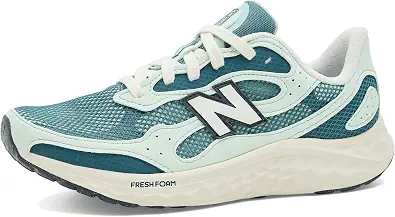 | Best Lightweight All-Day Option | Brand: New Balance | Model: Fresh Foam Arishi V4 | Midsole: Fresh Foam cushioning | VIEW LATEST PRICE | See Our Full Breakdown |
| women’s running shoes for flat feet | Brand | Model | Inner material |
|---|---|---|---|
| Brooks Women’s Adrenaline GTS | Brooks | Adrenaline GTS 25 | Nylon |
| Nike Women’s Air Winflo 12 Roa | Nike | Air Winflo 12 | — |
| FitVille Women’s Cloud Walker | FitVille | Cloud Walker V7 | Knit fabric |
| WHITIN Women’s Barefoot Shoes | WHITIN | — | Cotton, mesh |
| Mishansha Women’s Air Cushion | Mishansha | — | — |
| Under Armour Women’s Charged A | Under Armour | Charged Assert 11 | — |
| Nike Women’s Revolution 8 Road | Nike | Revolution 8 | — |
| ASICS Women’s Gel-Excite 11 Ru | ASICS | Gel-Excite 11 | — |
| ASICS Women’s Gel-Cumulus 27 R | ASICS | Gel-Cumulus 27 | Polyester |
| New Balance Women’s Fresh Foam | New Balance | Fresh Foam 680 v9 | Cotton |
| Skechers Women’s Max Cushionin | — | — | Mesh, Air-Cooled Goga Mat |
| New Balance Women’s Fresh Foam | New Balance | Fresh Foam Arishi V4 | Mesh |
More Details on Our Top Picks
Brooks Women’s Adrenaline GTS 25 Running Shoe
Stability is the whole point of the Adrenaline GTS 25, and that’s exactly what flat feet need most. Instead of stacking arch props into the midsole, Brooks uses GuideRails technology, a holster-like system that keeps excess rolling and inward collapse in check without feeling restrictive. Compared with the Nike Air Winflo 12, which is a neutral road shoe with no motion control, this model does the supportive work flat arches typically demand. The nitrogen-infused DNA LOFT v3 cushioning keeps long miles soft without the weight penalty, and the APMA Seal of Acceptance plus PDAC A5500 diabetic certification signal genuine foot-health credibility rather than marketing shorthand. The tradeoff is a firmer, more structured ride than plush options like the Skechers Max Cushioning Endeavour, and it leans expensive.
Pros:- GuideRails support actively manages overpronation from collapsed arches
- Lightweight nitrogen-infused DNA LOFT v3 cushioning for high mileage
- APMA Seal of Acceptance and PDAC A5500 diabetic certification
- Breathable mesh upper with a secure flat-knit collar fit
Cons:- More structured and less plush than max-cushion rivals
- Higher price point than value-oriented picks like the Mishansha Air Cushion
Best for: Runners with flat feet who log regular mileage and need true stability support, not just cushioning
Not ideal for: Runners with high arches or neutral gait who will find the GuideRails support unnecessary and the ride overly controlling
- Brand:Brooks
- Model:Adrenaline GTS 25
- Support system:GuideRails
- Cushioning:Nitrogen-infused DNA LOFT v3
- Upper:Engineered mesh
- Inner material:Nylon
- Sole material:Rubber
- Certifications:PDAC A5500 Diabetic shoe; APMA Seal of Acceptance
Our verdict“If collapsed arches are the reason your runs hurt, this is the shoe built specifically to fix that problem.”
Nike Women’s Air Winflo 12 Road Running Shoes
This option stands out as the recognizable-name pick for everyday road mileage, with Nike Air cushioning delivering a responsive rather than squishy feel on pavement. For a flat-footed runner with mild collapse rather than severe overpronation, the Winflo 12 offers enough midsole structure to feel stable at an easy pace — but it’s a neutral trainer at heart. Compared with the Brooks Adrenaline GTS 25, it simply lacks a dedicated support system, so runners whose arches fully collapse will notice fatigue creeping in on longer outings. Where it beats the Brooks is weight and bounce: Nike Air units feel springier during tempo work and shorter runs. The honest tradeoff is information — detailed specs on drop and stack height are thin, so buyers are trusting the brand name more than the data sheet.
Pros:- Trusted Nike build quality and consistent sizing
- Air cushioning gives a responsive, energetic road feel
- Designed specifically for road running daily training
- Lighter and springier than stability-focused rivals
Cons:- Neutral design offers no dedicated arch or motion support
- Limited published technical details on drop and stack height
Best for: Mildly flat-footed runners who want a trusted brand for moderate road mileage and don’t need heavy motion control
Not ideal for: Runners with severe overpronation who need structured stability like the Brooks Adrenaline GTS 25 provides
- Brand:Nike
- Model:Air Winflo 12
- Gender:Women’s
- Intended use:Road running
- Cushioning:Nike Air
- ASIN:B0FQJFKQD5
Our verdict“A solid daily trainer for mild flat feet, but serious overpronators should step up to a stability shoe.”
FitVille Women’s Cloud Walker V7 Slip-On Walking Sneakers
This pick makes the most sense for flat-footed walkers whose problem is width and comfort rather than speed. The wide and extra-wide toe box lets toes splay naturally, which takes pressure off collapsed arches, and the extra-thick rebound EVA sole absorbs shock in a way the thinner-soled WHITIN barefoot shoe simply cannot. The hands-free slip-on design is a genuine quality-of-life feature for anyone with foot pain, back issues, or busy mornings — no lacing, no bending. Compared with the Brooks Adrenaline GTS 25, though, the Cloud Walker V7 offers cushioning without structured guidance, so it reads more as a walking and errands shoe than a serious running trainer. The pull-on fit also means less lockdown during faster movement, a real limitation if running is your priority.
Pros:- Wide and extra-wide toe box relieves pressure on flat, wide feet
- Extra-thick rebound sole for shock absorption
- Hands-free slip-on design aids accessibility
- Breathable knit upper for all-day wear
Cons:- No structural arch or pronation support system
- Pull-on closure limits midfoot lockdown for running
Best for: Women with flat, wide feet who need all-day walking comfort and a shoe they can put on without bending down
Not ideal for: Runners who need secure lockdown and structured support for faster paces — the slip-on fit is too loose for that
- Brand:FitVille
- Model:Cloud Walker V7
- Sole material:EVA
- Outer material:Mesh
- Inner material:Knit fabric
- Closure type:Pull-on
- Fit:Wide and extra-wide toe box
- Sole:Extra-thick rebound sole
Our verdict“Choose this for comfortable, wide-fitting everyday walking rather than genuine running performance.”
WHITIN Women’s Barefoot Shoes with Wide Toe Box
This model occupies the opposite end of the philosophy spectrum from the Brooks Adrenaline GTS 25. Instead of supporting a collapsed arch, the WHITIN’s zero-drop, thin, flexible sole is designed to let the foot muscles of the foot do the work — an approach some flat-footed runners use for gradual arch strengthening. The wide toe box mirrors the FitVille Cloud Walker V7’s splay-friendly fit, but everything else diverges: where the FitVille piles on cushioning, the WHITIN strips it away. That means a low-to-the-ground, ground-feel-heavy experience with a slip-proof rubber outsole. The tradeoff is real — cushioning is minimal, so joints take more impact, and flat-footed runners should build up mileage slowly or risk soreness. Anyone expecting plush comfort from day one should look at the Skechers Max Cushioning Endeavour instead.
Pros:- Zero-drop design promotes natural foot positioning and arch engagement
- Wide toe box allows full natural toe splay
- Thin flexible sole builds ground feel and foot strength
- Slip-proof rubber outsole for reliable traction
Cons:- Minimal cushioning transmits more impact to joints
- Requires a slow adaptation period for flat-footed runners
Best for: Flat-footed runners already comfortable with minimalism who want to strengthen their feet naturally
Not ideal for: Runners who need cushioning or support right now — beginners and heavier runners will find the thin sole punishing
- Brand:WHITIN
- Sole material:Rubber
- Outer material:Rubber
- Inner material:Cotton, mesh
- Closure type:Lace-up
- Heel design:Zero drop
- Toe box:Wide
Our verdict“A deliberate training tool for foot strengthening, not a comfort shoe — go in with clear expectations.”
Mishansha Women’s Air Cushion Running Sneakers
For casual joggers and gym-goers who don’t want to overspend, this option covers the basics: a breathable mesh upper, a removable arch-support insole — handy for flat feet, since it can be swapped for a custom orthotic — and an air-cushion midsole that softens everyday impact. Compared with the Brooks Adrenaline GTS 25, the Mishansha can’t match structural stability or durability, but it out-flexes it on versatility and price, working as a walking, travel, and workout shoe in one. The removable insole is the quiet differentiator here: the WHITIN barefoot shoe offers no such customization, and neither does the FitVille slip-on. The drawbacks are honest ones — grip is rated for dry surfaces only, and the build targets light running rather than sustained high-impact mileage, so serious trainers will outgrow it fast.
Pros:- Removable arch-support insoles accept custom orthotics
- Air-cushion midsole absorbs everyday impact
- Breathable mesh upper with soft sponge lining
- Lightweight flexible EVA outsole with rubber traction patches
Cons:- Traction designed for dry surfaces only
- Build quality suits light running, not high-impact training
Best for: Casual runners and gym-goers with flat feet on a budget who want to add their own orthotics
Not ideal for: Regular road runners logging high mileage, who need the durability and stability of the Brooks Adrenaline GTS 25
- Brand:Mishansha
- Upper material:Mesh
- Fabric:Knitted fabric
- Midsole:Air cushion
- Sole materials:EVA with rubber traction patches
- Insole:Removable arch-support insoles
- Lining:Sponge inner lining
- Intended use:Walking, light running, gym training, casual wear
Our verdict“A sensible low-cost choice for light activity with flat feet — just don’t build a serious running habit on it.”
Under Armour Women’s Charged Assert 11 Running Shoes
Most shoes in this batch are soft and neutral, which is exactly what flat-footed runners sometimes can’t get away with. The Charged Assert 11 takes a different approach: its durable leather overlays lock down the midfoot, keeping a collapsing arch from rolling inward on every stride. Compared to the ASICS Gel-Excite 11, which prioritizes plush softness, this model favors structure and control — a fair trade if support matters more than pillow-like cushioning to you. The Charged+ midsole still delivers respectable all-day comfort, and the anti-microbial sockliner is a smart touch for anyone logging daily miles. The tradeoff is weight and breathability: leather overlays and a 7.7 oz build make it warmer and slightly clunkier than mesh-only rivals like the New Balance Fresh Foam 680 v9. For runners who overpronate, though, that sturdiness is the point.
Pros:- Leather midfoot overlays provide structure that flat arches benefit from
- Charged+ midsole cushioning stays comfortable across long days on your feet
- Rubber outsole with flex grooves gives reliable traction and a clean toe-off
- Anti-microbial sockliner resists odor through high-mileage weeks
Cons:- Overlays reduce breathability compared to full-mesh options like the Gel-Excite 11
- At 7.7 oz it feels heavier than softer neutral trainers in this lineup
- Neutral support label means severe overpronators may still need more control
Best for: Flat-footed runners who need midfoot structure and mild overpronation control without jumping to a full stability shoe like the Brooks Adrenaline GTS 25
Not ideal for: Runners wanting a barely-there, breathable daily trainer — the overlays add warmth and weight that minimalists will notice by mile three
- Brand:Under Armour
- Model:Charged Assert 11
- Support Type:Neutral with structured overlays
- Midsole:Charged+ cushioning
- Outsole:Rubber with flex grooves
- Upper:Athletic mesh with leather overlays, 30% recycled content
- Weight:7.7 oz
- Sockliner:Plush anti-microbial
Our verdict“The strongest midfoot structure in this batch, making it the pick for flat feet that need containment rather than pure softness.”
Nike Women’s Revolution 8 Road Running Shoes
The Revolution 8 occupies the entry-level slot in this roundup, and I’d frame it honestly: it’s a light-duty shoe for joggers, walkers, and gym-goers rather than a serious mileage trainer. Where the Brooks Adrenaline GTS 25 brings genuine stability tech for flat feet, the Revolution 8 asks you to rely on a firm, conventional ride and Nike’s usual snug fit — fine for shorter efforts, less so if your arches collapse over long distances. Compared to the Nike Air Winflo 12 elsewhere in this list, it sits a tier below in cushioning quality, but that’s also its appeal: less shoe, simpler decision for someone testing whether running sticks. The main caveat for this audience is the absence of any arch-support feature, so flat-footed buyers should plan on pairing it with their own insoles.
Pros:- Lightweight, low-commitment design suits beginners and casual joggers
- Recognizable Nike fit and styling work for everyday wear beyond running
- Simple road-oriented build with nothing complicated to break in
- Easy to pair with after-market orthotic insoles
Cons:- No built-in arch support or stability features for flat feet
- Cushioning is basic compared to the Winflo 12 or ASICS options here
- Not durable enough for high weekly mileage
Best for: New or casual runners doing short, easy miles who want a familiar brand name and a no-frills road shoe at a starter level
Not ideal for: Flat-footed runners logging over roughly 15 miles a week — the cushioning and support aren’t built for sustained impact
- Brand:Nike
- Model:Revolution 8
- Category:Road running shoes
- Support Type:Neutral
- Intended Use:Everyday road running
- Fit:Standard Nike sizing
Our verdict“A reasonable first running shoe for short miles, but flat-footed runners will want to add their own insoles from day one.”
ASICS Women’s Gel-Excite 11 Running Shoes
If the Gel-Cumulus 27 is ASICS’ premium cushioning play, the Gel-Excite 11 is its accessible sibling — and the value case is strong. You still get PureGEL technology and AMPLIFOAM PLUS foam, the same soft-landing formula, just in a simpler package that skips the Cumulus’ lightweight FF BLAST PLUS rebound layer. For flat-footed runners, that softness is a double-edged sword: it absorbs impact kindly, but there’s no guidance system like the Brooks Adrenaline GTS 25 offers, so arch fatigue can creep in on longer runs. The details are genuinely thoughtful — a moisture-managing OrthoLite X-30 sockliner, reflective accents, and a knit heel tab that makes pulling them on effortless. One warning worth repeating: these run small, so size up half a size or expect a tight toe box.
Pros:- PureGEL and AMPLIFOAM PLUS deliver notably soft landings for the price
- Breathable engineered mesh upper keeps feet cool
- OrthoLite X-30 sockliner manages moisture and adds plushness
- Reflective details improve safety for low-light runs
Cons:- Runs small — many buyers will need to size up
- Lacks the responsive rebound of the Gel-Cumulus 27’s FF BLAST PLUS
- No stability features, so flat arches work harder over distance
Best for: Budget-conscious runners who want gel-cushioned comfort for easy daily miles and don’t mind sizing up
Not ideal for: Runners needing arch guidance or true stability — the soft, neutral platform offers no overpronation control
- Brand:ASICS
- Model:Gel-Excite 11
- Cushioning:PureGEL and AMPLIFOAM PLUS
- Upper:Engineered mesh
- Sockliner:OrthoLite X-30
- Outsole:Rubber
- Fit:Runs small
- Visibility:Reflective details
Our verdict“The most comfortable gel ride per dollar in this lineup, best paired with supportive insoles if your arches are flat.”
ASICS Women’s Gel-Cumulus 27 Running Shoes
This is the cushioning ceiling of this batch. The Gel-Cumulus 27 pairs FF BLAST PLUS foam — light, energetic, and quick to rebound — with PureGEL inserts for softer landings, and the difference against the Gel-Excite 11 is immediate: same softness on impact, but far more pop at toe-off so the shoe doesn’t feel dead late in a run. The FLUIDRIDE outsole encourages a smoother stride, which flatters runners whose flat feet make their gait feel a bit mushy in softer shoes. The engineered mesh upper breathes well, and ASICS’ solution-dyed sockliner process cuts water use and carbon output — a real consideration for eco-minded buyers. The honest tradeoff: this is a neutral trainer, so unlike the Brooks Adrenaline GTS 25 it won’t actively correct overpronation. Flat-footed runners with neutral-to-mild mechanics will love it; those who collapse inward heavily should look elsewhere.
Pros:- FF BLAST PLUS foam combines light weight with responsive rebound
- PureGEL inserts soften landings without deadening the ride
- FLUIDRIDE outsole promotes a smoother, more efficient stride
- Solution-dyed sockliner reduces water use and carbon emissions
Cons:- Premium cushioning comes at a premium tier above the Gel-Excite 11
- No stability features for runners who overpronate heavily
- Plush stack may feel too soft for runners who prefer ground feel
Best for: Regular runners with neutral-to-mild flat-foot mechanics who want energetic, high-mileage cushioning that stays lively to the last mile
Not ideal for: Moderate-to-severe overpronators — there’s no stability post, so the soft stack can encourage inward rolling
- Brand:ASICS
- Model:Gel-Cumulus 27
- Cushioning:FF BLAST PLUS and PureGEL
- Upper:Engineered mesh
- Outsole:FLUIDRIDE rubber
- Inner Material:Polyester
- Reflective Details:Yes
- Sustainability:Solution-dyed sockliner — ~33% less water, ~45% fewer carbon emissions
Our verdict“The best pure ride in this lineup for flat feet that behave — buy it for the rebound, skip it if you need motion control.”
New Balance Women’s Fresh Foam 680 v9 Running Shoe
Not every buyer wants a specialist, and the Fresh Foam 680 v9 is the most well-rounded option here. The Fresh Foam midsole is soft enough for comfortable runs yet firm enough for lateral movement, which is why it handles gym floors and sidewalk walks as gracefully as road miles — something the ASICS Gel-Cumulus 27, with its run-first design, doesn’t attempt. The engineered mesh upper keeps feet dry, and the traditional lace-up closure lets flat-footed wearers dial in midfoot snugness over a supportive insole. Compared to New Balance’s own Arishi V4 in this roundup, the 680 v9 offers a plusher, more forgiving ride at a slight weight penalty. The tradeoff is that it’s a jack-of-all-trades: it won’t match the Cumulus’ rebound on long runs or the Charged Assert 11’s structured overlays for arch control. As a one-shoe wardrobe solution, though, it’s hard to beat.
Pros:- Fresh Foam midsole balances softness with enough stability for varied activities
- Breathable engineered mesh keeps feet cool and dry
- Durable rubber outsole grips roads, sidewalks, and gym floors
- Lace-up closure allows a customizable, supportive midfoot fit
Cons:- Heavier and less responsive than the Gel-Cumulus 27 for faster running
- No built-in arch structure, so it depends on insoles for flat-foot support
- Versatile design means it excels at nothing in particular
Best for: Runners who want one shoe for easy miles, gym sessions, and all-day everyday wear — especially flat-footed buyers who use their own orthotics
Not ideal for: Performance-focused runners chasing pace — the do-everything build lacks the responsiveness of dedicated trainers
- Brand:New Balance
- Model:Fresh Foam 680 v9
- Midsole:Fresh Foam
- Upper:Engineered mesh
- Outsole:Rubber
- Closure:Traditional lace-up
- Inner Material:Cotton
- Origin:Imported
Our verdict“The best single-shoe answer in this roundup for flat feet that split time between running, the gym, and daily life.”
Skechers Women’s Max Cushioning Endeavour Sneakers
Skechers takes a different route to flat-foot comfort than stability-focused rivals like the Brooks Adrenaline GTS 25. Instead of firmer support posts, this model leans on plush Air-Cooled Goga Mat cushioning and Natural Rocker Technology, which encourages a smoother forward roll and takes pressure off arches that collapse mid-stride. The rocker geometry is the real story here — it does some of the work a stable arch would normally do. The tradeoff is honest: there’s no structured medial support, so severe overpronators will still want the Brooks. What the Skechers offers instead is practicality nothing else in this lineup matches — machine washable, vegan-friendly, and built on an Ultra Light midsole that keeps long days on your feet from feeling heavy. Compared with the Mishansha Air Cushion sneakers, the cushioning here is noticeably more resilient and breathable.
Pros:- Natural Rocker Technology smooths the stride and reduces strain on collapsed arches
- Air-Cooled Goga Mat insole adds high-rebound, breathable cushioning
- Machine washable and vegan-friendly — rare practical perks in this category
- Ultra Light midsole keeps the shoe from feeling bulky on longer outings
Cons:- No structured medial support, so it won’t control strong overpronation
- Soft cushioning may feel less responsive and durable for faster-paced running
Best for: Flat-footed runners and walkers who prioritize plush, washable comfort for everyday training and don’t need rigid stability structure
Not ideal for: Severe overpronators who need genuine motion control — the soft, rocker-based design won’t correct heavy inward rolling like the Brooks Adrenaline GTS 25
- Sole material:Rubber
- Outer material:Mesh with synthetic overlays
- Inner material:Mesh, Air-Cooled Goga Mat
- Midsole:Ultra Light cushioning
- Technology:Natural Rocker Technology
- Care:Machine washable; air dry
- Vegan-friendly:Yes
- Origin:Imported
Our verdict“A comfort-first, low-maintenance pick for flat feet that favors plush rocker-assisted movement over corrective stability.”
New Balance Women’s Fresh Foam Arishi V4 Running Shoe
The Fresh Foam Arishi V4 earns its spot as the go-light choice in this roundup. Where the New Balance Fresh Foam 680 v9 leans toward cushioned everyday training, the Arishi trims weight and bulk, making it the better call for flat-footed runners who log mixed days — a morning run, then errands and gym time. The precision-engineered Fresh Foam midsole delivers soft landings without the dead, marshmallow feel of cheaper options like the Nike Revolution 8, and no-sew overlays mean zero stitching to rub against a foot that’s already spreading under load. The honest caveat: this is a neutral shoe. Compared with the ASICS Gel-Excite 11, the Arishi is sleeker and more versatile, but flat feet that overpronate aggressively will need to pair it with orthotic insoles or step up to a true stability model.
Pros:- Fresh Foam midsole delivers soft yet responsive, lightweight cushioning
- No-sew upper construction eliminates irritation points across a spreading midfoot
- Durable rubber outsole grips reliably on roads and sidewalks
- Sleek, versatile styling moves from running to casual wear seamlessly
Cons:- Neutral support provides no built-in pronation control for flatter arches
- Cushioning runs firmer than plush-minded options like the Skechers Endeavour
Best for: Runners with flexible flat feet and mild pronation who want one lightweight shoe for runs, gym sessions, and all-day wear
Not ideal for: Runners relying on the shoe alone for stability or motion control — the neutral platform offers no arch guidance without an added insole
- Brand:New Balance
- Model:Fresh Foam Arishi V4
- Midsole:Fresh Foam cushioning
- Outer material:Mesh
- Inner material:Mesh
- Sole material:Rubber
- Closure:Lace-up
- Support type:Neutral
- Origin:Imported
Our verdict“A light, comfortable do-everything shoe for mild flat feet — just add your own insoles if you need real arch guidance.”

How We Picked
I evaluated each shoe through one specific lens: how well it supports a collapsed or low arch during repetitive running impact. The first filter was midsole architecture — dual-density foam, medial posts, GuideRails, or TRUSSTIC-style plates earned more credit than soft foam alone, because flat feet need the midsole to resist compression where the arch should be. The second was heel and rearfoot structure: a firm, well-cradled heel counter reduces the inward roll that starts at heel strike, so I favored shoes with reinforced counters over soft, sock-like collars.
From there, I weighed cushioning balance, fit options (especially width availability), durability of the support elements under mileage, and price-to-performance. Shoes ranked higher when their stability features survived hundreds of miles rather than fading after a few weeks. I also flagged models that are walking-first or barefoot-first designs — useful for some flat-footed buyers, but misleading if marketed purely as running shoes. That’s why the ranking orders true stability trainers first, versatile mild-support shoes next, and lifestyle-leaning or minimalist options last.
Factors to Consider When Choosing Women’s Running Shoes For Flat Feet
Choosing running shoes for flat feet involves more than picking the most cushioned model on the shelf. These are the factors that actually change how a shoe performs for a collapsed arch — and the mistakes buyers make with each one.Stability Features vs. Generic Arch Support
The biggest mistake flat-footed runners make is assuming any shoe labeled “arch support” will control pronation. True stability shoes use dual-density midsoles, medial posts, or rail systems that physically slow the inward roll of the foot; most comfort shoes just add a raised bump of foam under the arch that compresses within weeks. Look for technology names in the spec sheet — GuideRails, TRUSSTIC, medial post — rather than marketing phrases like “cushioned arch.” A quick field test: press your thumb firmly into the inner midsole. If it collapses as easily as the outer edge, the shoe offers comfort, not correction. Also know that overcorrecting is a real risk; a rigid motion-control shoe on a mildly flat foot can push your knee outward and cause new pain. Match the level of control to how far your arch actually collapses.
Heel Counter Firmness
Pronation starts at heel strike, so the heel counter — the rigid structure wrapping the back of the shoe — does a large share of the stability work. Soft, sock-like heels that feel plush in the store often fail to hold a flat foot in a straight line once you’re three miles into a run. Pinch the heel counter before buying: it should resist folding flat between your fingers. Counterintuitively, a firmer heel often feels less comfortable on day one but dramatically better by week three, while a mushy heel feels great for an hour and causes arch fatigue afterward. Runners who supinate to compensate for collapse should be careful here, though — an overly aggressive counter combined with a high medial post can create outer-foot pressure. Heel structure is also where cheap shoes quietly cut costs, so this is a spec worth checking even on well-reviewed budget models.
Cushioning Density and Where It Sits
Cushioning for flat feet is about placement and density, not total thickness. A shoe with 30mm of uniform soft foam can actually worsen pronation, because the arch sinks deeper into the midsole with every stride. The better pattern is firm foam on the medial (inner) side and softer foam laterally, which is exactly what dual-density construction provides. Max-cushion shoes can still work for flat feet, but only when the foam is resilient — responsive or slightly firmer compounds rather than pillowy ones. Pay attention to stack height too: very tall, soft midsoles raise your center of gravity and increase wobble for a foot that already lacks a stable base. If you love plush shoes, aim for plushness at the forefoot with firmness through the midfoot and heel.
Width, Toe Splay, and Sizing
Your Actual Running Volume
A shoe that’s stable enough for a 5K twice a week may be underbuilt for half-marathon training, and overbuilt shoes can be just as problematic for short-distance runners. Support structures break down with mileage — typically 300 to 500 miles — and a flat foot notices the loss sooner than a neutral foot does, because it starts relying on the shoe the moment the foam softens. If you run fewer than 15 miles a week, durability matters less and you can prioritize fit and comfort. Higher-mileage runners should budget for replacement timing and favor shoes with reinforced outsoles and proven foam longevity, even at a higher upfront cost. One practical tip: note the date you start a pair and watch for inner-heel wear patterns, since flat feet erode the medial edge of the outsole first and uneven wear accelerates once it starts.
When to Skip Running Shoes Entirely and See a Professional
Shoes can accommodate a flat arch, but they can’t fix pain caused by it. If you experience persistent plantar fascia soreness, inner-knee pain, or shin splints that don’t improve after a shoe change, a podiatrist or physical therapist can determine whether you need orthotics or strengthening work alongside — or instead of — a stability shoe. Custom or over-the-counter orthotics change the shoe equation completely: they need a removable insole and extra depth, which rules out some sleeker designs in this category. Buying an expensive stability shoe and placing an orthotic on top of its built-in support often doubles up correction and causes new problems. Get the diagnosis before the purchase, not after. And remember that flat feet vary enormously — flexible flat feet that form an arch when seated need very different shoes than rigid ones that never do.
Frequently Asked Questions
Do I need stability shoes if my flat feet don’t hurt?
Not automatically. Pain-free flat feet that function well during runs often need only mild support — a firm heel counter and a reasonably structured midsole — which opens up neutral shoes like the Gel-Cumulus 27 or Fresh Foam 680 v9 rather than restricting you to stability models. Overcorrecting a foot that doesn’t pronate excessively can shift stress to the knees and outer leg. The honest test is your wear pattern and post-run feel: if your old shoes wear down heavily along the inner edge, or your arches ache after six miles, that’s your foot asking for more structure. If neither happens, buy for comfort and fit first and let support be a tiebreaker.
Are barefoot-style shoes like the WHITIN safe for flat feet?
They’re not inherently unsafe, but they demand a very different approach. Barefoot shoes remove the external support a flat arch relies on and transfer that work to your own muscles and tendons — which can strengthen the foot over time but can also trigger plantar fasciitis if you jump in too fast. Anyone attempting this route should start with short walks, progress to brief jogs over several weeks, and expect noticeable calf and arch soreness as an adaptation signal, not a badge of honor. Flat-footed runners who log consistent mileage or carry extra weight are the worst candidates for an abrupt switch. If you love the wide toe box concept but want to keep running, the FitVille offers similar splay with far more underfoot structure.
Can I just add arch-support insoles to a cheaper shoe instead of buying a stability model?
This can work, but only with the right chassis underneath. An insole sits on top of the midsole, so if the shoe’s midsole is soft and collapses under your arch, the insole tilts and sinks with it — you get the cost of the insert without the correction. Budget-friendly shoes with firm heel counters and reasonably dense midsoles, like the New Balance Fresh Foam Arishi V4, make better insole platforms than plush walking sneakers. You also need to check insole depth: adding a thick orthotic to a low-volume shoe crowds the toe box and can cause numbness. If you already own custom orthotics, buy the shoe around them — a roomier neutral shoe often beats a stability shoe for orthotic compatibility.
How do I know when my running shoes have lost their support for flat feet?
Flat-footed runners typically feel support loss before the shoe looks worn out. The classic signs are arch fatigue arriving earlier in your runs than it used to, new aching along the inside of your shin, and a sensation that your foot is “rolling” in a shoe that used to feel locked in. Physically, check the inner heel edge: if the outsole rubber is worn smooth or the midsole foam there compresses easily under your thumb, the stability elements are spent. For most runners this happens between 300 and 500 miles, but heavier runners or those who pronate heavily may hit it closer to 250. Replacing on feel and wear — not on a fixed calendar — is the smarter habit.
Is it worth paying more for the Brooks Adrenaline GTS 25 over the budget options in this lineup?
It depends on your mileage and how much your arch collapses. The Adrenaline’s GuideRails system supports the whole leg’s alignment rather than just pushing up on the arch, and its foam holds its corrective geometry for far more miles than the Mishansha or Skechers alternatives — which matters a lot if you run more than about 15 miles a week. For casual joggers or walkers, that durability advantage is largely wasted, and a firm-heeled budget shoe does nearly the same job. Where the premium price really pays off is injury prevention: recurring shin or knee pain from under-supported pronation costs far more in physio than the price gap between models. If you run seriously and overpronate, it’s the most cost-effective shoe here despite being among the priciest.
Conclusion
The right pick here depends less on price and more on how far your arch collapses and how much you run. For most flat-footed runners, the Brooks Adrenaline GTS 25 is the best overall choice — its GuideRails support controls pronation across the highest mileage while staying comfortable enough for daily wear. The FitVille Cloud Walker V7 is my best value pick, delivering a wide, stable base and easy slip-on fit at a budget price, though serious runners will outgrow it. For premium comfort with mild support, the ASICS Gel-Cumulus 27 justifies its cost with refined cushioning best suited to mild collapse or orthotic users.
Beginners should start with the ASICS Gel-Excite 11 or New Balance Fresh Foam Arishi V4 — both teach good habits without overwhelming a low-mileage stride. For specific needs: wide or splayed feet get the best fit from the New Balance Fresh Foam 680 v9 in its wide widths, walkers who occasionally jog should take the Skechers Max Cushioning Endeavour, and the WHITIN Barefoot suits only experienced runners committed to a slow transition to minimalism. Whatever you choose, buy from a retailer with a generous return window and test your first run on softer ground — flat feet tell you quickly, and honestly, whether a shoe is working.
Halloween Picks
halloween
As an affiliate, we earn on qualifying purchases.