
For most runners, I’d start with the Be Smart Get Prepared Coach’s First Aid Kit: its roll-up format and sports focus make it a practical choice for a group or a run-support bag. For minimalist trail runners, the Adventure Medical Kits Ultralight/Watertight .5 prioritizes compact, weather-conscious packing, while the Rhino Rescue EVA Small Waterproof Kit offers a more protective case for exposed routes. The main tradeoff is between a kit light enough to carry and one with enough supplies for multiple people or a broader range of mishaps. Larger kits add contents but can be awkward on a run, and compact kits may need replenishing or customization. Read on for the full breakdown by running style and carrying needs.

Get workout gear delivered free with Prime
- Fast, free delivery on millions of items
- Prime Video, Amazon Music and more included
- Member-only deals all year
Complete the kit

Key Takeaways
- The best running kit depends on where it travels. The Coach’s roll-up design suits organized activities and support bags better than a tiny waist-pack loadout.
- Compactness and weather protection are separate advantages. Adventure Medical Kits emphasizes ultralight, watertight packing, while Rhino Rescue’s EVA case favors a protective shell.
- Piece counts don’t tell the whole story. The 300-, 400-, and 410-piece kits may suit cars, homes, or group supplies, but their larger formats can be a poor match for carrying on a run.
- Small kits make sense for solo runners only when their limits are clear. The EVERLIT minis and compact Rhino Rescue options reduce carrying burden, but may call for personal additions and regular checks.
- Several products are general-purpose emergency kits, not running-specific carry kits. Car, home, and multipurpose models are best treated as route-side or vehicle backup unless their packed dimensions and weight suit the runner.




| first aid kits for runner | Number of pieces | Weight | Dimensions |
|---|---|---|---|
| Be Smart Get Prepared Coach’s | 73 | — | — |
| Adventure Medical Kits Ultrali | — | — | — |
| Protect Life Travel First Aid | 100 | — | — |
| Mini First Aid Kit | 150+ | 0.73 lb | 6.4 x 4.9 x 2.7 inches |
| Rhino Rescue EVA Small Waterpr | — | — | Small, portable size; exact dimensions not specified |
| VRIEXSD 400 Piece Large First | 400 | 2.64 pounds | 9.4 x 3.9 x 6.8 inches |
| Travel First Aid Kit | 300 | — | — |
| EVERLIT Mini First Aid Kit | — | — | — |
| EVERLIT Ultralight Mini First | — | 6.7 ounces | 5 x 4.5 x 1 inches |
| Rhino Rescue Small Waterproof | 114 | Approximately 0.67 pounds | — |
| RHINO RESCUE Small Ultralight | — | 20 g | 180 × 100 × 30 mm |
| Gevoke 410-Piece Waterproof Ha | — | 2.43 lb | 9.8 × 6.6 × 4.1 inches |
More Details on Our Top Picks
Be Smart Get Prepared Coach’s First Aid Kit 73 Pc Hanging Rollup Bag Sports
For runners who want one kit to leave at a meet-up point or carry in a support vehicle, the 73-piece sports-focused set offers more organized access than a pocket-sized personal kit. Its roll-up layout has clear zipper pockets and a hanging hook, making it easier to find supplies when several people need attention. Compared with the compact Adventure Medical Kits Ultralight/Watertight .5, this is better suited to shared use than carrying on a run; the Adventure Medical kit is the more practical choice for a runner’s own pack. The tradeoff is bulk: at 10 inches long, this bag is less appealing for a belt or small running vest, and the listed supplies focus on common sports injuries rather than a broad emergency response. I’d choose it for organized group coverage, not solo runs.
Pros:- 73 pieces provide a broader shared supply set than a minimalist personal kit
- Clear zipper pockets help separate and locate supplies quickly
- Hanging hook makes the kit convenient to access at a club meet-up or aid station
- Includes gloves, scissors, and a guide booklet
Cons:- Roll-up format is less convenient to carry on a run than a compact waterproof pouch
- Sports-focused supplies may not cover a wide range of emergencies
- Refill availability is not specified
Best for: Running clubs, race volunteers, and coaches who can keep a shared kit at a trailhead or in a support vehicle.
Not ideal for: Solo runners who need a kit to fit inside a running vest or belt, since its roll-up bag is better suited to group support.
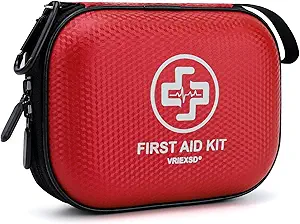
- Number of pieces:73
- Bag dimensions:4.5 x 10 x 4.25 inches
- Bag materials:PVC and nylon
- Bag format:Roll-up bag with multiple clear zipper pockets
- Access feature:Hanging hook
- Listed inclusions:First aid supplies, gloves, scissors, and guide booklet
Our verdict“Choose this for an organized running-club or support-vehicle kit, but pick a smaller pouch for supplies you’ll carry during a run.”
Adventure Medical Kits Ultralight/Watertight Medical Kit .5 (2 Person)
When rain, creek crossings, or damp trail conditions could compromise supplies, the DryFlex waterproof bag gives this kit a clear advantage for runners carrying first aid in a pack. Its contents address common trail problems, including blisters, minor wounds, and insect stings, while the compact design is aimed at two people rather than a large group. Compared with the roomier Be Smart Get Prepared Coach’s First Aid Kit, this is much more suited to carrying on a run, though it gives up the Coach’s kit’s more accessible roll-up organization and broader shared-use feel. The tradeoff is scope: it is a basic outdoor kit, not a source of advanced medical equipment, and its stated capacity is limited to two people. I’d favor it when keeping supplies dry and packable matters more than having a large inventory.
Pros:- DryFlex bag is designed to keep contents dry in outdoor conditions
- Compact, lightweight format is suitable for carrying in a running pack
- Includes blister moleskin alongside wound-care basics
- Supplies cover common minor outdoor injuries, including insect stings and splinters
Cons:- Stated capacity is limited to two people
- Does not include advanced medical equipment
- Less suited to home or group use than the larger Coach’s roll-up kit
Best for: Trail runners who carry a small pack, run with a partner, and want basic wound and blister supplies protected from wet conditions.
Not ideal for: Running clubs or race support teams needing a larger shared inventory or supplies for more than two people.
- Capacity:2 people
- Bag material:DryFlex waterproof material
- Listed wound-care supplies:Bandages, gauze, antiseptic wipes, and antibiotic ointment
- Blister care:Blister moleskin
- Other listed supplies:Insect sting relief, alcohol swabs, splinter picker, and safety pin
- Intended setting:Outdoor use, including camping and hiking
Our verdict“Pick this for a two-person trail outing where wet-weather protection and blister care matter more than a large supply count.”
Protect Life Travel First Aid Kit for Car – 100 Piece Waterproof Emergency Kit with Blanket & Guide
The hard waterproof case, emergency blanket, and first aid guide make this a sensible choice to keep in a car for the drive home or post-run support—not a kit I’d prioritize carrying on a run. Its 100-piece inventory is more substantial than a bare-bones pouch, and the blanket adds an item that the more run-focused Adventure Medical Kits Ultralight/Watertight .5 listing does not specify. That extra utility comes with a portability tradeoff: this hard-case format is less adaptable to a running vest than the Adventure Medical kit’s compact outdoor bag. The product data also gives no quantities for individual supplies, so the piece count alone doesn’t show how much wound care is included. I’d choose it for a vehicle serving regular trail outings, while runners who carry their kit should look to a smaller soft pack.
Pros:- Waterproof hard case suits storage in a car or outdoor gear area
- Emergency blanket adds a useful item for unexpected exposure or waiting for help
- First aid guide provides a reference alongside the supplies
- 100-piece set covers more than a very minimal personal pouch
Cons:- Hard-case design is less convenient to carry while running than the Adventure Medical soft kit
- Individual supply quantities are not specified
- The listed contents may be limited for extended emergencies
Best for: Runners who drive to trailheads and want a waterproof car kit with a guide and emergency blanket for roadside or post-run needs.
Not ideal for: Runners who want a kit inside a running vest or belt, since the hard case is better suited to a vehicle or stored gear.
- Number of pieces:100
- Case type:Hard case
- Waterproof:Yes
- Listed inclusions:Emergency blanket and first aid guide
- Intended uses:Home, travel, camping, boating, and hiking
- Supply quantities:Not specified in the product data
Our verdict“Choose this as a waterproof vehicle kit for trail runners, rather than as a packable kit for carrying on your run.”
Mini First Aid Kit – 150 Piece Waterproof Emergency Medical Kit for Home, Car, Travel, Camping, Hiking, Sports, Office, Outdoor
This kit stands out for runners who want a small, hard-wearing case without stepping down to the more limited feel of a very basic pocket pouch. At 0.73 pounds and under 6.5 inches long, it can suit a daypack or car kit, and the 150-plus listed pieces give it a larger stated inventory than the 100-piece Protect Life kit. The waterproof EVA case and organized compartments help protect and separate supplies, but the compact footprint also limits what larger items can fit. Although the description lists a tourniquet, it does not provide detailed instructions for every supply, so buyers should not treat the piece count as a substitute for knowing how to use the contents. Compared with the two-person Adventure Medical kit, this offers a higher stated count and a harder case, but is less specifically focused on blister care.
Pros:- 150-plus listed pieces offer a broad supply count in a compact case
- Waterproof EVA material helps protect contents outdoors
- At 0.73 pounds, it is portable for a daypack or vehicle
- Organized compartments can make supplies easier to locate
Cons:- Compact case may not fit larger medical items
- The description does not provide detailed instructions for all supplies
- The broad piece count does not establish the quantity of each specific item
Best for: Runners who want a compact waterproof kit for a daypack or car and value a broad inventory for common outdoor and sports mishaps.
Not ideal for: Ultralight runners who count every ounce, or buyers who need room for larger medical items and detailed guidance for every supply.
- Number of pieces:150+
- Weight:0.73 lb
- Dimensions:6.4 x 4.9 x 2.7 inches
- Case material:Waterproof EVA
- Listed supplies:Bandages, gloves, tweezers, and a tourniquet
- Organization:Organized compartments
- Intended uses:Home, car, travel, camping, hiking, sports, office, and outdoor use
Our verdict“Choose this for a compact, waterproof daypack or car kit with a broad stated inventory, but not if you need low weight or room for larger supplies.”
Rhino Rescue EVA Small Waterproof First Aid Kit for Hiking and Travel
The included first aid and CPR guides give this compact kit a helpful point of difference for runners who want a written reference alongside basic supplies. Its 130-piece set and water-resistant EVA shell suit day hikes, travel, and a small pack, while double-way zippers and a lay-flat design are meant to make contents easier to reach. Compared with the Mini First Aid Kit 150 Piece, Rhino Rescue lists fewer pieces but adds explicit guidebook support and a carabiner for attaching the kit to gear. The tradeoff is that its size leaves little room for larger items, and the description does not list advanced medical equipment. Consumables will also need replenishing as they are used. I’d choose this for a runner who values accessible reference material and organized basic supplies over the highest stated piece count.
Pros:- Includes both first aid and CPR guides for reference
- Water-resistant EVA exterior suits outdoor and travel use
- Double-way zippers and lay-flat design support access to contents
- Carabiner provides an option to attach the kit to gear
Cons:- Small format limits space for larger medical supplies
- Advanced medical equipment is not listed
- Consumables need replenishment after use
Best for: Day hikers and trail runners who want a compact water-resistant kit with first aid and CPR guides and an attachment option for their gear.
Not ideal for: Runners seeking advanced medical equipment, extra capacity for larger supplies, or a kit requiring little replenishment over repeated outings.
- Contents count:130 pieces
- Material:EVA
- Water resistance:Water-resistant
- Dimensions:Small, portable size; exact dimensions not specified
- Included guides:First aid guide and CPR guide
- Zippers:Double-way
- Layout:Lay-flat design
- Attachment feature:Carabiner
Our verdict“Pick this for a compact day-hike or trail kit when guides and gear attachment matter more than maximizing piece count.”
VRIEXSD 400 Piece Large First Aid Kit for Emergency Preparedness
The 400-piece supply count makes this a better fit for a trailhead, race support vehicle, or running club’s shared stash than for an individual’s running belt. Its compartments can help separate supplies so several people can find items quickly after a group run, while the waterproof polyester case offers more protection for gear kept in a car or outdoor staging area. Compared with the EVERLIT Mini First Aid Kit, VRIEXSD provides far more supplies but weighs 2.64 pounds, a poor trade for carrying on a run. The listed information does not detail the contents, so I would check what is included before relying on it for specific running injuries. It is compact for storage, not especially light for distance carry.
Pros:- 400 supplies suit a shared kit serving multiple runners
- Organized compartments support faster access than a loose collection of supplies
- Waterproof 1680D polyester fabric suits vehicle or outdoor storage
- Compact case dimensions make it practical to keep in a support vehicle
Cons:- At 2.64 pounds, it is cumbersome for a runner to carry over distance
- Specific contents are not detailed, making it hard to confirm coverage for common running injuries
- No supply expiration information is provided
Best for: Running clubs, race organizers, and runners who keep a shared kit in a support vehicle or at a trailhead.
Not ideal for: Solo runners who need a kit to carry on a run, since its 2.64-pound weight is far above the listed weight of the EVERLIT mini kits.
- Number of pieces:400
- Dimensions:9.4 x 3.9 x 6.8 inches
- Weight:2.64 pounds
- Case material:1680D polyester
- Water resistance:Waterproof fabric
- Organization:Organized compartments
Our verdict“Choose VRIEXSD as a shared base kit for a running group or support vehicle, not as personal carry-on-run gear.”
Travel First Aid Kit, 300PCS Portable Emergency Medical Supplies for Car, Home, Outdoors, Camping, Hiking
This 300-piece travel kit offers broader coverage than the 50-item EVERLIT Ultralight Mini First Aid Kit – Orange, which can matter when a long run turns into an extended outing or a group needs supplies at the finish point. Its listed contents include gauze, burn dressings, an ice pack, triangular bandages, and an emergency blanket, giving it more range than a simple pocket kit. That breadth comes with a tradeoff: the compact case may be awkward to carry while running, and its zipper edge is not waterproof. I would treat it as a bag, car, or aid-station kit rather than something to wear on a run. The item variety is useful, but buyers should be ready to sort through it.
Pros:- 300 supplies provide broader coverage than compact 50-item kits
- Includes an ice pack, gauze, and triangular bandage for varied minor-injury needs
- Emergency blanket adds useful backup for a runner delayed outdoors
- Waterproof plastic compartments help organize the contents
Cons:- The zipper edge is not waterproof, leaving a potential weak point in wet conditions
- Small case limits space for larger personal supplies
- Large assortment can take time to sort through when quick access matters
Best for: Runners planning long trail days, group outings, or point-to-point routes with a pack or support vehicle available.
Not ideal for: Minimalist road runners who want a small, weather-protected kit to carry on their person during a run.
- Number of pieces:300
- Case size:Travel-size, compact
- Case material:Waterproof plastic compartments
- Color:Red
- Listed contents:Cotton swabs, adhesive bandages, burn dressings, tongue depressors, gauze, safety pins, triangular bandages, ice packs, scissors, tweezers, emergency blanket
- Water protection note:Zipper edge is not waterproof
Our verdict“Pick this for a running pack or support point when you want a broad supply assortment and can accept imperfect water protection.”
EVERLIT Mini First Aid Kit (3-Pack), Ultralight Water-Resistant Emergency Medical Kits for Camping, Hiking, Travel
The three-kit bundle gives a running group a practical way to spread small emergency kits across a car, a trail pack, and a home base—or to equip multiple runners without sharing one bulky case. Each weighs 6.7 ounces and includes 50 supplies plus a Mylar blanket, so it is much more suitable for a running pack than the heavier VRIEXSD 400-piece kit. The ripstop nylon and water-resistant construction offer some protection from rain and sweat, though the listing does not claim a fully waterproof case. Capacity is the main limit: these kits focus on common minor problems, not a broad group-response setup. Compared with the single-kit EVERLIT Orange version, the contents and size are similar; this pick’s distinction is getting three kits at once.
Pros:- Three separate kits make it easy to equip multiple runners or locations
- At 6.7 ounces per kit, each is far easier to carry than the VRIEXSD option
- Water-resistant ripstop nylon helps protect supplies from everyday outdoor moisture
- Each kit includes 50 medical items and a Mylar emergency blanket
Cons:- Limited space restricts storage of larger supplies or personal medications
- Basic contents are not intended to cover serious injuries
- Supplies need replenishing after use
Best for: Running clubs, relay teams, or households with several runners who want a compact kit in more than one pack or vehicle.
Not ideal for: Runners seeking one highly stocked kit for a large group or serious injuries; each pouch has limited room and basic supplies.
- Number of kits:3
- Dimensions per kit:5 x 4.5 x 1 inches
- Weight per kit:6.7 ounces
- Material:Ripstop nylon
- Water resistance:Water-resistant
- Supplies per kit:50 medical items
- Additional item:Mylar emergency blanket
- Attachment:Carabiner included
Our verdict“Choose the three-pack when several runners or locations need lightweight basic coverage rather than one high-capacity group kit.”
EVERLIT Ultralight Mini First Aid Kit – Orange
For runners who want a kit that can disappear into a small pack, the 6.7-ounce weight and 5 x 4.5 x 1-inch footprint are the main reasons to choose this EVERLIT. Its orange ripstop nylon pouch is easy to spot in a bag, and the carabiner offers a simple way to attach it to gear. It carries 50 supplies and a Mylar blanket, so it is better suited to basic incidents than the 300-piece Travel First Aid Kit, which offers a wider assortment but is less clearly aimed at minimal carry. The small size also means no room for larger tools such as scissors and little capacity for additions. The three-pack EVERLIT version has similar per-kit specs; choose this single kit when you need just one.
Pros:- Light 6.7-ounce weight suits carry during a run
- Small 5 x 4.5 x 1-inch pouch fits compact packs
- Water-resistant ripstop nylon offers some protection from moisture
- Carabiner and orange color support quick attachment and visibility
Cons:- Only 50 supplies, limiting its usefulness for group needs
- Small pouch omits larger tools such as scissors
- Water-resistant construction is not described as fully waterproof
Best for: Solo runners and hikers who want a lightweight basic kit attached to a small pack or carried in a running vest.
Not ideal for: Runners responsible for a group or those who need larger tools, extra personal supplies, or coverage for more serious injuries.
- Dimensions:5 x 4.5 x 1 inches
- Weight:6.7 ounces
- Material:Ripstop nylon
- Water resistance:Water-resistant
- Contents:50 medical supplies
- Additional item:Mylar emergency blanket
- Attachment:Carabiner included
- Color:Orange
Our verdict“Choose this single EVERLIT kit for lightweight personal carry when a compact set of basic supplies matters more than capacity.”
Rhino Rescue Small Waterproof First Aid Kit, 114 Pieces for Hiking, Camping, Travel
The waterproof fabric, seam sealing, and waterproof zippers make this Rhino Rescue the strongest choice here for runners who expect wet trails or want a kit that can live in an exposed pack. At approximately 0.67 pounds, it is heavier than either EVERLIT mini but carries 114 pieces, a whistle, and a multitool. That balance suits a trail runner who wants more than a pocket-size set without carrying the VRIEXSD’s 2.64-pound load. The tradeoff is that the compact case leaves little room for personal additions, and the listed contents do not amount to advanced medical equipment. Packaging may vary, so I would confirm the current configuration before relying on a specific item being present.
Pros:- Waterproof fabric, sealed seams, and waterproof zippers offer stronger moisture protection than the water-resistant EVERLIT kits
- 114 pieces provide more supplies than the 50-item mini kits
- Approximately 0.67-pound weight is manageable in a running pack
- Whistle and multitool add non-medical emergency utility
Cons:- Heavier than the EVERLIT mini options for runners focused on minimal carry
- Compact case limits room for personal medication and additional supplies
- Does not claim to include advanced medical equipment, and packaging may vary
Best for: Trail runners who carry a small pack in wet conditions and want a more substantial kit than a 50-item mini pouch.
Not ideal for: Road runners prioritizing the lightest possible carry, or buyers who need verified advanced medical supplies and ample room for personal additions.
- Number of pieces:114
- Weight:Approximately 0.67 pounds
- Case material:Waterproof fabric
- Seams:Seam sealed
- Zippers:Waterproof
- Contents:Medical supplies, whistle, and multitool
- Size:Ultralight and compact; fits in a pocket or backpack
Our verdict“Choose Rhino Rescue for wet-weather trail runs when waterproofing and a broader kit matter more than the lowest carry weight.”
RHINO RESCUE Small Ultralight First Aid Kit, Water-Resistant Medical Kit
For runners who count every gram, this 20 g kit is the lightest, most run-friendly choice in this pair. Its 180 × 100 × 30 mm profile can fit in a running vest or belt without the bulk of the Gevoke 410-Piece Waterproof Hard Shell First Aid Kit, which is better suited to a car, campsite, or group outing. The listed 79 supplies give it more breadth than a bare-minimum pocket pouch, while the water-resistant nylon offers some protection from damp conditions. The tradeoff is capacity: its contents are aimed at minor injuries, not serious emergencies, and the description does not identify individual supplies. I’d choose it for solo runs where low weight matters more than a hard shell or extensive group coverage.
Pros:- At 20 g, adds very little carried weight on a run.
- Compact dimensions suit running vests and small packs.
- Lists 79 emergency supplies for a range of minor outdoor injuries.
- Water-resistant nylon is suited to damp outdoor use.
Cons:- Designed for minor injuries, not severe emergencies.
- Water-resistant material is not described as fully waterproof.
- Some units may be the V1.0 version, so the supplied version may vary.
Best for: Solo road and trail runners who want a lightweight kit for minor scrapes and similar issues in a vest, belt, or small pack.
Not ideal for: Runners who need supplies for a group, want a rigid waterproof case, or expect equipment for severe injuries.
- Material:High-quality nylon
- Weight:20 g
- Dimensions:180 × 100 × 30 mm
- Listed supplies:79 items
- Water protection:Water-resistant
- Intended use:Minor injuries, burns, and cold prevention
Our verdict“Choose this kit for solo runs when low weight and compact storage matter more than a rigid case or group-sized supply capacity.”
Gevoke 410-Piece Waterproof Hard Shell First Aid Kit for Home, Car, Travel, Camping, and Outdoor Emergencies
The Gevoke makes more sense as a shared group kit than something to carry on every run. Its 410 listed pieces are arranged across five transparent compartments, which can make supplies easier to locate when several runners need access. The waterproof EVA hard shell and carrying options suit a car, club base, or trailhead; compared with the RHINO RESCUE Small Ultralight First Aid Kit, though, its 2.43 lb weight and 9.8 × 6.6 × 4.1-inch case are a poor match for a running belt or vest. The tradeoff is straightforward: it offers greater stated quantity and a tougher case, but brings more bulk than a solo runner is likely to want. I’d keep it near a group run rather than take it along on a workout.
Pros:- Lists 410 emergency supplies for shared use.
- Five transparent compartments help separate and locate contents.
- Waterproof EVA hard shell is suited to travel and outdoor storage.
- Detachable shoulder strap and TPU handle provide carrying options.
Cons:- At 2.43 lb, it is far too heavy for most running belts and vests.
- Hard-shell dimensions take more storage space than a pocket-sized kit.
- The high piece count may be more than a solo runner needs for basic coverage.
Best for: Running clubs, race volunteers, and families who want an organized first aid kit at a trailhead, in a vehicle, or at a group gathering.
Not ideal for: Solo runners and anyone packing a running vest who needs a light, compact kit for use on the move.
- Listed pieces:410
- Case material:Waterproof EVA
- Dimensions:9.8 × 6.6 × 4.1 inches
- Weight:2.43 lb
- Compartments:5 transparent compartments
- Carrying options:Detachable shoulder strap and TPU handle
Our verdict“Pick the Gevoke as a stored kit for group runs or a vehicle, not as personal gear to carry during a run.”

How We Picked
I compared the 12 kits through a runner’s practical needs: whether the format is plausibly portable, how well the case or packaging suits wet and rough conditions, and whether the stated contents appear aimed at quick minor-care needs or broader emergency storage. I also weighed usability: a kit that opens and organizes supplies quickly can be more useful on a group run than a larger collection of items packed into a bulky case. Since product titles alone do not establish exact carry weight, fit, or every included supply, I avoid treating piece count as a direct measure of trail readiness.
The ranking favors kits with a clear role for runners and a believable balance of portability, protection, and access. The Coach’s sports-oriented roll-up kit leads for organized running and support use; compact, weather-conscious options follow for runners who carry their own supplies. Larger car and home kits rank lower for on-run use, though they can be sensible staging or vehicle backups. Each pick has a tradeoff: readers should check current contents, packed dimensions, and closure details before choosing a kit for a specific route.
Factors to Consider When Choosing First Aid Kits For Runners
A runner’s first aid kit is only useful if it matches the way you carry supplies and the problems you are likely to face. I’d choose differently for a short pavement loop, a remote trail outing, and a club run with a support vehicle. These factors help separate a carry kit from a backup kit.
Will You Carry It or Leave It at a Staging Point?
Start by deciding whether the kit belongs in a vest, belt, handheld pack, or vehicle. A kit that stays in a car can be larger and more varied; one carried for every mile needs to justify its space and weight. A common mistake is choosing by item count before checking the packed size and weight. Compare those measurements with the storage space you actually have, rather than assuming “mini” or “ultralight” will fit your setup. For races and group outings, a central support kit can complement a smaller personal kit instead of replacing it.
Match the Kit to Route Exposure
Road runners near populated areas may prioritize quick access to basic supplies, while remote trail runners may put more weight on weather protection and a carefully planned personal add-on set. Rain, sweat, dust, and repeated opening can affect packaging and access, so look beyond the word “waterproof” and check how the case closes and how items are individually wrapped. No small pouch turns an exposed route into a low-risk one; location, communication, and turnaround plans matter too. If your kit will live in a vehicle between runs, account for heat, cold, and moisture when storing it. Recheck the contents after wet outings or rough handling.
Think About Access, Not Just Contents
When a minor injury happens, rummaging through a crowded pouch can cost time and attention. Prefer a layout that lets you find supplies without spreading everything on the ground, especially in rain or low light. Roll-up organizers can make items visible, while hard-shell cases may offer stronger structure but take more room to open. Before relying on a kit, learn where its main supplies sit and replace anything used. Avoid packing so tightly that you cannot close the case or retrieve a needed item quickly.
Choose for Your Group Size and Run Length
A solo runner on a familiar neighborhood route has different needs from a leader taking a group onto remote trails. A two-person kit or sports-oriented organizer may suit shared support, while a very small kit can be easier to carry alone. Larger kits can contain more supplies, but extra pieces do not automatically make them suitable for a long run; many may be intended for a home or car. Consider how many people you are responsible for and how far help may be. For organized outings, agree on who carries the main kit so every runner does not carry redundant bulk.
Budget for Personalization and Replenishment
Preassembled kits save packing time, but no general kit will match every runner’s route, medical needs, or preferred supplies. Check the included list and add only items you know how to use and can carry safely. Some kits may need a few personal additions; others may include supplies you will never take on a run. Set a calendar reminder to inspect packaging, replace used items, and check expiration dates where applicable. The better value is often the kit that fits your routine and stays maintained, not the one with the biggest stated count.
Frequently Asked Questions
Should I carry a first aid kit on every run?
Not every short, familiar run calls for the same loadout, but carrying a compact kit can make sense when you run alone, travel remote routes, or expect limited access to help. Your route, weather, group size, and personal needs should guide the choice. A small kit may cover minor issues without taking much space, while a larger kit can be staged in a car or with a group leader. If you choose not to carry one, think through how you would contact help and what supplies are available nearby.
Is a high piece count a good way to pick a running kit?
No. Piece counts can include multiple small items and say little about packed weight, organization, or suitability for a run. In this roundup, the 300-, 400-, and 410-piece options are more naturally considered for home, car, or shared backup use than for routine on-run carry. Check the item list, case size, and weight before treating a large count as an advantage. A smaller, well-organized kit can be more useful when you need to carry it throughout the run.
Do I need a waterproof kit for trail running?
Weather protection is especially useful when a kit may face rain, stream crossings, mud, or sweat, but product wording alone does not tell you how well it will hold up in your conditions. Check the closure design and the packaging of individual supplies, and inspect the kit after exposure. A water-resistant pouch may be adequate for some outings, while a more protective case can be preferable for wetter or rougher routes. No case should be treated as a substitute for testing your gear before relying on it.
Can I use a car or home first aid kit as my running kit?
You can use one as a backup or support-point kit, but size and access may make it a poor choice to carry. Several products here are presented for car, home, travel, or general outdoor use, so their intended format may be better suited to storage than a running belt or vest. Check packed dimensions and weight against your actual carrying setup. If the kit stays in a vehicle, consider adding a separate compact option for remote runs and keeping both maintained.
How often should I check a running first aid kit?
Check it before a major trip or event, after using it, and periodically during the season. Look for missing supplies, damaged or opened packaging, and expiration dates where applicable. Storage conditions matter: a kit left in a hot car or exposed to repeated moisture may need closer attention. Replacing only what is missing or no longer usable can keep a compact kit ready without adding unnecessary bulk. Make sure any new item still fits and can be found quickly.
Conclusion
For the broadest running-oriented use, I’d choose the Be Smart Get Prepared Coach’s First Aid Kit as the best overall, especially for clubs, coaches, or support bags. The Adventure Medical Kits Ultralight/Watertight .5 is my best premium-style pick for runners who prioritize compact, weather-conscious packing, while the EVERLIT Mini First Aid Kit 3-Pack stands out for value when you want small kits for several bags or runners. Beginners who want a clearly sports-focused format can start with the Coach’s roll-up kit; it is easier to treat as a shared organizer than an oversized multipurpose box. For exposed routes, compare the Rhino Rescue EVA and small waterproof kits, while runners seeking vehicle or home backup can look at the larger VRIEXSD, Gevoke, or 300-piece kits. Match the kit to where you will carry it, then verify its contents and fit before heading out.
Halloween Picks
halloween
As an affiliate, we earn on qualifying purchases.