For an all-around balance of hydration capacity and trail storage, I’d start with the Teton Oasis Trailrunner; its 18L and 22L sizes and sewn-in rain cover suit longer outings. The INOXTO running vest is a more focused choice for runners who prefer a 1.5L bladder, while the Unigear 2L pack is a straightforward option for hiking and cycling. Lightweight hydration packs differ most in fit, storage, and water capacity: a close-fitting vest can move less while running, while a roomier daypack carries more gear but adds bulk. Read on for the full comparison and help matching a pack to your activity.

Get workout gear delivered free with Prime
- Fast, free delivery on millions of items
- Prime Video, Amazon Music and more included
- Member-only deals all year
Complete the kit

Key Takeaways
- The pack style matters as much as the stated weight. Running vests such as the INOXTO, KUYOU, and Maelstrom are aimed at a close-to-body carry, while roomier designs such as the Teton Oasis and N NEVO RHINO offer more space for trail essentials.
- Reservoir capacity varies from 1.5L to 3L. The INOXTO is the lower-capacity running-focused choice; the MARCHWAY, Noola, and N NEVO RHINO include 3L bladders for outings where carrying more water matters.
- Several listings share similar names or configurations. The two Unigear entries and the multi-pack options should be checked for the exact size, included reservoirs, and quantity before purchase.
- Extra features serve different needs. The Teton Oasis adds a sewn-in rain cover, while KUYOU lists reflective strips and an emergency whistle; these features may matter more for changing weather or low-light use than for short daytime outings.
- A larger bladder does not automatically make a better lightweight pack. Capacity can reduce refill stops, but the water itself adds carried weight, so shorter runs may suit a smaller reservoir and minimal storage.

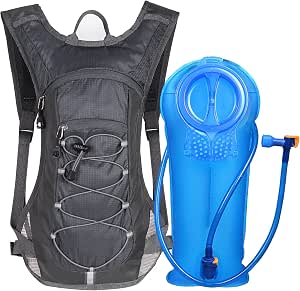


| lightweight hydration pack | Weight | Material | Dimensions |
|---|---|---|---|
| MARCHWAY Tactical Molle Hydrat | 2 pounds | 1000D water-repellent nylon | 8.7 in W x 19.7 in H |
| INOXTO Running Hydration Vest | 140 g | Polyester | 5.9 in W x 13.77 in H |
| Unigear Hydration Pack Backpac | 1.1 pounds | 100% nylon | — |
| Blue Quartz Hydration Backpack | 0.54 kg | Nylon | 9.5 in W x 15.7 in H |
| Lightweight Hydration Backpack | 8.5 oz | Nylon | 11.8 in W x 16.5 in H |
| KUYOU Running Hydration Vest | 1.1 pounds | Polyester | 15 in W × 6.7 in H |
| Maelstrom Hydration Backpack w | 1.1 pounds | — | — |
| Unigear Hydration Pack Backpac | 0.46 kg | 80% nylon, 20% polyurethane | 8 in W × 16.5 in H |
| N NEVO RHINO Hydration Backpac | 0.79 kg | Nylon | 3.9 in W × 18.1 in H |
| Lightweight 2-Pack Hydration B | — | — | — |
| Noola Hydration Backpack with | 1.8 pounds | 900D nylon | 11.81 in W x 18.11 in H |
| MIYCOO Hydration Backpack with | 0.67 kg | Polyester | — |
| 2 Pack Hydration Pack with 2L | 0.79 pounds | Nylon | — |
| ECOHUB Hydration Backpack with | 0.59 kg | Nylon | — |
| Teton Oasis Trailrunner Hydrat | 14.4 ounces | 600D honeycomb ripstop and 600D dobby ripstop | 10 in W x 3 in H (as listed) |
More Details on Our Top Picks
MARCHWAY Tactical Molle Hydration Pack Backpack with 3L TPU Water Bladder
The MARCHWAY is the pick for buyers who put rugged construction and 3 liters of water ahead of a low carry weight. Its 1000D water-repellent nylon and MOLLE webbing suit rough outings or trips where attaching extra gear matters; that setup is a clear contrast with the 140 g INOXTO running vest, which prioritizes a close, lightweight fit for faster movement. The tradeoff is substantial for a roundup focused on lightweight hydration packs: at 2 pounds before adding water, this is much heavier than the running-oriented options here. Its two pockets also leave less room for organizing small essentials than packs with more compartments. Choose it for durability and modular carrying, not for the lightest feel or casual everyday wear.
Pros:- Includes a 3-liter TPU bladder for longer stretches between refills.
- 1000D water-repellent nylon is suited to demanding outdoor use.
- MOLLE webbing allows compatible gear to be attached externally.
- Adjustable straps help secure the pack during active movement.
Cons:- At 2 pounds, it is the heaviest-feeling choice among these lightweight-focused options.
- Two pockets offer limited organization for snacks and small essentials.
- Tactical styling and attachment webbing can feel bulky for casual use.
Best for: Hikers and climbers who need a durable, modular pack and value a 3-liter bladder more than minimizing pack weight.
Not ideal for: Runners and cyclists seeking a barely-there carry, or casual users who want a compact pack without tactical webbing.
- Material:1000D water-repellent nylon
- Water bladder capacity:3 liters
- Weight:2 pounds
- Dimensions:8.7 in W x 19.7 in H
- Number of pockets:2
- Color:Black
- Features:Adjustable straps, MOLLE webbing, impact-resistant buckles
Our verdict“Choose the MARCHWAY if rugged materials, MOLLE attachment points, and a 3-liter bladder matter more to you than a low pack weight.”
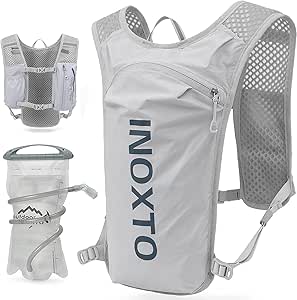
INOXTO Running Hydration Vest Backpack, Lightweight Insulated Pack with 1.5L Water Bladder for Hiking, Trail Running, Cycling, Race, Marathon for Women and Men
At a listed 140 g, the INOXTO is the clearest choice here for runners who want hydration with as little pack weight as possible. Its vest-style shape, breathable mesh, and adjustable straps are geared toward staying close to the body during hard efforts; compared with the 12-liter Lightweight Hydration Backpack, it gives up cargo capacity to keep the carry more streamlined. Four pockets provide space for small run essentials, but the 1.5-liter bladder is smaller than the 2-liter systems in the Unigear and Blue Quartz packs. That makes it better suited to shorter outings or routes with refill options than long days away from water. Buyers with very large torsos may also find the fit limiting.
Pros:- Listed weight of 140 g keeps the carry exceptionally light.
- Breathable mesh design supports airflow against the back.
- Four pockets give small items designated storage.
- Adjustable straps allow the fit to be tailored.
Cons:- The 1.5-liter bladder holds less than the 2-liter options from Unigear and Blue Quartz.
- Limited cargo capacity makes it a poor choice for carrying larger gear.
- May not fit very large torso sizes comfortably.
Best for: Trail runners and cyclists who prioritize minimal pack weight, a close-fitting vest design, and room for a few small essentials.
Not ideal for: Hikers heading out for long stretches without refill access, or buyers needing generous cargo space or a very broad torso fit.
- Weight:140 g
- Water bladder capacity:1.5 liters
- Material:Polyester
- Dimensions:5.9 in W x 13.77 in H
- Number of pockets:4
- Color:Light gray/dark blue
Our verdict“Pick the INOXTO for shorter, faster outings where minimal weight matters more than bladder capacity or substantial storage.”
Unigear Hydration Pack Backpack with 2L Water Bladder for Hiking & Cycling
The Unigear takes a middle course: its 2-liter BPA-free bladder provides more capacity than the INOXTO’s 1.5-liter reservoir, while its compact profile avoids the larger carrying space of the 12-liter Lightweight Hydration Backpack. At 1.1 pounds, it is not the lightest pick, but it offers a useful balance for hikes and rides where a little pack structure is welcome. Splash-resistant nylon and adjustable straps suit active outdoor use, and the included air-flow system is intended to help keep water cool. The main compromise is storage: the front pocket is small, and the compact design does not leave much room for bulkier gear. I would choose it for hydration-first outings rather than as a general-purpose daypack.
Pros:- 2-liter BPA-free bladder offers more capacity than the INOXTO’s 1.5-liter system.
- Compact profile suits hydration-focused hikes and rides.
- Splash-resistant nylon is practical for outdoor activity.
- Adjustable straps help tailor the fit.
Cons:- At 1.1 pounds, it is heavier than the 140 g INOXTO vest.
- Small front pocket limits storage for items that need quick access.
- Compact design is not suited to carrying larger gear.
Best for: Hikers and cyclists who want a compact carry with a 2-liter bladder and enough space for basic essentials.
Not ideal for: Day hikers carrying bulky layers or larger gear, and runners whose first priority is the lowest possible pack weight.
- Material:100% nylon
- Water capacity:2 liters
- Weight:1.1 pounds
- Pack dimensions:16.5 x 8 x 6.0 in
- Bladder:BPA-free, with screw cap
- Included:2-liter water bladder
Our verdict“Choose the Unigear for a compact hiking or cycling pack when a 2-liter bladder matters more than ultralight weight or extra cargo room.”
Blue Quartz Hydration Backpack with 2L Water Bladder – Hiking, Cycling, Running & Biking
The Blue Quartz is the storage-focused option in this group: its 10-liter capacity and eight pockets give riders and hikers more room to separate essentials than the compact Unigear, while its 2-liter insulated bladder serves the same basic water volume. A wide main opening makes packing less fiddly, and breathable mesh straps with an adjustable chest strap are meant to limit bounce and heat buildup during movement. The tradeoff is bulk. At 0.54 kg, it weighs more than the INOXTO vest, and a loaded 10-liter pack can feel like overkill on short runs. The insulation and organization make sense for longer outings with extra gear, but buyers seeking the least noticeable carry should choose a smaller, lighter design.
Pros:- Eight pockets make it easier to separate small essentials than in the Unigear.
- Insulated 2-liter bladder is designed to keep drinks cool longer.
- Wide main compartment opening makes loading gear easier.
- Breathable straps and adjustable chest strap support a more stable fit.
Cons:- At 0.54 kg, it is heavier than the 140 g INOXTO running vest.
- The 10-liter capacity can feel bulky when fully loaded.
- Helmet net may be too small for larger helmets.
Best for: Cyclists and hikers who want organized storage for snacks, a phone, and extra gear alongside a 2-liter bladder.
Not ideal for: Minimalist runners or short-outing users who do not need 10 liters of storage and want the lightest possible pack.
- Pack capacity:10 liters
- Water bladder capacity:2 liters
- Weight:0.54 kg
- Dimensions:9.5 in W x 15.7 in H
- Number of pockets:8
- Material:Nylon
- Straps:Adjustable, breathable
- Color:Black
Our verdict“Pick the Blue Quartz when organized gear space and an insulated 2-liter bladder outweigh the need for a very light, compact carry.”
Lightweight Hydration Backpack with 2L Water Bladder for Running and Hiking
This pack pairs a listed 8.5-ounce weight with 12 liters of storage, making it a stronger choice for carrying layers and trail essentials than the compact Unigear. Its 2-liter BPA-free bladder, four compartments, and breathable mesh back give it more day-trip utility than the INOXTO vest, though the vest is far lighter at 140 g and better suited to stripped-down runs. Waterproof, tear-resistant nylon is a useful match for changing outdoor conditions, but added cargo space only helps if the fit works for you: the pack may not sit comfortably on larger torsos. The hose also needs careful handling to reduce leak risk. I would choose it for lightweight hikes where storage matters, rather than for the most bounce-sensitive runs.
Pros:- Listed weight of 8.5 oz is low for a pack with 12 liters of storage.
- 2-liter BPA-free bladder provides more water capacity than the INOXTO.
- Four compartments help organize gear for longer outings.
- Waterproof, tear-resistant nylon and breathable mesh back suit outdoor use.
Cons:- May not fit larger torso sizes comfortably.
- Hose requires careful handling to reduce the risk of leaks.
- Its backpack format is less streamlined for fast running than the INOXTO vest.
Best for: Hikers and runners who want a low listed pack weight, a 2-liter bladder, and room for layers or extra trail items.
Not ideal for: Buyers with larger torsos, or runners seeking a close-fitting minimalist vest with the lightest possible carry.
- Weight:8.5 oz
- Pack capacity:12 liters
- Water bladder volume:2 liters
- Material:Nylon
- Dimensions:11.8 in W x 16.5 in H
- Number of pockets:4
- Color:Black
Our verdict“Choose this pack for a lightweight, storage-friendly carry on hikes, but favor the INOXTO for a more minimal running fit.”
KUYOU Running Hydration Vest – Lightweight Insulated Hydration Backpack with 2L Water Bladder, Adjustable Chest Straps, Reflective Strips, and Emergency Whistle
The KUYOU makes sense for runners who want a vest-style fit with visibility and emergency signaling built in. Its 2-liter bladder gives it the same water capacity as the Unigear Hydration Pack, while reflective strips and a whistle add practical safety features for dawn, dusk, or roadside routes. At 1.1 pounds, though, it is far heavier than the Unigear’s listed 0.46 kg? No—the Unigear is also about 1.01 pounds, so the weight difference is modest. The KUYOU’s listed single pocket is a clearer limitation: essentials may need careful packing, despite the description referring to multiple compartments. Adjustable straps help secure the load, but the fit may still feel snug. Choose it for safety touches; skip it if you need generous storage or a highly customizable fit.
Pros:- 2-liter BPA-free bladder supports longer stretches between refills.
- Reflective strips and an emergency whistle add useful safety features for low-light outings.
- Adjustable shoulder straps help keep the pack secure during movement.
- Listed weight of 1.1 pounds is manageable for a hydration vest.
Cons:- The listed single pocket limits room for gear despite the description mentioning multiple compartments.
- Some wearers may find the fit snug even with adjustable straps.
- Only black is listed.
Best for: Runners and cyclists who train in low light and want a 2-liter bladder plus reflective details and an emergency whistle.
Not ideal for: Runners who carry a phone, layers, and several small essentials, or buyers who need a roomy, reliably adjustable fit.
- Weight:1.1 pounds
- Capacity:2 liters
- Dimensions:15 in W × 6.7 in H
- Material:Polyester
- Pocket count:1 listed
- Straps:Adjustable shoulder straps
- Safety features:Reflective strips and emergency whistle
- Listed activities:Running, hiking, cycling, and jogging
Our verdict“Choose the KUYOU if visibility and an emergency whistle matter more than carrying much beyond water and a few essentials.”
Maelstrom Hydration Backpack with 2L Water Bladder – Lightweight Running Vest
The Maelstrom stands apart for buyers who need a hydration pack that can accommodate a broad range of chest sizes: its straps adjust from 22.4 to 61 inches. That range is more specific than the general adjustable-strap descriptions for the KUYOU and Unigear, making fit a stronger reason to pick it. A ventilated back panel is also useful on warm runs, while the insulated 2-liter bladder supports hands-free hydration. Helmet clips give it an extra use case for cyclists, though the pack is not the lightest choice here: at 1.1 pounds, it adds more load than the 0.37-pound-per-pack 2-Pack Hydration Backpack. The tradeoff is a more feature-rich setup rather than minimum carry weight. Pick it for fit flexibility and ventilation, not for ultralight outings.
Pros:- Chest straps adjust from 22.4 to 61 inches for a broad range of body sizes.
- Ventilated back panel helps limit heat and sweat buildup.
- Insulated, BPA-free 2-liter bladder supports hands-free hydration.
- Helmet clips and reflective strips add practical cycling and visibility features.
Cons:- At 1.1 pounds, it weighs substantially more than the 0.37-pound-per-pack 2-Pack Hydration Backpack.
- Its extra features may be unnecessary for runners seeking a simple, minimal setup.
Best for: Runners and cyclists who need a wide chest-strap adjustment range, a ventilated back panel, and helmet storage clips.
Not ideal for: Ultralight hikers or runners who prioritize the lowest possible pack weight over fit features and added hardware.
- Weight:1.1 pounds
- Capacity:2 liters
- Pack material:Nylon
- Bladder material:BPA-free PEVA
- Chest strap adjustment:22.4–61 inches
- Back panel:Ventilated
- Additional features:Helmet storage clips and reflective strips
- Warranty:1 year
Our verdict“Pick the Maelstrom if strap adjustability and ventilation are worth carrying more weight than the lightest packs in this group.”
Unigear Hydration Pack Backpack with 2L Water Bladder for Hiking & Cycling
At 0.46 kg, the Unigear is a straightforward choice for buyers who want a conventional hydration backpack without the bulk of a gear-carrying daypack. Its 2-liter bladder matches the KUYOU’s capacity, but the compact backpack format and splash-resistant nylon suit hikers and cyclists who want a simple water-and-essentials setup. The leakproof on/off lever can help prevent drips during storage or transport, while wear- and tear-resistant construction is useful when the pack gets regular outdoor use. The compromise is storage: the small front pocket is not suited to bulky layers or a full set of accessories. Unlike the 2-Pack Hydration Backpack, this is a single pack, but it is also heavier per listed unit. Choose it for a durable basic carry, not for maximum pocket space or minimum weight.
Pros:- Splash-resistant nylon and wear- and tear-resistant construction suit regular outdoor use.
- 2-liter bladder provides a practical capacity for day outings.
- Leakproof on/off lever helps reduce leaks when the pack is stored or carried.
- Adjustable straps support a range of users.
Cons:- The small front pocket offers limited room for gear.
- At 0.46 kg, it weighs more than the 0.37-pound-per-pack 2-Pack Hydration Backpack.
- Only black is listed.
Best for: Day hikers and cyclists who want one durable 2-liter pack for water and a few small essentials.
Not ideal for: Runners seeking the lowest pack weight, or hikers who need space for layers, food, and larger accessories.
- Weight:0.46 kg
- Capacity:2 liters
- Dimensions:8 in W × 16.5 in H
- Material:80% nylon, 20% polyurethane
- Included:Backpack and 2-liter bladder
- Pocket:Small front pocket
- Features:Splashproof, adjustable straps, leakproof on/off lever
- Color:Black
Our verdict“Choose the Unigear for a durable, simple hydration setup, but look elsewhere if storage space or the lightest carry is your priority.”
N NEVO RHINO Hydration Backpack, 18L Hiking Backpack with 3L Water Bladder
The N NEVO RHINO is the clear capacity pick here: it pairs a 3-liter bladder with an 18-liter pack, giving hikers room for both water and more trail gear than the compact Unigear or KUYOU. Its three pockets and ventilated mesh cushioning make that extra carrying space more practical, while the insulated bladder is described as keeping liquids cool for up to five hours. This is still listed at 0.79 kg, but the larger capacity means it is not a minimalist running option beside the 0.37-pound-per-pack 2-Pack Hydration Backpack. The extra volume can feel unnecessary on short runs, and the listed dimensions are narrow relative to the pack’s height. Choose it when a longer outing calls for spare gear and more water, not when every ounce matters.
Pros:- 3-liter bladder carries more water than the 2-liter options in this group.
- 18-liter capacity and three pockets provide room for trail gear beyond hydration.
- Insulated bladder compartment is designed to keep liquids cool for up to five hours.
- Ventilated mesh cushioning and reflective strips support comfort and visibility.
Cons:- At 0.79 kg, it is much heavier than the 0.37-pound-per-pack 2-Pack Hydration Backpack.
- Its 18-liter storage volume may be excessive for short runs or minimalist outings.
- Only green is listed.
Best for: Hikers and cyclists on longer day outings who need a 3-liter bladder plus space for clothing, food, and other gear.
Not ideal for: Trail runners and minimalist day hikers who want a small, low-weight pack for water and only a few essentials.
- Pack capacity:18 liters
- Water bladder volume:3 liters
- Weight:0.79 kg
- Dimensions:3.9 in W × 18.1 in H
- Material:Nylon
- Pocket count:3
- Features:Insulated bladder compartment, reflective strips, ventilated mesh cushioning
- Color:Green
Our verdict“Choose the N NEVO RHINO when longer hikes call for more water and gear, rather than a minimal running pack.”
Lightweight 2-Pack Hydration Backpack with 2L Water Bladder for Hiking
For the lowest listed weight, this set is the standout: each backpack weighs just 0.37 pounds (170 g), well below the KUYOU and Maelstrom at 1.1 pounds each. It also includes two complete packs and two 2-liter bladders, which makes it a practical choice for partners who want matching hydration setups without sharing gear. Three zippered pockets, adjustable shoulder and chest straps, and a breathable mesh back panel give each pack useful basics without adding much weight. The tradeoff is capacity: each bladder holds 2 liters, so the N NEVO RHINO is a better fit for longer hikes requiring more water and storage. Three pockets also do not make this a gear hauler; the overall design is aimed at essentials. Choose this set for light training and shared day trips.
Pros:- Each pack weighs only 0.37 pounds (170 g), the lowest listed weight in this group.
- Includes two backpacks and two 2-liter bladders for a pair of users.
- Three zippered pockets provide organized space for small essentials.
- Adjustable shoulder and chest straps pair with a breathable mesh back panel.
Cons:- Each bladder holds only 2 liters, less than the 3-liter N NEVO RHINO bladder.
- Pocket capacity is limited for bulky gear or longer hikes.
- A two-pack set may be unnecessary for solo buyers.
Best for: Two runners, cyclists, or hiking partners who want exceptionally light individual packs for short-to-moderate outings.
Not ideal for: Solo buyers who need a larger water reserve or hikers who carry bulky gear beyond the three small zippered pockets.
- Pack weight:0.37 lb (170 g) each
- Pack count:2 backpacks
- Bladder count:2
- Bladder capacity:2 liters each
- Pocket count:3 zippered pockets per pack
- Materials:Nylon and TPU
- Straps:Adjustable shoulder and chest straps
- Warranty:3-year manufacturer warranty
Our verdict“Choose this set for two people who want very light 2-liter packs, but skip it if you need more water or substantial gear storage.”
Noola Hydration Backpack with 3L Water Bladder, Tactical Pack for Hiking
The Noola suits hikers who want more water and gear organization in one pack. Its 3L bladder holds more than the 2L systems in the MIYCOO and ECOHUB, while nine pockets and MOLLE compatibility give small tools and trail extras dedicated places. That capacity comes with a weight tradeoff: at 1.8 pounds, it is heavier than the listed 0.67 kg MIYCOO and 0.59 kg ECOHUB. The abrasion-resistant 900D nylon and padded, breathable straps make it a more hard-wearing choice for rugged outings, but its tactical styling and storage setup are less suited to a simple run where low bulk matters most. I’d choose it for longer days that call for extra water and organized kit, not for minimalist carry.
Pros:- 3L BPA-free TPU bladder offers more listed water capacity than the 2L MIYCOO and ECOHUB.
- Nine pockets help keep small gear organized.
- 900D nylon is abrasion-resistant for rough outdoor use.
- Padded, breathable straps support a more comfortable fit over longer outings.
Cons:- At 1.8 pounds, it is the heaviest listed option in this batch.
- Tactical design and MOLLE compatibility add bulk that may be unnecessary for running or casual walks.
- Only black is listed.
Best for: Day hikers and campers who want a 3L water supply, durable fabric, and separate pockets for trail gear.
Not ideal for: Runners and weight-conscious hikers who want a streamlined pack or carry only a few essentials.
- Material:900D nylon
- Water bladder capacity:3 liters
- Bladder material:BPA-free TPU
- Weight:1.8 pounds
- Pockets:9
- Dimensions:11.81 in W x 18.11 in H
- Features:Waterproof, MOLLE compatible, breathable straps
- Listed color:Black
Our verdict“Choose the Noola if you value 3L capacity and rugged, organized storage more than the lightest possible carry.”
MIYCOO Hydration Backpack with 2L Water Bladder
The MIYCOO balances a useful 10L pack capacity with a 2L bladder, giving day hikers room for essentials without stepping up to the bulkier Noola and its 3L reservoir. Its standout is insulation, which is intended to keep water cold for hours—a practical perk on warm hikes or rides. At 0.67 kg, it is lighter than the Noola’s listed 1.8 pounds, though the ECOHUB is lighter still at 0.59 kg and also lists an insulated bladder. Five pockets and breathable mesh straps add everyday usefulness, but the 2L supply may fall short on longer outings, and the description notes no included bladder cover. I’d pick it over the Noola for a lighter, moderate-capacity day pack; I’d skip it if maximum water or minimum weight is the main goal.
Pros:- 10L pack capacity provides room for day-trip essentials.
- Insulated bladder is designed to keep water cold for hours.
- Five pockets separate smaller items from main gear.
- Breathable mesh shoulder straps help with airflow.
Cons:- Its 2L bladder offers less water capacity than the Noola’s 3L reservoir.
- At 0.67 kg, it weighs more than the listed 0.59 kg ECOHUB.
- No bladder cover is listed, and only black is specified.
Best for: Day hikers and cyclists who want moderate storage, a 2L reservoir, and insulated water for warm-weather outings.
Not ideal for: Long-distance users needing more than 2L of water, or ultralight buyers who would prefer the lighter listed ECOHUB.
- Pack capacity:10 liters
- Water bladder volume:2 liters
- Weight:0.67 kg
- Material:Polyester
- Pockets:5
- Insulation:Yes
- Straps:Adjustable mesh
- Listed color:Black
Our verdict“Pick the MIYCOO for a moderately sized day pack with insulation, but choose the Noola for more water or the ECOHUB for a lower listed weight.”
2 Pack Hydration Pack with 2L Backpack Water Bladder for Outdoor Sports
At a listed 0.79 pounds, this pack is the lightest option in the batch by the supplied weights, making it a compelling choice when carrying less matters more than having a large storage layout. The 2L bladder, adjustable straps, and three compartments cover basic needs for a run, ride, or short hike. Compared with the MIYCOO, it gives up insulation and two pockets; against the Noola, it trades 3L of water capacity and rugged 900D fabric for a much lighter listed load. Water-resistant nylon offers some protection for belongings, but the product data does not specify the total pack capacity or bladder-cleaning features. The title also describes a two-pack, while the supplied specs give no details on what is included beyond a backpack and bladder, so I’d check the package contents before buying.
Pros:- Listed weight of 0.79 pounds is lower than the other supplied weights in this batch.
- Adjustable straps allow a more adaptable fit.
- Three compartments provide basic separation for essentials.
- Water-resistant nylon helps protect belongings from light moisture.
Cons:- The 2L bladder may not provide enough water for longer or hotter outings.
- Three compartments offer less organization than the MIYCOO’s five pockets or Noola’s nine.
- Total pack capacity and specific bladder-cleaning features are not listed.
Best for: Weight-conscious runners and cyclists taking short outings with a few essentials and a 2L water supply.
Not ideal for: Hikers needing extra water, extensive organization, or confirmed storage capacity for longer trips.
- Water bladder volume:2 liters
- Weight:0.79 pounds
- Material:Nylon
- Compartments:3
- Straps:Adjustable
- Material feature:Water-resistant
- Listed color:Assorted
Our verdict“Choose this pack for short outings where low listed weight matters most, and look to the MIYCOO or Noola for more storage or water capacity.”
ECOHUB Hydration Backpack with 2L Water Bladder, Lightweight Running Pack
The ECOHUB is the lightest listed option here with an insulated bladder: its 0.59 kg weight undercuts the MIYCOO’s 0.67 kg while matching its 2L water volume and insulation. That makes it a good fit for runners and cyclists who want cold water without moving up to the heavier Noola or its larger 3L reservoir. A breathable mesh back panel and adjustable straps focus the design on comfortable carry, while multiple pockets leave room for essentials. The tradeoff is limited detail: the number of pockets, pack capacity, and bladder material are not specified. Compared with the 0.79-pound two-compartment pack, it offers insulation and a described mesh back panel, but its listed weight uses kilograms, so I would avoid treating the figures as a precise apples-to-apples ranking without confirming units and product configuration.
Pros:- Listed weight of 0.59 kg is lower than the MIYCOO’s 0.67 kg.
- Insulated 2L bladder is intended to keep drinks cold longer.
- Breathable mesh back panel supports airflow against the back.
- Adjustable straps and multiple pockets serve active day use.
Cons:- The 2L bladder holds less than the Noola’s 3L reservoir.
- Pack capacity and exact pocket count are not specified.
- Only black is mentioned, and reflective details are not listed.
Best for: Runners and cyclists seeking a relatively light, insulated 2L pack with a breathable back panel for everyday outings.
Not ideal for: Buyers who need a stated pack capacity, detailed pocket count, more than 2L of water, or specified reflective features.
- Weight:0.59 kg
- Water bladder volume:2 liters
- Material:Nylon
- Insulation:Yes
- Back panel:Breathable mesh
- Straps:Adjustable
- Storage:Multiple pockets; count not specified
- Listed color:Black
Our verdict“Choose the ECOHUB for an insulated 2L setup with a lower listed weight than the MIYCOO, provided its unspecified storage details suit your needs.”
Teton Oasis Trailrunner Hydration Backpack – Lightweight Water Pack with 2L/3L Bladder for Hiking, Running, Cycling, Biking 18L/22L Sizes – Sewn-in Rain Cover – Fits Men and Women
The TETON Oasis Trailrunner takes a different approach from the smaller 2L packs: its listed 18L/22L storage gives hikers room for extra layers and supplies, and the sewn-in rain cover adds weather protection the MIYCOO and ECOHUB descriptions do not list. It also offers a choice of 2L or 3L bladder, letting buyers match water capacity to the outing. At 14.4 ounces, its listed weight is low for a pack with this much storage, though the supplied 10 in W x 3 in H dimensions look incomplete and should not be used to judge fit or packed volume. Compared with the Noola, it pairs a 3L option with more stated pack capacity and a rain cover; the Noola instead lists more pockets and 900D nylon. This is the more versatile choice, not the simplest minimalist one.
Pros:- 18L/22L pack capacity accommodates more gear than the smaller day packs in this batch.
- Choice of 2L or 3L bladder suits different outing lengths.
- Sewn-in rain cover adds stated weather protection.
- Six pockets and adjustable straps support organized, adaptable carry.
Cons:- The larger storage capacity may be more pack than short runs require.
- The supplied dimensions of 10 in W x 3 in H appear incomplete, making fit and pack shape hard to judge.
- Only black is listed.
Best for: Hikers and cyclists who need substantial day-pack storage, a choice of bladder size, and a rain cover for variable conditions.
Not ideal for: Minimalist runners who want a small, simple hydration pack and do not need 18L/22L storage or a rain cover.
- Pack capacity:18L/22L
- Hydration bladder volume:2L or 3L
- Weight:14.4 ounces
- Dimensions:10 in W x 3 in H (as listed)
- Pockets:6
- Material:600D honeycomb ripstop and 600D dobby ripstop
- Rain cover:Sewn-in
- Model number:2100SCOX
- Listed color:Black
Our verdict“Choose the TETON if you want more day-hike storage and a sewn-in rain cover; pick a smaller 2L pack for short outings with minimal gear.”

How We Picked
I compared the 15 listed packs by the factors that shape lightweight carry: intended activity, reservoir capacity, pack style, and usable storage. I also looked at fit-related features, listed safety details, weather protection, and whether a design appears better suited to short runs, day hikes, or cycling. Product titles do not provide verified pack weights or enough detail to confirm fit across body types, so I avoid treating the word “lightweight” as a measured result.
The order prioritizes versatility and decision clarity rather than bladder size alone. The Teton Oasis ranks first for its stated size choices and sewn-in rain cover; more specialized vests follow for buyers who value a running-oriented carry. Simpler packs remain useful for hiking and cycling, while multi-packs and tactical or larger-capacity designs rank lower for shoppers seeking one easy-to-match lightweight option. I treat repeated or similar listings cautiously and recommend checking the exact configuration before buying.
Factors to Consider When Choosing Lightweight Hydration Packs
Before choosing a pack, I’d match its carry style to the movement and distance you expect, then check the details that product titles often leave unclear. These factors can help prevent the common mismatch of carrying a bulky pack for a short run or taking too little water on a long, exposed route.
Match the pack shape to your activity
A vest-style pack usually suits running because it holds closer to the torso and can limit bounce when adjusted well. A more traditional backpack shape may feel easier to load for hiking or cycling, especially when you want room for layers and snacks. Do not assume every product described as a vest has the same pocket layout or adjustment range. Check how the chest straps sit and whether the pack is designed to carry weight high or low on your back. If you switch between sports, favor a fit you can secure comfortably at both a walking and running pace. A versatile pack can save you from owning two, but it may not feel as specialized as a dedicated running vest.
Choose reservoir capacity for the route, not the headline
The listed bladders span 1.5L, 2L, and 3L, but more capacity means more water weight against your back when filled. A smaller reservoir may be enough for a short run with refill access, while longer or remote outings can call for more water or a separate bottle. Plan around route length, temperature, refill points, and your own hydration needs rather than choosing the largest number by default. Check whether the reservoir is included in the specific version you are buying and whether its shape fits the sleeve. A capacity that looks generous on paper can also crowd out other gear in a compact pack. Leave a margin for food, clothing, and safety items when deciding how much volume you need.
Treat fit and bounce control as key weight features
A low listed pack weight cannot compensate for straps that rub or a load that shifts with every step. Look for adjustable chest straps and enough adjustment range to hold the pack securely without restricting breathing. Fit can change with clothing layers, so consider whether you will wear it over a light running shirt or a thicker jacket. When possible, check the manufacturer’s sizing guidance and return terms before committing. A pack with several adjustment points may take longer to set up, but a stable fit can feel better over distance than a simpler design. Do not pack every pocket full on the first outing; test the fit with the load you expect to carry.
Separate water capacity from gear storage
Reservoir volume and backpack storage are different measures: a 3L bladder does not tell you how much room remains for clothing, food, or a phone. For a short run, extra compartments may add bulk without helping much. A day hike often benefits from space for a shell and basic supplies, while a cycling route may call for secure access to small essentials. Check whether the listing specifies usable pack volume, pocket placement, and how gear is separated from the bladder. Avoid relying on broad labels such as “hiking pack” when the product details do not describe storage clearly. When storage information is limited, choose based on the essentials you can confirm will fit.
Account for cleaning and refill routines
A hydration system is only convenient if you can refill and clean it without a struggle. Before buying, check how the reservoir opens, whether the hose can be detached, and whether replacement components are available. Rinse and dry the bladder after use, since leaving moisture inside can lead to odors or buildup. A wide opening can make drying easier, while a simple hose connection can make packing and cleaning less fiddly. Do not assume all included bladders use the same fittings or care instructions. If you expect frequent use, easy maintenance may matter more over time than an extra pocket.
Pay extra for features you will actually use
Features such as a rain cover, reflective details, or an emergency whistle are useful only when they fit your routes and habits. A sewn-in rain cover can be handy for hikes in changeable weather, but it adds little value on short outings in dry conditions. Reflective strips and a whistle may suit runners who travel near roads or ride in low light, though they do not replace lights or other safety equipment. Multi-pack listings can make sense for shared use, but confirm how many packs and bladders are included rather than assuming the title tells the whole story. Compare the full feature set with your normal load, not a hypothetical trip. Paying for a more specialized pack makes the most sense when its added features solve a recurring need.
Frequently Asked Questions
Is a 1.5L reservoir enough for a long run?
It can be enough on a route with reliable refill access and conditions that match your hydration needs, but the number alone cannot answer that safely. Consider distance, heat, effort, and how much water you usually drink rather than copying another runner’s plan. The INOXTO’s listed 1.5L capacity makes it a more compact option than the 2L and 3L packs here. For remote routes, you may prefer a larger reservoir or a way to carry extra water. Plan your route and refill points before deciding.
Should I choose a running vest or a small backpack for mixed hiking and running?
Choose based on which activity sets the stricter fit requirement. A vest-style design is more likely to suit running when bounce control and quick access matter, while a small backpack can be easier to load for hikes with extra layers. For a true mix, check that the pack stays secure at a jog and has enough storage for your hiking essentials. Product labels alone do not confirm comfort or fit, so sizing details and a practical return policy are useful. If most outings are hikes with only occasional running, a roomier pack may be the more practical compromise.
Does a 3L bladder make a hydration pack too heavy?
It can add substantial carried weight when full, since the water is part of the load even if the pack itself is light. A 3L reservoir can reduce refill concerns on longer outings, but may be unnecessary for short runs or routes with water access. The MARCHWAY, Noola, and N NEVO RHINO listings pair their packs with 3L bladders, while several others list 2L. Think about how much water you will actually carry for a typical trip, not just the maximum capacity. An unfilled or partly filled reservoir may be an option, though its fit and stability can vary by design.
What should I verify when two listings have the same or similar product name?
Compare the exact model, size, included bladder, color or configuration, and quantity shown on the purchase page. This roundup includes two Unigear entries with the same stated name, along with separate two-pack listings, so similar wording does not prove the contents match. Check whether the listing includes one pack or multiple packs and whether the reservoir capacity applies to each one. Also confirm dimensions and return terms if the detail page leaves fit unclear. When the configuration is ambiguous, do not rely on the headline alone.
Is a rain cover or reflective detailing worth choosing over a lighter, simpler pack?
That depends on your routes. A rain cover can protect carried gear during wet hikes, while reflective details can add visibility for outings near traffic or in low light. The Teton Oasis lists a sewn-in rain cover, and KUYOU lists reflective strips and an emergency whistle, so these features address different situations. Neither feature replaces suitable clothing, lights, or route planning. If you mostly run short distances in daylight, a simpler pack may be easier to justify; if the feature solves a regular problem, the added design detail may be worthwhile.
Conclusion
For the best overall, I’d choose the Teton Oasis Trailrunner for its stated 18L and 22L options and sewn-in rain cover, especially for hikers who want room beyond the bladder. The best value-style choice is the Unigear 2L pack for buyers who want a straightforward option for hiking and cycling; check the exact listing configuration, since a second similar Unigear entry appears in this roundup. For a premium-style, feature-led pick, I’d look at the Teton Oasis when its weather protection and larger storage suit your routes, while recognizing that the listing does not establish measured pack weight. Beginners may prefer a simple 2L design such as the Blue Quartz or MIYCOO, after checking fit and included components. For focused running, compare the INOXTO’s 1.5L setup with the KUYOU or Maelstrom; for a 3L bladder, consider MARCHWAY, Noola, or N NEVO RHINO, and for shared use, verify the contents of the two-pack listings before ordering.