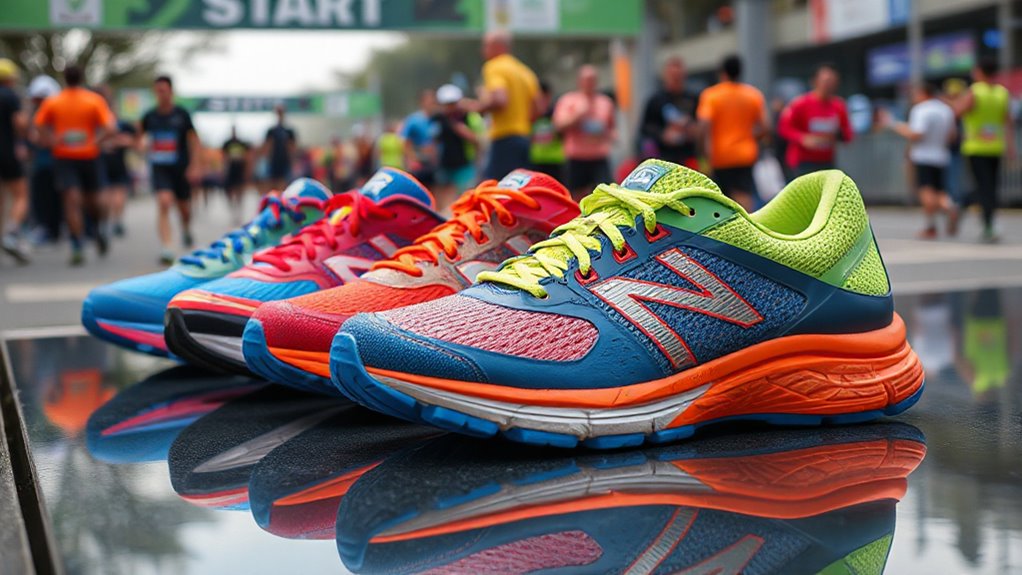

Finding a marathon racing shoe for wide feet that balances speed with comfort is a delicate challenge. The New Balance FuelCell Supercomp Elite V4 stands out as the top choice due to its generous forefoot geometry and stable propulsion plate, offering elite performance without the usual pinch. For those seeking a more accessible entry point, the New Balance FuelCell Rebel V5 provides a softer, wider platform suitable for long training blocks, while the Brooks Hyperion Max 3 offers a neutral alternative with ample toe-box room. The main tradeoff in this category is often between weight savings and structural support; narrower, ultra-light plates may cause discomfort for wider feet over 26.2 miles. Read on to see which of these fourteen models offers the best combination of speed, stability, and width for your specific foot shape.

Get workout gear delivered free with Prime
- Fast, free delivery on millions of items
- Prime Video, Amazon Music and more included
- Member-only deals all year
Complete the kit


Key Takeaways
- New Balance dominates this category because their ‘Fresh Foam X’ and ‘FuelCell’ midsoles naturally accommodate wider foot volumes better than many competitors.
- Carbon-plated shoes often exacerbate width issues; the top picks here feature wider bases or softer uppers to mitigate the stiffness of the plate.
- The Saucony Endorphin Shift 3 is the only pick that prioritizes stability over pure speed, making it ideal for wide-footed runners who overpronate.
- Budget-friendly generic carbon plate shoes often lack the structural integrity to support wider feet over marathon distances, leading to faster midsole breakdown.
- Upper material flexibility matters more than shoe size; a rigid mesh upper can cause blisters on wide feet even if the sole is wide enough.
| New Balance Men’s FuelCell Supercomp Trainer V3 |  | Best for Plate-Assisted Marathon Training | Upper: Mesh | Midsole: FuelCell foam with bio-based content | Plate design: Energy Arc with carbon-fiber plate | VIEW ON AMAZON | See Our Full Breakdown |
| Unisex Carbon Plate Running Shoes |  | Best Budget-Spec Alternative | Fit: Unisex; described as true to size | Upper: Mesh | Sole material: Rubber | VIEW ON AMAZON | See Our Full Breakdown |
| Topo Athletic Women’s Phantom 4 Lightweight Comfortable 5MM Drop Road Running Shoes |  | Best for Cushioned, Unplated Miles | Intended model: Women’s road running shoe | Stack height: 35 x 30 mm | Drop: 5 mm, as stated in product title | VIEW ON AMAZON | See Our Full Breakdown |
| Carbon Plate Marathon Running Shoes Men Support Shock-Relief Ultra-Light TPU Outsole Sneakers |  | Best for Multi-Activity Use | Intended model: Men’s | Upper: Multi-color flying-woven tatting material | Midsole: Nylon carbon plate cushioning with light-rebound technology | VIEW ON AMAZON | See Our Full Breakdown |
| Men’s Carbon Plate Running Shoes with Mesh Upper and TPU Outsole |  | Best for Heel Stability | Intended model: Men’s | Upper: Mesh | Inner material: Mesh | VIEW ON AMAZON | See Our Full Breakdown |
| New Balance Women’s FuelCell Supercomp Elitev5 |  | Best Race-Day Pick | Midsole: PEBA FuelCell | Plate: Carbon fiber | Upper: FantomFit mesh | VIEW ON AMAZON | See Our Full Breakdown |
| Nike Men’s Run Swift 3 Road Running Shoes |  | Best for Everyday Training | Intended use: Road running and daily training | Construction: Lightweight | Materials: Breathable materials | VIEW ON AMAZON | See Our Full Breakdown |
| ONEMIX Light Armor 21601 Men’s Carbon Plate Road Running Shoes |  | Best Explicit Wide-Fit Option | Upper: Engineered mesh | Midsole: Vacuum-foamed cushioning | Plate: Carbon fiber | VIEW ON AMAZON | See Our Full Breakdown |
| Carbon Plate Road Running Shoes for Men and Women |  | Best Dual-Plate Concept | Plate: Dual full-length carbon plates | Midsole: TPEE | Upper: Nylon yarn mesh | VIEW ON AMAZON | See Our Full Breakdown |
| Brooks Men’s Hyperion Max 3 Neutral Running Shoe |  | Best for Neutral Runners Wanting Cushion | Cushioning: DNA GOLD | Transition design: RapidRoll Rocker | Plate: Speed-vault plate | VIEW ON AMAZON | See Our Full Breakdown |
| New Balance Men’s FuelCell Supercomp Elite V4 Running Shoes |  | Best Race-Day Pick | Sole material: Rubber | Outer material: Mesh | Inner material: Mesh | VIEW ON AMAZON | See Our Full Breakdown |
| Saucony Men’s Endorphin Shift 3 Running Shoes |  | Best for Steady Long Runs | Origin: Imported | Sole material: Rubber | Outer material: Mesh | VIEW ON AMAZON | See Our Full Breakdown |
| Saucony Men’s Endorphin Speed 5 Sneaker |  | Best for Bouncy Daily Training | Origin: Imported | Sole material: Rubber | Outsole: XT-900 rubber | VIEW ON AMAZON | See Our Full Breakdown |
| New Balance Men’s FuelCell Rebel V5 |  | Best Lightweight Training Alternative | Origin: Imported | Sole material: Rubber | Outer material: Mesh | VIEW ON AMAZON | See Our Full Breakdown |
| marathon racing shoes for wide feet | Sole material | Upper | Midsole | Origin |
|---|---|---|---|---|
| New Balance Men’s FuelCell Sup | Rubber | Mesh | FuelCell foam with bio-based content | Imported |
| Unisex Carbon Plate Running Sh | Rubber | Mesh | — | Imported |
| Topo Athletic Women’s Phantom | — | Polyester | ZipFoam | — |
| Carbon Plate Marathon Running | Rubber | Multi-color flying-woven tatting material | Nylon carbon plate cushioning with light-rebound technology | — |
| Men’s Carbon Plate Running Sho | Thermoplastic polyurethane (TPU) | Mesh | EVA with nylon carbon plate | — |
| New Balance Women’s FuelCell S | — | FantomFit mesh | PEBA FuelCell | Imported |
| Nike Men’s Run Swift 3 Road Ru | — | — | — | — |
| ONEMIX Light Armor 21601 Men’s | Rubber | Engineered mesh | Vacuum-foamed cushioning | — |
| Carbon Plate Road Running Shoe | Chemically polymeric urethane | Nylon yarn mesh | TPEE | Imported |
| Brooks Men’s Hyperion Max 3 Ne | Rubber | — | — | Imported |
| New Balance Men’s FuelCell Sup | Rubber | — | — | — |
| Saucony Men’s Endorphin Shift | Rubber | — | — | Imported |
| Saucony Men’s Endorphin Speed | Rubber | — | — | Imported |
| New Balance Men’s FuelCell Reb | Rubber | FantomFit bonded upper | Enhanced geometric design | Imported |
More Details on Our Top Picks
New Balance Men’s FuelCell Supercomp Trainer V3
Among these five options, I’d put the FuelCell Supercomp Trainer V3 first for runners who want a plated shoe for marathon training rather than a shoe presented as a race-day specialist. Its FuelCell foam and carbon-fiber plate are intended to add propulsion, while the breathable mesh upper and rubber outsole address comfort and grip over repeated road miles. The approximate 4 mm drop may suit runners who prefer a lower heel-to-toe difference, though the listing does not provide width measurements or a wide-width fit claim. Compared with the Topo Phantom 4, this New Balance is the more plate-focused, propulsive choice; the Topo instead emphasizes cushioning without a plate. The tradeoff is a potentially stiff ride, and its angular design may feel specialized rather than versatile off the run.
Pros:- FuelCell foam and a carbon-fiber plate are designed to provide a propulsive feel for long training runs.
- Breathable mesh upper supports airflow during extended sessions.
- Rubber sole is intended to provide traction across varied running surfaces.
- Midsole foam includes bio-based content.
Cons:- The carbon-fiber plate may make the ride feel stiff to runners who prefer flexibility.
- No specific wide-width option or width measurement is provided.
- The approximately 4 mm drop is identified as approximate, so it is not a precise fit reference.
Best for: Marathon trainees who want a carbon-plated, propulsive shoe and already know that the available fit works for their foot width.
Not ideal for: Runners who need a confirmed wide size, prefer a flexible ride, or want a comfortable everyday shoe for non-running use.
- Upper:Mesh
- Midsole:FuelCell foam with bio-based content
- Plate design:Energy Arc with carbon-fiber plate
- Sole material:Rubber
- Closure:Lace-up
- Drop:Approximately 4 mm
- Origin:Imported
Our verdict“Choose this New Balance for plate-assisted marathon training if its unconfirmed width works for you and you can accept a firmer, more specialized ride.”
Unisex Carbon Plate Running Shoes
This unisex model is the lineup’s straightforward carbon-plate option: the description pairs responsive cushioning with a breathable mesh upper and anti-slip rubber outsole, without naming a proprietary foam platform or detailed plate geometry. That makes its feature set less specific than the New Balance FuelCell Supercomp Trainer V3, whose Energy Arc design and FuelCell foam give buyers more detail about the construction. The listed claim of over 70% cushioning rebound may appeal to runners looking for a lively feel, but the figure does not explain how it was measured or predict marathon comfort. The unisex, true-to-size description also leaves a major question unanswered for this roundup: there is no stated wide fit or width range. I’d treat it as a feature-led possibility, not a width-safe pick, and skip it if fit certainty matters more than a carbon plate.
Pros:- Carbon plate is intended to support propulsion and energy transfer.
- Breathable mesh upper is designed to help manage moisture.
- Anti-slip rubber outsole offers traction on varied surfaces.
- The description positions it for road runs, speed workouts, and training.
Cons:- No wide-width sizing or specific width measurements are provided.
- The over-70% rebound claim lacks measurement context.
- No waterproof rating or detailed cushioning specifications are listed.
Best for: Runners seeking a basic carbon-plated road shoe for speed sessions and training who can confirm the unisex fit works for their foot shape.
Not ideal for: Wide-footed marathoners who need a documented wide size, detailed fit guidance, or clear evidence of long-distance comfort.
- Fit:Unisex; described as true to size
- Upper:Mesh
- Sole material:Rubber
- Inner material:Rubber
- Outsole:Anti-slip RB rubber
- Cushioning rebound:Claimed over 70%
- Origin:Imported
Our verdict“Consider this model for plated workouts if the unisex fit checks out, but choose a better-documented option if wide-fit confidence is your priority.”
Topo Athletic Women’s Phantom 4 Lightweight Comfortable 5MM Drop Road Running Shoes
The Topo Athletic Phantom 4 earns its place as the comfort-led alternative for runners who value cushioning over a carbon-plate sensation. Its 35 x 30 mm stack, ZipFoam midsole, and plush OrthoLite insole are aimed at a smooth, protective ride for long runs; unlike the New Balance FuelCell Supercomp Trainer V3, it does not rely on a carbon plate for propulsion. That distinction matters to wide-footed buyers because this roundup’s product data does not confirm a wide size for either shoe, so neither should be treated as a guaranteed fit. The Phantom 4’s listed 5 mm drop may appeal to runners seeking a moderate offset, while its cushioning can feel excessive to people who prefer ground feedback or a firmer platform. It is also a women’s model, narrowing its intended audience.
Pros:- 35 x 30 mm stack and ZipFoam midsole are designed for cushioned long-distance running.
- Plush OrthoLite insole adds another layer of comfort.
- Rubber outsole supports durability on road runs.
- Unplated construction offers a different, less plate-focused option than the New Balance Supercomp Trainer V3.
Cons:- High cushioning may not suit runners who prefer a minimal or ground-connected ride.
- No specific wide-width fit or width measurement is provided.
- Women’s model may not suit buyers seeking a men’s or unisex fit.
Best for: Women marathoners who prefer a cushioned, unplated road shoe for long training runs and do not need a confirmed wide-size listing.
Not ideal for: Runners seeking a carbon-plated race feel, minimal cushioning, or a documented wide fit; the listed model is also specifically for women.
- Intended model:Women’s road running shoe
- Stack height:35 x 30 mm
- Drop:5 mm, as stated in product title
- Midsole:ZipFoam
- Insole:OrthoLite
- Outsole:Rubber
- Outsole thickness:3 mm heel; 2.5 mm forefoot
- Upper:Polyester
- Closure:Lace-up
Our verdict“Pick the Phantom 4 if cushioned, unplated long runs matter more to you than carbon-plate propulsion, and verify the fit before relying on it for wide feet.”
Carbon Plate Marathon Running Shoes Men Support Shock-Relief Ultra-Light TPU Outsole Sneakers
This men’s model is the most activity-flexible pick here: its description positions it for running, walking, and hiking, alongside a carbon-plate midsole and anti-skid rubber outsole. That broader use case distinguishes it from the New Balance FuelCell Supercomp Trainer V3, which has a more clearly marathon-training-oriented description and specifies its FuelCell foam and Energy Arc plate. The upper is described as breathable and quick-drying, but the shoe is explicitly not water resistant, which limits its appeal for wet-weather routes. For wide-footed buyers, the data offers no width option or fit measurement, so the stability language should not be mistaken for evidence of a roomy forefoot. A possible break-in period is another concern for marathon use: I would not make it a race-day choice without confirming comfort well before the event.
Pros:- Carbon-plate midsole with light-rebound cushioning is designed to add energy return.
- Breathable woven upper is described as quick-drying.
- Anti-skid rubber outsole is intended to provide traction and durability.
- The stated use range includes running, walking, and hiking.
Cons:- No wide-width sizing or forefoot measurement is provided.
- Not water resistant, limiting suitability for wet conditions.
- The listing warns that the shoe may require a break-in period.
Best for: Men seeking one plated shoe for road running and lower-intensity walking or hiking, provided the fit is comfortable and the route is dry.
Not ideal for: Wide-footed marathoners who need confirmed width sizing, runners who train in wet conditions, or anyone unwilling to allow time for a possible break-in period.
- Intended model:Men’s
- Upper:Multi-color flying-woven tatting material
- Midsole:Nylon carbon plate cushioning with light-rebound technology
- Outsole:Anti-skid rubber
- Sole material:Rubber
- Closure:Lace-up
- Water resistance:Not water resistant
- Stated activities:Running, walking, and hiking
Our verdict“Choose this for dry-weather, multi-activity use if its fit works, but look elsewhere for verified wide sizing or dependable wet-weather training.”
Men’s Carbon Plate Running Shoes with Mesh Upper and TPU Outsole
Of these five, this model gives the clearest specific stability feature for runners who want a more supported heel: the listing calls out a widened heel paired with a non-slip TPU outsole. That does not establish a wide forefoot fit, though, and the lack of sizing or width details is a real limitation for the target reader. Its EVA midsole with a nylon carbon plate is designed for cushioning and rebound, while the New Balance FuelCell Supercomp Trainer V3 offers a more detailed plate system and named foam. The stated rebound of up to 70% is not enough on its own to predict marathon performance. I’d view this as a stability-oriented option for mixed workouts rather than a proven racing shoe: the outsole description highlights hard courts, leaving road traction less clearly established.
Pros:- Widened heel is intended to support stability.
- EVA midsole with nylon carbon plate is designed for cushioning and rebound.
- Breathable mesh upper is used on both the outer and inner portions.
- TPU outsole is described as non-slip.
Cons:- No fit or sizing details confirm suitability for wide feet.
- Outsole traction is described for hard courts, with road performance unclear.
- The up-to-70% rebound claim is not accompanied by measurement details.
Best for: Men who want a widened heel and plated cushioning for gym sessions, walking, or running on surfaces where the TPU outsole is suitable.
Not ideal for: Wide-footed marathoners who need a confirmed roomy forefoot, precise sizing guidance, or clearly documented road-race traction.
- Intended model:Men’s
- Upper:Mesh
- Inner material:Mesh
- Midsole:EVA with nylon carbon plate
- Sole material:Thermoplastic polyurethane (TPU)
- Outsole:Non-slip TPU
- Energy rebound:Claimed up to 70%
- Closure:Lace-up
Our verdict“Choose this for its widened-heel emphasis and general training versatility, not as a confirmed wide-fit marathon racer without checking fit and road grip.”
New Balance Women’s FuelCell Supercomp Elitev5
For a wide-footed runner who wants a dedicated marathon racer, the FuelCell Supercomp Elite v5 brings a PEBA foam midsole and carbon plate together in a lightweight, race-focused design. The FantomFit mesh upper aims to hold the foot securely without adding much bulk, but the supplied details do not confirm a wide size or roomy forefoot; I would check the available fit options before choosing it. Compared with the more training-oriented Brooks Hyperion Max 3, this New Balance is framed more narrowly around race-day speed, not repeated daily mileage. That focus carries tradeoffs: its racing build may wear faster than a trainer, and its cushioning is described as more limited than training shoes. It suits a runner prioritizing propulsion over versatility, but it is not the safest pick for anyone who needs verified extra width.
Pros:- PEBA FuelCell midsole is designed for responsive energy return.
- Carbon fiber plate supports a race-focused, propulsive feel.
- Lightweight FantomFit upper aims to secure the foot without much bulk.
Cons:- The supplied product details do not confirm a wide fit or wide sizing.
- Race-focused construction may be less durable for frequent training.
- Cushioning is described as limited compared with training shoes.
Best for: Competitive women runners seeking a lightweight carbon-plated marathon shoe who can confirm that the available fit accommodates their forefoot.
Not ideal for: Runners who need a reliably wide toe box, want one durable shoe for daily training, or prefer generous training-shoe cushioning.
- Midsole:PEBA FuelCell
- Plate:Carbon fiber
- Upper:FantomFit mesh
- Outsole:Rubber
- Closure:Lace-up
- Origin:Imported
Our verdict“Choose this for race-day responsiveness if its fit works for your foot, but skip it if you need confirmed wide sizing or a durable daily trainer.”
Nike Men’s Run Swift 3 Road Running Shoes
The Nike Run Swift 3 is the everyday-training option here, rather than a dedicated marathon racer: its description highlights breathable, lightweight construction and support, but does not mention a carbon plate or race-specific propulsion. That makes it a more straightforward choice for routine road miles than the plated ONEMIX Light Armor 21601, whose stiff forefoot may feel less natural to runners wanting a flexible stride. For wide-footed buyers, however, the main concern is explicit: this model may run narrow, and no width options or sizing details are supplied. A supportive fit is not the same as a roomy fit. I would treat it as a possible training shoe only if trying it confirms enough forefoot space; marathoners seeking a proven wide race fit should look elsewhere in this lineup.
Pros:- Lightweight construction suits regular road running.
- Breathable materials help with airflow during runs.
- Supportive design is intended for running use.
- Durable construction is described for repeated wear.
Cons:- The product may run narrow, a significant concern for wide feet.
- No width options, cushioning details, or technical specifications are supplied.
- No race plate or other marathon-specific speed feature is listed.
Best for: Runners seeking a lightweight, breathable road shoe for regular training who can try it on and confirm that the fit is not too narrow.
Not ideal for: Wide-footed marathon racers who need confirmed wide sizing, a roomy toe box, or a carbon-plated race-day design.
- Intended use:Road running and daily training
- Construction:Lightweight
- Materials:Breathable materials
- Fit note:May run narrow
Our verdict“Consider it as a daily road trainer only if the fit proves roomy enough; wide-footed racers needing a confirmed fit should pass.”
ONEMIX Light Armor 21601 Men’s Carbon Plate Road Running Shoes
Among these five, the ONEMIX Light Armor 21601 is the clearest match for the wide-feet brief: its product details explicitly list a wide design with arch support, rather than leaving width to guesswork. A carbon plate, rocker shape, and vacuum-foamed cushioning add a race-oriented feel, while the engineered mesh upper is intended to breathe and hold the foot. Compared with the New Balance FuelCell Supercomp Elite v5, ONEMIX provides stronger stated evidence of a wide fit, though the New Balance specifies PEBA foam. The tradeoff is a stiff forefoot, which may not suit runners who want the shoe to flex naturally, and it is not water resistant. Its listed fit features make it a more targeted wide-foot candidate, but the product details offer no weight or drop information to help fine-tune a marathon shoe choice.
Pros:- Wide design and arch support are explicitly listed.
- Carbon plate and rocker shape are intended to support forward momentum.
- Vacuum-foamed cushioning pairs responsiveness with underfoot cushioning.
- Textured rubber outsole is designed for traction and abrasion resistance.
Cons:- Stiff forefoot may feel restrictive to runners who prefer more flex.
- Not water resistant.
- No weight or heel-to-toe drop information is supplied.
Best for: Men with wide feet who want a carbon-plated road shoe and value an explicitly stated wide design with arch support.
Not ideal for: Runners who prefer a flexible forefoot, need water resistance, or want published weight and drop details before selecting a marathon racer.
- Upper:Engineered mesh
- Midsole:Vacuum-foamed cushioning
- Plate:Carbon fiber
- Outsole:Textured, high-abrasion elastic rubber
- Fit features:Wide design with arch support
- Closure:Lace-up
- Water resistance:Not water resistant
- Sole material:Rubber
Our verdict“This is the most directly supported choice for a wide-footed runner seeking a plated racer, provided a stiff forefoot suits your stride.”
Carbon Plate Road Running Shoes for Men and Women
This unisex road shoe stands apart with dual full-length carbon plates and a TPEE midsole, a more unusual setup than the single carbon plate listed for the ONEMIX Light Armor 21601. The product description connects the plates with responsive transitions and the foam with cushioning and energy return, making the design relevant to runners seeking a firm, propulsion-focused ride on pavement. Its 9.5 oz weight gives a useful reference point, but the wide-feet case is uncertain: no width or sizing details are provided, and an adaptive mesh upper does not establish a roomy forefoot. The road-focused outsole also limits its appeal for routes beyond pavement. I would rank it below ONEMIX for wide-footed shoppers because ONEMIX explicitly lists a wide design, while this model asks buyers to verify fit without that reassurance.
Pros:- Dual full-length carbon plates are designed to support responsive transitions.
- TPEE midsole combines cushioning with energy return.
- Breathable nylon yarn mesh upper is intended to provide airflow and an adaptive fit.
- Listed weight of 9.5 oz gives buyers a concrete weight reference.
Cons:- Width and available sizing are not specified.
- Intended primarily for pavement and roads.
- The product details do not specify heel-to-toe drop or fit shape.
Best for: Men or women interested in a dual-plate pavement shoe who can confirm the fit suits their foot width before committing.
Not ideal for: Wide-footed runners who need documented wide sizing, or runners who want one shoe for trails and varied surfaces.
- Plate:Dual full-length carbon plates
- Midsole:TPEE
- Upper:Nylon yarn mesh
- Outer material:Mesh
- Inner material:Mesh
- Sole material:Chemically polymeric urethane
- Weight:9.5 oz
- Intended surfaces:Pavement and roads
- Origin:Imported
Our verdict“Pick it only if you want a dual-plate road shoe and can verify the width, since ONEMIX is the clearer fit choice for wide feet.”
Brooks Men’s Hyperion Max 3 Neutral Running Shoe
The Brooks Hyperion Max 3 is the pick for neutral runners who want a speed-oriented shoe with more emphasis on cushioning and smooth turnover. Its DNA GOLD cushioning, RapidRoll Rocker, and speed-vault plate are described as supporting protection, propulsion, and heel-to-toe flow across long runs and harder workouts. That makes it a more training-flexible proposition than the race-focused New Balance FuelCell Supercomp Elite v5, which is described as having limited cushioning compared with training shoes. The limitation for this roundup is fit evidence: the Brooks details do not specify a wide option or roomy toe box. It is also aimed at neutral runners, so those who need stability support should look elsewhere. For wide-footed buyers, I would treat its performance features as promising but secondary to confirming width in the available size.
Pros:- DNA GOLD cushioning is designed to provide responsiveness and comfort.
- RapidRoll Rocker supports smooth heel-to-toe transitions.
- Speed-vault plate is intended to add propulsion and stability.
- Breathable mesh construction suits long runs and harder workouts.
Cons:- No wide-fit or width-specific details are supplied.
- Designed primarily for neutral runners rather than runners needing stability support.
- May lack durability for heavy daily use.
Best for: Neutral runners seeking a cushioned, speed-focused shoe for long runs and intense workouts who can verify the fit accommodates their width.
Not ideal for: Runners needing stability features or documented wide sizing, and those seeking a shoe built for heavy daily wear.
- Cushioning:DNA GOLD
- Transition design:RapidRoll Rocker
- Plate:Speed-vault plate
- Runner type:Neutral
- Outer material:Mesh
- Inner material:Nylon
- Sole material:Rubber
- Origin:Imported
Our verdict“Choose it for cushioned speed sessions and long runs if you run neutrally and can confirm the width; skip it if you need stability or verified wide sizing.”
New Balance Men’s FuelCell Supercomp Elite V4 Running Shoes
For runners seeking a fast marathon shoe, the FuelCell Supercomp Elite V4 has the clearest race-day focus in this group. Its carbon fiber plate works with propulsive FuelCell foam to support efficient turnover, while the lightweight mesh upper favors ventilation over substantial structure. That makes it a stronger choice for race pace than the more training-oriented FuelCell Rebel V5, but neither description confirms a wide-width option. The listed 4 mm drop may suit runners who prefer a lower platform, though it can feel different from higher-drop shoes. The tradeoff is specialization: this model may not hold up as well as a daily trainer, and its light construction makes fit especially personal. I’d choose it for race-day speed only after confirming the available width works for your foot.
Pros:- Carbon fiber plate supports race-focused running efficiency
- Propulsive FuelCell foam targets energetic toe-off
- Lightweight mesh upper promotes ventilation
- Listed 4 mm drop suits runners seeking a lower-drop feel
Cons:- Product details do not confirm a wide-width version
- Race-focused construction may be less durable for everyday mileage
- Lightweight upper may provide too little structure for some feet
Best for: Marathon racers who prioritize a plated, lightweight ride and can confirm that the shoe’s available width accommodates their forefoot.
Not ideal for: Runners who require a verified wide-width fit, want one durable shoe for daily training, or prefer a more structured upper.
- Sole material:Rubber
- Outer material:Mesh
- Inner material:Mesh
- Drop:4 mm
- Weight:Lightweight
- Cushioning technology:FuelCell foam
- Plate:Carbon fiber
Our verdict“Choose this for plated marathon racing if its actual width fits you, but skip it if you need a confirmed wide fit or a daily trainer.”
Saucony Men’s Endorphin Shift 3 Running Shoes
The Endorphin Shift 3 is the steadier, more supportive option here, rather than a dedicated carbon-plated racer. Its SPEEDROLL geometry, PWRRUN foam and centralized heel groove are intended to guide a smooth stride, while the heel clip adds structure that the lighter FuelCell Supercomp Elite V4 does not emphasize. That support may appeal to runners who value a composed feel over an aggressive race-day setup, especially during steady long runs. But the product details do not list a wide size or width, so the supportive build is no guarantee of room across the forefoot. Cushioning is also flagged as potentially insufficient for some long-distance runners. I’d treat this as a stable-feeling training alternative, not a proven wide-foot marathon racer or a substitute for a highly cushioned plated shoe.
Pros:- SPEEDROLL design aims for a smooth forward ride
- Heel clip adds support and structure
- Centralized torsional heel groove is designed to promote stability
- Durable, lightweight mesh upper
Cons:- No wide-width availability is confirmed in the supplied details
- Cushioning may feel insufficient for some runners on long runs
- No carbon plate is listed for race-focused propulsion
Best for: Runners seeking a structured shoe for steady training who prefer guided transitions and can verify the fit is roomy enough.
Not ideal for: Wide-footed marathoners who need a documented wide option, maximum long-run cushioning, or a carbon plate for race day.
- Origin:Imported
- Sole material:Rubber
- Outer material:Mesh
- Inner material:Soft, comfortable fabric
- Ride technology:SPEEDROLL
- Foam:PWRRUN
- Support feature:Streamlined heel clip
- Stability feature:Centralized torsional heel groove
Our verdict“Pick the Endorphin Shift 3 for guided steady running if the fit suits your foot, not as a confirmed wide-fit carbon racer.”
Saucony Men’s Endorphin Speed 5 Sneaker
The Endorphin Speed 5 is presented as a soft, bouncy shoe for daily training, giving it a different job from the race-specialized FuelCell Supercomp Elite V4. Its XT-900 rubber outsole is the clearest durability advantage in the supplied details, which may make it a more sensible choice for regular use than a shoe described primarily for race day. The catch for this roundup is fit evidence: the listing names a leather outer material but provides no width information, and leather may feel warmer or less accommodating than the mesh uppers on the New Balance options. The product details also do not identify a carbon plate or a specific wide-fit version. I’d consider it for training comfort and outsole wear, but not assume its speed-oriented name makes it a wide-foot marathon racer.
Pros:- Soft, bouncy ride is suited to comfortable training
- XT-900 rubber outsole is described as durable
- Lace-up closure allows fit adjustment
- Round toe silhouette
Cons:- No wide-width option is confirmed in the supplied details
- Leather outer material may feel less breathable than mesh alternatives
- Product details do not specify a carbon plate for marathon racing
Best for: Runners who want a soft, springy-feeling trainer with a durable rubber outsole and have already confirmed the fit works for their foot.
Not ideal for: Wide-footed racers needing a documented wide size, a highly breathable upper, or confirmed carbon-plate construction.
- Origin:Imported
- Sole material:Rubber
- Outsole:XT-900 rubber
- Outer material:Leather
- Closure:Lace-up
- Toe silhouette:Round
- Ride description:Soft and bouncy
Our verdict“Choose this as a bouncy training option only if the upper fits comfortably; wide-foot racers should favor a shoe with verified width information.”
New Balance Men’s FuelCell Rebel V5
The FuelCell Rebel V5 suits runners who want a light, responsive shoe for varied training rather than a clearly specified plated marathon racer. Its FuelCell foam and enhanced midsole geometry aim to balance cushioning with a lively feel; compared with the race-day-focused Supercomp Elite V4, the Rebel is framed as the more flexible choice for different running intensities. The FantomFit bonded mesh upper and gusseted tongue are intended to hold the foot securely, but a secure fit is not the same as a wide fit. No width option is listed, and the cotton inner material may manage moisture less effectively than a fully synthetic lining. I’d put it on the shortlist for lightweight training, while wide-footed buyers should check the actual forefoot fit before relying on it for marathon distance.
Pros:- FuelCell foam provides responsive cushioning
- Lightweight design suits faster training
- FantomFit bonded upper and gusseted tongue aim for a secure hold
- Enhanced midsole geometry adds cushioning
Cons:- No wide-width option is specified
- Cotton inner material may be less moisture-wicking
- Product details do not list a carbon plate
Best for: Runners wanting a lightweight, responsive training shoe for varied efforts who can confirm that its race-inspired fit leaves enough room.
Not ideal for: Runners who require a verified wide width, a carbon plate for race day, or a lining optimized for moisture management.
- Origin:Imported
- Sole material:Rubber
- Outer material:Mesh
- Inner material:Cotton
- Foam technology:FuelCell
- Upper:FantomFit bonded upper
- Midsole:Enhanced geometric design
- Design features:Streamlined mesh and gusseted tongue
Our verdict“Choose the Rebel V5 for responsive, lightweight training if the fit has enough forefoot room, but look elsewhere for a confirmed wide-fit plated racer.”

How We Picked
I evaluated these fourteen shoes by focusing on three primary criteria: forefoot volume, midsole stability, and upper flexibility. For wide-footed runners, the width of the sole is often less important than the height and shape of the toe box; a shallow toe box will crush metatarsals even if the shoe is marked ‘wide.’ I compared the internal last shapes of each model, prioritizing those with a anatomical fit rather than just a standard sizing chart adjustment.
I also assessed how each shoe handles the long-distance fatigue factor. A shoe might fit perfectly at mile one but feel restrictive at mile twenty as feet naturally swell. Rankings were determined by how well each model maintained its fit and performance characteristics throughout a full marathon distance, with a heavy emphasis on options that offer genuine wide sizes or naturally accommodating geometry rather than relying on break-in periods.
| marathon racing shoes for wide feet | Sole material | Inner material | Outsole |
|---|---|---|---|
| New Balance Men’s FuelCell Sup | Rubber | — | — |
| Unisex Carbon Plate Running Sh | Rubber | Rubber | Anti-slip RB rubber |
| Topo Athletic Women’s Phantom | — | — | Rubber |
| Carbon Plate Marathon Running | Rubber | — | Anti-skid rubber |
| Men’s Carbon Plate Running Sho | Thermoplastic polyurethane (TPU) | Mesh | Non-slip TPU |
| New Balance Women’s FuelCell S | — | — | Rubber |
| Nike Men’s Run Swift 3 Road Ru | — | — | — |
| ONEMIX Light Armor 21601 Men’s | Rubber | — | Textured, high-abrasion elastic rubber |
| Carbon Plate Road Running Shoe | Chemically polymeric urethane | Mesh | — |
| Brooks Men’s Hyperion Max 3 Ne | Rubber | Nylon | — |
| New Balance Men’s FuelCell Sup | Rubber | Mesh | — |
| Saucony Men’s Endorphin Shift | Rubber | Soft, comfortable fabric | — |
| Saucony Men’s Endorphin Speed | Rubber | — | XT-900 rubber |
| New Balance Men’s FuelCell Reb | Rubber | Cotton | — |
Factors to Consider When Choosing Marathon Racing Shoes For Wide Feet
Choosing the right racing shoe when you have wide feet requires looking beyond standard size labels. Here are the critical factors to weigh before making your purchase.Forefoot Volume vs. Width
Many runners assume they need a wider shoe when they actually need more vertical volume. If your feet are wide but not tall, a standard width shoe might fit, whereas a ‘2E’ width shoe might feel sloppy. Look for models with a higher toe box that allows your toes to splay naturally without pressing against the upper. This distinction is critical because excess width can cause your foot to slide laterally inside the shoe, leading to blisters and instability during the push-off phase of your stride.
The Impact of Carbon Plates on Fit
Carbon fiber plates are designed to be stiff to return energy, but this stiffness can conflict with the natural flex of a wider foot. In narrow racing shoes, the plate creates a rigid platform that does not conform to the foot’s shape, causing pressure points on the fifth metatarsal. The best options for wide feet integrate the plate into a wider midsole geometry or use softer plate materials that allow for slight torsional movement. This ensures the shoe works with your foot structure rather than fighting against it over 26.2 miles.
Upper Material Flexibility
Lightweight racing shoes often use thin, synthetic uppers that save weight but offer little stretch. For wide feet, this lack of give can result in hot spots and blisters as the foot swells during a race. I recommend prioritizing uppers made from engineered mesh or knit materials that offer multi-directional stretch. While these materials may weigh slightly more, the ability of the upper to mold to your foot’s unique shape prevents the friction that often ruins a marathon performance.
Midsole Stability and Base Width
A wide foot needs a wider base to remain stable, especially when landing on the outside of the heel. Shoes with a narrow midsole platform can feel tippy, forcing your stabilizer muscles to work harder and leading to earlier fatigue. When comparing options, look for a flared heel and forefoot geometry that increases the surface area contacting the ground. This added stability is more important than marginal weight savings for runners with wider feet, as it protects against ankle rolls and maintains efficient form.
Sizing Up vs. True-to-Size Fit
A common mistake is sizing up a half-size to accommodate width, which often results in a shoe that is too long. This causes your foot to slide forward, jamming your toes into the front of the shoe during downhill sections. Instead, focus on finding a model that offers true width sizing or a naturally accommodating last. If a brand does not offer wide sizes, it is better to skip that model entirely than to compromise fit, as ill-fitting racing shoes rarely improve with break-in and can cause permanent injury.
Frequently Asked Questions
Do carbon plate shoes come in wide sizes?
Most elite-level carbon plate racing shoes are designed with a narrow, aerodynamic fit and do not offer dedicated wide sizes. This is a significant limitation for runners with wide feet, as the stiff plate does not mold to the foot. However, some brands like New Balance have introduced models with wider forefoot geometry that accommodate broader feet without requiring a specific ‘wide’ label. It is important to research the internal last shape rather than relying on standard size charts, as a ‘standard’ width shoe from one brand may fit differently than another.
Is it better to wear a wide training shoe or a narrow racing shoe for a marathon?
This depends on your injury history and speed goals. A narrow racing shoe offers superior energy return and speed, but the risk of metatarsalgia or blisters is high if your feet are wide. A wide training shoe is more comfortable and safer, but it may feel sluggish and heavy over 26.2 miles. The ideal compromise is a racing shoe with a generous toe box and flexible upper, which provides most of the speed benefits while maintaining enough space to prevent foot compression during swelling.
How do I know if a shoe is truly wide or just has a soft upper?
A soft upper can stretch to accommodate width, but it does not provide the structural support of a wide last. You can test this by pressing firmly on the side of the shoe near the ball of the foot; if it collapses easily and stays deformed, the shoe lacks structural width. A truly wide shoe will have a broader midsole platform and a wider internal footprint. Always check the manufacturer’s stated forefoot width in millimeters if available, as this is a more reliable metric than marketing terms like ‘roomy’ or ‘relaxed fit’.
Will wearing wide racing shoes slow me down?
Generally, wider shoes are slightly heavier due to the additional material required for the upper and midsole. However, the impact on speed is often negligible compared to the performance loss from discomfort. If a narrow shoe causes pain, you will likely alter your gait, reduce your stride length, or slow down to mitigate the pressure. A properly fitting wide shoe allows you to maintain your natural mechanics and push harder for longer, which ultimately results in a faster finish time despite the marginal weight increase.
Can I use insoles to fix fit issues in narrow racing shoes?
Adding insoles to a narrow racing shoe is generally a bad idea because it reduces internal volume, making the fit even tighter. Racing shoes are designed with minimal internal space to lock the foot in place; adding an insole removes this critical room. If you need arch support, it is better to find a shoe with built-in stability features or a removable insole that can be replaced with a thinner profile. Never try to force a wide foot into a narrow shoe with aftermarket inserts, as this creates pressure points that will inevitably fail during a marathon.
Conclusion
Choosing the right marathon racing shoe when you have wide feet is about balancing speed with structural accommodation. The New Balance FuelCell Supercomp Elite V4 is the best overall pick because it offers elite-level propulsion without the restrictive fit typical of carbon-plated racers. For those on a tighter budget, the New Balance FuelCell Rebel V5 provides a wide, cushioned platform that is versatile enough for both training and racing. If you require more stability due to overpronation, the Saucony Endorphin Shift 3 is the standout choice, offering a wider base and support system that prevents fatigue. Beginners should avoid the stiffest carbon plates and instead start with the Brooks Hyperion Max 3 to build up to higher-speed models safely. Ultimately, prioritize a shoe that allows your toes to splay naturally; comfort over 26.2 miles is the single biggest factor in achieving a personal best.