Smart running accessories can improve training data, comfort, safety and access to essentials, but the right choice depends on what your current setup lacks. I rank the Garmin Forerunner 165 as the best overall pick for runners who want GPS and everyday training tools in one device. The Garmin Forerunner 965 is the premium choice for deeper training and navigation features, while the COROS POD 2 is a focused add-on for runners who want better indoor distance tracking. The main tradeoff is between all-in-one capability and simpler accessories that solve one problem with less setup. Read on for how the 15 options compare and which one fits your running routine.

Get workout gear delivered free with Prime
- Fast, free delivery on millions of items
- Prime Video, Amazon Music and more included
- Member-only deals all year
Complete the kit


Key Takeaways
- The Forerunner 165 leads for balance: it brings GPS watch functionality without the larger, more advanced feature set of the Forerunner 965.
- The Forerunner 965 is the specialist upgrade: its higher-end training and navigation role makes more sense for runners who will use those tools, not just track outdoor runs.
- The COROS POD 2 fills a narrow gap: it targets indoor and treadmill distance tracking, while the watches serve as broader training hubs.
- Safety and storage are separate needs: LED armbands add visibility, while belts, armbands and vests carry a phone or other essentials; none replaces the other.
- Simple gear can be the smarter purchase: running belts and rechargeable lights may suit everyday runners better than adding another connected device.
| SWIFTVEST Adjustable Running Hydration Vest with 500 ml Soft Flask |  | Best for Carrying Hydration and Essentials | Brand and model: SWIFTVEST SV01 | Weight: 285 g | Dimensions: 11 × 14 in | VIEW ON AMAZON | See Our Full Breakdown |
| AI Smart Patella Strap Knee Brace, Patellar Tendon Dynamic Support Strap |  | Best for Adjustable Knee Support | Weight: 52 g | Fitting range: M/L extension straps fit 13.4–17.7 in (34–45 cm) | Charging time: 60 minutes | VIEW ON AMAZON | See Our Full Breakdown |
| Fokia Kunbio Light Up LED Armband for Running and Night Safety, Rechargeable, Reflective, Adjustable |  | Best for Night-Run Visibility | Weight: 28 g | Lighting modes: 6 colors; 3 modes: colorful, steady, and flashing | Battery life: Up to 20 hours | VIEW ON AMAZON | See Our Full Breakdown |
| Garmin Forerunner 165 GPS Running Smartwatch, 43 mm, Black |  | Best for Guided Training | Display: AMOLED touchscreen | Case size: 43 mm | GPS and heart rate: Built-in GPS; wrist-based heart rate | VIEW ON AMAZON | See Our Full Breakdown |
| Slim Running Belt with Phone Pocket |  | Best Minimal Carry Option | Brand and model: U·LANARO U99 | Material: Polyester | Waist fit: 27–46 in | VIEW ON AMAZON | See Our Full Breakdown |
| Garmin Forerunner 965 Running Smartwatch, 47mm, Black/Powder Gray |  | Best for Advanced Training | Display: AMOLED touchscreen | Case size: 47mm | Battery life: Up to 23 days in smartwatch mode; up to 31 hours in GPS mode | VIEW ON AMAZON | See Our Full Breakdown |
| Fitense Rechargeable LED Armbands, 2-Pack, White |  | Best for Nighttime Visibility | Quantity: 2 armbands | Light colors: White, green, blue, purple, red | Light modes: Constant, flash, RGB | VIEW ON AMAZON | See Our Full Breakdown |
| COROS POD 2 Watch Sensor Accessory, Indoor and Treadmill Distance Tracking |  | Best for Treadmill and GPS-Challenged Runs | Compatibility: COROS watches, excluding COROS PACE1 | Sensor type: Accelerometer | Pace tracking: Real-time pace measurement | VIEW ON AMAZON | See Our Full Breakdown |
| VUP Running Armband 360° Rotatable for Smartphones 4-6.7 Inch, Fits All Arm Sizes, with Key Holder, Water Resistant, Black |  | Best for Phone Access on the Run | Phone compatibility: Smartphones from 4.0 to 6.7 inches, including iPhone and Galaxy series | Rotation: 360° | Materials: Lycra, neoprene, leather | VIEW ON AMAZON | See Our Full Breakdown |
| Fitgriff Running Belt for Men and Women |  | Best for Low-Profile Carrying | Model: FG018 | Size: S-M | Strap length: 35 in | VIEW ON AMAZON | See Our Full Breakdown |
| Garmin Forerunner 70 GPS Running Watch with AMOLED Screen, 13-Day Battery, Black |  | Best for Training Insights | Display: 1.2-inch AMOLED touchscreen | Battery life: Up to 13 days in smartwatch mode | Satellite systems: GPS, GLONASS, Galileo | VIEW ON AMAZON | See Our Full Breakdown |
| AIKENDO Slim Running Belt for Women and Men, Fanny Pack Phone Holder | 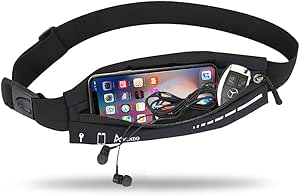 | Best Lightweight Phone Belt | Material: Soft, water-resistant fabric | Weight: 2 oz | Waist size range: 27–45 inches | VIEW ON AMAZON | See Our Full Breakdown |
| SHOKZ OpenRun Pro 2 Bone Conduction Bluetooth Sport Headphones, Orange | 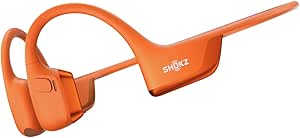 | Best Open-Ear Audio | Model: OpenRun Pro 2 (SHOKZ S820) | Listening design: Bone-conduction, open-ear | Battery life: 12 hours | VIEW ON AMAZON | See Our Full Breakdown |
| Garmin Forerunner 55 GPS Running Watch with Daily Suggested Workouts |  | Best for Beginner Runners | Battery life: Up to 2 weeks in smartwatch mode; up to 20 hours in GPS mode | Tracking: GPS, heart rate, distance, and pace | Training tools: Daily suggested workouts, race predictions, PacePro | VIEW ON AMAZON | See Our Full Breakdown |
| MVRK Water Resistant Running Vest Chest Pack, Phone Holder for Running, Lightweight Training Pack with Reflective Detail |  | Best for Secure Chest Storage | Material: Cordura Nylon | Dimensions: 4 x 7 inches | Water resistance: Yes | VIEW ON AMAZON | See Our Full Breakdown |
| smart running accessorie | Weight | Battery life |
|---|---|---|
| SWIFTVEST Adjustable Running H | 285 g | — |
| AI Smart Patella Strap Knee Br | 52 g | 4–6 hours of active support |
| Fokia Kunbio Light Up LED Armb | 28 g | Up to 20 hours |
| Garmin Forerunner 165 GPS Runn | — | Up to 11 days in smartwatch mode; up to 19 hours in GPS mode |
| Slim Running Belt with Phone P | 2.4 oz | — |
| Garmin Forerunner 965 Running | — | Up to 23 days in smartwatch mode; up to 31 hours in GPS mode |
| Fitense Rechargeable LED Armba | — | 8–10 hours |
| COROS POD 2 Watch Sensor Acces | — | — |
| VUP Running Armband 360° Rotat | 58.97 g | — |
| Fitgriff Running Belt for Men | 85 g | — |
| Garmin Forerunner 70 GPS Runni | 1.4 oz | Up to 13 days in smartwatch mode |
| AIKENDO Slim Running Belt for | 2 oz | — |
| SHOKZ OpenRun Pro 2 Bone Condu | — | 12 hours |
| Garmin Forerunner 55 GPS Runni | — | Up to 2 weeks in smartwatch mode; up to 20 hours in GPS mode |
| MVRK Water Resistant Running V | — | — |
More Details on Our Top Picks
SWIFTVEST Adjustable Running Hydration Vest with 500 ml Soft Flask
For runners who want water, phone storage, and room for small essentials in one setup, the SWIFTVEST vest is the most self-contained option in this group. Its six pockets and included 500 ml soft flask make it more useful on longer routes than the U·LANARO running belt, which has a single pocket and no included hydration. Adjustable straps and neoprene padding are intended to limit bounce and chafing, while quick-dry material and heat-dissipation zones address comfort during movement. Reflective detailing adds visibility, though it is not a substitute for dedicated lights like the Fokia Kunbio LED armband. The tradeoff is bulk: at 285 g and with neoprene listed as the material, it may feel warmer and less minimal than a belt. The phone pouch also has a defined size limit.
Pros:- Six pockets separate a phone and small running essentials.
- Includes a compressible 500 ml soft flask.
- Adjustable straps and neoprene padding are designed to reduce bounce and chafing.
- Quick-dry material, heat-dissipation zones, and reflective details support outdoor use.
Cons:- The phone pouch is limited to devices up to 18 × 10 cm.
- Neoprene may feel less breathable than a lightweight mesh construction.
- More vest coverage and weight than a simple running belt.
Best for: Runners on longer routes who want a soft flask plus organized space for a phone, keys, and gels.
Not ideal for: Short-run minimalists or runners whose phone exceeds 18 × 10 cm; the vest adds more coverage than a slim belt and its pouch may not fit larger phones.
- Brand and model:SWIFTVEST SV01
- Weight:285 g
- Dimensions:11 × 14 in
- Capacity:500 ml
- Pockets:6
- Phone pouch fit:Up to 18 × 10 cm
- Fit:Adjustable; XS-S, M-L, and L-XL
- Material and color:Neoprene; black
- Included components:Running vest and 500 ml soft flask
Our verdict“Choose the SWIFTVEST if you want hydration and several storage pockets together, but skip it if you prefer the lighter, simpler carry of the U·LANARO belt.”
AI Smart Patella Strap Knee Brace, Patellar Tendon Dynamic Support Strap
This patella strap takes a different approach to running support than the other picks: instead of carrying gear or improving visibility, it focuses on the knee. Its AI-powered compression is described as adjusting support during activity, with multiple modes for different needs. At 52 g, it is a light, localized alternative to adding a bulky brace, and the quick-detach design makes cleaning easier. The listed 4–6 hours of active support may suit a training session, but it means the feature set depends on a charged battery; the Fokia Kunbio armband, by comparison, offers visibility without an electronic support system that must be charged for operation. This is also a specialized accessory, not a general running upgrade: it supports the patellar area only, and the automatic modes may take time for new users to understand.
Pros:- AI-powered compression is designed to adapt support during activity.
- Multiple modes allow different support settings.
- Lightweight 52 g design is suited to extended wear.
- Quick-detach construction supports easier cleaning.
Cons:- Requires charging to operate.
- Active support is listed at 4–6 hours per charge.
- Provides knee support only, and its modes may feel complex to first-time users.
Best for: Runners seeking targeted patellar tendon support during workouts who are comfortable charging and configuring a wearable support device.
Not ideal for: Runners who want a simple, battery-free strap or need support for an ankle, hip, or another joint.
- Weight:52 g
- Fitting range:M/L extension straps fit 13.4–17.7 in (34–45 cm)
- Charging time:60 minutes
- Battery life:4–6 hours of active support
- Support type:Patellar tendon and knee
- Compression:AI-powered automatic adjustment
- Support modes:Multiple modes
- Cleaning feature:Quick-detach design
Our verdict“Pick this strap if targeted, adjustable knee support is your priority, but choose a simpler accessory such as the Fokia Kunbio armband if you do not need a powered support device.”
Fokia Kunbio Light Up LED Armband for Running and Night Safety, Rechargeable, Reflective, Adjustable
The Fokia Kunbio is the clearest choice here for runners who need to be seen after dark. It pairs bright LEDs with reflective strips, giving it an active-lighting role that reflective details on the SWIFTVEST vest or U·LANARO belt cannot match. At 28 g, it adds little weight, and the adjustable 9.0–14.6-inch length supports a range of placements. USB-C charging takes 1.5 hours, with up to 20 hours of stated battery life, so it can cover repeated outings between charges depending on mode and use. Its tradeoff is specialization: it adds visibility but no storage, hydration, or run metrics like the Garmin Forerunner 165. The lighting is also limited to six colors and three modes, and reflective strips may wear over time.
Pros:- LED lighting and reflective strips provide two visibility elements.
- USB-C charging takes 1.5 hours.
- Listed battery life reaches up to 20 hours.
- Lightweight 28 g build with an adjustable 9.0–14.6-inch length.
Cons:- Offers no storage, hydration, or training data.
- Lighting is limited to six colors and three modes.
- Battery life varies with use, and reflective strips may wear over time.
Best for: Road and path runners who train in low light and want a lightweight rechargeable light they can wear on an arm or leg.
Not ideal for: Runners seeking an all-in-one accessory for storage, hydration, or workout tracking; this armband only addresses visibility.
- Weight:28 g
- Lighting modes:6 colors; 3 modes: colorful, steady, and flashing
- Battery life:Up to 20 hours
- Charging:USB-C; 1.5-hour charge time
- Adjustable length:9.0–14.6 in
- Reflective feature:Reflective strips
- Intended activities:Running, walking, cycling, and outdoor activities
Our verdict“Choose the Fokia Kunbio for a dedicated rechargeable visibility aid, while runners wanting reflective details built into a carry option may prefer the SWIFTVEST vest.”
Garmin Forerunner 165 GPS Running Smartwatch, 43 mm, Black
The Garmin Forerunner 165 earns its place as the most training-focused accessory in this set. Built-in GPS, wrist-based heart rate, and adaptive training plans put route tracking and workout guidance on the wrist, while sleep and recovery insights add context between runs. Its AMOLED touchscreen is paired with physical buttons, giving runners more than one way to control the watch during movement. Compared with the Fokia Kunbio armband, it offers far more running data but does not provide the same dedicated visible light; compared with the AI Smart Patella Strap, it tracks activity rather than adjusting knee compression. Battery life is listed at up to 11 days in smartwatch mode and 19 hours in GPS mode, so frequent GPS use calls for more regular charging. Some safety features also depend on a compatible phone and network coverage.
Pros:- Built-in GPS and wrist-based heart rate combine route and effort tracking.
- Adaptive training plans and 25+ activity profiles support varied workouts.
- AMOLED touchscreen works alongside button controls.
- Sleep and recovery insights complement run data.
Cons:- GPS-mode battery life is listed at up to 19 hours, below its smartwatch-mode runtime.
- Some safety features require a compatible smartphone and network coverage.
- Garmin Pay availability depends on supported countries and payment networks.
Best for: Runners who want built-in GPS, guided training, and recovery information in one watch compatible with Android and iPhone.
Not ideal for: Runners who only need a simple safety light or carry solution, or who want safety features that work without a compatible smartphone and network coverage.
- Display:AMOLED touchscreen
- Case size:43 mm
- GPS and heart rate:Built-in GPS; wrist-based heart rate
- Battery life:Up to 11 days in smartwatch mode; up to 19 hours in GPS mode
- Activity profiles:25+
- Water resistance:50 meters
- Storage:4 GB
- Connectivity:Bluetooth, USB, and Wi-Fi
- Compatibility:Android and iPhone
Our verdict“Choose the Forerunner 165 if you want training guidance and run metrics in a smartwatch; choose the Fokia Kunbio instead when low-light visibility is the main need.”
Slim Running Belt with Phone Pocket
For runners who want phone storage without wearing a vest, the U·LANARO U99 keeps the carry setup simple. Its single expandable pocket is designed for a smartphone with a case and everyday essentials, while the adjustable strap fits waists from 27 to 46 inches. A water-resistant inner layer, zipper, and reflective strips add practical protection and low-light visibility without the extra pockets or hydration of the SWIFTVEST. That makes this belt the more minimal choice for shorter runs, but also the less versatile one: there is only one pocket, and no flask is included. At 2.4 ounces it is much lighter than the vest, though the tradeoff is less organization. Hand washing is required, which may be inconvenient for runners who want machine-washable gear.
Pros:- Expandable pocket is designed to fit smartphones with cases and everyday essentials.
- Adjustable strap fits waists from 27 to 46 inches.
- Water-resistant inner layer and zipper help protect carried items.
- Reflective strips add visibility in low-light conditions.
Cons:- One pocket offers limited organization compared with the SWIFTVEST’s six pockets.
- No hydration flask is included.
- Hand wash only.
Best for: Runners who want to carry a cased smartphone and a few small essentials in a lightweight belt for everyday workouts.
Not ideal for: Long-distance runners who need several organized pockets or included hydration, and anyone who prefers machine-washable accessories.
- Brand and model:U·LANARO U99
- Material:Polyester
- Waist fit:27–46 in
- Strap length:46 in
- Weight:2.4 oz
- Water resistance:Water resistant
- Closure and pockets:Zipper; 1 pocket
- Color:Black
- Care:Hand wash only
Our verdict“Choose the U·LANARO belt for lightweight phone carry on routine runs, but opt for the SWIFTVEST if you need hydration and more organized storage.”
Garmin Forerunner 965 Running Smartwatch, 47mm, Black/Powder Gray
The Forerunner 965 is the most capable data and navigation hub in this group, pairing multi-band GNSS with SatIQ, built-in maps, HRV monitoring, and wrist-based running dynamics. That combination is useful for runners who want more than basic pace and distance, especially on routes where GPS can struggle. Its AMOLED touchscreen makes maps and workout details easy to read, while the titanium bezel and long battery life support regular training without frequent charging. Compared with the COROS POD 2, this watch is a broader all-in-one tool rather than a focused pace sensor; the POD 2 makes more sense for runners who already own a compatible COROS watch and mainly want sharper pace data. The tradeoff is complexity: the 965’s many metrics take time to learn, and its 47mm case may feel large on smaller wrists.
Pros:- Multi-band GNSS with SatIQ supports accurate tracking in challenging GPS conditions
- Built-in maps and multi-sport profiles add navigation and training flexibility
- Up to 23 days of smartwatch battery life and up to 31 hours in GPS mode
- AMOLED display, titanium bezel, HRV monitoring, and wrist-based running dynamics
Cons:- Advanced menus and metrics can take time to learn
- The 47mm case may be bulky on smaller wrists
- Its feature set may be more than runners who only need basic pace and distance tracking require
Best for: Experienced runners who want detailed training and health metrics, route maps, and strong GPS performance in one watch
Not ideal for: New runners seeking simple workout tracking or runners with smaller wrists who prefer a compact watch
- Display:AMOLED touchscreen
- Case size:47mm
- Battery life:Up to 23 days in smartwatch mode; up to 31 hours in GPS mode
- Bezel material:Titanium
- GPS:Multi-band GNSS with SatIQ
- Navigation:Built-in maps
- Running and health features:Wrist-based running dynamics, HRV monitoring, multi-sport profiles
Our verdict“Choose the Forerunner 965 if you want a feature-rich training watch with maps and advanced metrics, and are comfortable with a larger case and a learning curve.”
Fitense Rechargeable LED Armbands, 2-Pack, White
The Fitense LED armbands are a simple way to add active lighting to evening runs: the two-band set offers five colors, three modes, and up to 8–10 hours of illumination per charge. Wearing a band on a wrist or ankle can make movement easier to notice than relying on reflective details alone, such as the strips on the Fitgriff Running Belt. The included dual-port cable also lets both bands charge together. This is a visibility accessory, not a substitute for a headlamp or a guarantee that traffic will see you, and it does not track workouts like the Garmin Forerunner 965. The main fit limitation is its fixed length: each band accommodates a circumference of up to 25 cm, so it may not fit every arm or ankle. Charging also calls for a standard 5V/1A adapter rather than a fast charger.
Pros:- Five selectable light colors and three modes provide visibility options
- Two bands are supplied with a dual-port charging cable
- Provides up to 8–10 hours of illumination per charge
- Can be worn on either a wrist or an ankle
Cons:- Fixed 35 cm length limits fit to a circumference of 25 cm or less
- Requires a standard 5V/1A charger; fast charging is not recommended
- Adds visibility but does not replace a dedicated path light or provide workout tracking
Best for: Runners who regularly train after dark and want two rechargeable lights that can be worn on wrists or ankles
Not ideal for: Runners who need an adjustable fit, have wrists or ankles over 25 cm in circumference, or want a full lighting system
- Quantity:2 armbands
- Light colors:White, green, blue, purple, red
- Light modes:Constant, flash, RGB
- Battery capacity:100 mAh
- Battery life:8–10 hours
- Charging time:About 40 minutes
- Dimensions and fit:35 × 4 cm; maximum circumference 25 cm (10 in)
- Material:Non-woven fabric, polyester, TPU light guide strip
- Included components:2 armbands and dual-port charging cable
Our verdict“Pick this two-band set for rechargeable nighttime visibility if its fixed fit works for you and you already have other lighting for seeing the route.”
COROS POD 2 Watch Sensor Accessory, Indoor and Treadmill Distance Tracking
The COROS POD 2 is a focused add-on for runners who want pace and distance data that responds to foot movement, especially indoors or where GPS drops out. Its accelerometer supports treadmill measurement and can correct GPS disruptions, making pace changes more immediate than relying on a watch’s GPS alone. That gives it a different job from the Garmin Forerunner 965, which combines tracking with maps, health metrics, and broader training tools rather than serving as a dedicated foot sensor. The POD 2’s strongest case is for an existing COROS user who often runs indoors, through tunnels, or among tall buildings. Its limitation is just as clear: it only works with compatible COROS watches, excluding the PACE1, and it is not a standalone running tracker. Runners outside that ecosystem should look at a watch-based option instead.
Pros:- Measures pace and distance using foot movement for responsive updates
- Supports indoor and treadmill distance measurement
- Can correct GPS disruptions in tunnels and urban environments
- Designed to improve tracking on hilly terrain
Cons:- Compatible only with COROS watches and excludes the PACE1
- Requires a paired COROS watch and cannot function as a standalone tracker
- Its benefits are focused on running rather than a wider range of activities
Best for: COROS watch owners who regularly run on treadmills or in tunnels and want more responsive pace and distance data
Not ideal for: Runners without a compatible COROS watch, including PACE1 owners, or anyone seeking an independent tracker or multi-purpose accessory
- Compatibility:COROS watches, excluding COROS PACE1
- Sensor type:Accelerometer
- Pace tracking:Real-time pace measurement
- Indoor tracking:Indoor distance measurement and treadmill tracking
- GPS support:GPS correction for disrupted signals
- Terrain support:Hilly terrain accuracy
Our verdict“Buy the POD 2 if you already use a compatible COROS watch and need more dependable pace or treadmill distance; skip it if you do not use that ecosystem.”
VUP Running Armband 360° Rotatable for Smartphones 4-6.7 Inch, Fits All Arm Sizes, with Key Holder, Water Resistant, Black
The VUP Running Armband suits runners who want their phone on their arm and within easy reach, with a 360° rotating mount for changing the screen angle and a small key holder for a run essential. Its adjustable fit and compatibility with phones from 4 to 6.7 inches give it more flexibility across arm sizes and devices than a one-fit accessory. Compared with the Fitgriff Running Belt, it keeps the phone visible and accessible rather than tucked at the waist; the belt is a better match for runners who prefer carrying their phone and small items out of the way. VUP’s breathable, washable construction supports repeated workouts, but water resistance is limited, not waterproof. A large phone with a bulky case may not fit, and carrying the phone on the arm may feel less comfortable than a belt for some runners.
Pros:- 360° rotation makes it easier to view the phone from different angles
- Adjustable design accommodates a range of arm sizes
- Breathable, stretchable materials are washable
- Includes a key holder and fits many phones from 4 to 6.7 inches
Cons:- May not fit larger phones with bulky cases
- Water resistant but not waterproof
- Phone-on-arm carry may be less appealing than the waist storage of the Fitgriff Running Belt
Best for: Runners who want to check or control a compatible phone while moving and need an adjustable armband with a key holder
Not ideal for: Runners with phones larger than 6.7 inches or bulky cases, and those who prefer waist storage or need waterproof protection
- Phone compatibility:Smartphones from 4.0 to 6.7 inches, including iPhone and Galaxy series
- Rotation:360°
- Materials:Lycra, neoprene, leather
- Dimensions:5 × 1 × 2 in
- Weight:58.97 g
- Water resistance:Water resistant
- Closure:Buckle
- Additional features:Key holder, breathable, stretchable, washable
Our verdict“Choose the VUP armband if you want your phone accessible on your arm, but opt for the Fitgriff belt if you prefer carrying it at your waist.”
Fitgriff Running Belt for Men and Women
The Fitgriff Running Belt is the understated carry option here: its adjustable elastic strap holds a phone in the main compartment and separates keys, cash, or cards in a smaller pocket. That layout keeps small items from sharing space with the phone, while reflective strips add visibility in low light. Compared with the VUP Running Armband, the belt carries a phone at the waist instead of putting it on display for quick viewing; that makes it a better fit for runners who want less arm-mounted gear, but not for those who regularly check their screen mid-run. Water-repellent polyester can help against sweat and light rain, yet the belt is not waterproof and seams may let moisture through in prolonged or heavy rain. Buyers also need to choose the size carefully and hand-wash it.
Pros:- Main compartment and smaller pocket separate a phone from keys, cash, and cards
- Adjustable elastic strap is designed to stay secure during activity
- Reflective strips add visibility at dusk and at night
- Water-repellent polyester helps protect contents from sweat and light rain
Cons:- Water repellent rather than waterproof; seams may admit moisture in heavy or prolonged rain
- Fit depends on measuring the waist and selecting the right size
- Phone is less immediately accessible than when carried in the VUP armband
Best for: Runners who want to carry a phone plus small essentials at the waist, with separate storage and reflective details for low-light outings
Not ideal for: Runners who need waterproof storage, want continuous phone access, or do not want to measure their waist and select a size
- Model:FG018
- Size:S-M
- Strap length:35 in
- Dimensions:10 × 2 × 2 in
- Weight:85 g
- Material:Polyester
- Water resistance:Water repellent; not fully waterproof
- Storage and closure:Main compartment and smaller separate pocket; zipper
- Care:Hand wash only
Our verdict“Choose the Fitgriff belt for separated, low-profile waist storage on ordinary runs, but not for phone access on the move or wet-weather protection.”
Garmin Forerunner 70 GPS Running Watch with AMOLED Screen, 13-Day Battery, Black
The Forerunner 70 is the stronger pick for runners who want a bright display and more guidance around training, rather than only pace and distance tracking. Its AMOLED touchscreen, Training Readiness insights, and Garmin Coach plans help make workout choices easier to follow, while built-in GPS and wrist-based heart rate cover core run data. Compared with the Forerunner 55, it adds a more vivid screen and a broader set of sports modes; the 55 remains a simpler option with stated GPS-mode battery life. The 70 lasts up to 13 days in smartwatch mode, but the supplied data does not specify GPS-mode endurance. It also lacks on-watch music playback, so runners who want to leave a phone behind for audio should look elsewhere.
Pros:- AMOLED touchscreen makes run data easier to read at a glance.
- Training Readiness and Garmin Coach provide structured guidance.
- Supports more than 80 sports modes for varied activity tracking.
- Up to 13 days of battery life in smartwatch mode reduces charging frequency.
Cons:- No music storage or playback for phone-free listening.
- GPS-mode battery life is not specified in the provided product data.
- Screen protectors are a separate purchase, and included accessories are limited.
Best for: Runners who want training-readiness guidance, a bright screen, and activity tracking beyond running.
Not ideal for: Runners who want stored music or need clearly specified GPS-mode battery endurance.
- Display:1.2-inch AMOLED touchscreen
- Battery life:Up to 13 days in smartwatch mode
- Satellite systems:GPS, GLONASS, Galileo
- Heart rate:Wrist-based monitoring
- Sports modes:More than 80
- Water resistance:50 meters
- Connectivity:Bluetooth, ANT+
- Weight:1.4 oz
Our verdict“Choose the Forerunner 70 if training guidance and a vivid display matter more than onboard music or a simpler interface.”
AIKENDO Slim Running Belt for Women and Men, Fanny Pack Phone Holder
For runners who want a simple way to carry a phone and keys without wearing a vest, the AIKENDO Slim Running Belt keeps the setup light at just 2 ounces. Its expandable pockets are described as fitting smartphones with cases, while the adjustable strap covers waist sizes from 27 to 45 inches. That makes it a less involved carry option than the MVRK Water Resistant Running Vest Chest Pack, which offers multiple zippered pockets and a chest-mounted fit. The tradeoff is capacity: this belt is intended for a phone and keys, not a larger collection of run essentials. Its water-resistant fabric and reflective details add practical touches, but the product information does not establish full waterproofing or how visible the reflective elements are in every lighting condition.
Pros:- Lightweight 2-ounce design suits runners who want minimal carry weight.
- Expandable pockets are described as fitting smartphones with cases.
- Adjustable waist strap fits a stated range of 27 to 45 inches.
- Water-resistant fabric and reflective elements add useful outdoor features.
Cons:- Storage is limited to phone-and-key essentials, with no additional compartments specified.
- Water resistance does not establish protection in heavy rain or submersion.
- Reflective details may not provide enough visibility in every low-light setting.
Best for: Runners and walkers who want to carry a cased phone and keys without wearing a larger chest pack.
Not ideal for: Runners who need several secure compartments, hydration storage, or stronger evidence of wet-weather protection.
- Material:Soft, water-resistant fabric
- Weight:2 oz
- Waist size range:27–45 inches
- Pocket fit:Expandable pockets described as fitting smartphones with cases
- Visibility:Reflective elements
- Fit:Adjustable waist strap
Our verdict“Pick this belt for lightweight phone-and-key carry, but choose the MVRK vest if you need more compartmentalized storage.”
SHOKZ OpenRun Pro 2 Bone Conduction Bluetooth Sport Headphones, Orange
The SHOKZ OpenRun Pro 2 suits runners who want audio while keeping their ears uncovered and more aware of surrounding sounds. Its bone-conduction, open-ear design makes it a different kind of accessory from the Garmin watches here: it adds listening and call functions rather than route or training data. Compared with carrying a phone in the AIKENDO Slim Running Belt and relying on its speaker, these headphones offer a dedicated Bluetooth listening option with customizable EQ modes and noise-reduced calls. The fit uses ergonomic ear hooks, though comfort can vary during long sessions. Battery life is listed at 12 hours, a potential limit for extended outings or frequent use between charges; the supplied details also give no weight figure for buyers comparing fit and bulk.
Pros:- Open-ear design leaves ears uncovered for greater awareness of surroundings.
- Customizable EQ modes let listeners adjust the audio profile.
- Noise-reduction features support clearer calls during activity.
- Includes a hard-shell carrying case and a two-year warranty.
Cons:- Listed 12-hour battery life may fall short for especially long outings or frequent use.
- Ear-hook fit may feel uncomfortable during extended wear for some runners.
- Product data does not specify weight, limiting fit comparisons.
Best for: Outdoor runners who want Bluetooth audio and calls while keeping their ears uncovered.
Not ideal for: Runners who need an immersive sealed-ear listening experience, a known low weight, or battery life for very long sessions.
- Model:OpenRun Pro 2 (SHOKZ S820)
- Listening design:Bone-conduction, open-ear
- Battery life:12 hours
- Charge time:60 minutes
- Connectivity:Bluetooth
- Audio features:Customizable EQ modes and noise-reduced calls
- Included accessories:Hard-shell carrying case, media cable, user manual
- Warranty:2 years
Our verdict“Choose the OpenRun Pro 2 if open-ear listening is a priority and its 12-hour battery window suits your routine.”
Garmin Forerunner 55 GPS Running Watch with Daily Suggested Workouts
The Forerunner 55 gives runners a more straightforward route into GPS tracking and guided workouts than the feature-rich Forerunner 70. It tracks pace, distance, and heart rate, then adds daily suggested workouts, race predictions, and PacePro tools to help make training feel less like guesswork. Its stated battery life—up to two weeks in smartwatch mode and 20 hours in GPS mode—also gives buyers a clearer picture of run-use endurance than the Forerunner 70 data provided here. The 55 is not as display-focused as the newer AMOLED model, and its heart-rate readings are not medical-grade. PacePro also does not support on-device courses, which limits its usefulness for runners who expect course-based guidance from the watch itself.
Pros:- Daily suggested workouts provide a practical structure for training.
- Race predictions and PacePro add tools for planning run efforts.
- Battery life is specified for both smartwatch and GPS modes.
- Activity profiles extend beyond running to options such as cycling and pool swimming.
Cons:- Heart-rate monitoring is not medical-grade.
- PacePro is not compatible with on-device courses.
- Lacks the AMOLED screen featured on the Forerunner 70.
Best for: Newer runners who want GPS pace and distance tracking plus suggested workouts without the Forerunner 70’s broader feature set.
Not ideal for: Runners who want an AMOLED display, medical-grade heart-rate data, or PacePro guidance on on-device courses.
- Battery life:Up to 2 weeks in smartwatch mode; up to 20 hours in GPS mode
- Tracking:GPS, heart rate, distance, and pace
- Training tools:Daily suggested workouts, race predictions, PacePro
- Activity profiles:Running, cycling, track run, virtual run, pool swim, Pilates, HIIT, breathwork
- Customization:Connect IQ Store watch-face customization
- Wellness:Wellness features included
Our verdict“Choose the Forerunner 55 for clearly specified GPS endurance and approachable training prompts, rather than a brighter screen or a broader feature set.”
MVRK Water Resistant Running Vest Chest Pack, Phone Holder for Running, Lightweight Training Pack with Reflective Detail
The MVRK Chest Pack is the storage-first choice in this group: its chest-mounted design pairs multiple zippered pockets with adjustable straps, giving small essentials a more organized place than the phone-and-key-focused AIKENDO belt. Cordura Nylon and water-resistant construction make it a practical option for runners who want to keep a phone, wallet, and keys close, while reflective print adds a visibility detail for low-light outings. The listed dimensions are just 4 by 7 inches, so this is still a compact pack rather than a substitute for the SWIFTVEST Adjustable Running Hydration Vest when a run calls for a soft flask or more carrying capacity. Neoprene padding may also bother some wearers over longer sessions, and the product data does not give a weight figure.
Pros:- Multiple zippered pockets help separate and secure small essentials.
- Cordura Nylon and water-resistant construction suit varied outdoor conditions.
- Reflective print adds a visibility feature for low-light runs.
- Adjustable straps and neoprene padding support a closer chest fit.
Cons:- Compact 4-by-7-inch dimensions limit capacity for larger gear.
- No hydration flask or larger-capacity storage is specified.
- Neoprene padding may feel uncomfortable during extended wear, and weight is not listed.
Best for: Runners who want a compact, chest-mounted way to separate and secure a phone, wallet, and keys.
Not ideal for: Runners who need hydration storage or a larger pack for long outings, or who are sensitive to padded gear against the chest.
- Material:Cordura Nylon
- Dimensions:4 x 7 inches
- Water resistance:Yes
- Storage:Multiple zippered pockets
- Fit:Adjustable straps
- Padding:Neoprene
- Visibility:Reflective print
Our verdict“Choose the MVRK pack for organized, compact chest storage, but opt for the SWIFTVEST if carrying hydration is part of the plan.”
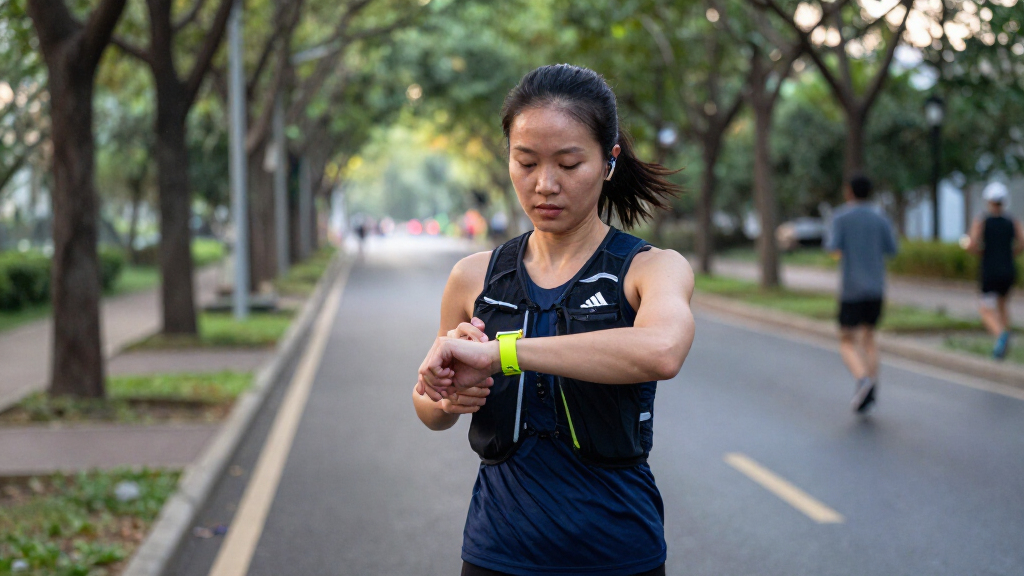
How We Picked
I ranked these smart running accessories by how clearly each one solves a running-specific problem, how easy it is to fit into a regular routine, and how much useful function it offers without adding unnecessary bulk or complexity. For watches, I weighed GPS and training functionality against the needs of runners who want a simpler device. For carrying gear and safety, I focused on practical use, adjustability, visibility features and whether the design serves a distinct purpose. The headphones, knee strap and hydration options were judged by the specific job they support rather than by features they do not claim to provide.
The ranking favors versatile picks that help a broad range of runners, then gives more specialized options their place where they solve a particular need well. That puts the Forerunner 165 ahead as a balanced training hub, the Forerunner 965 in the premium specialist role, and the COROS POD 2 lower because its value depends on indoor tracking needs. I also compared overlapping products by their use case: belts versus phone armbands, and rechargeable lights versus reflective details. Product descriptions do not establish every detail of comfort, durability or compatibility, so buyers should check fit and device requirements before purchase.
Factors to Consider When Choosing Smart Running Accessories
Before choosing an accessory, start with the problem that interrupts your runs most often. A new device can add information, but useful equipment should fit your route, clothing, phone and training habits without creating another task to manage.
Choose One Problem to Solve First
It is easy to buy overlapping accessories because each promises a different improvement. Start by naming the issue: poor training data, a phone that bounces, low visibility after dark, or limited access to water. Then choose the item that directly addresses it rather than building a kit around a broad idea of being more prepared. A GPS watch may be redundant if your current watch already records the metrics you use. A belt and an armband can both carry a phone, but owning both only helps if your routes or clothing call for different carry styles. Add a second accessory after you have identified a separate need.
Match Tracking Features to Your Training
A watch with many metrics is useful only when those metrics affect decisions you make. If you mainly need route recording and basic run data, a simpler GPS watch may be easier to live with than a premium model. Navigation, detailed training tools and extra data have more value for runners who plan routes, follow structured sessions or review progress regularly. For treadmill workouts, check whether the accessory or watch combination supports the indoor tracking method you intend to use. A sensor add-on can address a specific tracking weakness, but it also brings compatibility and pairing steps. Prioritize the data you will act on, not the longest feature list.
Check Fit With Your Phone, Clothes and Body
Carry gear should stay put without rubbing, pinching or restricting arm movement. Phone size is only one fit question: case thickness, pocket access and whether you need to reach the screen during a run can change which style works. A belt may distribute a phone and keys around the waist, while an armband keeps the device closer to hand but can feel more noticeable on the upper arm. Vests offer more carrying capacity, though that can be unnecessary on short runs. Adjustability helps, but it does not guarantee a comfortable fit for every body or layer combination. Check the stated size range and test the load with the items you actually carry before a long run.
Treat Night Visibility as a Layered Safety Choice
Reflective material and powered lights serve different roles: reflectors return light from cars, while LEDs produce their own light. Neither makes a runner visible from every angle or replaces route awareness, so think about where traffic approaches and how much ambient light your route has. Armbands can be easy to add to a running kit, but placement and battery readiness affect whether they help on a given outing. A vest with reflective detail may add visibility while carrying gear, yet reflective accents still depend on an outside light source. Choose equipment that is easy to wear consistently rather than relying on a safety item you often leave at home. For dark or mixed-traffic routes, combining visible clothing with an active light can offer a more complete approach.
Weigh Water Capacity Against Carrying Comfort
Hydration gear can make longer or hotter runs easier to manage, but extra capacity also means more weight and more items to clean. Estimate how long you run between reliable refill points instead of choosing a vest simply because it carries water. A soft flask is useful when you want water close at hand, while a lightweight phone vest may be better suited to carrying essentials without a hydration-focused setup. Check how the flask, phone and keys fit together; a crowded pack can be less comfortable than a simpler carry option. After each run, rinsing and drying reusable hydration parts helps prevent residue from building up. If you rarely need water on your usual routes, a vest may add bulk without solving a regular problem.
Pay More Only for Features You Will Use
Premium gear earns its place when a specific feature changes how you train, navigate or manage a run. Before stepping up to an advanced watch, identify which functions your current device lacks and how often you would use the upgrade. For accessories, a more elaborate setup may bring extra adjustment, charging or cleaning rather than a meaningful improvement for your routine. Consider ongoing tasks too: rechargeable lights need power, connected devices may require pairing, and hydration equipment needs care. A simpler product can be the better long-term choice if it is quicker to put on and easier to maintain. Spend for a clear benefit, not for features that sound impressive but do not fit your running habits.
Frequently Asked Questions
Should I buy a GPS running watch or add a sensor to the watch I already own?
Choose a GPS watch if you want an all-around device for outdoor routes, workout recording and training tools. An add-on sensor makes more sense when your current setup already does most of what you need and one specific measurement is lacking, such as indoor distance tracking. Before buying a sensor, confirm it works with your watch and the apps you use; compatibility can shape its usefulness more than the sensor itself. Also think about whether you want another item to charge, pair and remember before each run. If the goal is a general upgrade, a watch is usually the broader solution; if the gap is narrow, a sensor can be the more focused one.
Is a running belt or phone armband better for carrying a large phone?
Neither style is automatically more comfortable with a large phone, because case size, body shape and clothing all affect fit. A belt spreads the load around the waist and may be preferable if an armband feels restrictive or shifts during arm movement. An armband can keep the phone close to hand, but check the stated phone-size range and account for a protective case. The best test is whether the phone stays secure without bouncing or rubbing at your normal pace. If you also carry keys or other small items, compare the overall storage layout rather than choosing on phone capacity alone.
Do LED running armbands replace reflective clothing?
No. LED armbands emit light, while reflective details depend on headlights or another light source to shine back toward a driver. Their visibility can vary with placement, clothing, traffic direction and surrounding light. Reflective clothing can cover more of the body, while an armband offers a compact light source that is easy to add to a run. For low-light routes, using both active light and reflective details is a more layered approach than relying on either one alone. Check that rechargeable lights are charged before leaving, since a dead battery removes their active-light benefit.
When does a hydration vest make more sense than a running belt?
A hydration vest is more suitable when a run calls for water access and room for additional essentials, especially if you are away from refill points. A belt is often enough when the main job is carrying a phone, keys or a small item on a shorter route. More storage can improve preparedness, but it can also add weight, warmth and post-run cleaning. Consider your usual distance, weather and access to water rather than buying around an occasional long outing. If those needs change by workout, keeping a simple carry option for short runs may be more practical than wearing a vest every time.
Is a premium running watch worth it for someone who only runs a few times a week?
It can be, but run frequency alone does not determine whether a premium watch is worthwhile. The deciding factor is whether you will use its advanced training or navigation functions and whether those features improve your planning. A simpler GPS watch may cover route recording and everyday workouts without adding functions you rarely check. If you are still building a routine, ease of use and comfortable fit may matter more than a broad set of metrics. Compare the features you expect to use weekly against the added complexity of a more advanced device before choosing.
Conclusion
For most runners seeking one central training accessory, I recommend the Garmin Forerunner 165 as the best overall because it balances GPS tracking and everyday training use. The Fitgriff Running Belt is my best value-style pick for runners whose main need is carrying essentials without adding a watch or vest. For premium training and navigation needs, choose the Garmin Forerunner 965; beginners who want a straightforward entry into GPS run tracking should look at the Garmin Forerunner 55. For specific needs, the COROS POD 2 suits indoor distance tracking, the Fokia Kunbio LED Armband serves low-light visibility, and the SWIFTVEST is the hydration-focused option. Start with the problem you want to solve, then choose the accessory that addresses it without adding gear you will not use.