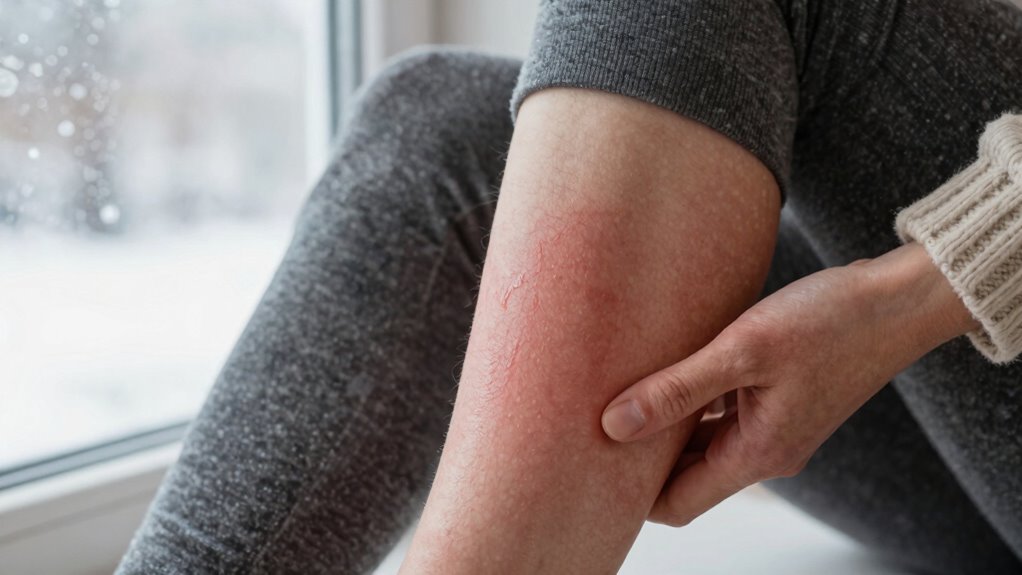

The hidden cause of winter chafing is moisture trapped between your skin and clothing, which leads to irritation and discomfort. When sweat accumulates or damp clothes stay against your skin, it dries out your skin and increases friction. Thick or tight clothing can worsen this by trapping heat and moisture. To prevent this, choose moisture-wicking fabrics and make sure your clothing fits well. Stay tuned to learn simple tips that will keep you comfortable all winter.
Key Takeaways
- Moisture buildup from sweat and damp clothing traps in skin folds, stripping natural oils and increasing irritation.
- Synthetic and coarse fabrics cause increased friction and heat retention, worsening chafing.
- Tight or ill-fitting clothing restricts airflow and causes excessive rubbing against sensitive skin.
- Indoor heating and cold winds dry out skin, making it more vulnerable to friction and irritation.
- The easy fix involves using moisture-wicking, soft clothing, ensuring proper fit, and applying moisturizer to create a protective barrier.
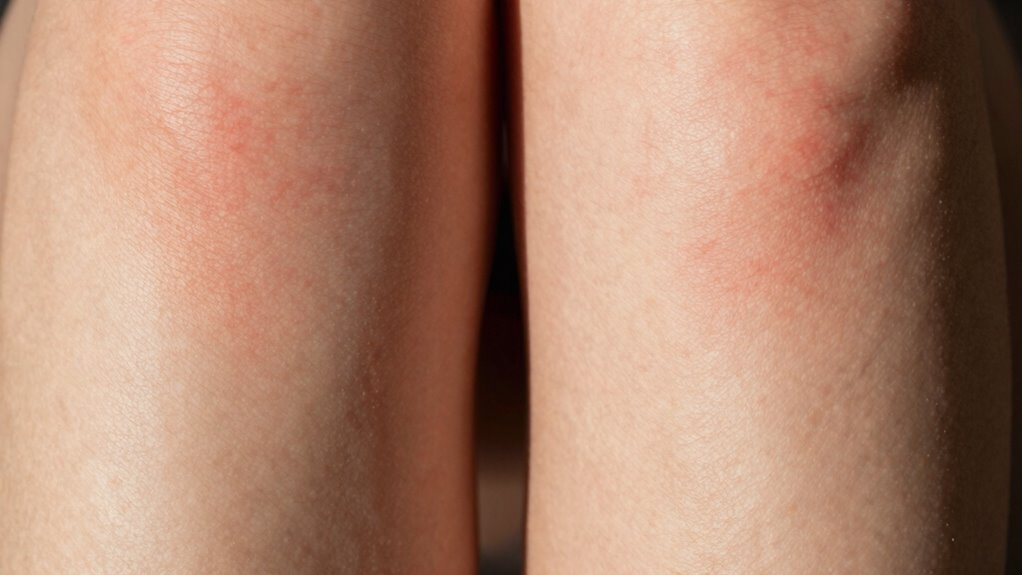
Winter chafing often feels unavoidable, but many people overlook a hidden culprit: dry, irritated skin caused by indoor heating and harsh cold winds. While you might focus on layering up or moisturizing, you might not realize that moisture buildup and fabric friction play significant roles in causing discomfort. When your skin becomes dry from exposure to cold air and heated indoor environments, it’s more prone to chafing. The repetitive rubbing of clothing against sensitive skin creates friction, which worsens irritation and leads to painful chafing patches. Recognizing how skin sensitivity increases vulnerability to irritation can help you better prevent chafing.
Moisture buildup is a common problem during winter, especially when you sweat indoors or wear multiple layers. Sweat can accumulate between your skin and clothing, trapping moisture that further dries out your skin. This not only strips away your skin’s natural oils but also makes it more susceptible to friction damage. If your clothing doesn’t wick away moisture effectively, the constant dampness increases the chances of chafing, especially in areas where skin folds or where fabric constantly moves against your body.
Moisture trapped between skin and clothing worsens dryness and increases chafing risk in winter.
Fabric friction is often overlooked but plays a fundamental role in winter chafing. Thick, rough, or poorly fitting clothes can create added friction against your skin, causing irritation over time. Synthetic fabrics tend to trap heat and moisture, increasing discomfort and chafing potential. Conversely, rough or coarse textiles can rub harshly against your skin, especially if your clothing isn’t smooth or if you’re constantly moving. Tight clothing can exacerbate the problem by restricting airflow and increasing friction, while loose garments may cause constant rubbing as they shift during movement.
To reduce moisture buildup and fabric friction, you should focus on choosing the right clothing and managing moisture effectively. Opt for moisture-wicking fabrics that draw sweat away from your skin, keeping you dry and reducing irritation. Layering should be done thoughtfully; use soft, seamless undergarments and avoid tight elastic bands that can cause additional friction. Regularly changing out damp clothes and ensuring your skin stays dry can help prevent moisture buildup. Applying a good moisturizer can also create a protective barrier, reducing friction and irritation caused by rubbing fabrics.
In addition, pay attention to the fit of your winter wardrobe. Loose but not too baggy clothes can minimize friction, while snug but comfortable garments prevent excessive movement and rubbing. Taking these simple steps can make a significant difference in preventing winter chafing, allowing you to stay warm and comfortable without the pain of irritated skin. Recognizing the roles of moisture buildup and fabric friction helps you address the root causes, making your winter experience much more bearable.

Mens Thermal Underwear Long Johns Set Cold Weather Hunting Base Layer
- Extreme warmth and comfort: Made from soft polyester-spandex blend with fleece
- Moisture-wicking fabric: Keeps you dry and comfortable all day
- Four-way stretch design: Ensures maximum mobility and durability
As an affiliate, we earn on qualifying purchases.
As an affiliate, we earn on qualifying purchases.
Frequently Asked Questions
Can Dietary Changes Reduce Winter Chafing?
Yes, dietary changes can help reduce winter chafing. By incorporating diet modification, such as increasing omega-3 fatty acids and staying well-hydrated, you strengthen your skin’s resilience. Additionally, supplement intake like vitamin E or zinc supports skin healing and moisture retention. These adjustments improve skin health, making it less prone to chafing during colder months. Consistently applying these strategies can make a noticeable difference in comfort and skin condition.
Are Certain Fabrics More Prone to Causing Chafing?
Certain fabrics are more prone to causing chafing, especially those that are rough or less durable. Sensitive skin reacts badly to coarse textiles like wool or polyester blends, which can increase friction. Opt for fabrics with better textile durability, like smooth cotton or moisture-wicking materials, to reduce chafing. Choosing softer, high-quality fabrics helps protect your skin and keeps chafing at bay during winter.
How Does Hydration Impact Winter Skin Irritation?
Think of your skin as a winter battlefield, where proper hydration acts as your secret weapon. When you stay hydrated, winter hydration keeps your skin moisture balanced, creating a resilient barrier against chafing and irritation. Without enough water, your skin becomes brittle, more prone to chafing. So, drink plenty of water, use moisturizers, and let your skin stay plump and supple, fighting off winter’s harshest assaults.
Is Winter Chafing Linked to Underlying Skin Conditions?
Winter chafing can be linked to underlying skin conditions like skin sensitivity or allergy triggers. If your skin reacts more intensely during winter, it’s likely due to increased sensitivity or exposure to irritants. You should pay attention to signs of skin issues and avoid known allergy triggers. Using gentle skincare products and keeping your skin moisturized can help reduce chafing and prevent irritation from worsening.
What Are Natural Remedies to Soothe Chafed Skin?
You can soothe chafed skin naturally with herbal ointments like aloe vera or calendula, which calm irritation and promote healing. Essential oils such as lavender or chamomile diluted in carrier oils also work well to reduce inflammation and soothe discomfort. Apply these remedies gently to the affected areas, and consider wearing breathable fabrics to prevent further chafing. Consistent use helps restore comfort and skin health during winter.
Conclusion
Now that you know the hidden cause of winter chafing, you can take simple steps to prevent it. Imagine Sarah, a runner who used to suffer every winter until she started applying moisturizer regularly before her runs. Just by making this small change, she kept her skin smooth and comfortable, even in the cold. Don’t let chafing ruin your winter—identify the cause, stay proactive, and enjoy the season comfortably.