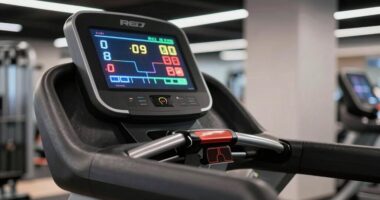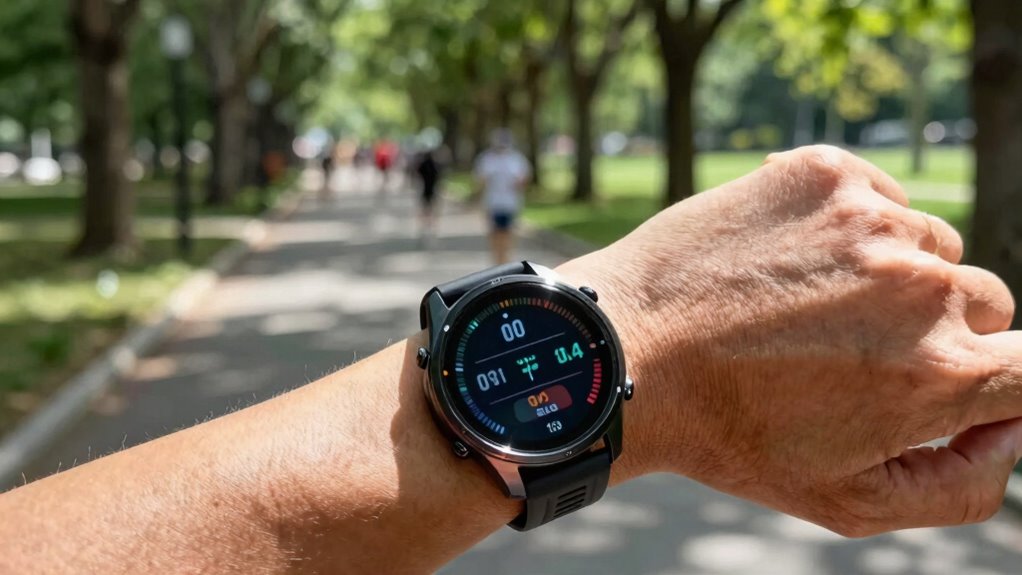

Monitoring your training load is the most useful running metric for busy athletes because it helps you track how much stress your body experiences during each run. By understanding your training patterns, you can prevent overtraining and injury while optimizing recovery. This insight allows you to adjust effort levels and avoid wasted time on unnecessary efforts. Stay with me, and you’ll discover how balancing these metrics can make your running more effective and sustainable even with a packed schedule.
Key Takeaways
- Heart rate variability (HRV) provides quick insights into recovery and readiness without extra time investment.
- Training load metrics help busy athletes optimize effort levels and prevent overtraining with minimal daily monitoring.
- Automated tracking tools streamline data collection, making it easy to review key metrics regularly.
- Monitoring training patterns over time offers simple trends to adjust training intensity efficiently.
- Combining HRV and training load ensures effective recovery and performance balance with minimal effort.
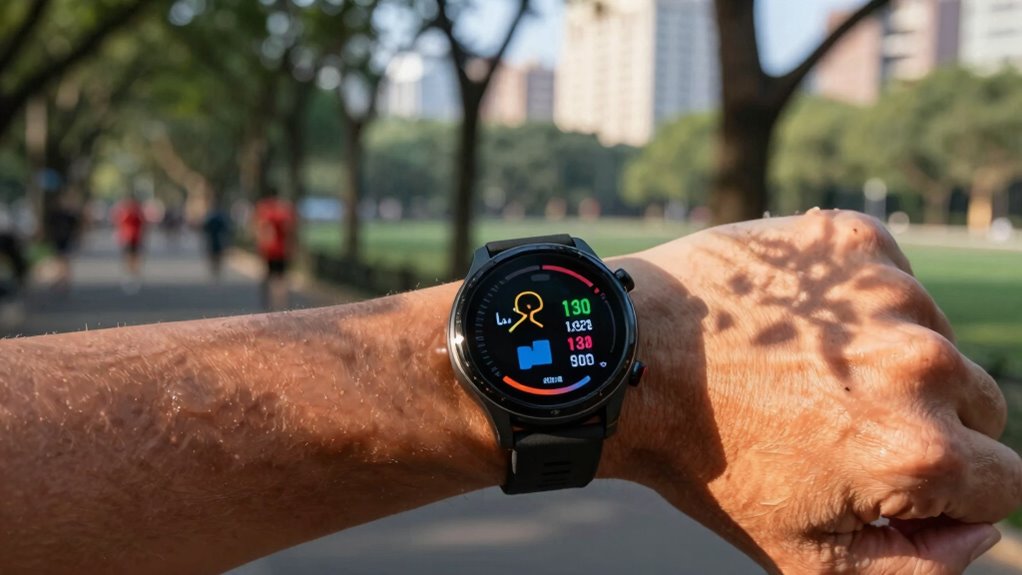
Balancing a hectic schedule with a consistent running routine can be challenging, but understanding your running metrics makes it easier to stay on track. When you’re juggling work, family, and personal commitments, you need tools that provide clear, actionable insights without demanding too much time. One of the most useful metrics for busy athletes like you is the training load, which measures how much stress your body endures during runs. It helps you optimize your workouts by balancing effort and recovery, ensuring you get the most out of each session without risking burnout.
Tracking your training load allows you to plan your runs around your other responsibilities. For instance, if you notice you’re approaching a high training load, you can prioritize recovery strategies such as gentle stretching, foam rolling, or even a rest day. This proactive approach prevents overtraining and injury, which can derail your schedule entirely. Incorporating recovery strategies into your routine becomes more effective when you understand how your body responds to different levels of exertion. Monitoring metrics like heart rate variability (HRV) can tell you whether you’re ready for a hard workout or need to focus on recovery. Additionally, understanding your training metrics can help you make more informed decisions about your overall fitness and progress. Recognizing training load patterns over time can also help you identify trends and adjust your goals accordingly. Developing an awareness of training intensity allows you to better manage your effort levels during each session. Being aware of your training recovery status can further support your ability to optimize training without overextending yourself.
Monitoring training load and HRV helps you balance workouts and recovery, preventing injury and supporting your busy schedule.
Nutrition planning also benefits from understanding your running metrics. When you track how your body responds to various training intensities, you can tailor your nutrition to support recovery and performance. For example, if your metrics indicate you’re pushing yourself hard, increasing carbohydrate intake for glycogen replenishment can speed up recovery. Conversely, on lighter days, you might focus on protein and healthy fats to support tissue repair. This targeted nutrition ensures you’re fueling your body efficiently, saving time and maximizing results.
Incorporating these metrics into your routine doesn’t require hours of data analysis. Many fitness devices and apps automatically track your performance, providing summaries that are easy to interpret. With just a few minutes daily or weekly, you can adjust your training and recovery strategies accordingly. This way, your running becomes a sustainable part of your busy life rather than an added stress. By paying attention to your training load and recovery metrics, you gain a clearer understanding of your body’s needs and limits, making every run more effective and less taxing on your schedule.
Ultimately, the most useful running metric for busy athletes is one that helps you listen to your body, plan your nutrition, and incorporate recovery strategies efficiently. It guides you to train smarter, recover faster, and stay motivated—so you can enjoy running without sacrificing your other priorities.

Garmin HRM 200 Heart Rate Monitor, Accurate Heart Rate and HRV Data, Comfortable Machine Washable Strap, M-XL
- Real-time Heart Rate Data: Transmits accurate HR and HRV data
- Compatible Devices: Works with Garmin smartwatches and cycling computers
- Comfortable Fit: Available in XS–S and M–XL sizes
As an affiliate, we earn on qualifying purchases.
As an affiliate, we earn on qualifying purchases.
Frequently Asked Questions
How Do I Track My Running Metrics Without Specialized Equipment?
You can track your running metrics without specialized equipment by paying attention to pacing strategies and monitoring your heart rate manually. Use a stopwatch or timer to keep track of your pace, and check your pulse for a quick heart rate reading during or after your run. This approach helps you stay within target zones and maintain consistent effort, making your workouts more effective and personalized even without fancy gadgets.
Can I Improve My Running Performance With Limited Training Time?
Yes, you can improve your running performance with limited training time by focusing on interval training and monitoring your heart rate. Incorporate short bursts of high-intensity running into your routine, then recover at a lower pace. Keep an eye on your heart rate to guarantee you’re pushing yourself enough without overtraining. This efficient approach maximizes gains, even with busy schedules, helping you become faster and more endurance-ready.
What Is the Best Time of Day to Run for Busy Schedules?
The early morning, like the first rays of dawn breaking over a quiet lake, is often the best time to run for busy schedules. Ideal running timing aligns with your daily routines, helping you stay consistent and energized. Running in the morning can boost your mood and productivity, making it easier to stick to your routine. Find a time that fits seamlessly into your day, and your running becomes a natural part of life.
How Do Weather Conditions Affect Running Metrics Accuracy?
Weather impact can markedly influence your running metrics accuracy. Rain, wind, and extreme temperatures can skew data like pace, heart rate, and distance measurements, especially if you’re using GPS or heart rate monitors. You might notice inconsistencies or less reliable readings during adverse weather. To maintain metric accuracy, run in stable conditions when possible, or account for weather variations when analyzing your data.
Are There Any Quick Tips to Stay Motivated to Run Regularly?
You’ll feel like conquering Everest just to stay motivated! To keep your runs exciting, use motivation techniques like rewarding yourself after milestones and setting clear goals. Break big goals into tiny, achievable steps—like running for just five minutes—then celebrate each victory. Visualize your progress and remind yourself why you started. These tricks turn running from a chore into an addictive, unstoppable adventure you can’t wait to continue!
Conclusion
In the end, tracking your running metrics helps you make smarter decisions and maximize your limited time. Did you know that runners who monitor their pace and heart rate see a 20% improvement in performance over just three months? By focusing on one key metric like your pace, you can stay efficient and motivated, even on busy days. Remember, even small, consistent efforts lead to big gains—so keep pushing forward!