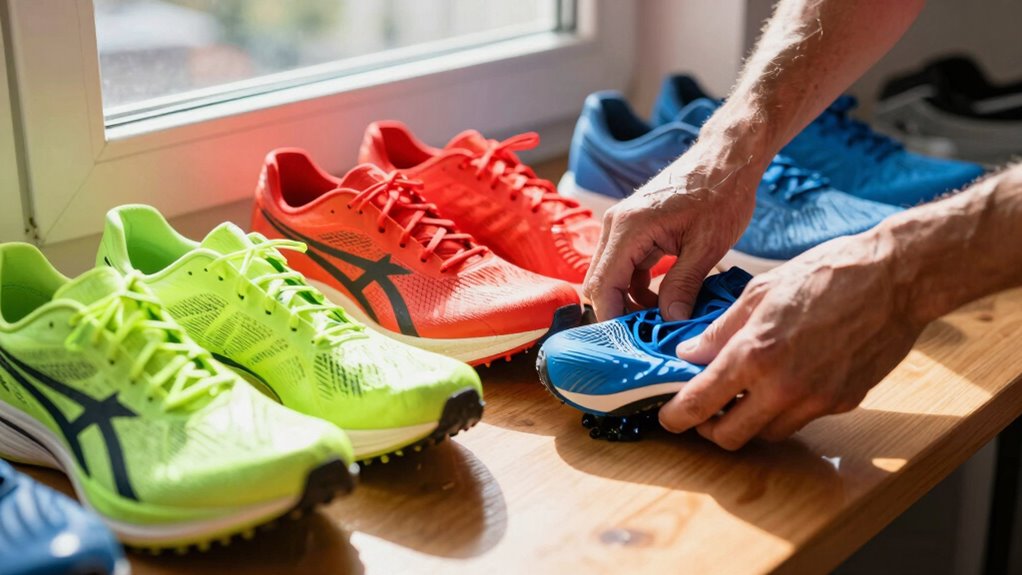

To choose your race shoes weeks before the event, start your decision process early, allowing plenty of time to find the perfect fit and style. Try on multiple pairs, paying attention to comfort and fit, and break them in during training. Stick with trusted brands and avoid last-minute switches, as consistency boosts confidence. Proper planning helps guarantee comfort and peak performance. Keep exploring, and you’ll discover more tips to optimize your race day experience.
Key Takeaways
- Start researching and trying on shoes several weeks early to allow for proper testing and adjustments.
- Prioritize brands with a strong reputation for quality and innovation, supported by reviews and recommendations.
- Focus on material choices that suit race conditions, such as breathable mesh or supportive overlays.
- Test shoes during training to ensure comfort, fit, and performance, avoiding new shoes just before the race.
- Finalize your selection well in advance, maintaining consistency to build confidence and prevent last-minute surprises.
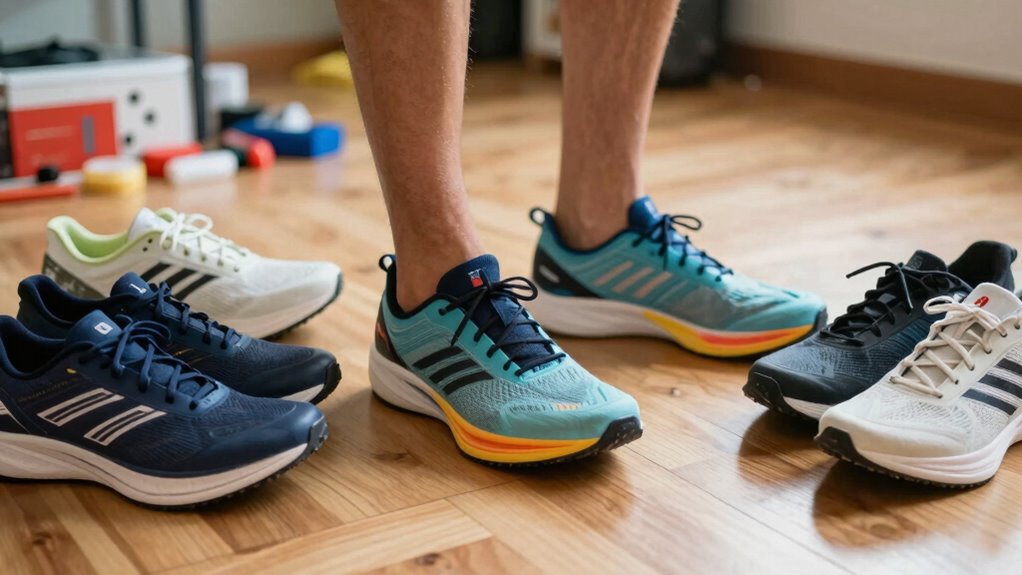
Are you unsure how to choose the perfect race shoes? The process can feel overwhelming, especially with so many options on the market. But if you start your decision-making weeks before the event, you give yourself plenty of time to find the right fit and style. One of the most critical factors to take into account is the shoe material. Different materials offer distinct benefits—some are lightweight and breathable, ideal for long-distance races, while others provide extra support and durability for intense training. For example, mesh uppers are popular because they allow air to circulate, keeping your feet cool during a race. On the other hand, synthetic or leather overlays can strengthen the shoe’s structure, offering more stability and longevity. Understanding these differences helps you choose a shoe that matches your racing conditions and personal preferences. Choosing the right shoe material can significantly impact your comfort and performance during the race.
Choosing the right shoe material enhances comfort, support, and performance during your race.
Another essential aspect to think about is brand reputation. Trustworthy brands have a history of manufacturing high-quality race shoes that combine innovation with durability. Do some research to identify brands known for their performance and customer satisfaction. Reading reviews and seeking recommendations from fellow runners can provide valuable insights into how well a particular brand’s shoes hold up over time. When a brand has a solid reputation, it often indicates consistent quality and a commitment to producing shoes that meet runners’ needs. This peace of mind is especially important when you’re preparing weeks ahead of your race, giving you confidence that your shoes won’t unexpectedly fail during your run. Additionally, considering shoe technology can help you find a pair that incorporates innovations to enhance your running experience. Exploring material innovations can also reveal newer, high-performance options that improve comfort and efficiency. Being aware of performance features can further guide you toward shoes that optimize your running style and goals. Staying informed about biodiversity and sustainability within the shoe industry can also help you make choices that align with sustainable living practices and reduce environmental impact.
As you narrow down your choices, try on several pairs to see how they feel on your feet. Pay attention to how the shoe material interacts with your foot’s shape and how snug or roomy the fit is. Remember, even the most reputable brand’s shoes aren’t one-size-fits-all; what works for one runner might not suit another. Take the time to break in new shoes by wearing them during training sessions, not just on race day. This way, you can identify any discomfort or issues early and make adjustments before the big day.
In the final weeks leading up to your race, avoid making drastic changes to your footwear. Stick with the pair you’ve tested and trained with consistently. By focusing on shoe material and brand reputation during your selection process, you set yourself up for a smoother race experience. Choosing the right shoes weeks in advance ensures you’re comfortable, confident, and ready to perform at your best when race day arrives.
best race shoes for long-distance running
As an affiliate, we earn on qualifying purchases.
As an affiliate, we earn on qualifying purchases.
Frequently Asked Questions
How Often Should I Replace My Race Shoes?
You should replace your race shoes every 300 to 500 miles, depending on your shoe material and running gait. Softer materials tend to wear out faster, so keep an eye on cushioning and outsole wear. If your running gait changes or you notice discomfort, it’s time for new shoes. Regularly check for signs of wear to prevent injury and guarantee peak performance.
Can I Test Race Shoes on a Treadmill Before the Race?
Absolutely, you can do a treadmill trial to test your race shoes—it’s like giving them a test run before the big day. Shoe testing on a treadmill helps you feel how they perform with your stride and comfort. Just make sure to run a few miles to get a real sense of their support and responsiveness. This way, you’ll avoid surprises and guarantee your shoes are race-ready!
What Should I Do if My Shoes Cause Blisters?
If your shoes cause blisters, stop wearing them immediately and address blister prevention. Apply blister pads or moleskin to reduce friction and protect your skin. Consider shoe fitting tips like ensuring a snug fit without tightness and checking for hot spots during runs. If blisters persist, switch to different shoes or insoles that better support your feet. Proper fitting and blister prevention techniques are key to keeping your feet comfortable and injury-free during your race.
Are Custom Orthotics Compatible With Race Shoes?
Yes, custom orthotics are compatible with race shoes, but you need to take into account orthotic compatibility and proper shoe fitting. Make sure your race shoes have enough space to accommodate your orthotics comfortably without sacrificing fit or support. It’s best to try on different shoes with your orthotics beforehand, ensuring they fit well and provide the necessary support for your race. This way, you avoid discomfort or injury during your event.
How Do I Break in New Race Shoes Quickly?
To break in new race shoes quickly, you want to focus on comfort, flexibility, and support. Wear shoes with soft, breathable materials that mold to your running gait, starting with short runs to ease into the fit. Gradually increase your mileage, listen to your body, and avoid blisters by using socks that wick moisture. This approach helps your shoes adapt to your gait, ensuring a smoother, more comfortable race day.
Conclusion
Remember, choosing race shoes is like planting a seed—you want to nurture it early for the best bloom come race day. I once waited until the last minute, only to find my shoes rubbing and blisters forming, turning my race into a painful detour. Start testing your options weeks in advance, and you’ll find your perfect fit blossoming just in time. Trust the process, and your feet will thank you when it counts.