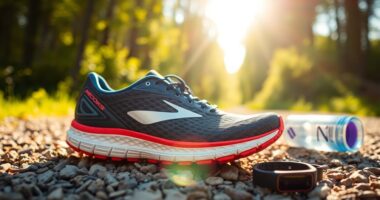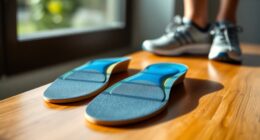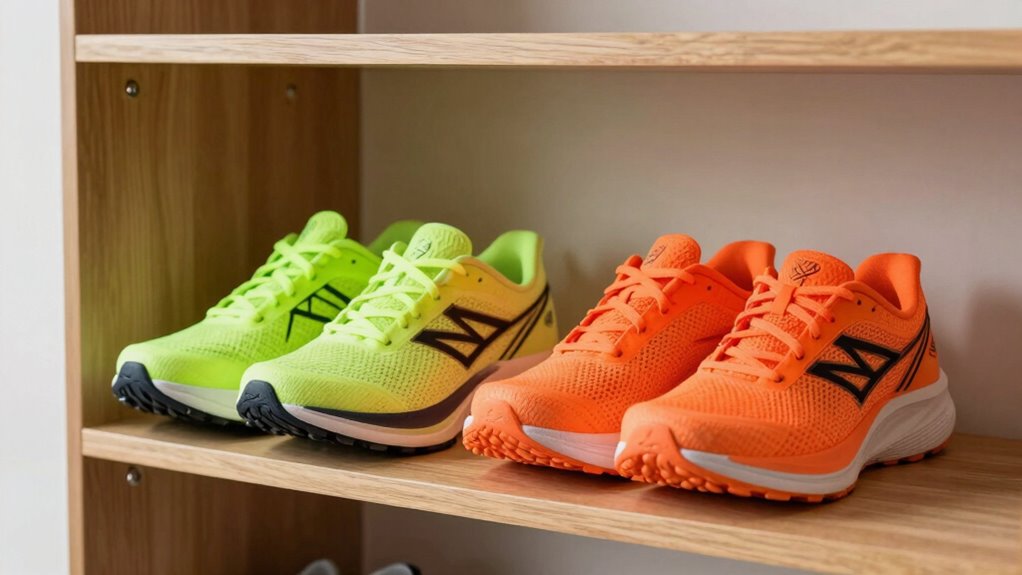
To make your running shoes last, always dry them properly after wearing—remove insoles and laces, stuff them with newspaper, and air in a well-ventilated spot. Store them upright in a cool, dry place that gets plenty of airflow, avoiding damp areas like basements. Use odor absorbers and give your shoes at least 24 hours to air out between wears. Proper storage prevents damage and keeps shoes fresh—keep exploring for more tips to preserve your favorite pair.

Get workout gear delivered free — and shop member deals
- Fast, free delivery on millions of items
- Access to Prime Big Deal Days deals on October 6–7
- Prime Video, Amazon Music and more included
Key Takeaways
- Always dry shoes thoroughly with newspaper or paper towels and good ventilation before storing.
- Store shoes in a cool, dry, well-ventilated area away from humidity and direct sunlight.
- Remove insoles and laces to allow better airflow and prevent odor buildup.
- Keep shoes upright or in a shape-maintaining position to prevent deformation.
- Use odor absorbers like baking soda and air out shoes between uses to maintain freshness.
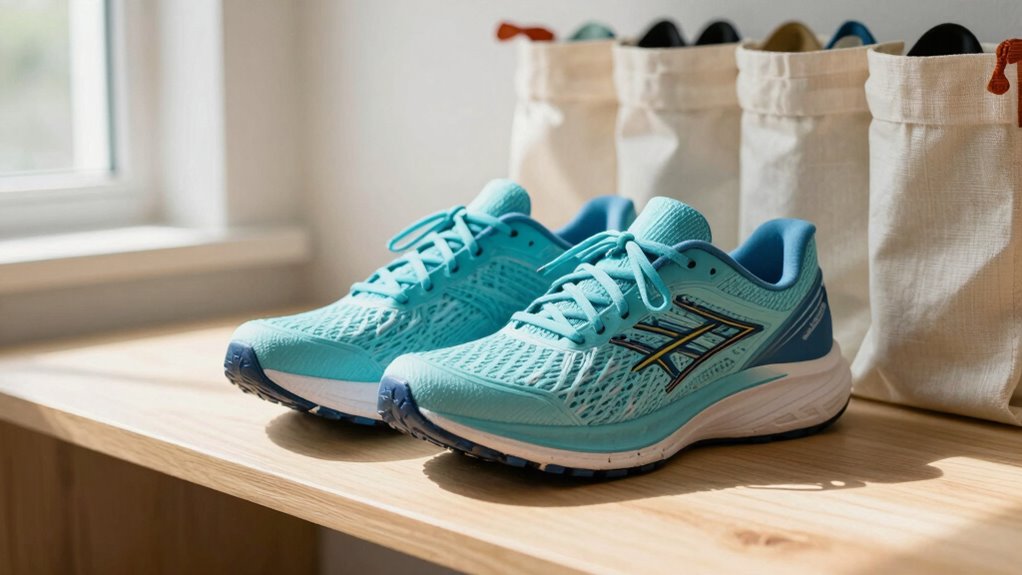
Have you ever wondered if you’re storing your running shoes the right way? It’s a common question, especially when new shoes quickly start to smell or lose their shape. Proper storage isn’t just about keeping your shoes neat; it’s about extending their lifespan and maintaining their performance. One key aspect is shoe odor prevention. If you leave your shoes crammed in a closet or under your bed without taking steps to control odor, bacteria and sweat buildup can make them smell terrible and even compromise their material over time. To prevent this, make sure your shoes are completely dry before storing them. Proper shoe drying is essential—never shove them into a plastic bag or airtight container right after a sweaty run because moisture gets trapped, leading to odors and mold. Instead, remove the insoles and laces, then let your shoes air out in a well-ventilated space. Using newspaper or paper towels inside can absorb excess moisture, speeding up the drying process. Ensuring your shoes are stored in a well-ventilated space is crucial for preventing mold and bacteria growth. Additionally, using proper drying techniques can significantly reduce the risk of developing unpleasant odors. Incorporating adequate airflow around your shoes can also help maintain their freshness and prevent moisture buildup.
You should also avoid storing your running shoes in damp or humid areas, such as basements or bathrooms, because these environments promote mold and bacteria growth. Instead, choose a cool, dry, and well-ventilated spot—like a shelf in your closet or near a window that gets airflow. If you want to keep your shoes fresh between wears, consider using odor-absorbing products like baking soda or specialized sneaker deodorizers. Placing these inside your shoes when you’re not wearing them helps control smell and bacteria. Additionally, rotating your shoes matters: avoid wearing the same pair every day. Giving your shoes at least 24 hours to air out allows moisture to evaporate completely, which is *vital* for shoe odor prevention and overall shoe health. Proper storage can also help preserve the material quality of your shoes, ensuring they last longer. Regularly inspecting your shoes for signs of moisture or damage is also recommended to catch issues early and prolong their lifespan.
When storing your running shoes, don’t crush or stack them tightly. Keep them upright or in a way that maintains their shape, especially if they’re made of delicate materials or have structural support. This prevents deforming the shoes and helps preserve their cushioning and support. *Finally*, regularly check your stored shoes for signs of moisture or odor, and clean them as needed. Proper shoe drying, combined with good ventilation and odor prevention strategies, ensures your running shoes stay fresh, comfortable, and durable for many miles to come. Taking these simple steps means your shoes will be ready to support your next run, rather than sitting unused and deteriorating in the shadows of neglect.
As an affiliate, we earn on qualifying purchases.
Frequently Asked Questions
Can Storing Shoes in the Fridge Extend Their Lifespan?
Storing shoes in the fridge isn’t a practical way to extend their lifespan. The cold and humidity can damage shoe materials like leather and mesh, causing cracks or mold. Instead, focus on controlling storage humidity by keeping shoes in a cool, dry place. Use breathable containers or shoe trees to maintain shape and prevent moisture buildup. Proper storage protects the materials, ensuring your running shoes stay in good shape longer.
Is It Better to Store Running Shoes With or Without Insoles?
Storing running shoes with insoles is like keeping a garden lush; they soak up moisture and can harbor bacteria. Without insoles, your shoes breathe easier, especially in dry, low-humidity environments. Shoe material matters too—mesh dries faster than leather. To extend their life, remove insoles if they get damp, and store shoes in a cool, dry place with low humidity. This keeps your shoes fresh and ready for every mile ahead.
How Often Should I Replace the Shoe Storage Containers?
You should replace your shoe storage containers when they show signs of wear or damage, typically every 1-2 years. Consider the shoe material and storage humidity—plastic containers work well for moisture control, but if they crack or warp, substitute them. Proper storage helps prevent mold and odor, so updating your containers guarantees your running shoes stay fresh and in good condition longer.
Do Shoe Deodorants Affect Storage Shelf Life?
Think of shoe deodorants as guardians for your shoes, protecting them from the villainous spread of odor. They generally don’t impact the storage shelf life, but some formulas might interact with certain shoe materials, causing potential damage over time. For odor prevention, choose deodorants compatible with your shoe material, and always allow shoes to dry completely before storing. Proper use keeps your shoes fresh and your storage long-lasting.
Should I Store Running Shoes in a Climate-Controlled Environment?
Yes, you should store your running shoes in a climate-controlled environment. Extreme temperatures and humidity can damage shoe material, causing deterioration and unpleasant odors. A cool, dry storage location helps preserve the shoe’s integrity and extends their lifespan. By maintaining proper conditions, you keep your running shoes in good shape, preventing mold, warping, or cracking, so they stay comfortable and durable for every run.
Conclusion
By properly storing your running shoes, you’re not just preserving their appearance—you’re safeguarding the memories of every mile, every victory, every struggle. Think of your shoes as silent witnesses to your journey, deserving gentle care when they’re not in use. With a simple routine, you guarantee they’re always ready for the next adventure, like a trusted friend waiting patiently in the shadows, enthusiastic to support you once more. After all, isn’t that what true care is all about?
Halloween Picks
halloween
As an affiliate, we earn on qualifying purchases.