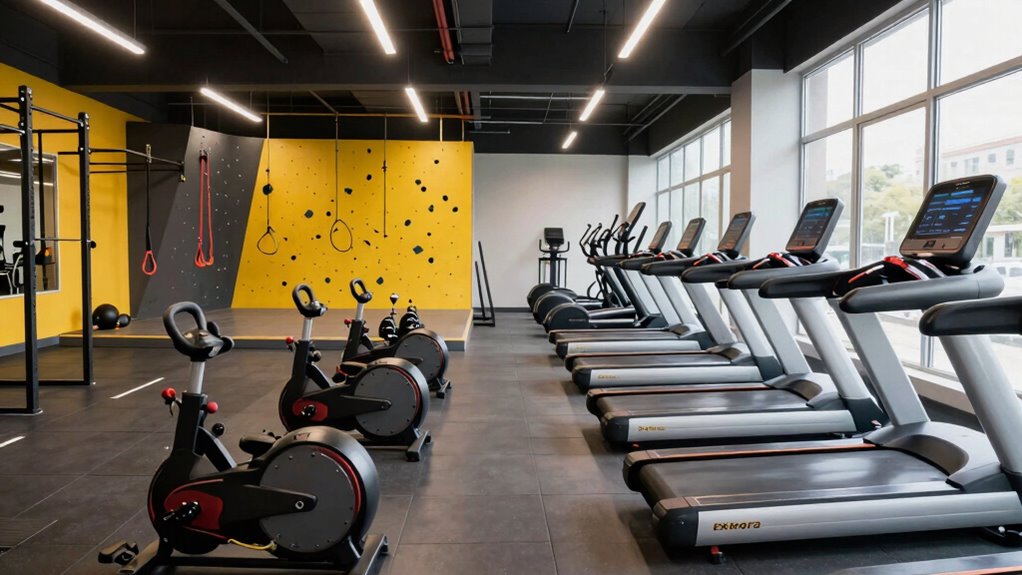
Cross-training equipment, like kettlebells and resistance bands, focuses on building strength and engaging multiple muscle groups. It enhances balance and functional fitness, making your workouts more dynamic. In contrast, cardio machines, such as treadmills and bikes, primarily boost aerobic capacity and endurance, helping you burn calories. Relying solely on cardio can lead to muscle loss. Mixing both can elevate your fitness game, and there’s more to discover about maximizing your workout routine.
Key Takeaways
- Cross-training equipment, like kettlebells and resistance bands, focuses on strength and functionality, engaging multiple muscle groups simultaneously.
- Cardio machines, such as treadmills and stationary bikes, primarily target aerobic fitness and endurance, elevating heart rate.
- Combining cross-training with cardio promotes a balanced workout, enhancing both strength and cardiovascular health.
- Cross-training prevents workout monotony and plateaus by varying intensity and exercise types, unlike traditional cardio machines.
- Engaging with diverse cross-training modalities fosters long-term adherence and motivation in fitness routines.
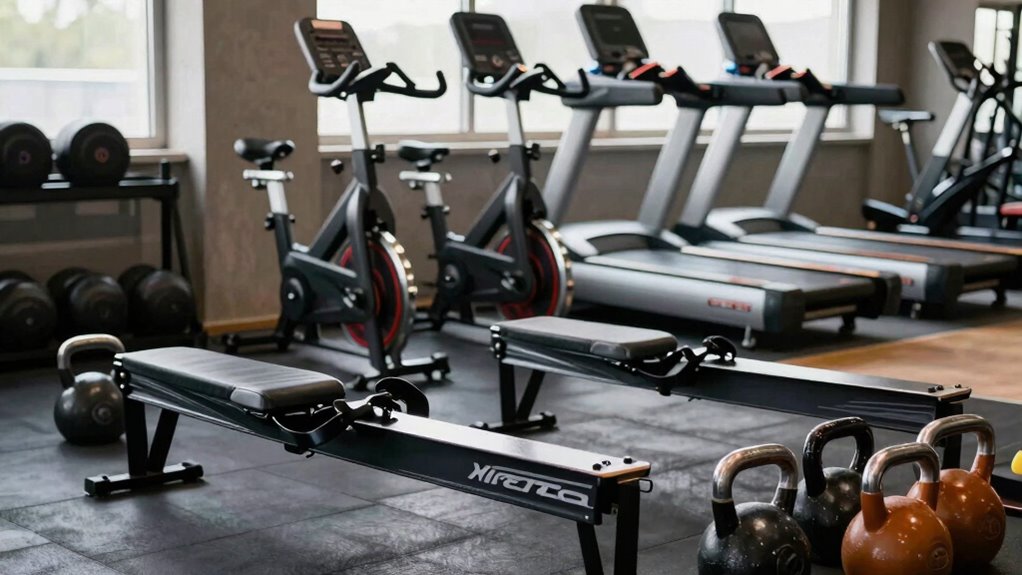
When you’re looking to boost your fitness routine, deciding between cross-training equipment and cardio machines can feel overwhelming. Both options offer unique benefits, but understanding the differences can help you make a more informed choice. Cross-training equipment generally includes tools like kettlebells, resistance bands, and medicine balls. These tools focus on strength training and functionality, allowing you to engage multiple muscle groups simultaneously. This can lead to improved balance, coordination, and overall body strength.
On the other hand, cardio machines like treadmills, stationary bikes, and ellipticals primarily target aerobic benefits. They elevate your heart rate, enhance endurance, and are excellent for burning calories. If your goal is to improve cardiovascular fitness, you might lean more toward these machines. However, relying solely on cardio can sometimes lead to muscle loss if you’re not incorporating strength training into your routine.
Cross-training equipment allows you to blend both cardio and strength elements into your workouts. For instance, you can perform high-intensity interval training (HIIT) routines that involve short bursts of strength exercises followed by cardio intervals. This combination can maximize your workout efficiency, giving you both the aerobic benefits of cardio and the muscle-building advantages of strength training. Incorporating varied training modalities can also help prevent stagnation and maintain your motivation.
Cross-training equipment seamlessly blends cardio and strength, maximizing workout efficiency through dynamic HIIT routines.
Using cross-training equipment also means you can adapt your workouts to prevent plateaus. By varying the intensity and types of exercises, you keep your body guessing and engaged. This is something you might miss with traditional cardio machines, where routines can become monotonous over time. Additionally, functional fitness can be significantly improved through cross-training, enabling better performance in daily activities. Including multi-modal training can further enhance your overall fitness and prevent boredom.
Plus, cross-training helps reduce the risk of injury since it promotes a more balanced approach to fitness. By working on strength, flexibility, and endurance, you’re less likely to overwork specific muscle groups. Incorporating diverse training modalities can also improve overall functional fitness and performance. If you’re someone who enjoys variety, cross-training equipment allows you to mix things up with different modalities, ensuring you stay motivated.
kettlebell set for strength training
As an affiliate, we earn on qualifying purchases.
As an affiliate, we earn on qualifying purchases.
Frequently Asked Questions
Can Cross-Training Equipment Help With Weight Loss Effectively?
Yes, cross-training equipment can help with weight loss effectively. By engaging multiple muscle groups, it boosts your calorie burn compared to traditional cardio machines. The varied workouts challenge your body, preventing plateaus and keeping you motivated. Plus, it improves overall fitness, which enhances your ability to burn calories even at rest. Incorporating cross-training into your routine can accelerate your weight loss journey and make your workouts more enjoyable.
Are Cardio Machines Better for Endurance Training?
Cardio machines can definitely be better for endurance training, but don’t overlook cross-training equipment. While cardio machines offer consistent endurance benefits through steady workouts, cross-training adds variety, engaging different muscle groups and reducing the risk of injury. You’ll find that mixing both can enhance your training regime. So, if you’re aiming for improved stamina, incorporating a mix of these tools can keep your workouts fresh and effective.
How Often Should I Use Cross-Training Equipment?
You should use cross-training equipment about three to four times a week to maximize its benefits. This frequency allows you to enjoy the versatility that different machines offer, targeting various muscle groups while keeping your workouts fresh. Incorporating cross training not only boosts your endurance but also helps prevent injuries by reducing repetitive strain. So, mix it up, stay consistent, and reap the full range of cross-training benefits for your fitness journey!
What’s the Cost Difference Between the Two Types?
Imagine you’re choosing between a sturdy ship and a sleek speedboat. When it comes to cost comparison, cross-training equipment often carries a higher price tag, but it’s built for durability, making it a long-term investment. Cardio machines, while usually cheaper upfront, may not last as long under heavy use. Weigh your options based on your fitness goals to decide which vessel will take you further on your journey!
Can Beginners Use Cross-Training Equipment Safely?
Yes, beginners can use cross-training equipment safely. Start with lighter resistance and lower intensity to avoid injury. It’s crucial to warm up before workouts and cool down afterward. Focus on proper form to maximize benefits and prevent strain. Beginner tips include setting realistic goals and gradually increasing your workout duration. Always listen to your body and take breaks when needed. Incorporating safety measures guarantees a positive and effective cross-training experience.
Conclusion
In the grand symphony of fitness, cross-training equipment dances gracefully alongside cardio machines. While the latter keeps your heart racing, the former invites you on a journey of strength and versatility. Choosing between them isn’t just about calories burned; it’s about crafting a well-rounded routine that harmonizes your body’s needs. So, embrace the variety, and let each piece of equipment serenade you toward your goals, making every workout a delightful adventure.