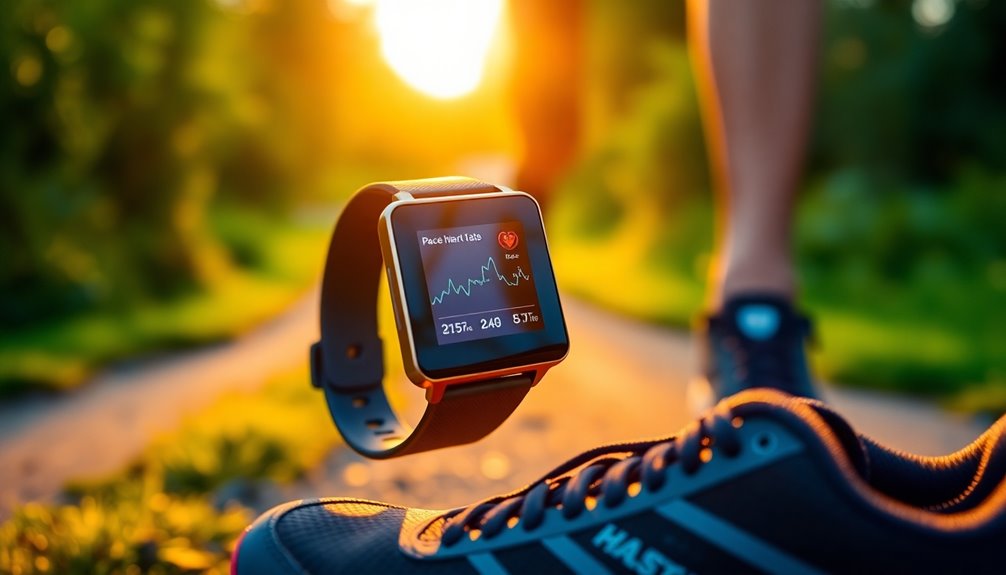

For most runners choosing a Fitbit for runners, the Fitbit Charge 6 is the strongest all-around pick: it has a display for checking workout stats and offers built-in GPS for recording outdoor routes without carrying a phone. The Fitbit Air suits runners who prefer a screenless, less distracting tracker, while the Inspire 3 is a simpler, compact option for everyday activity and wellness tracking. The main tradeoff is whether you want on-wrist running data and route tracking or a lighter device focused on basic tracking. Fitbit’s lineup also includes several color and bundle variations, so not every listing represents a different running experience. Read on for how the nine options compare and which type of runner each one suits.

Get workout gear delivered free with Prime
- Fast, free delivery on millions of items
- Prime Video, Amazon Music and more included
- Member-only deals all year
Complete the kit

Key Takeaways
- Charge 6 stands apart for outdoor running: Built-in GPS and a screen make it the most capable choice here for checking workout information and recording a route without relying on a phone.
- Air favors distraction-free tracking, not detailed on-wrist feedback: Its screenless design may appeal to runners who want a low-profile tracker, but it is less suited to checking pace or stats mid-run.
- Inspire 3 is the simpler everyday pick: Its small form and basic tracking focus suit beginners and casual runners, while runners seeking richer run data should look to Charge 6.
- Most of the nine listings are variations, not distinct models: The three Charge 6 listings and three Inspire 3 listings differ mainly by color or presentation, so buyers should compare the model and included accessories rather than assume a performance difference.
- Running style should drive the choice: Cross-country runners who need phone-free route recording have a stronger case for Charge 6; runners who already carry a phone or care most about a discreet tracker may prefer Air or Inspire 3.


| fitbit for runner | Color | Battery life | Exercise modes |
|---|---|---|---|
| Google Fitbit Inspire 3 | — | Up to 10 days | — |
| Google Fitbit Air Special Edit | — | 7 days | — |
| Google Fitbit Charge 6 | Gold/Coral | — | 40+ |
| Fitbit Charge 6 Fitness Tracke | Porcelain/Silver | — | 40+ |
| Google Fitbit Charge 6 | Obsidian/Black | — | 40+ |
| Fitbit Inspire 3 Fitness Track | — | Up to 10 days | More than 20 |
| Google Fitbit Air | Lavender | Up to 7 days | — |
| Fitbit Google Air | Obsidian | Up to 7 days | — |
| Google Fitbit Inspire 3 | Midnight Zen/Black | — | More than 40 |
More Details on Our Top Picks
Google Fitbit Inspire 3 – Lilac Bliss/Black – Small and Large Bands
The Inspire 3 makes the most sense for runners who want basic workout and wellness tracking without the bulk or complexity of the Charge 6. Its up to 10-day battery life means less charging between runs, while 50-meter water resistance suits swim sessions and wet-weather training. The color touchscreen offers a quick glance at notifications and activity, but this model’s supplied information does not list built-in GPS, so route tracking may depend on a phone. For cross-country runners asking whether a Versa-style Fitbit makes a good running watch, the Inspire 3 is a simpler, lighter-tracking alternative—not a dedicated navigation or performance watch. Compared with the GPS-equipped Fitbit Charge 6, it gives up built-in route tracking and broader exercise tools for longer stated battery life and a more straightforward experience. Some insights also require Premium.
Pros:- Up to 10 days of stated battery life reduces charging interruptions
- Color touchscreen provides at-a-glance activity and phone notifications
- 50-meter water resistance supports swimming and wet-weather use
- Small and large bands are included for a more flexible fit
Cons:- Built-in GPS is not listed, limiting phone-free route tracking
- Some personalized insights require a Fitbit Premium subscription
- Some features, including irregular heart rhythm notifications, have regional limits
Best for: New or casual runners who want a slim tracker for activity, sleep, and heart-health monitoring and are comfortable bringing a phone for route tracking.
Not ideal for: Cross-country runners who need built-in GPS, route guidance, or detailed run metrics without carrying a phone.
- Compatibility:Apple iOS 15 or higher; Android OS 9 or higher
- Water resistance:Up to 50 meters
- Battery life:Up to 10 days
- Display:Color touchscreen
- Included bands:Small and large
- Included membership:6-month Fitbit Premium membership
Our verdict“Choose the Inspire 3 for approachable everyday and beginner-run tracking, but pick the Charge 6 if you need built-in GPS for cross-country routes.”
Google Fitbit Air Special Edition Stephen Curry – Screenless Fitness Tracker – Rye
The Fitbit Air Special Edition Stephen Curry is aimed at runners who prefer a low-distraction tracker they can wear through workouts and sleep. Its screenless design avoids notifications and on-run glances, while the Google Performance Loop band and stated seven-day battery life support all-day wear. The tradeoff is immediate feedback: unlike the touchscreen Inspire 3 or GPS-equipped Charge 6, this Air has no display and needs a compatible smartphone for GPS functionality. That makes it a weaker fit for runners who want to check pace or follow routes from their wrist, especially on cross-country courses. It does offer 50-meter water resistance and a quick-charge claim, but it is best understood as a discreet health and activity tracker rather than a standalone running watch.
Pros:- Screenless design keeps on-run notifications and visual distractions out of the way
- Google Performance Loop band is designed for comfortable all-day wear
- Seven-day stated battery life supports regular use between charges
- Water resistance up to 50 meters suits swimming and sweaty workouts
Cons:- No display means no immediate on-device run feedback
- GPS functionality requires a compatible smartphone
- Its fitness and health focus omits advanced smartwatch features
Best for: Runners who want screen-free activity and health tracking for workouts and sleep, and who are happy to use a compatible phone for GPS.
Not ideal for: Runners who rely on wrist-visible pace, route information, or phone-free GPS during road or cross-country runs.
- Operating system:Fitbit OS
- Battery life:7 days
- Fast charging:5 minutes for 1 day of use
- Water resistance:Up to 50 meters
- Supported devices:Android 11.0 or higher; iOS 16.4 or higher
- Display:No display; listed display size 16.5 mm
- Band material:Google Performance Loop
- Weight:49 g
Our verdict“Pick this Air for discreet, screen-free tracking, not for runners who need GPS and run data directly on their wrist.”
Google Fitbit Charge 6 – Fitness Tracker – Gold/Coral
The Fitbit Charge 6 is the strongest runner-focused choice in this group because its built-in GPS can record routes without relying on a phone, and its 40-plus exercise modes cover more than running alone. Heart-rate tracking and Active Zone Minutes help runners follow effort, while sleep and stress measures add recovery context. Google Maps, Wallet, and YouTube Music controls give it more day-to-day utility than the simpler Inspire 3. That breadth comes with tradeoffs: personalized coaching is tied to an optional Google Health Premium subscription, and the supplied details do not specify battery life or water resistance. For cross-country runners wondering whether a Versa-style Fitbit can serve as a running watch, this Charge 6 is the better-supported pick here for phone-free GPS, though route guidance and detailed race-training features are not established by the supplied data.
Pros:- Built-in GPS supports phone-free route recording
- More than 40 exercise modes suit varied training and cross-training
- Tracks heart rate, Active Zone Minutes, sleep, stress, and calories
- Google Maps, Wallet, and YouTube Music controls add everyday functions
Cons:- Personalized coaching features require Google Health Premium
- Battery life and water-resistance details are not provided here
- The Gold/Coral color option may not suit every runner’s preference
Best for: Runners who want built-in GPS, broad exercise tracking, and everyday Google services in a single wrist-worn tracker.
Not ideal for: Runners who want verified long battery life, extensive on-device navigation, or personalized coaching without a subscription.
- Color:Gold/Coral
- GPS:Built-in
- Exercise modes:40+
- Metrics tracked:Calories, Active Zone Minutes, sleep, heart rate, stress
- Connectivity:YouTube Music controls, Google Wallet, Google Maps
- Subscription:Google Health Premium; trial included
Our verdict“Choose the Gold/Coral Charge 6 if built-in GPS and broad training metrics matter more than a confirmed battery-life specification.”
Fitbit Charge 6 Fitness Tracker – Porcelain/Silver
This Porcelain/Silver Charge 6 suits runners who want GPS and a tracker that also handles everyday Google conveniences. Its built-in GPS and 40-plus exercise modes put it on similar running footing to the Gold/Coral Charge 6, while Google Maps turn-by-turn directions, Wallet payments, and YouTube Music control make it the more explicitly described choice for connected daily use. Sleep Score, stress scores, and Smart Wake extend its appeal beyond training, though they do not replace run-specific coaching. Compared with the Inspire 3, this Charge 6 is better equipped for phone-free route recording; compared with the screenless Fitbit Air, it provides a more conventional on-device experience. The tradeoff is that personalized coaching requires a separate Premium subscription, and the supplied listing does not state battery life or a specific water-resistance depth.
Pros:- Built-in GPS and 40-plus exercise modes support varied training
- Google Maps turn-by-turn directions, Wallet, and YouTube Music controls are listed
- Sleep Score, stress score, and Smart Wake support recovery routines
- Multisport tracking suits runners who also train in other activities
Cons:- Advanced coaching features require a separate Google Health Premium subscription
- Battery life is not specified in the supplied product details
- Water resistance is listed without a depth rating
Best for: Runners who want built-in GPS plus Google Maps, contactless payments, music controls, and sleep insights for everyday use.
Not ideal for: Runners who prioritize a known multi-day battery specification or want premium coaching included beyond a trial.
- Color:Porcelain/Silver
- GPS:GPS enabled
- Exercise modes:40+
- Sport type:Multi-sports
- Additional features:Activity tracker, multisport tracker, ECG, contactless payments, sleep monitor
- Band material:Silicone
- Case material:Stainless steel or metal
- Water resistance:Water resistant; depth rating not specified
Our verdict“Choose this Charge 6 if Google navigation and daily smartwatch conveniences matter alongside GPS-based running.”
Google Fitbit Charge 6 – Fitness Tracker – Obsidian/Black
The Obsidian/Black Charge 6 keeps the running essentials prominent: built-in GPS, more than 40 exercise modes, heart-rate tracking, and Active Zone Minutes. For runners who want route recording without carrying a phone, that makes it a more capable choice than the Inspire 3; the Inspire counters with a longer stated battery life, but its supplied specs do not list built-in GPS. The Charge 6 also tracks sleep and calories and connects with Google Maps, Wallet, and YouTube Music, so it can pull double duty outside workouts. Its main compromise is that the data describes personalized coaching as optional Premium content, while some features depend on compatible devices and apps. Like the Gold/Coral Charge 6, it fits runners seeking GPS and broad metrics; the black finish simply offers a more understated look.
Pros:- Built-in GPS records running routes without relying on a phone
- More than 40 exercise modes support running and cross-training
- Tracks calories, Active Zone Minutes, sleep, and heart rate
- Google Maps, Wallet, and YouTube Music controls broaden daily usefulness
Cons:- Personalized coaching requires a Google Health Premium subscription
- Some functions depend on compatible devices and apps
- Battery life is not specified in the supplied product data
Best for: Runners who want built-in GPS and broad activity tracking in a low-key black finish, with Google services available for daily use.
Not ideal for: Runners who need a stated battery-life guarantee, want coaching without a subscription, or prefer a tracker with fewer connected features.
- Color:Obsidian/Black
- GPS:Built-in
- Exercise modes:40+
- Metrics tracked:Calories, Active Zone Minutes, sleep, heart rate
- Connectivity:YouTube Music controls, Google Wallet, Google Maps
- Subscription:Google Health Premium; trial included
Our verdict“Pick the Obsidian/Black Charge 6 for understated styling and built-in GPS, provided its subscription-dependent coaching and unspecified battery life suit you.”
Fitbit Inspire 3 Fitness Tracker – Advanced Health Insights with Stress Management, Sleep & Heart Rate Monitoring, Includes Small and Large Classic Bands (Lilac Bliss/Black)
For runners who want a lightweight tracker for training habits as well as sleep and stress, the Fitbit Inspire 3 offers a useful mix of more than 20 exercise modes, 24/7 heart-rate tracking, and Active Zone Minutes. Its up-to-10-day battery life means fewer charging breaks than the Fitbit Air’s up-to-7-day rating, while the screen makes workout information easier to check at a glance. But it is not a strong pick for standalone cross-country route tracking: GPS comes from a connected smartphone, so you need to carry your phone to record location. Compared with the screenless Air, the Inspire 3 gives more on-device feedback; compared with a Fitbit Charge 6, it is the simpler choice for runners who prioritize wellness tracking over a more training-focused feature set. The included two band sizes help with fit, though the plastic case and phone-dependent GPS are real limits.
Pros:- More than 20 exercise modes and Active Zone Minutes support general workout tracking
- Up to 10 days of battery life reduces charging frequency
- 50-meter water resistance suits swimming and everyday wear
- Small and large bands make it easier to find a comfortable fit
Cons:- No built-in GPS; location tracking relies on a connected smartphone
- Plastic case is less substantial than a more premium watch-style device
- Small display is less suited to reviewing detailed workout data
Best for: Runners who carry a smartphone and want an affordable-feeling, screen-based tracker for heart rate, exercise habits, sleep, and stress.
Not ideal for: Cross-country runners who want to leave their phone behind and track routes, or runners seeking detailed training tools from the watch itself.
- GPS:Connected smartphone GPS
- Battery life:Up to 10 days
- Water resistance:50 meters
- Exercise modes:More than 20
- Display:OLED touchscreen
- Sensors:Optical sensor and accelerometer
- Band material:Silicone
- Included bands:Small and large
Our verdict“Choose the Inspire 3 for everyday running and broad wellness tracking if carrying your phone for GPS is acceptable.”
Google Fitbit Air – Screenless Activity Tracker with Fitness, Heart Rate, and Sleep Tracking – Personalized AI-Powered Coaching – Up to 7 Days’ Battery Life – Works with iOS and Android – Lavender
The Google Fitbit Air suits runners who want continuous activity and sleep tracking without a display competing for attention. Its lightweight, adjustable band is designed for all-day wear, and fast charging adds a day of battery life in five minutes, a handy option when a run is coming up and the tracker is nearly empty. Unlike the screen-based Fitbit Inspire 3, though, the Air cannot show workout details on your wrist; the supplied information also does not specify GPS, so I would not choose it for dependable route recording on cross-country runs. Its coaching plans and deeper guidance require a separate Google Health Premium subscription, which makes the core tracker a better fit for people who value unobtrusive wear than those seeking a full set of running metrics. The Charge 6 is a more suitable comparison for runners wanting a display and richer workout interaction.
Pros:- Screenless design avoids wrist notifications and workout-display distractions
- Micro-adjustable fit is designed for continuous wear, including sleep
- Up to seven days of battery life
- Five minutes of charging provides a stated day of use
Cons:- No display for checking workout information while running
- Personalized coaching and plans require a separate subscription
- Product details provided do not specify GPS or detailed running metrics
Best for: Runners who prefer a screen-free, lightweight tracker for day-to-day activity and sleep, and are comfortable checking information through a phone.
Not ideal for: Cross-country runners who need documented built-in or phone-connected GPS details, or anyone who wants pace and workout stats visible on the wrist.
- Design:Screenless activity tracker
- Fit range:130–210 mm
- Battery life:Up to 7 days
- Fast charging:Five minutes provides up to one day of battery life
- Tracking:Activity, heart rate, and sleep
- Coaching:Google Health Coach features require a subscription
- Phone compatibility:iOS and Android
- Color:Lavender
Our verdict“Pick the Fitbit Air if comfort and screen-free daily tracking matter more than on-wrist running data or route recording.”
Fitbit Google Air – Screenless Activity Tracker – Obsidian
This Obsidian Fitbit Air is the pared-back choice for runners who want a tracker they can wear through the day and night without a screen. The listed details confirm a 130–210 mm fit range, up to seven days of battery life, and fast charging that supplies a day’s use in five minutes. That makes it easier to keep tracking through ordinary routines than a device that needs frequent charging. Its role differs from the Fitbit Inspire 3: the Inspire has a display and specified exercise modes, while this Air keeps the experience quieter but offers fewer details for judging a run. Google Health Premium coaching is a subscription feature, not a reason to assume advanced training tools come with the tracker. Since GPS and detailed running metrics are not specified, this is a weak match for cross-country route tracking; it fits better as a low-profile wellness companion.
Pros:- Screenless design stays visually discreet during runs and daily wear
- Lightweight form and adjustable 130–210 mm fit range support continuous wear
- Up to seven days of battery life
- Five minutes of charging provides a stated day of use
Cons:- No screen for quick access to workout feedback
- Personalized coaching features require a separate subscription
- GPS and detailed activity metrics are not specified in the supplied product data
Best for: Runners who want an unobtrusive tracker for everyday activity and sleep, and do not need to view workout stats on their wrist.
Not ideal for: Runners training by pace or route, especially cross-country runners who need clearly specified GPS support or detailed workout metrics.
- Design:Screenless activity tracker
- Fit range:130–210 mm
- Battery life:Up to 7 days
- Fast charging:Five minutes provides one day of use
- Tracking focus:Continuous health monitoring
- Coaching:Personalized coaching available through Google Health Premium
- Color:Obsidian
Our verdict“Choose this Fitbit Air for discreet activity and sleep tracking, not for a runner’s primary GPS watch.”
Google Fitbit Inspire 3 – Midnight Zen/Black – Small and Large Bands
The Google Fitbit Inspire 3 is a straightforward entry point for runners building a regular routine: it tracks 24/7 heart rate, Active Zone Minutes, sleep, stress, and more than 40 exercise modes, according to this listing. Those wellness measures can help put training in context, while the screen offers more immediate feedback than either screenless Fitbit Air. The key running limitation is that the supplied product details do not list GPS, so I would not rely on it as a cross-country route watch without confirming how location tracking works for this specific version. Compared with the other Inspire 3 listing, this one explicitly names iOS and Android compatibility and Daily Readiness Score, but provides less detail about water resistance and battery life. It is a practical choice for general fitness tracking, not a dedicated running-watch replacement.
Pros:- Lists more than 40 exercise modes for tracking varied workouts
- Tracks 24/7 heart rate, sleep, stress, and Active Zone Minutes
- Daily Readiness Score and mindfulness sessions add wellness context
- Includes small and large bands and supports iOS and Android
Cons:- GPS support is not specified in the supplied product details
- Battery life and water resistance are not specified for this listing
- Provides less documented running-specific detail than a more training-focused tracker such as Charge 6
Best for: Newer runners who want exercise-mode variety, heart-rate and wellness tracking, and compatibility with an iPhone or Android phone.
Not ideal for: Runners who need verified GPS route tracking, detailed on-watch training data, or confirmed swim-resistance specifications.
- Compatibility:Apple iOS 16.4 or higher; Android OS 11.0 or higher
- Exercise modes:More than 40
- Heart-rate tracking:24/7
- Activity metric:Active Zone Minutes
- Wellness tracking:Sleep and stress
- Additional features:Daily Readiness Score and mindfulness sessions
- Included bands:Small and large
- Color:Midnight Zen/Black
Our verdict“The Inspire 3 is a sensible starter fitness tracker for general running routines, but not my pick for cross-country GPS recording.”

How We Picked
I ranked these trackers by how well their stated features serve a runner’s actual routine: recording outdoor runs, checking information during a workout, wearing the device comfortably, and using it for everyday activity beyond running. Built-in GPS and an on-device display carry extra weight for runners who want to leave a phone behind or glance at workout data. A screenless tracker can still suit a runner, but its role is different: it prioritizes a less distracting, lower-profile experience over at-a-glance feedback.
The ranking reflects those differences rather than treating every color listing as a separate performance tier. Charge 6 leads because it offers the most directly useful running setup among these choices; Air follows for runners who value screenless wear, and Inspire 3 is positioned as the more straightforward everyday option. The products provided include repeated model families and color variants, not nine distinct feature sets, so I treat those listings as buying alternatives rather than inventing differences that the product information does not support.
| fitbit for runner | Color |
|---|---|
| Google Fitbit Inspire 3 | — |
| Google Fitbit Air Special Edit | — |
| Google Fitbit Charge 6 | Gold/Coral |
| Fitbit Charge 6 Fitness Tracke | Porcelain/Silver |
| Google Fitbit Charge 6 | Obsidian/Black |
| Fitbit Inspire 3 Fitness Track | — |
| Google Fitbit Air | Lavender |
| Fitbit Google Air | Obsidian |
| Google Fitbit Inspire 3 | Midnight Zen/Black |
Factors to Consider When Choosing Fitbit For Runners
Before choosing a Fitbit for running, decide what you need it to do while you are moving—not just what you want it to track afterward. A device that works well for casual jogs may feel limiting for cross-country training, while a screenless tracker can be a good match if you carry your phone and prefer fewer distractions.
Decide Whether You Need Phone-Free GPS
Think about where your runs take you and whether you want to bring your phone. Built-in GPS can record a route from the tracker itself, which is useful on trails or during runs when carrying a phone feels inconvenient. If you always run with a phone, GPS requirements may matter less, but confirm how the tracker records routes and whether it depends on connected GPS for the activity you care about. Cross-country runners should also think about how often they run in places with limited signal or changing terrain. Do not choose based on the word “running” alone: route recording and dependable workout data are separate needs. If route detail is central to your training, compare the tracker’s GPS capabilities against a dedicated running watch before buying.
Choose How Much Run Data You Want on Your Wrist
A screen changes the running experience: it lets you check workout information without reaching for a phone, while a screenless tracker keeps the device visually quiet. At-a-glance feedback matters more for runners who monitor progress during intervals or want to check a session as it unfolds. A screenless design may suit steady runs where you would rather review the workout later. Avoid assuming that a device tracks an activity just because it can measure heart rate; the information available during the run may be limited. Decide whether you need live feedback or simply a record of activity after you finish. That preference may matter more than the number of wellness features listed.
Match the Tracker to Your Training, Not Your Ambition
For short recreational runs, daily activity tracking and basic workout logging may be enough. A runner building structured workouts, checking pace, or training toward a specific goal may need more running-focused metrics than a general fitness tracker provides. Be realistic about your routine: buying for a training plan you do not follow can leave you paying attention to features you rarely use. Cross-country runners may also value reliable route tracking and clear workout controls over extra lifestyle features. If you already use a running app or watch, check whether a Fitbit will add useful information or just duplicate it. Choose the lightest feature set that supports the way you actually train.
Prioritize Comfort for Long Runs and Daily Wear
A tracker that feels fine for a quick jog may become irritating during a long run or overnight wear. Fit, strap adjustment, and how the device sits on your wrist all affect whether you keep wearing it consistently. Comfort supports consistent tracking, which can be more useful than a longer feature list if the device is meant to follow activity, sleep, and recovery habits. Check which band sizes are included and whether the fit works for your wrist before settling on a color variant. Runners who dislike a visible screen may gravitate toward a screenless model, while others prefer a display they can read quickly. Do not treat a smaller body or simpler design as proof that the tracker will suit every wrist.
Separate Model Differences From Color and Listing Differences
This lineup has multiple listings for the same core tracker, including several Charge 6 and Inspire 3 options. Color is not a performance upgrade, so compare model names, included bands, and stated functions before deciding between near-duplicate listings. Product titles can also emphasize different features or bundles, even when the underlying device family is the same. Check that the listing matches the tracker you intend to buy, especially if built-in GPS or a screenless design is a deciding factor. This simple check prevents a common mistake: choosing a listing based on its wording while overlooking that another option is the same model in a different finish. Focus your decision on the device role first and the color second.
Know When to Choose a Dedicated Running Watch
A Fitbit can cover everyday activity and recreational running, but runners with demanding training needs may want more specialized tools. Pay for running depth only if you will use it: detailed workout controls, training analysis, and navigation features can matter more than general wellness tracking for serious mileage. On the other hand, a dedicated running watch may feel unnecessary if you mainly jog for fitness and want one device for daily wear. Compare the run-specific tools you need against the comfort, simplicity, and everyday tracking you want. Runners heading onto unfamiliar trails should give route and navigation needs extra attention. The right choice is the one that supports both your usual run and the way you review it afterward.
Frequently Asked Questions
Does the Fitbit Charge 6 make a good cross-country running watch?
Charge 6 is the strongest Fitbit option in this lineup for cross-country runners who want built-in GPS and a display for checking workout information. Those features can help record outdoor routes and give you on-wrist access to data during a run. It is still a fitness tracker rather than a dedicated running watch, so runners who depend on advanced training analysis or specialized navigation should check whether it meets those needs. For casual and recreational cross-country runs, it has a more suitable feature mix than the screenless Air or the simpler Inspire 3. If detailed trail guidance is central to your training, compare it with running-focused watches before choosing.
Can I track an outdoor run with a Fitbit Air if it has no screen?
A screenless design does not automatically prevent activity tracking, but it changes how you interact with the tracker. You will not have a display for checking run information at a glance, so it is a better fit if you prefer to keep the device unobtrusive and review activity later. Check the specific Air listing’s GPS details before relying on it to record a route without your phone; the supplied product descriptions do not establish that every Air listing has built-in GPS. If phone-free route tracking is a priority, Charge 6 is the clearer choice among these options. Air makes more sense when a low-profile design matters more than live feedback.
Which Fitbit should I pick for a first running tracker?
Inspire 3 is a sensible starting point if you want a compact tracker for casual runs and everyday activity without making the choice about advanced running features. Charge 6 is a better first pick if you already know you want a screen and built-in GPS for outdoor runs. Consider how you run now: a beginner who always carries a phone may not need the same setup as someone who wants to leave it at home. Also think about whether you will check workout stats while running or only review them later. Choosing around those habits helps prevent buying features you will not use—or outgrowing a basic tracker quickly.
Are the different Charge 6 listings different trackers?
The listings in this roundup name the same core Charge 6 model in different color combinations. The product information provided does not indicate a different running feature set between the Gold/Coral, Porcelain/Silver, and Obsidian/Black options. Compare the exact listing details for included accessories and the finish you prefer, but do not assume a color changes GPS, screen, or workout capability. The same applies to the multiple Inspire 3 listings. Start with the model that fits your running needs, then choose the listing that matches your preferred color and stated bundle.
Should I buy a Fitbit or a dedicated running watch for trail training?
Choose a Fitbit if you want running activity alongside general fitness and wellness tracking, and its route and workout functions match your needs. A dedicated running watch may be a better fit if your training depends on specialized navigation, detailed workout planning, or in-depth running analysis. Cross-country runners should be particularly clear about whether recording a route is enough or whether they need guidance while on the route. Among these Fitbit options, Charge 6 is the most directly suited to outdoor running, while Air and Inspire 3 lean more toward discreet or everyday tracking. Let your training requirements—not the label on the product—decide which type of device belongs on your wrist.
Conclusion
Best overall for runners: choose Fitbit Charge 6 if you want a display and built-in GPS, especially for outdoor or cross-country runs. Best value-style choice for a simple routine: Inspire 3 suits casual runners who want compact everyday tracking and do not need the more running-oriented setup. Best for beginners: Inspire 3 is the straightforward place to start, while Charge 6 is the better beginner choice if you already want phone-free route tracking. Best for a screenless preference: Fitbit Air fits runners who value a low-profile tracker and are comfortable going without on-wrist run stats; check GPS details on the exact listing. Best premium-style pick within this lineup: Charge 6 is the most feature-oriented option for running, though the supplied product details do not establish a separate premium tier. For the color variants, pick the model first and the finish second—the running capabilities are tied to the tracker family, not the shade.