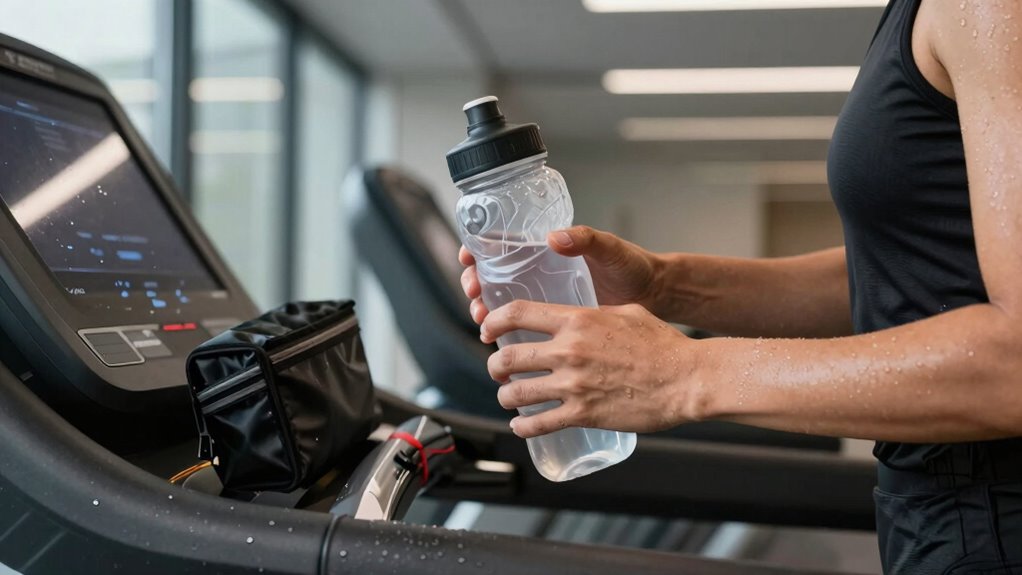
To adjust hydration for indoor treadmill runs, drink small amounts of water or electrolytes every 15 to 20 minutes, especially if you’re running at higher intensities or in warm environments. Monitor your sweat rate to personalize your intake, and consider adding electrolyte drinks for longer or more intense sessions. Be sure to hydrate before you start and listen to your body’s signals. Want to optimize your hydration even more? Keep exploring for expert tips.

Get workout gear delivered free with Prime
- Fast, free delivery on millions of items
- Prime Video, Amazon Music and more included
- Member-only deals all year
Key Takeaways
- Monitor sweat rate and adjust fluid intake accordingly, especially during higher intensity or longer indoor treadmill sessions.
- Use electrolyte drinks for extended or intense workouts to replenish lost sodium, potassium, and magnesium.
- Drink small, regular amounts of fluids every 15-20 minutes to prevent dehydration without stomach discomfort.
- Pre-hydrate before starting your treadmill run for a solid hydration foundation.
- Consider indoor temperature and humidity to tailor hydration needs and prevent electrolyte imbalances or overheating.
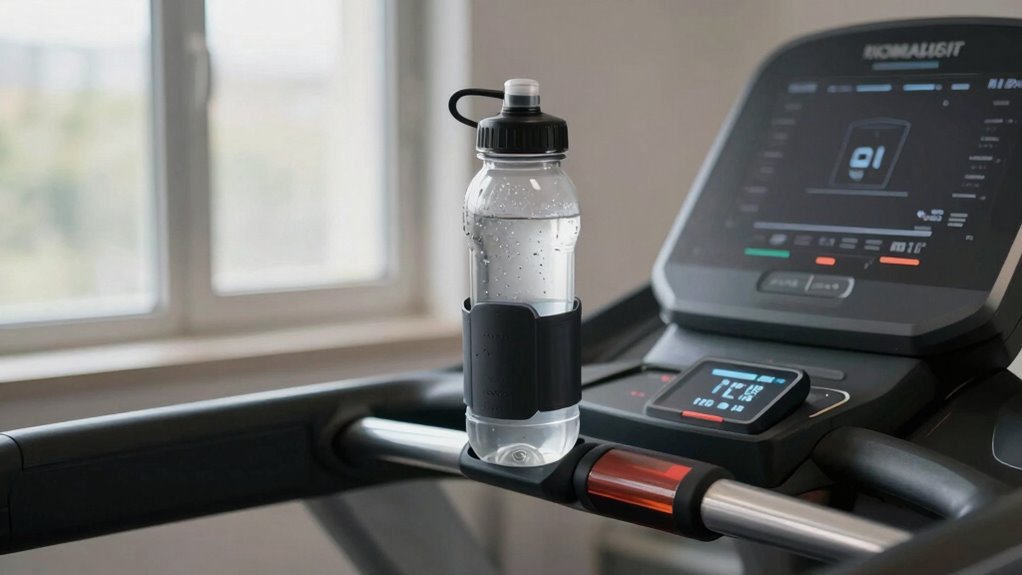
Running on a treadmill might seem less demanding than outdoor runs, but your hydration needs can still vary based on factors like your pace, indoor temperature, and sweat rate. Even in a controlled environment, staying properly hydrated is essential for maintaining performance and preventing fatigue. One key aspect to contemplate is hydration timing—knowing when to drink during your workout can make a significant difference. If you wait too long to hydrate, you risk dehydration, which can impair your endurance and cause dizziness. Conversely, drinking too much too quickly might lead to discomfort or stomach upset. Ideally, you want to sip small amounts of water regularly, roughly every 15 to 20 minutes, to maintain fluid levels without overwhelming your stomach.
Electrolyte balance is equally significant when adjusting your hydration routine for indoor treadmill runs. Sweating causes your body to lose not only water but also vital electrolytes like sodium, potassium, and magnesium, which are essential for muscle function and nerve signaling. If you’re running for longer periods or at high intensities, replenishing electrolytes becomes a priority. You can do this by consuming electrolyte drinks or adding electrolyte tablets to your water. These help restore the balance and prevent issues like cramping or muscle fatigue. Keep in mind that if your indoor environment is particularly warm or if you tend to sweat heavily, your electrolyte needs increase. Monitoring your sweat and how you feel during and after your run can guide you in adjusting your intake accordingly. Additionally, understanding your sweat rate can help personalize your hydration strategy for optimal performance. Incorporating hydration tracking methods can further optimize your fluid intake and ensure you’re meeting your specific needs. Recognizing the importance of electrolyte replenishment is crucial for sustaining your energy and avoiding imbalances during indoor treadmill workouts.
While hydration timing focuses on when you drink, paying attention to the quality and composition of your fluids ensures you’re maintaining electrolyte balance. Plain water is usually sufficient for shorter workouts, but for longer or more intense sessions, incorporating drinks with electrolytes helps sustain your performance. It’s also wise to listen to your body’s signals—thirst is a good indicator, but don’t rely solely on it. Pre-hydrating before your run can set a good foundation, and post-workout rehydration helps recovery.
As an affiliate, we earn on qualifying purchases.
Frequently Asked Questions
How Does Humidity Affect Indoor Hydration Needs?
Humidity directly impacts your hydration needs during indoor treadmill runs. High humidity makes you sweat more, risking dehydration, so you should increase your fluid intake. Conversely, low humidity reduces sweat loss, meaning less hydration is needed. Climate adaptation is essential, and don’t fall for hydration myths that you must drink excessive water. Pay attention to your body’s signals, stay consistent, and adjust your fluids based on humidity levels for ideal performance.
Should I Hydrate Differently Before or After Treadmill Workouts?
You should hydrate differently before and after treadmill workouts. For example, if you start feeling thirsty, it’s a sign to have some water beforehand—this is pre-run hydration. After your run, focus on post workout replenishment, drinking fluids with electrolytes to restore what you lost. Proper hydration strategies guarantee you perform well and recover faster, so listen to your body’s signals and adjust your intake accordingly.
Can Electrolyte Drinks Improve Hydration During Indoor Runs?
Yes, electrolyte drinks can improve hydration during indoor runs by helping maintain electrolyte balance, which is essential for muscle function and preventing cramps. They also offer flavor options that can make hydration more enjoyable, encouraging you to drink more consistently. Just choose a flavor you like and look for drinks with a good balance of electrolytes and low added sugars. This way, you’ll stay properly hydrated and perform your best.
How Do Hydration Needs Vary With Treadmill Workout Intensity?
Imagine your body’s like a car engine; the harder you push, the more coolant it needs. During intense treadmill workouts, your hydration needs increase, so you should hydrate more frequently, paying close attention to thirst cues. Timing your hydration around your workout helps prevent dehydration. For moderate efforts, sip water regularly, but for high-intensity sessions, consider electrolyte drinks to replace lost minerals and optimize performance.
Is It Necessary to Drink Water During Short Treadmill Sessions?
For short treadmill sessions, you generally don’t need to drink water during the workout. Hydration timing isn’t as critical for quick runs, but it’s still good to have water accessible if you feel thirsty. Your water intake should be spaced out before and after the session, ensuring you stay hydrated overall. If you tend to sweat more or run longer, sipping water during the workout becomes more important.
Conclusion
So, next time you’re pounding the treadmill indoors, remember to hydrate just enough—after all, who needs the extra water weight, right? It’s ironic how we often forget hydration when it’s right in front of us, yet aim to beat our personal bests. Stay smart and keep sipping, because a well-hydrated run isn’t just about performance—it’s about avoiding the amusingly ironic trap of dehydration during a workout meant to keep you fit!
Halloween Picks
halloween
As an affiliate, we earn on qualifying purchases.