

To practice race fueling without making long runs miserable, mimic race conditions by experimenting with foods, drinks, and timing to find what works best for you. Focus on gradual fuel intake, consuming small carbs every 45-60 minutes, and test different gels or chews during training. Stay hydrated with regular sips, monitor how your stomach reacts, and avoid trying new products on race day. Keep refining your plan, and you’ll develop a reliable strategy that enhances comfort and performance.

Get workout gear delivered free — and shop member deals
- Fast, free delivery on millions of items
- Access to Prime Big Deal Days deals on October 6–7
- Prime Video, Amazon Music and more included
Key Takeaways
- Mimic race conditions during training to find what foods and timing work best without discomfort.
- Gradually introduce new fueling products to monitor stomach response and prevent gastrointestinal issues.
- Maintain consistent hydration, sipping fluids regularly to avoid bloating and dehydration.
- Track and adjust your fueling and hydration plan based on personal responses and environmental conditions.
- Keep detailed notes to refine your strategy, ensuring it feels natural and sustainable for race day.
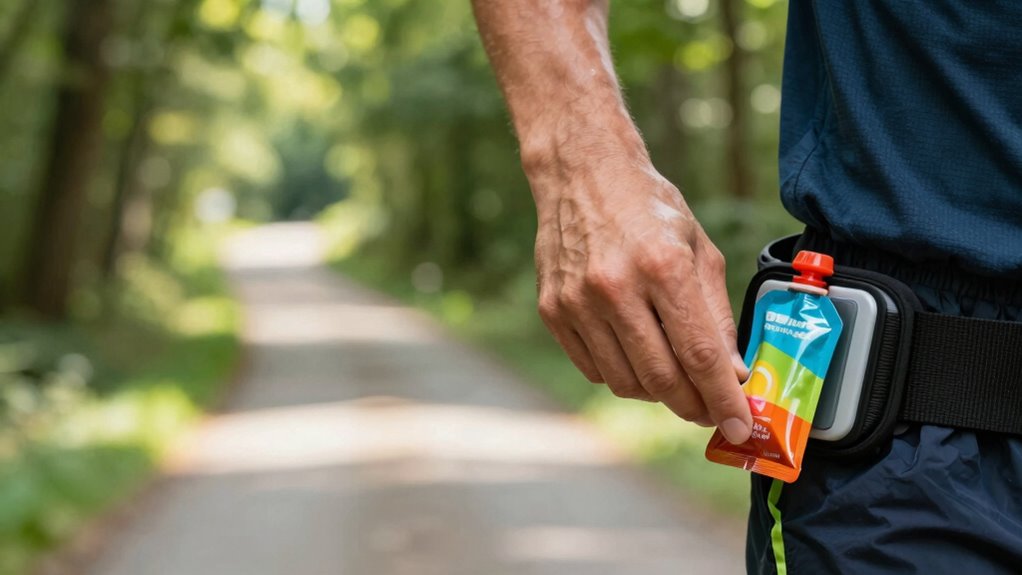
Practicing race fueling is vital to guarantee your body can efficiently absorb energy during competition, preventing bonking or dehydration. The key is to develop a fueling routine during your long runs that mimics race conditions. This way, you learn how your body responds to different foods, drinks, and timing, making race day less stressful. One of the most important aspects is nutrition timing. You want to figure out when to start fueling so your energy levels stay steady without feeling heavy or bloated. Typically, consuming small amounts of carbs every 45 to 60 minutes works well. Experiment with different types of energy gels, chews, or drinks to see what feels best and doesn’t upset your stomach. Keep in mind that your stomach can become sensitive, so don’t wait until race day to try new products. Instead, incorporate them into your training runs gradually, observing how your body reacts. Proper nutrition timing is essential for maintaining energy levels and avoiding gastrointestinal issues.
Hydration strategies are equally vital. During long runs, you should aim to sip fluids regularly, not just when you’re thirsty. Practice drinking small amounts frequently to maintain hydration without overloading your stomach. Use a water bottle or a hydration pack to control your fluid intake and avoid wasting time at aid stations during races. Pay attention to the color of your urine—pale yellow indicates good hydration. Adjust your fluid intake based on weather conditions, increasing it in hot or humid environments, and reducing it if it’s cooler or windy. Remember that electrolyte balance matters too; supplement with electrolytes if you notice cramping or excessive sweating. Many racers find that adding a pinch of salt to their water or consuming electrolyte tablets helps maintain balance. Incorporating hydration strategies that suit your individual needs can significantly improve your performance and comfort.
The challenge in practicing race fueling is to balance both nutrition timing and hydration strategies without turning your long runs into miserable experiences. It’s tempting to stick with familiar routines, but every runner’s needs are different. Use your training to tweak your fueling plan, discovering what gives you sustained energy without stomach discomfort. Keep track of what works best—note the foods, timing, and fluids you use—and stick to this plan on race day. Ultimately, the goal is to create a fueling strategy that feels natural and reliable, so you can focus on your race rather than worrying about running out of energy or becoming dehydrated. When you practice thoroughly, race day becomes a test of your endurance, not your nutrition skills. Understanding your individual hydration and fueling needs is crucial, as personalized strategies can make all the difference in race performance.
As an affiliate, we earn on qualifying purchases.
Frequently Asked Questions
How Do I Determine My Ideal Race Fueling Plan?
To determine your ideal race fueling plan, start by experimenting with hydration strategies and energy gel options during your long runs. Pay attention to how your body responds—notice which gels provide sustained energy without stomach upset. Track your intake and hydration levels, adjusting as needed. This trial-and-error process helps you find the right balance, ensuring you stay energized and comfortable on race day.
What Are Common Mistakes to Avoid During Race Fueling?
Avoid common mistakes like neglecting hydration strategies and misjudging carbohydrate timing. You might think you can “push through” without fueling, but this leads to bonking or dehydration. Don’t wait until you’re hungry or thirsty; practice fueling during your runs. Consistent hydration and timely carbohydrate intake optimize energy and prevent gastrointestinal issues, helping you race stronger. Pay attention to your body’s cues and stick to your fueling plan to stay on track.
How Should I Adjust Fueling for Different Weather Conditions?
You should adjust your fueling based on weather conditions by modifying hydration strategies and considering temperature effects. In hot weather, increase your fluid intake and opt for easily digestible, electrolyte-rich drinks to prevent dehydration and cramping. In cold conditions, focus on staying hydrated with warm fluids and carry quick energy sources. Pay attention to your body’s signals, and remember that weather impacts how your body absorbs and uses fuel.
Can I Practice Race Fueling During Shorter Training Runs?
You can absolutely practice race fueling during shorter runs; it’s the perfect time to fine-tune your hydration timing and experiment with carbohydrate types. Think of it as getting your ducks in a row before race day. Use these runs to test fueling strategies, ensuring your stomach handles different products well. This way, you’ll know exactly what works, making your longer runs and race day smoother and more confident.
What Are Signs of Fueling-Related Gastrointestinal Issues?
You might notice gastrointestinal symptoms like nausea, cramping, diarrhea, or bloating, which indicate fueling-related issues. These problems often stem from poor hydration strategies, consuming too much or the wrong type of fuel, or eating too quickly. To prevent this, stay attentive to your body’s signals, hydrate properly, and test different fueling options during training to find what works best without upsetting your stomach.
Conclusion
Practicing race fueling might seem like a chore, but it’s your secret weapon against misery on race day. Imagine the relief of feeling energized instead of drained, the confidence of knowing your stomach will cooperate. It’s the calm before the storm, the quiet moment of control amid chaos. By mastering fueling now, you turn the chaos into clarity. Race day becomes less about surviving and more about conquering — because preparation transforms dread into determination.
Halloween Picks
halloween
As an affiliate, we earn on qualifying purchases.