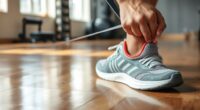
To prevent runner’s knee, support your knees with a brace during activity and focus on stretching tight muscles like your quadriceps, hamstrings, and calves. Use proper running shoes that fit well and provide good cushioning, and consider orthotics if needed. Pay attention to your body—rest when you feel pain and don’t push through discomfort. Improving your running form and gradually increasing intensity also helps. Keep exploring these tips to stay injury-free and enjoy your runs.
Key Takeaways
- Use knee braces during activity to provide support and reduce strain on the kneecap.
- Incorporate daily stretching of quadriceps, hamstrings, and calves to improve flexibility and lessen knee stress.
- Wear properly fitted, cushioned running shoes suited to your foot type for proper alignment and shock absorption.
- Gradually increase running intensity and mileage to prevent overuse injuries and allow your body to adapt.
- Listen to your body; rest, ice, and modify routines if experiencing knee discomfort to prevent worsening.

Runner’s knee, also known as patellofemoral pain syndrome, is a common overuse injury that affects runners and active individuals alike. It often manifests as pain around or behind the kneecap, especially during activities like running, jumping, or climbing stairs. To prevent this discomfort from developing into a more serious issue, you need to pay close attention to your knee health from the start. One effective way to do this is by using a knee brace during runs or workouts. A knee brace provides additional support, stabilizing your kneecap and reducing strain on the joint. It’s especially helpful if you notice any early signs of discomfort or if you’ve had previous knee injuries. Wearing a knee brace doesn’t mean you’re weak; it’s a proactive step to protect your knees and maintain your activity level.
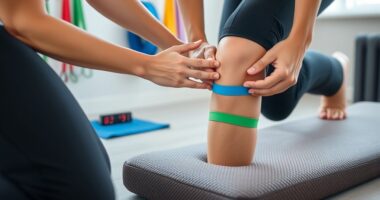
Using a knee brace during activity can help support your knees and prevent runner’s knee.
Alongside wearing a knee brace, incorporating stretching exercises into your routine plays a vital role in prevention. Tight muscles in your legs, particularly the quadriceps, hamstrings, and calves, can increase stress on your kneecap, leading to pain. Regularly stretching these muscle groups helps improve flexibility, easing the pressure on your knee joint. Focus on gentle, consistent stretches like quad pulls, hamstring stretches, and calf raises. Hold each stretch for at least 20-30 seconds, and avoid bouncing or overstretching, which can cause injury. These exercises should become a daily habit, especially before and after runs, to keep your muscles limber and supportive. Additionally, understanding knee anatomy can help you better grasp how these muscles influence joint health.
It’s also important to pay attention to your running form and footwear. Proper alignment reduces uneven force distribution across your knee joint. Make sure your shoes fit well, provide adequate cushioning, and are suited for your foot type. If you’re unsure about your gait or alignment, consider consulting a specialist or using orthotics. Additionally, gradually increasing your running intensity and mileage allows your body to adapt without overstressing your knees. Sudden jumps in activity can cause overuse injuries, including runner’s knee.
Finally, listen to your body. If you start feeling knee pain, don’t push through it. Rest, apply ice if needed, and review your routine. Combining these prevention strategies—wearing a supportive knee brace, performing stretching exercises regularly, and maintaining proper running mechanics—sets a strong foundation for avoiding runner’s knee. Staying proactive now guarantees you can keep running and staying active without the setbacks that come with avoidable injuries.

Bodyprox Patella Tendon Knee Strap 2 Pack, Knee Pain Relief Support Brace Hiking, Soccer, Basketball, Running, Jumpers Knee, Tennis, Tendonitis, Volleyball & Squats
ADJUSTABLE STRAP can make adjustment according personal knee’s curves to supply better protection of patella; It is fully…
As an affiliate, we earn on qualifying purchases.
As an affiliate, we earn on qualifying purchases.
Frequently Asked Questions
Can Running on Different Terrains Prevent Runner’s Knee?
Yes, running on different terrains can help prevent runner’s knee. By incorporating terrain variation, like trail running, you reduce repetitive stress on the same muscles and joints. This variety strengthens different muscle groups, improves stability, and minimizes overuse injuries. Alternating between pavement, trails, and softer surfaces gives your knees a break, lowering the risk of runner’s knee and keeping your running routine safer and more enjoyable.
Are There Specific Stretches Recommended for Runner’s Knee Prevention?
Sure, because stretching is the ultimate miracle cure, right? You should definitely do Quadriceps stretches and Iliotibial band stretches regularly. These targeted stretches help keep your knee happy by loosening tight muscles that might cause pain. Don’t skip them—consistency is key. Incorporate these stretches into your routine, especially after runs, to prevent runner’s knee and keep your knees feeling fresh and pain-free for miles ahead.
How Does Footwear Influence Runner’s Knee Risk?
Your footwear greatly influences your runner’s knee risk. Opt for shoes with proper cushioning to absorb shock and reduce joint stress. Orthopedic insoles can provide extra support, correcting your gait and alleviating pressure on your knees. Avoid worn-out shoes, as they lose cushioning and support, increasing injury risk. Choosing the right footwear, with adequate cushioning and insoles, helps protect your knees during runs and prevents runner’s knee.
Is It Safe to Continue Running With Mild Knee Pain?
You should avoid running with mild knee pain, as overuse injuries like runner’s knee can worsen if you push through discomfort. Studies show that continuing to run increases the risk of further damage and prolongs recovery. Your knee’s stabilization depends on proper rest and strengthening exercises. Ignoring pain can lead to more serious issues, so it’s best to rest, seek advice, and gradually rebuild your strength before hitting the pavement again.
What Are Signs That Require Immediate Medical Attention?
If you notice knee swelling or sudden locking, you should seek immediate medical attention. These signs could indicate serious issues like ligament tears or cartilage damage. Don’t ignore intense pain that doesn’t improve or worsens with rest. If your knee becomes unstable or you experience difficulty moving it, get evaluated by a healthcare professional right away. Prompt treatment can prevent further injury and promote proper recovery.

New Balance Men's Fresh Foam 520 v9 Running Shoe
The fresh foam cushioning provides plush comfort for miles of easy running.
As an affiliate, we earn on qualifying purchases.
As an affiliate, we earn on qualifying purchases.
Conclusion
By following these prevention tips, you can keep runner’s knee at bay and stay on your feet. Think of your knees as the engine of your running journey—if you neglect them, everything stalls. Strengthen your muscles, wear proper shoes, and listen to your body’s signals. With consistent care, you’ll glide smoothly over the pavement like a well-oiled machine, ready to enjoy every stride without pain or setbacks. Stay proactive, and keep running strong!

Foot and Calf Fascia Stretcher for Plantar Fasciitis, Physiotherapy Stretching Strap, Yoga Stretch Strap Improves Strength and Relief to Heel Spurs, Calf, Thigh and Hip (Black)
ULTIMATE PAIN RELIEF TREATMENT: Exceptional physiotherapy leg stretching strap assists in the treatment of plantar fasciitis, heel spurs,…
As an affiliate, we earn on qualifying purchases.
As an affiliate, we earn on qualifying purchases.

Plantar Fasciitis Insoles, High Arch Support Shoe Inserts Men Women, Orthotics Gel Running Insoles for Flat Feet – Arch Pain – Pronation – Metatarsalgia Pain Relief Heavy Duty Support(Trim to Fit)
ERGONOMIC HIGH ARCH SUPPORT DESIGN – This premium-quality high arch support shoe inserts for plantar fasciitis are specially…
As an affiliate, we earn on qualifying purchases.
As an affiliate, we earn on qualifying purchases.