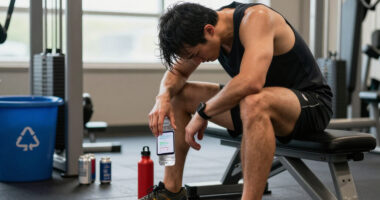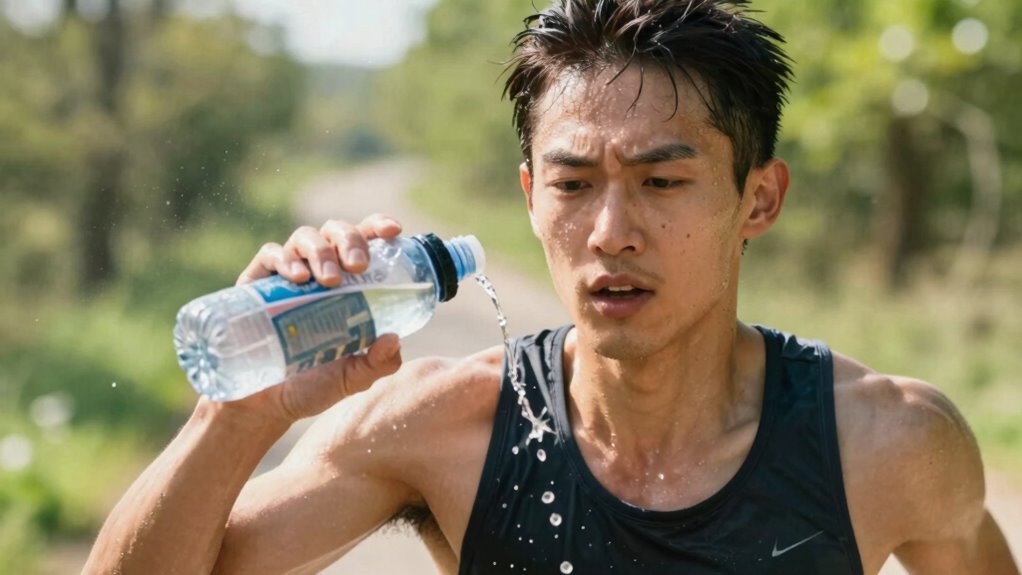

Many runners mistake increasing water intake immediately as temperatures rise, risking hyponatremia—a dangerous condition caused by low sodium levels. Drinking too much water without replacing electrolytes can impair performance and cause symptoms like nausea, confusion, or seizures. Instead, focus on balancing water with electrolytes through drinks or snacks and monitor your hydration signals. Want to learn how to avoid this sneaky mistake and stay safe? Keep going to discover essential tips.

Get workout gear delivered free with Prime
- Fast, free delivery on millions of items
- Prime Video, Amazon Music and more included
- Member-only deals all year
Key Takeaways
- Runners often overhydrate with water alone, risking hyponatremia during spring temperature increases.
- Ignoring electrolyte replacement can cause imbalances that impair muscle function and performance.
- Relying solely on thirst may lead to underhydration or overhydration, both affecting health.
- Sweating depletes vital minerals; neglecting electrolytes during hydration can cause health risks.
- Not monitoring hydration status or adjusting for weather conditions increases the risk of imbalance.
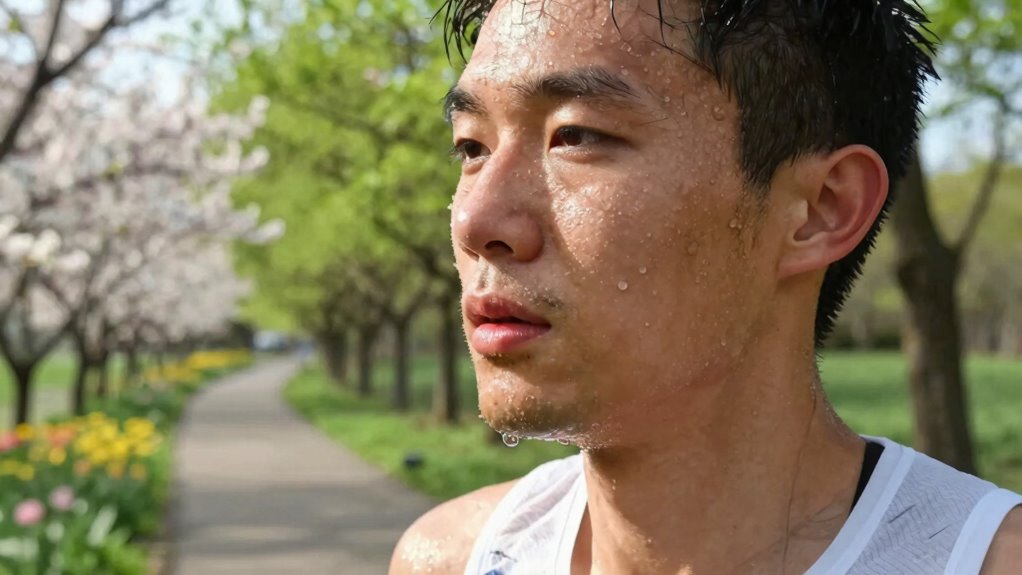
As temperatures rise in spring, many runners believe they need to increase their water intake immediately, but this common mistake can do more harm than good. Jumping into increased hydration without a proper plan can lead to a dangerous condition known as hyponatremia, where your body’s sodium levels become dangerously low. Instead of blindly drinking more water, it’s essential to develop a thoughtful hydration strategy that balances fluid intake with electrolyte replenishment. Relying solely on water can dilute your blood sodium levels, leading to symptoms like nausea, headache, confusion, and in severe cases, even seizures or coma.
To avoid this, you should focus on maintaining a proper electrolyte balance during your runs. Electrolytes—such as sodium, potassium, magnesium, and calcium—are imperative for muscle function, nerve signaling, and fluid regulation. When you sweat, you lose not just water but also these essential minerals. If you replace only the water without replenishing electrolytes, you risk creating an imbalance that can impair your performance and health. Incorporate electrolyte-rich drinks or snacks into your hydration plan, especially during long runs or intense workouts. Sports drinks formulated with balanced electrolytes can help you maintain the right internal environment, preventing both dehydration and hyponatremia.
It’s equally important to listen to your body’s signals. Thirst is a natural indicator, but don’t rely solely on it—by the time you feel thirsty, you may already be slightly dehydrated or on your way to an imbalance. Instead, aim for consistent hydration before, during, and after your runs, and pay attention to the color of your urine; a light, straw-colored hue typically signals proper hydration. Additionally, understanding your sweat rate and how it varies with weather conditions can help you customize your hydration plan more effectively. Monitoring environmental factors can help you adjust your hydration strategy accordingly. Being aware of your hydration needs can prevent common mistakes that lead to health risks during spring runs. Recognizing the importance of electrolyte balance is crucial for maintaining optimal performance and safety.
electrolyte sports drinks for runners
As an affiliate, we earn on qualifying purchases.
As an affiliate, we earn on qualifying purchases.
Frequently Asked Questions
How Can I Tell if I’M Overhydrating During Runs?
You can tell if you’re overhydrating during runs by watching for signs like nausea, headache, or bloating. Overhydration disrupts your hydration balance, leading to diluted electrolytes. Keep an eye on water intake—if you’re drinking excessively without losing much sweat, you might be overdoing it. Pay attention to your body signals and aim for balanced hydration, drinking enough to stay moist but not overly full, especially during longer runs.
Are Electrolyte Drinks Necessary for Short Spring Runs?
You definitely don’t need electrolyte drinks for short spring runs—plain water usually does the trick. But if you’re craving flavor options or prefer convenient container types, electrolyte drinks can add variety and make hydration more enjoyable. They’re especially handy if you sweat heavily or run in hot weather. For quick, easy runs, sticking to water keeps things simple, while electrolyte drinks can be a flavorful boost when you want that extra hydration edge.
What Signs Indicate Dehydration Despite Drinking Water?
You might be dehydrated even if you’re drinking water if you notice signs like dark urine, dry mouth, fatigue, headache, or dizziness. These symptoms often defy hydration myths suggesting water absorption is instant; instead, your body needs time to properly absorb water. Keep an eye on those signs, stay consistent with hydration, and consider electrolyte drinks during long runs to support ideal water absorption and prevent dehydration.
How Does Spring Weather Affect My Hydration Needs?
Spring weather raises your hydration needs because warmer temperatures and increased pollen effects can cause your body to sweat more and feel dehydrated faster. Spring allergies might make you breathe harder, leading to more fluid loss. You should drink more water, especially during outdoor activities, and pay attention to pollen levels, which can worsen allergy symptoms and increase your water loss. Staying hydrated helps you stay energized and comfortable.
When Should I Adjust My Hydration Routine in Spring?
You should adjust your hydration routine as spring temperatures rise and your runs get longer. Don’t fall for hydration myths that suggest you need excessive water—balance is key. Pay attention to your running nutrition, ensuring you’re fueling properly and hydrating steadily. Increase your fluid intake gradually, especially if you notice sweating more or running in warmer weather. Listening to your body helps prevent dehydration and keeps your performance on point.
Conclusion
As spring blossoms around you, don’t let hydration slip through your fingers like fleeting dew. Remember, even a gentle breeze can carry away your best efforts if you’re not careful. Stay ahead of the game, sip wisely, and listen to your body’s whispers. With each mindful gulp, you’re nurturing your race-day confidence—painting your own vibrant masterpiece on the canvas of spring. Keep hydrated, and let your strides bloom with energy.
Columbus Day / Indigenous Peoples' Day Picks
long weekend sales
As an affiliate, we earn on qualifying purchases.