One of the most common mistakes with portable ice baths is not managing the temperature effectively. If the water’s too warm, you won’t experience the full recovery benefits, as warmer temps reduce vasoconstriction. On the flip side, if it’s too cold, you might face discomfort or numbness. It’s essential to find that sweet spot between 50°F and 59°F. Getting this right can make all the difference in your recovery journey. There’s more to reflect on, so keep going!

Get workout gear delivered free with Prime
- Fast, free delivery on millions of items
- Prime Video, Amazon Music and more included
- Member-only deals all year
Key Takeaways
- Not checking the temperature can lead to ineffective recovery; ensure it’s between 50°F and 59°F for optimal benefits.
- Failing to wait 30 minutes post-workout before immersion can hinder natural recovery processes.
- Overextending the duration beyond 15 minutes may cause discomfort and numbness; listen to your body.
- Ignoring hydration can lead to dehydration, diminishing the effectiveness of the ice bath.
- Entering the ice bath with anxiety or tension can limit recovery benefits; practice deep breathing for relaxation.
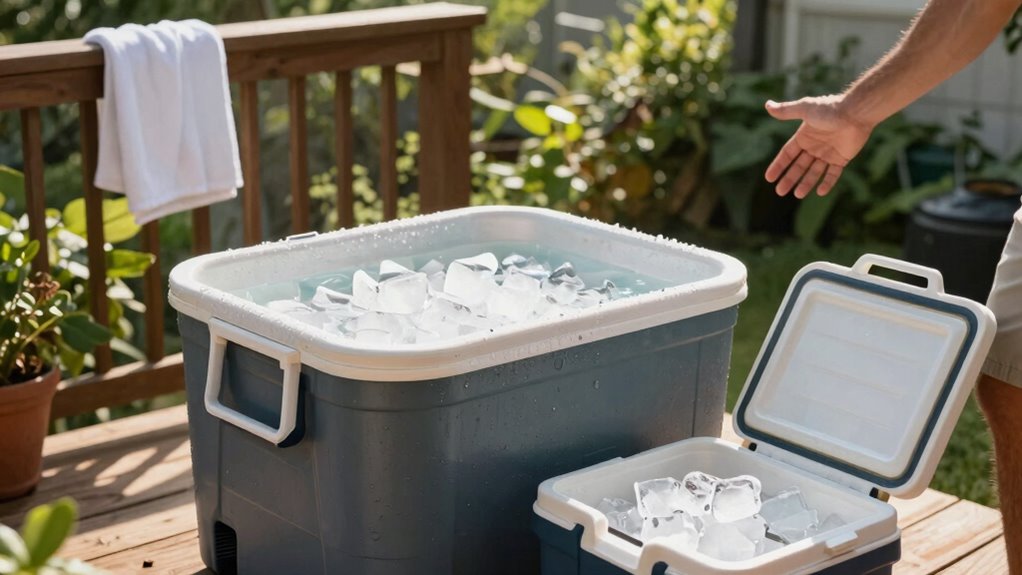
When you’re using a portable ice bath, it’s easy to overlook some key details that can make a big difference in your recovery. One of the most common mistakes people make is not fully understanding how to optimize their ice bath experience. Sure, you might think just hopping in after a workout is enough, but there’s more to it if you want to maximize the ice bath benefits and enhance your recovery techniques.
First, let’s talk about temperature. If you don’t keep your ice bath cold enough, you won’t reap the full benefits. Aim for a temperature between 50°F and 59°F (10°C and 15°C). If it’s warmer, you might not achieve the desired vasoconstriction effect that helps reduce inflammation and speeds up recovery. So, always check the temperature before you take the plunge.
Aim for a temperature between 50°F and 59°F to maximize the recovery benefits of your ice bath. Always check before you dive in!
Next, consider the duration of your ice bath sessions. A common mistake is staying in too long or not long enough. Ideally, you should aim for about 10 to 15 minutes in the ice bath. Staying in for a shorter time might not provide enough of a stimulus for recovery, while going overboard can lead to excessive discomfort and even numbness. Listen to your body—if you start feeling uncomfortable, it’s probably time to get out. Additionally, understanding your body’s cold response can help you tailor the experience to your needs.
You should also pay attention to timing. Jumping into an ice bath immediately after intense physical activity can be counterproductive. Try waiting about 30 minutes post-workout before submerging yourself. This allows your body to undergo some natural recovery processes before you introduce cold therapy, which can help enhance the ice bath benefits.
Another often-missed detail is the mindset you bring into the bath. If you’re anxious or tense, you might not fully relax, which can limit the effectiveness of your recovery techniques. Take a few deep breaths before you get in to help calm your mind. Consider focusing on your breathing while you’re in there, letting go of any tension.
Lastly, don’t forget about hydration. Cold exposure can lead to shivering and increased metabolism, which might dehydrate you. Make sure to drink water before and after your ice bath to keep your body in the best shape for recovery. Being aware of your body’s response to cold temperature regulation can help you optimize your experience. By avoiding these common mistakes, you’ll truly harness the power of your portable ice bath and elevate your recovery game.
portable ice bath with temperature control
As an affiliate, we earn on qualifying purchases.
As an affiliate, we earn on qualifying purchases.
Frequently Asked Questions
How Long Should I Stay in a Portable Ice Bath?
You should stay in a portable ice bath for about 10 to 15 minutes. This ice bath duration is ideal for maximizing recovery benefits without risking injury. During this time, your body cools down, reducing inflammation and speeding up muscle repair. Just listen to your body; if it feels too uncomfortable, don’t hesitate to get out. Remember, the goal is to enhance your recovery, so find what works best for you!
Can I Use Hot Water Instead of Ice?
You wouldn’t water a cactus with lemonade, right? Just like that, using hot water instead of ice in a bath isn’t the best idea. While hot water benefits your muscles by promoting relaxation and increased blood flow, it’s not a true alternative to an ice bath. If you’re looking for ice bath alternatives, stick to cold water or contrast baths for recovery, as these methods target inflammation more effectively.
What Is the Ideal Temperature for Ice Baths?
The ideal temperature for ice baths is between 50°F to 59°F (10°C to 15°C). This range maximizes ice bath benefits, helping reduce muscle soreness and speeding up recovery. When you immerse yourself in this temperature, your body can effectively recover from intense workouts. Just remember to limit your time in the bath to about 10-15 minutes for the best results. Incorporating this technique can enhance your overall recovery routine!
How Often Should I Take Ice Baths?
In the grand tapestry of athletic recovery, you should aim for ice baths two to three times a week. This frequency maximizes your recovery benefits without overdoing it. Ideal timing is essential; consider taking an ice bath within 30 minutes post-workout for the best results. Listen to your body, as individual needs may vary. With consistency, you’ll enhance muscle recovery and reduce soreness, ensuring you stay at the top of your game.
Are There Health Risks Associated With Ice Baths?
Yes, there are health risks associated with ice baths. While they offer health benefits like reducing inflammation and aiding injury recovery, improper use can lead to hypothermia, frostbite, or circulatory issues. It’s essential to limit your time in the bath and monitor your body’s response. If you have cardiovascular issues or sensitivity to cold, consult a healthcare professional before incorporating ice baths into your recovery routine. Always prioritize safety!
Conclusion
To truly tap into the transformative benefits of portable ice baths, don’t fall for the frequent faux pas of inadequate ice. Instead, make sure you’ve got sufficient ice to create that crisp, cold comfort for ideal recovery. By prioritizing proper preparation, you’ll plunge into a revitalizing routine that promotes powerful performance and post-workout rejuvenation. So, make your ice bath experience both beneficial and blissful—every single time!
Halloween Picks
halloween
As an affiliate, we earn on qualifying purchases.