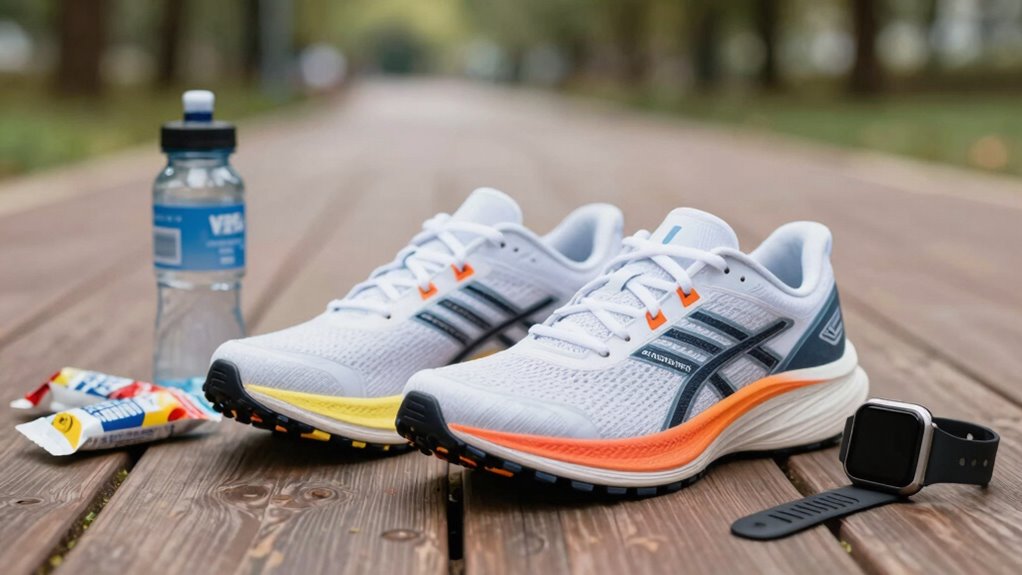

To break in your marathon shoes without risking race day discomfort, start by wearing them around the house and for short runs. Make certain they fit snugly but aren’t too tight, and gradually shift from softer surfaces to harder ones. Incorporate your new shoes into easy runs for foot strengthening, but don’t rush it. Avoid using them on race day or for speed work without prior testing. If you want to guarantee a smooth progression, there’s more you should consider.

Get workout gear delivered free with Prime
- Fast, free delivery on millions of items
- Prime Video, Amazon Music and more included
- Member-only deals all year
Key Takeaways
- Gradually wear new shoes around the house or during short runs to acclimate your feet to the cushioning and fit.
- Ensure shoes fit snugly without pinching; consider swapping insoles if there’s irritation to prevent discomfort.
- Start running on softer surfaces like grass before transitioning to harder ones, allowing gradual adaptation without overwhelming discomfort.
- Incorporate new shoes into easy runs for foot strengthening, avoiding long runs too soon to prevent fatigue and injuries.
- Never debut new shoes on race day; always test them during training to ensure comfort and reliability.
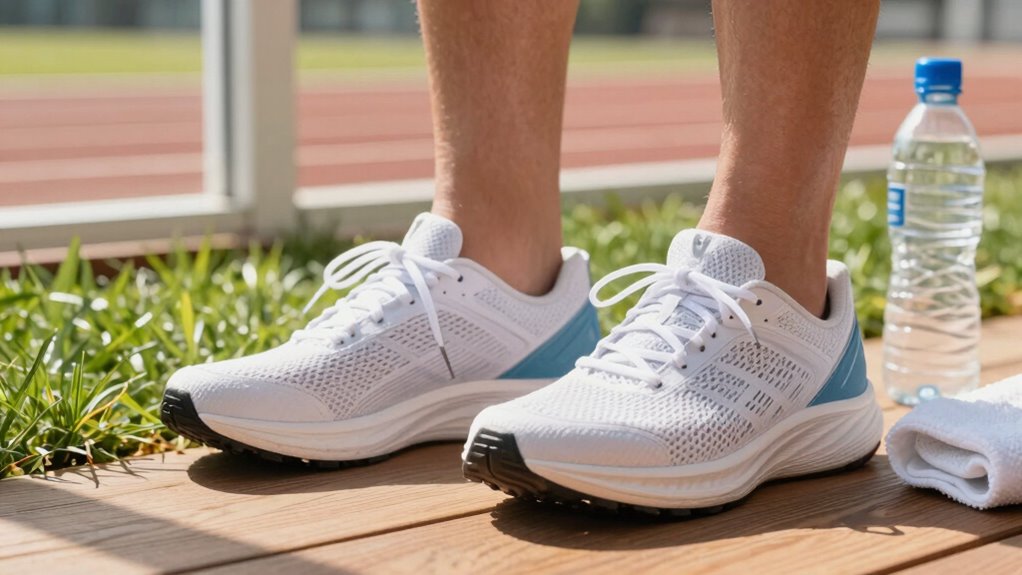
When you get a new pair of marathon shoes, breaking them in properly is essential to avoid blisters and discomfort on race day. You might be excited about your shoe selection, but remember that even the best shoes need time to acclimate to your feet. Start by wearing them around the house or during short runs. This helps you get a feel for the cushioning types and how they interact with your stride. Don’t rush this process; give your feet a chance to adapt.
As you break in your shoes, focus on making fit adjustments. Make sure they’re snug without being too tight. Check for any pinching around the toe box or heel; these can lead to common mistakes like choosing the wrong size or style. If you notice any irritation, consider swapping out your insoles. Custom insoles can enhance comfort and support, making a significant difference in your training plans. Proper shoe fit is vital for preventing discomfort and injuries. Additionally, paying attention to foot shape can help you select the right shoes from the start. Knowing about shoe materials can also improve your understanding of how shoes will respond to different terrains and conditions. Being aware of shoe responsiveness can help you choose shoes that match your running style and training needs.
When you take your new shoes outside, start with softer running surfaces, such as grass or a track, to minimize impact. Gradually progress to harder surfaces like pavement. This gradual adjustment allows your feet and shoes to adapt without overwhelming discomfort. Keep your runs short at first, focusing on technique rather than distance. You want to make sure that your shoes don’t cause any issues before ramping up your mileage.
Incorporate your new shoes into your recovery strategies. Use them during easy runs, allowing your feet to strengthen while still benefiting from the shoes’ cushioning. Avoid the temptation to wear them for long runs too soon. This can lead to fatigue and injuries, especially if you skip the break-in phase entirely. Listen to your body; if you feel any discomfort, take a step back.
Finally, keep in mind the common mistakes runners make when breaking in new shoes. Don’t wear them for the first time on race day or use them for speed work without testing them first. This can lead to blisters and unnecessary pain. Properly breaking in shoes is a crucial step to prevent discomfort and injuries. Instead, give yourself ample time to adjust. By following these steps, you’ll make sure that your new marathon shoes support you effectively, leaving you ready to tackle the miles ahead without worry. Breaking them in properly can make all the difference on race day, so take it seriously!
As an affiliate, we earn on qualifying purchases.
Frequently Asked Questions
How Long Before the Race Should I Start Breaking in My Shoes?
You should start breaking in your shoes at least three to four weeks before the race. This gives you enough time to assess shoe flexibility and adjust to the cushioning preferences you like. Gradually increase your mileage, starting with short runs. Listen to your feet; if you feel discomfort, it’s okay to take a step back. By race day, your shoes should feel comfortable and ready to support you through those miles.
Can I Use My Marathon Shoes for Training Runs?
Absolutely, you can use your marathon shoes for training runs! In fact, it’s like discovering a treasure chest of training benefits. Wearing them during your runs helps enhance shoe flexibility and allows them to mold to your feet, ensuring comfort on race day. Just start with shorter distances to avoid any discomfort, and gradually increase your mileage. This way, you’ll be ready to conquer the marathon like a pro!
What if My Shoes Feel Uncomfortable After Breaking Them In?
If your shoes feel uncomfortable after breaking them in, don’t panic. First, check for proper fit—too tight or loose can cause discomfort. You can make shoe adjustments, like adding insoles or adjusting laces, to improve comfort. Discomfort can also stem from the type of socks you wear or your foot’s arch support. Try different combinations until you find what works best for you, and give yourself time to adapt.
Should I Wear Different Socks While Breaking in My Marathon Shoes?
While you’re easing into your new marathon shoes, it’s wise to choose your sock companions carefully. Opt for a lighter sock material to help your feet breathe and reduce friction, avoiding any potential discomfort. If you’re used to thicker socks, gradually shift to thinner options, allowing your shoes to fit snugly without feeling cramped. This way, you’ll keep your feet happy as you commence your breaking-in adventure!
How Do I Know if My Shoes Are the Right Fit?
To know if your shoes are the right fit, start by checking the shoe size; you should have about a thumb’s width between your toes and the toe box. Make sure the arch support matches your foot shape and that the heel height feels comfortable. Experiment with your lacing technique to secure your foot without creating pressure points. A proper fit lets you move freely without pinching or excessive movement.
Conclusion
So, if you think you can just waltz into race day with fresh kicks, think again! You’re not a superhero; you’re a runner. Break those shoes in like you’re auditioning for a reality show—slowly, dramatically, and with flair. Take ’em on short runs, like a first date, and let them woo you. By the time race day rolls around, you’ll be ready to strut your stuff, not hobbled by blisters. Happy running!
Evergreen bestsellers Picks
bestsellers
As an affiliate, we earn on qualifying purchases.