

To warm up for different race distances, you should start with dynamic stretches like leg swings, arm circles, and light jogging to prime your muscles and elevate your heart rate. For shorter races, include strides or accelerations, running 200-400 meter repeats at race pace with rest intervals. For longer distances, run 1-2 miles at your target pace, breaking it into segments. If you keep moving through these steps, you’ll discover how to tailor your warm-up perfectly to your race.

Get workout gear delivered free — and shop member deals
- Fast, free delivery on millions of items
- Access to Prime Big Deal Days deals on October 6–7
- Prime Video, Amazon Music and more included
Key Takeaways
- Tailor warm-up intensity and duration based on race distance, with shorter, dynamic routines for sprints and longer, gradual warm-ups for endurance events.
- Incorporate dynamic stretching and active movements to prime muscles and increase blood flow relevant to the race type.
- Use race pace drills appropriate to the distance to enhance pacing and mental readiness.
- Ensure the body is warm and slightly sweaty before starting the race, avoiding overexertion during warm-up.
- Include strides or accelerations for short races, and maintain steady efforts for longer races to transition smoothly into competition.
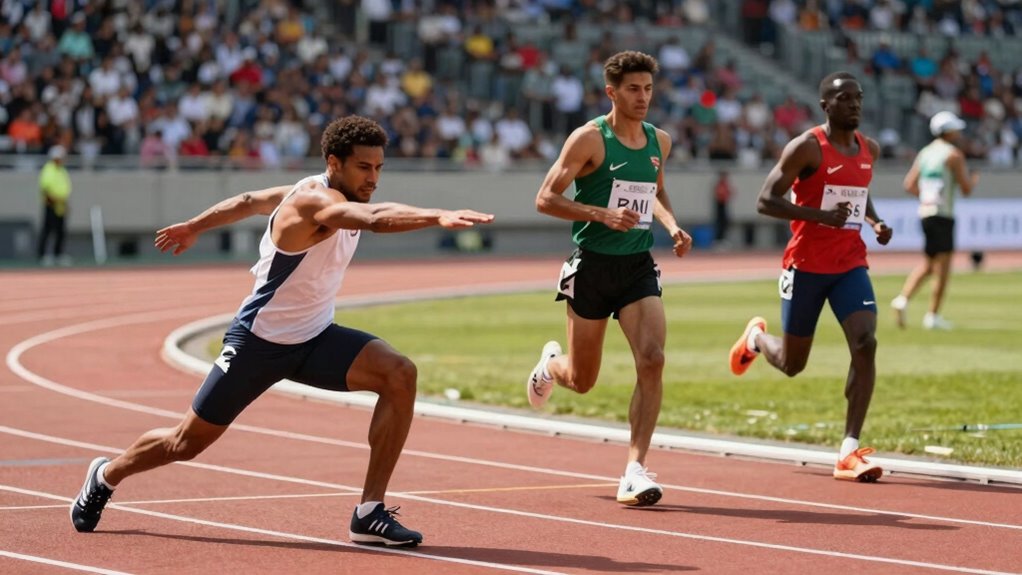
Ever wonder how to prepare your body properly before different race distances? Warm-up routines vary depending on whether you’re tackling a 5K or a marathon, but the goal remains the same: get your muscles primed, elevate your heart rate, and mentally prepare for the effort ahead. A good warm-up should include dynamic stretching and race pace drills to guarantee you’re ready to perform at your best.
Start with some dynamic stretching to loosen up your muscles and improve your range of motion. Unlike static stretching, which involves holding stretches for an extended period, dynamic stretching involves active movements that mimic the activity you’re about to do. Think leg swings, arm circles, high knees, and lunges. These movements increase blood flow to your muscles, enhance flexibility, and reduce injury risk. For shorter races like the 5K or 10K, include more explosive movements like butt kicks and quick strides to stimulate your nervous system and prepare your muscles for faster turnover.
Dynamic stretching with leg swings, arm circles, high knees, and lunges boosts blood flow, flexibility, and injury prevention.
Once your body feels loose, incorporate race pace drills. These are short, controlled efforts at or slightly faster than your target race pace. For a 5K, you might do 3 to 4 repetitions of 200 or 400 meters at race pace with equal rest time. These drills help your body get used to the pace you’ll maintain during the race, sharpening both your mental focus and physical readiness. For longer distances like a half marathon or marathon, race pace drills are less intense but still valuable. You might run 1 to 2 miles at your goal pace, broken into segments with brief rests. This helps your body adapt to the sustained effort and improves your pacing strategy.
As you progress through your warm-up, pay attention to how your body feels. You should be warm, slightly sweaty, and mentally alert, but not fatigued. The shift from warm-up to race should be smooth, so avoid overexerting yourself during these drills. For shorter races, you might include strides or accelerations after your drills to further prepare your body for quick starts. For longer races, focus on maintaining a steady, controlled effort during your warm-up, leaving some energy reserves for the race itself.
dynamic stretching bands for runners
As an affiliate, we earn on qualifying purchases.
As an affiliate, we earn on qualifying purchases.
Frequently Asked Questions
Should Warm-Up Routines Vary Based on Weather Conditions?
Yes, your warm-up routines should vary based on weather conditions. In cold weather, you’ll need clothing adjustments and longer warm-ups to prevent injuries, while in hot conditions, you should focus on heat acclimatization and shorter, more gentle routines. Always listen to your body and adapt your warm-up to guarantee you stay comfortable and prepared, regardless of the weather. This approach helps optimize performance and reduce the risk of issues.
How Long Should a Warm-Up Last Before a Race?
A warm-up should last about 10 to 15 minutes before your race. Studies show that this duration optimizes muscle readiness without tiring you out. During this time, focus on light jogging or dynamic stretches, check your pre-race nutrition to fuel your body, and make any equipment adjustments. This routine keeps you energized, prevents injury, and sets the stage for peak performance when you hit the starting line.
Is Stretching Necessary Before All Race Distances?
Stretching isn’t necessary before all race distances. Instead, focus on dynamic stretching to warm up your muscles effectively and prevent injury. This prepares your body for the specific demands of your race. Additionally, use this time for mental preparation, visualizing your race plan and boosting confidence. Combining dynamic stretching with mental focus helps you perform at your best, whether you’re running sprints or marathons.
When Should I Hydrate During My Warm-Up?
Like a seasoned sailor adjusting to the tide, you should hydrate during your warm-up, ideally about 10-15 minutes beforehand. Focus on hydration timing to prevent dehydration and optimize performance. Keep your warm-up frequency consistent, incorporating small sips of water or sports drinks gradually. This approach guarantees your body stays energized and ready, helping you avoid the pitfalls of dehydration and maintain peak performance throughout your race.
Can Warm-Up Routines Improve Race Performance Significantly?
Warm-up routines can considerably boost your race performance by enhancing your pre-race mental preparation and ensuring you’re physically ready. Incorporate an ideal warm-up gear to stay comfortable and prevent injuries. As you warm up, focus on mental cues to boost confidence and focus. This combined approach helps your body shift seamlessly into race mode, often leading to improved speed, endurance, and overall results.
Conclusion
Now that you know how to warm up for every race distance, you’re ready to ignite your engine and hit the track with confidence. Think of your warm-up as the spark that lights a blazing fire within, fueling your stride and sharpening your focus. With each step, you’re fanning the flames of energy, ensuring you race with the power of a roaring locomotive. So, get ready—your perfect race begins with a warm-up that sparks your inner fire.
Fall Picks
fall essentials
As an affiliate, we earn on qualifying purchases.