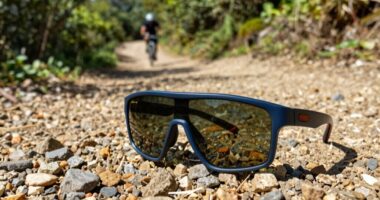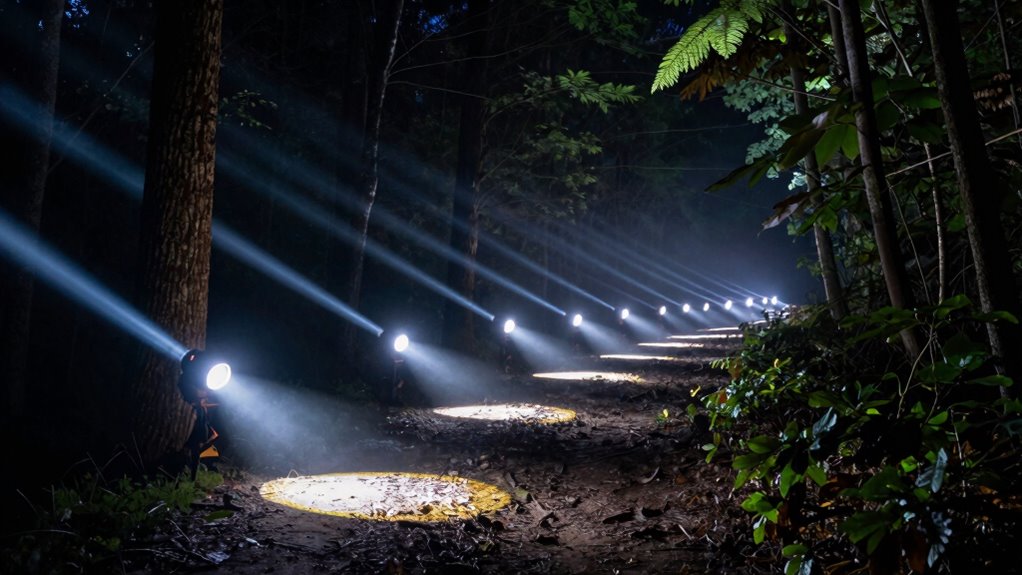

When choosing a headlamp for trail and road running, understanding beam shapes is essential. Flood beams provide wide, diffused light for close obstacles, while spot beams focus intensity for far-off visibility. Hybrid beams offer versatility, letting you adjust based on your surroundings. Pay attention to color temperature, as warmer tones reduce eye fatigue. Battery life is also key; you want brightness without constant recharging. Keep exploring these features to enhance your running experience even further.

Get workout gear delivered free with Prime
- Fast, free delivery on millions of items
- Prime Video, Amazon Music and more included
- Member-only deals all year
Key Takeaways
- Flood Beams provide wide, diffused light, ideal for close-range visibility during trail running and navigating uneven terrain.
- Spot Beams offer focused light for long-distance visibility, critical for spotting hazards on the trail ahead.
- Hybrid Beams combine flood and spot features, allowing versatility in varying terrains for both close exploration and distant sight.
- Color Temperature affects eye comfort; warmer tones reduce fatigue, making them preferable for long night runs.
- Battery Life is vital; balance brightness with longevity to ensure consistent performance throughout your run.
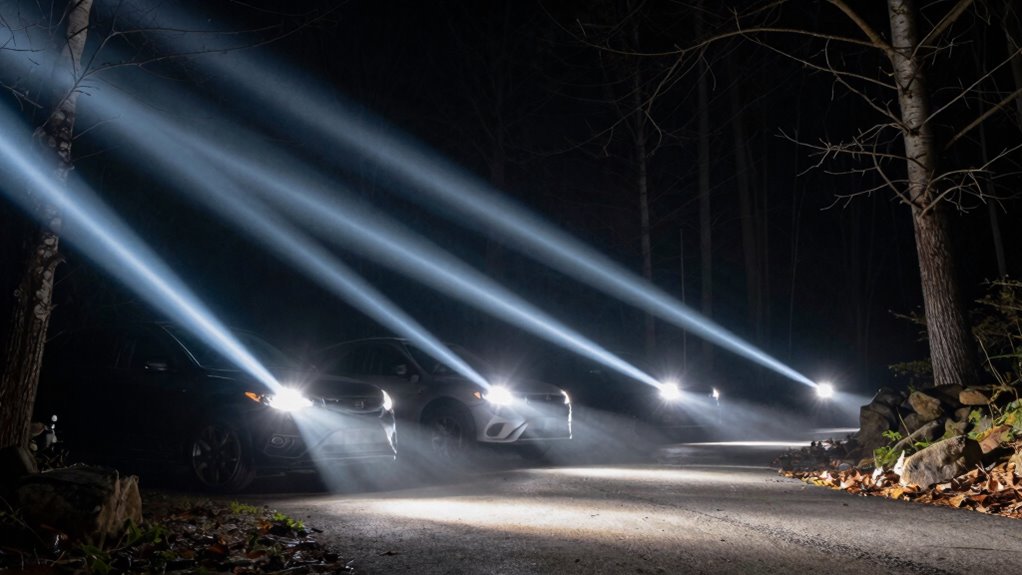
When choosing a headlamp, understanding the different beam shapes can make a big difference in your outdoor experience. The right beam shape impacts how well you see the trail or road ahead, especially during early morning or late evening runs. Let’s explore the three primary beam types: flood beams, spot beams, and hybrid beams, so you can pick the one that fits your needs best.
Flood beams offer a wide, diffused light that’s perfect for close-up activities. If you’re traversing uneven terrain or need to see your immediate surroundings, a flood beam’s light distribution helps illuminate a broad area, making it easier to avoid obstacles. However, while this beam excels in close-range visibility, its beam distance is usually shorter, which might not be ideal if you’re looking to spot distant landmarks.
Flood beams provide wide, diffused light for close-up activities, illuminating immediate surroundings and helping to navigate uneven terrain effectively.
On the other hand, spot beams focus on producing a concentrated light with high beam intensity. This type of beam is fantastic for seeing far ahead, making it suitable for longer trail runs where you want to spot upcoming turns or hazards. The narrow beam allows for greater beam distance, ensuring you can see what’s coming well in advance. However, using a spot beam means you might miss some details right in front of you, so be cautious if you’re running on tricky terrain.
Hybrid beams combine both flood and spot features, giving you the best of both worlds. This versatility allows you to adjust your light depending on the environment. You can switch between a wide beam for close exploration and a focused beam for spotting distant features. This flexibility can enhance your running experience, especially when shifting from open trails to dense woods.
Color temperature also plays an important role. A warmer color temperature might be more comfortable on the eyes, helping you avoid fatigue during long runs. Conversely, a cooler temperature can enhance visibility in certain situations, but it might strain your eyes if used for extended periods. Additionally, beam shape selections can influence how well your headlamp performs in different conditions, ensuring optimal visibility tailored to your environment. Understanding beam configurations can help you select a headlamp that adapts to various terrains and lighting conditions. Considering features like adjustable beam focus can further improve your experience by allowing you to fine-tune the light output as needed.
Lastly, consider battery life. A headlamp with a powerful beam intensity may drain batteries faster, so you want to find a balance between brightness and longevity. Choosing a headlamp isn’t just about the brightness; it’s about how that brightness serves your specific running needs. By understanding these beam shapes, you’ll enhance your outdoor experience, ensuring every run is both safe and enjoyable.
trail running headlamp flood beam
As an affiliate, we earn on qualifying purchases.
As an affiliate, we earn on qualifying purchases.
Frequently Asked Questions
How Do I Choose the Right Brightness for My Headlamp?
To choose the right brightness for your headlamp, start by considering your activity and environment. Use a lumens guide: for close tasks, 100-200 lumens works well, while 200-500 lumens is great for trails. If you’re running on roads or in the dark, a higher brightness level around 500-1000 lumens will be ideal. Remember, more lumens mean more light, but also quicker battery drain, so balance is key!
Are Rechargeable Headlamps Better Than Disposable Battery Models?
Rechargeable headlamps are often better than disposable battery models. Did you know that 85% of users report significant savings with rechargeable options over time? With rechargeable advantages, you get consistent brightness and battery longevity, reducing the hassle of constantly buying replacements. Plus, they’re environmentally friendly, cutting down on waste. If you’re looking for convenience and sustainability, a rechargeable headlamp is a smart choice for your outdoor adventures.
Can I Use a Headlamp for Camping and Hiking?
Yes, you can definitely use a headlamp for camping and hiking. It’s one of the camping essentials that enhances your hiking safety. A headlamp frees up your hands, allowing you to navigate trails or set up camp easily in low light. Plus, it helps you spot obstacles or wildlife during nighttime adventures. Just make sure to choose a model with adequate brightness and battery life to suit your needs.
What Is the Best Way to Clean My Headlamp?
Your headlamp’s like a trusty sidekick, and keeping it clean is essential! Start by wiping the lens with a soft, damp cloth to maintain clarity. For stubborn dirt, use a mild soap solution, but avoid submerging it—after all, it’s not a fish! Verify its water resistance remains intact by checking seals. Regular lens maintenance keeps your light bright and reliable, ready to shine in the darkest adventures.
How Long Do Headlamp Batteries Typically Last?
Headlamp batteries typically last anywhere from 2 to 30 hours, depending on battery types and usage. For instance, alkaline batteries offer shorter runtimes compared to lithium-ion, which can provide extended use. When considering a runtime comparison, keep in mind that higher brightness settings drain batteries faster. To maximize your headlamp’s life, opt for a lower setting when possible. Always check the specs for your specific model to get a better idea of expected performance.
Conclusion
So, whether you’re blazing through the trails or tiptoeing along the road, remember: the right headlamp beam is your trusty sidekick. After all, who wouldn’t want a spotlight on their next misstep? With a flood for your wide-eyed adventures and a spot for those “I swear I saw a bear!” moments, you’re all set. Just don’t forget to charge it—because nothing says “I love night runs” like stumbling in the dark, right? Happy running!
Fall Picks
fall essentials
As an affiliate, we earn on qualifying purchases.