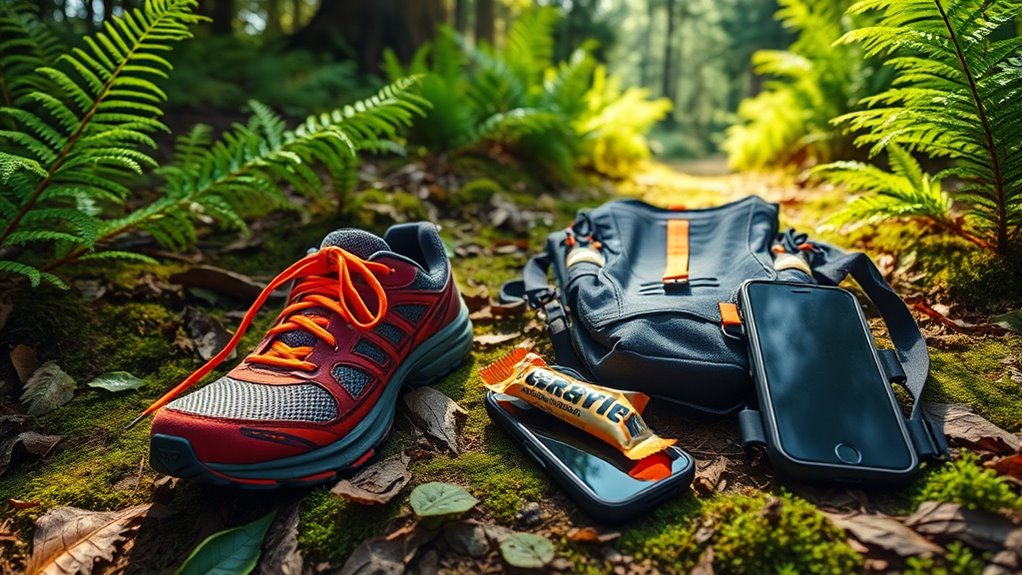

When heading out on a trail run, you should carry essentials like a water bottle or hydration pack, snacks, and a small first aid kit. Wear trail-appropriate shoes, moisture-wicking clothing, and sun protection such as sunglasses and a hat. Bring navigation tools like a map or GPS, a flashlight for low light, and a communication device for emergencies. Planning ahead and packing these items can keep you safe and comfortable—discover more to make certain you’re fully prepared.

Get workout gear delivered free with Prime
- Fast, free delivery on millions of items
- Prime Video, Amazon Music and more included
- Member-only deals all year
Key Takeaways
- Carry a hydration source like a water bottle or hydration pack and include electrolyte drinks for extended runs.
- Wear trail-appropriate shoes with good grip, support, and moisture-wicking clothing for comfort and safety.
- Pack safety items such as a small first aid kit, whistle, communication device, and a flashlight or headlamp.
- Bring navigation tools like a map, compass, or GPS device to prevent getting lost.
- Include snacks like energy bars or gels to maintain energy levels during the run.
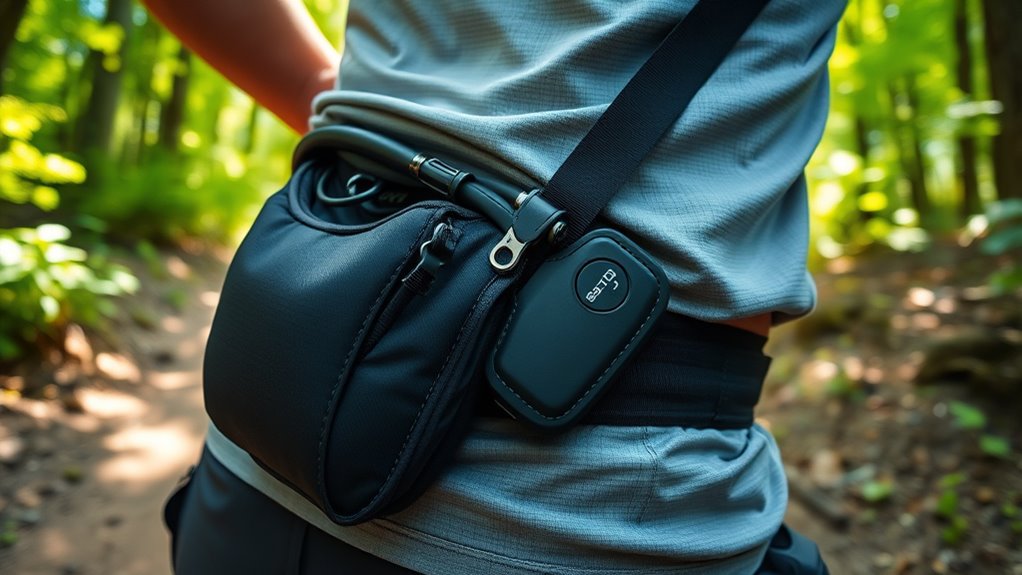
Trail running can be incredibly rewarding, but it requires more than just putting on your shoes and hitting the trail. To stay safe and enjoy your run, you need to be prepared with the right gear and knowledge. One of the most critical aspects of preparation is understanding hydration strategies. When you’re out on the trail, especially during long runs or in hot weather, staying properly hydrated is essential. Carry a water bottle or hydration pack that’s easy to access, and plan your route around water sources if possible. Sipping small amounts regularly helps prevent dehydration and maintains your energy levels. Remember, thirst isn’t always the best indicator—by the time you feel thirsty, you may already be dehydrated. Incorporate electrolyte drinks if you’re running for extended periods, as they help replenish salts lost through sweat.
Along with hydration, trail safety tips are essential to ensure you avoid common hazards. Always tell someone your route and expected return time. This way, if you’re delayed or get injured, someone knows where to find you. Before you start, check the weather forecast so you’re prepared for sudden changes—rain, heat, or cold can all impact your run. Wear trail-appropriate shoes that provide good grip and support to prevent slips or ankle injuries. Pack a small first aid kit with essentials like band-aids, antiseptic wipes, and blister treatment. It’s also wise to carry a whistle or a communication device, like a fully charged phone, to call for help if needed.
Other trail essentials include navigation tools such as a map, compass, or GPS device. While many runners rely on their phones, don’t forget that signal can be spotty in remote areas. Wearing moisture-wicking clothing helps keep you comfortable and dry, reducing chafing and overheating. Sun protection is also key—apply sunscreen, wear a hat, and sunglasses to shield yourself from harmful rays. Snacks like energy bars or gels can keep your energy up during longer runs, preventing fatigue. A small flashlight or headlamp may be helpful if your run extends into low light conditions.
As an affiliate, we earn on qualifying purchases.
Frequently Asked Questions
How Do I Choose the Right Trail Running Shoes?
To choose the right trail running shoes, focus on trail shoe fit and durability. You want a snug, comfortable fit that prevents blisters but isn’t too tight. Look for shoes with durable outsoles to handle rough terrain and protection. Consider your running style and terrain type, and try on different brands to find the best fit. Properly fitted, durable shoes will enhance your performance and keep your feet comfortable on tough trails.
What Safety Gear Is Essential for Night Trail Runs?
Think of night trail running as maneuvering a dark forest; your safety gear is your guiding light. You must wear a reliable headlamp for consistent illumination and head it securely so it won’t fall. Reflective gear is your trail’s glow stick, making sure you’re visible to others. Both are essential for headlamp safety and staying seen, helping you avoid obstacles and stay safe during your nocturnal adventure.
How Much Water Should I Carry on a Long Trail Run?
For a long trail run, you should carry at least 16-20 ounces of water, adjusting based on distance, temperature, and your hydration needs. Use hydration strategies like sipping regularly rather than gulping. Opt for water bottle types such as handheld bottles, hydration packs, or waist belts to guarantee easy access. Remember, staying hydrated helps prevent fatigue and keeps you safe during your run.
Are Energy Gels Necessary for Short Trail Runs?
You might find yourself wondering if energy gels are necessary for short trail runs, but they’re not always essential. Coincidentally, alternatives like fruit, nuts, or energy bars can effectively fuel your run. When considering trail running nutrition, think about what your body needs without relying solely on gels. These options can provide quick energy and keep you going, making your run enjoyable without extra gear.
How Can I Prevent Blisters During Trail Running?
To prevent blisters during trail running, follow blister prevention tips like keeping your feet dry and changing socks if they get sweaty. Proper sock selection is key—choose moisture-wicking, seamless socks that fit well to reduce friction. Make sure your shoes are comfortable and well-fitted, and consider applying a lubricant or blister pads on hotspots. These steps help keep your feet comfortable and blister-free on tough trails.
Conclusion
Now that you know what to bring, you’re ready to hit the trails confident and prepared. The right gear transforms a tough climb into a rewarding adventure, much like how a sturdy map turns unfamiliar terrain into exploration. Remember, it’s not just about packing essentials—it’s about embracing the journey with safety and enthusiasm. So, gear up, stay alert, and enjoy every moment on the trail—because the wilderness waits for those prepared to explore it fully.
Halloween Picks
halloween
As an affiliate, we earn on qualifying purchases.