
To improve your optical heart rate monitor’s accuracy, position the device about an inch above your wrist bone. This ideal placement enhances sensor detection and reduces extraneous signals, leading to more reliable readings. Make sure the band fits snugly without cutting off circulation; a good rule is to slide a finger underneath. Consistently wearing the device can help maintain this proper setup. Keep these tips in mind, and you’ll discover even more ways to boost your heart rate monitoring.

Get workout gear delivered free with Prime
- Fast, free delivery on millions of items
- Prime Video, Amazon Music and more included
- Member-only deals all year
Key Takeaways
- Position the device about an inch above the wrist bone for optimal blood flow detection.
- Ensure a snug fit that prevents movement but allows a finger to slide underneath.
- Maintain consistent sensor placement to enhance measurement accuracy during activities.
- Regularly calibrate the device to improve precision and reduce data variability.
- Habitually wearing the device helps establish optimal placement and improves long-term accuracy.
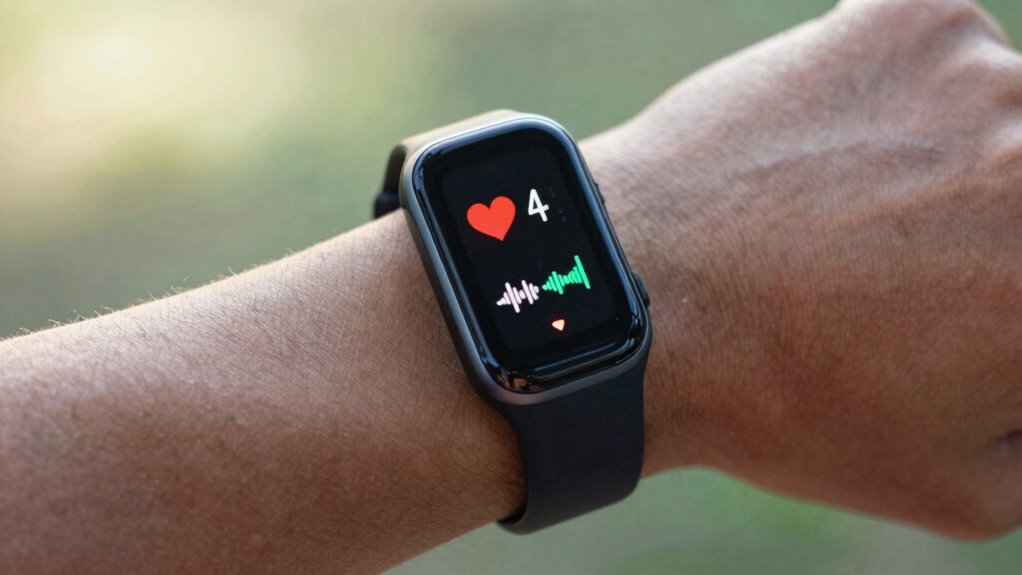
When you’re tracking your heart rate, the fit of your wrist device can make all the difference. You might be surprised to learn that small adjustments in wrist positioning and band tightness can greatly improve the accuracy of your readings. If your device isn’t snug enough or positioned correctly, it might struggle to get a clear signal from your heart, leading to inaccurate data.
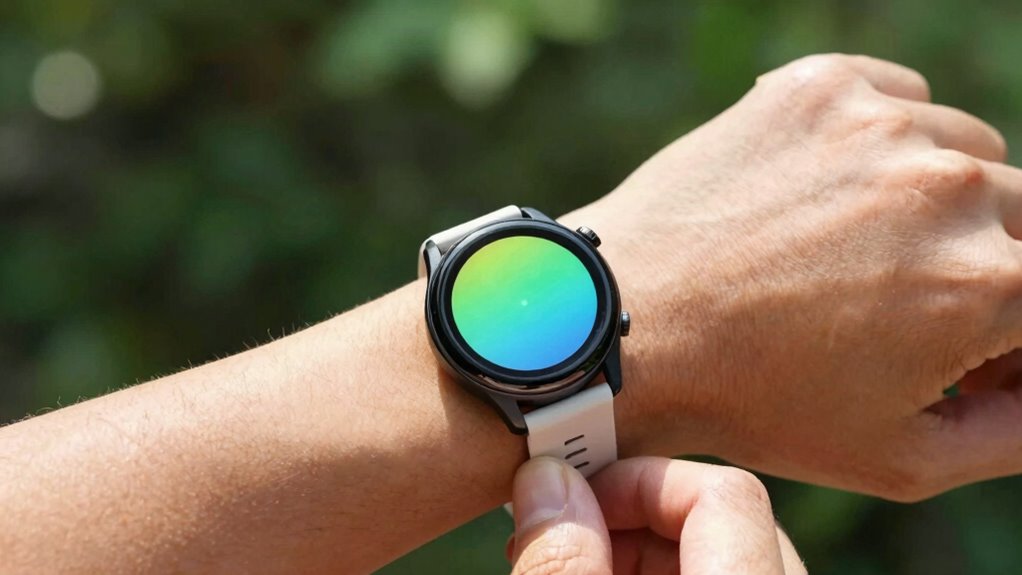
First off, let’s talk about wrist positioning. Your device should sit about an inch above your wrist bone. This positioning allows the sensors to better detect blood flow and provides a more reliable reading. If your watch or band is too low on your wrist, it may pick up extraneous signals or even struggle to read your heart rate at all. So, before you start your workout, take a moment to adjust that device. You want it right where it can do its job effectively.
Position your device an inch above your wrist bone for optimal heart rate accuracy and reliable readings. Adjust it before your workout!
Next, consider band tightness. You might think that a loose fit would be more comfortable, but that can actually hinder the device’s ability to accurately measure your heart rate. A band that’s too loose can move around during your activities, creating gaps that disrupt the sensor’s contact with your skin. Aim for a snug fit—tight enough that the device doesn’t slide around, but not so tight that it cuts off circulation. You should be able to slide a finger underneath the band comfortably. Additionally, sensor placement plays a critical role in measurement accuracy, so paying attention to how the sensors sit against your skin can make a significant difference. Proper device calibration can further enhance the precision of your measurements during various activities, ensuring you get the most accurate data possible. Regularly checking and adjusting your device’s fit can help maintain optimal sensor contact, especially during extended workouts or activities that cause wrist movement. Maintaining consistent wear and position can also help your device develop a habitual placement, which can improve long-term accuracy and reduce variability between readings.
optical heart rate monitor wrist band
As an affiliate, we earn on qualifying purchases.
As an affiliate, we earn on qualifying purchases.
Frequently Asked Questions
What Types of Devices Benefit From the Wrist Fit Trick?
Fitness trackers, smartwatches, and heart rate monitors all benefit from the wrist fit trick. When you adjust your device for a snug fit, you enhance its ability to read your heart rate accurately. This simple tweak can make a big difference in wearable technology’s performance, ensuring you get reliable data during workouts. So, if you want accurate readings, make sure your devices fit just right on your wrist.
How Often Should I Adjust My Device for Optimal Fit?
You should make frequent adjustments to your device to guarantee ideal positioning. Check the fit at least once a day, especially during workouts or after prolonged use. If you notice any discomfort or if your heart rate readings seem off, it’s time to readjust. A snug yet comfortable fit enhances accuracy and keeps your device in the right spot, so don’t hesitate to tweak it as needed for the best results.
Can the Wrist Fit Trick Reduce Battery Consumption?
Sure, adjusting your device to improve battery efficiency sounds like a clever idea, right? Actually, the wrist fit trick can indeed help reduce battery consumption. By optimizing wrist positioning, you guarantee your device properly reads your heart rate, which means it won’t drain power searching for signals. So, when you get that snug fit, not only does accuracy improve, but you also get to enjoy longer battery life. Isn’t that a win-win?
Is This Technique Suitable for All Wrist Sizes?
Yes, this technique can be suitable for various wrist sizes. You can use wrist measurement techniques to find the perfect fit for your wrist. If you have an adjustable band, it’ll be even easier to customize the fit, enhancing comfort and accuracy. Just make sure the band isn’t too tight or loose, as that can affect performance. Properly fitting gear helps you get the most out of your heart rate monitoring experience.
What Other Factors Influence Heart Rate Accuracy?
You might be surprised, but heart rate accuracy hinges on more than just the device. Environmental factors, like temperature and humidity, play a big role. If it’s too hot or cold, your readings can skew. Skin tone also affects how well sensors pick up your heart rate, with darker skin sometimes leading to less accurate results. So, keep these factors in mind to guarantee you’re getting the most reliable data during your workouts.
Conclusion
By adjusting your wrist fit for ideal heart rate monitoring, you can considerably enhance the accuracy of your device. Imagine you’re training for a marathon, and every beat counts. By simply loosening or tightening your watch to find that sweet spot, you could gain insights that keep you from overtraining or underestimating your recovery. So, next time you strap on your fitness tracker, remember this wrist fit trick—it could be the game changer you need for your performance!
Halloween Picks
halloween
As an affiliate, we earn on qualifying purchases.