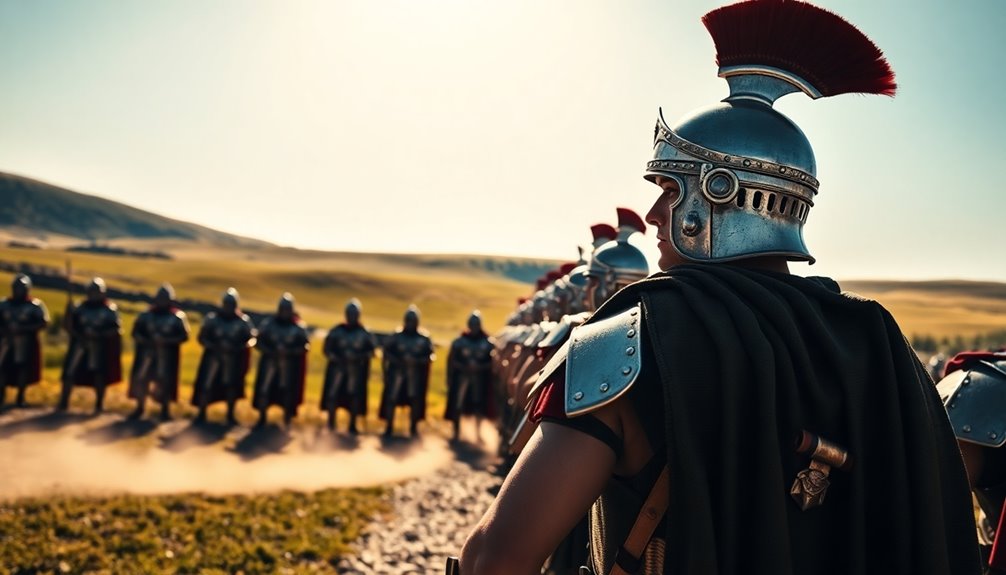

Roman soldiers never ran more than three miles because their training focused on building endurance for long marches instead of short sprints. Carrying over 100 pounds of gear, they prioritized conserving energy to stay combat-ready, knowing that fatigue could hurt their effectiveness. Fast running could disrupt formations like the Testudo, which was crucial for protection in battle. Understanding this military strategy reveals why endurance reigned supreme. There's much more to uncover about their training methods and tactical approaches.
Key Takeaways
- Roman soldiers prioritized endurance training, focusing on sustained marches of 20 to 25 miles rather than short-distance running.
- Running in full armor was impractical, often taking over 1.5 minutes to cover 180 meters.
- Tactical formations like Testudo required slow, coordinated movements rather than chaotic running to maintain combat effectiveness.
- Energy conservation was crucial; unnecessary running led to fatigue, diminishing soldiers' readiness for battle.
- Psychological factors influenced soldiers' understanding of stamina preservation, ensuring combat readiness at all times.
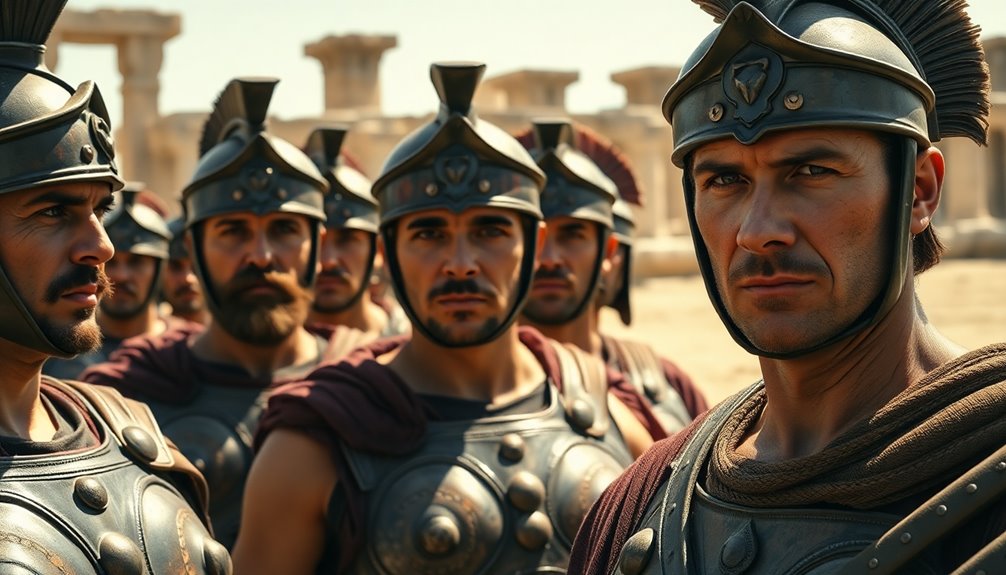
While you might picture Roman soldiers sprinting across the battlefield, the reality is quite different. In fact, Roman soldiers were trained for endurance rather than speed, emphasizing sustained marches over short bursts of running. These military units typically marched 20 to 25 miles a day while fully equipped, which meant carrying over 100 pounds of gear. You can imagine how impractical it was for these soldiers to run distances exceeding three miles in full armor. The heft of their equipment would slow them down, making running a strategic disadvantage.
When you consider the time it took for a Roman soldier to cover 180 meters in armor—anywhere from 40 seconds to over 1.5 minutes—it becomes clear that running wasn't an efficient use of energy. Instead, their training focused on building endurance and strength to tackle long, sustained marches. The Roman army conditioned its soldiers to maintain a steady pace, which was essential for traversing the vast territories they controlled. This endurance training was crucial for preparing soldiers for the rigors of prolonged campaigns.
Another factor to consider is the Testudo formation, a tactical maneuver that provided protection during battle. This formation required soldiers to move in unison, emphasizing slow and steady movement rather than chaos. Running would've compromised the integrity of the Testudo, risking both individual safety and the overall combat effectiveness of the unit. Maintaining formation stability was paramount, as it allowed Roman soldiers to defend against enemy projectiles and maintain cohesion during engagements.
Psychological factors also played a significant role in limiting running distances. Roman soldiers needed to conserve energy, ensuring they remained combat-ready when facing the enemy. If they fatigued themselves with unnecessary running, they risked diminishing their effectiveness in battle. Every soldier understood that preserving their stamina was vital, especially when they could be called upon to fight at a moment's notice.
Roman soldier endurance training gear
As an affiliate, we earn on qualifying purchases.
As an affiliate, we earn on qualifying purchases.
Conclusion
In conclusion, the Roman soldiers' strategy of not running more than three miles reveals key insights into effective endurance training. By focusing on efficiency over distance, they maximized their performance and minimized fatigue. This approach challenges modern athletes to rethink their own training methods. Embracing these ancient principles could lead to breakthroughs in performance and recovery, proving that sometimes, looking to the past can uncover invaluable secrets for the future. So, maybe it's time to rethink that long run!