
To build simple meal patterns around your training volume, plan your meals to align with your workout schedule. Have a balanced breakfast with complex carbs, protein, and healthy fats an hour before your morning session. Eat a nutrient-rich lunch or snack for afternoon workouts, and prioritize a protein-focused meal within 30-60 minutes after training. Adjust portion sizes based on your energy needs and listen to your body’s feedback. More tips can help you refine your approach.

Get workout gear delivered free — and shop member deals
- Fast, free delivery on millions of items
- Access to Prime Big Deal Days deals on October 6–7
- Prime Video, Amazon Music and more included
Key Takeaways
- Align larger, carbohydrate-rich meals with high-volume training days to replenish glycogen stores effectively.
- Consume protein and carbs within 30-60 minutes post-workout to support recovery and muscle growth.
- Adjust meal size and timing based on training intensity and individual energy needs.
- Incorporate balanced meals before workouts to sustain energy without causing discomfort.
- Use flexible meal planning that adapts to changing training schedules and personal responses.
Have you ever wondered how your meal patterns can boost your training performance? Understanding meal timing and nutrient timing can make a significant difference in how your body responds to workouts and recovers afterward. When you align your eating schedule with your training volume, you optimize energy levels and promote muscle growth. The key is to plan your meals around your workout times, ensuring your body has the nutrients it needs when it needs them most.
Start by considering your training schedule. If you work out in the morning, aim to have a balanced breakfast about an hour beforehand. This meal should include complex carbs for sustained energy, moderate protein, and a small amount of healthy fats. Think oatmeal with fruit and a handful of nuts or a whole-grain toast with eggs. This approach leverages nutrient timing, giving your muscles the fuel they require and preventing energy dips during exercise. Post-exercise nutrition is especially important for muscle recovery and maximizing the benefits of your workout. Consuming nutrients within 30 to 60 minutes post-exercise maximizes recovery and muscle synthesis, making your efforts more effective. Incorporating proper nutrient timing can further enhance your results by aligning nutrient intake with your body’s needs during recovery. Additionally, understanding the importance of training volume can help you tailor your meal patterns more effectively to support your workout intensity. Recognizing the role of metabolic responses can also help you fine-tune your nutrition to optimize energy expenditure and recovery.
Fuel your morning workout with a balanced breakfast and replenish muscles quickly after for optimal recovery.
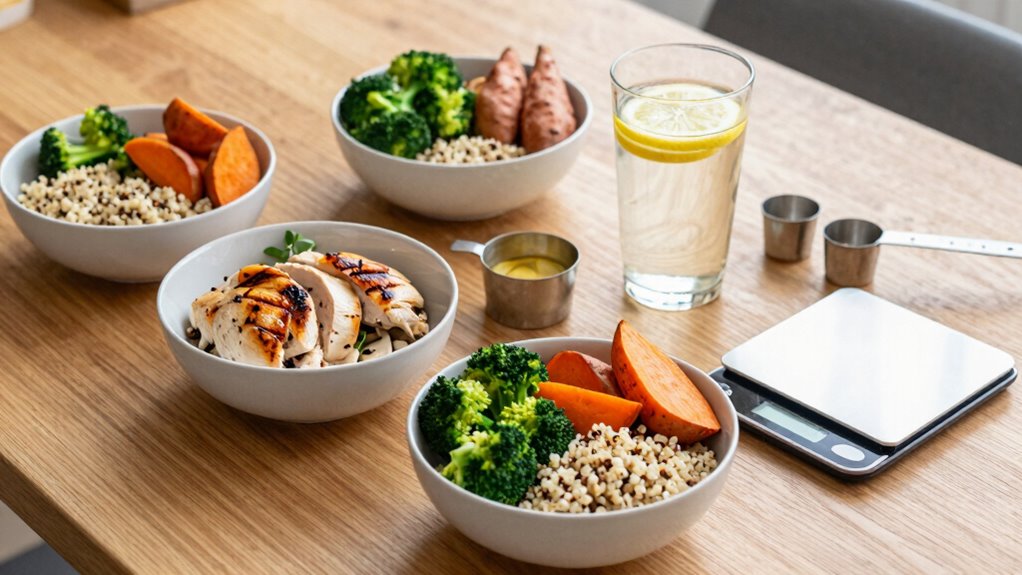
If you train in the afternoon or evening, plan your meals accordingly. Have a balanced lunch with enough carbs to sustain your energy through the workout, along with lean protein and vegetables. For instance, grilled chicken with quinoa and vegetables provides sustained energy without feeling heavy. As your workout approaches, consider a small snack about an hour prior—like Greek yogurt with berries or a rice cake with peanut butter—to ensure you’re fueled without feeling bloated. Post-exercise, follow the same principle: prioritize nutrient timing by eating a protein-rich meal soon after training. This helps your muscles recover and grow, especially if your training volume is high.
Incorporating meal timing strategies into your routine doesn’t mean you need to be overly rigid. It’s about consistency and making smart choices around your training schedule. Adjust your meal patterns based on how your body responds, but always aim to provide your muscles with the necessary nutrients at the right times. When you pay attention to nutrient timing and plan your meals around your training volume, you’ll notice improvements in strength, endurance, and recovery—helping you reach your fitness goals more efficiently.
meal prep containers for athletes
As an affiliate, we earn on qualifying purchases.
As an affiliate, we earn on qualifying purchases.
Frequently Asked Questions
How Does Meal Timing Affect Muscle Recovery?
Meal timing, especially post workout nutrition, plays a vital role in muscle recovery. When you consume nutrients soon after training, you optimize nutrient timing to replenish glycogen stores and repair muscle fibers effectively. You should focus on a balanced meal with carbs and protein within 30-60 minutes post workout. This accelerates recovery, reduces soreness, and supports your training goals by ensuring your muscles get the nutrients they need promptly.
Should I Adjust My Calorie Intake on Rest Days?
Did you know that on rest days, your calorie needs drop by about 10-15%? You should adjust your calorie intake accordingly. For rest day nutrition, it’s smart to reduce calories slightly, focusing on protein and healthy fats to support recovery. You don’t need to cut calories drastically, but small adjustments help prevent weight gain and keep your energy levels steady. Listen to your body and tweak as needed.
What Are the Best Protein Sources for Athletes?
You should prioritize high-quality protein sources like dairy options, such as Greek yogurt and cottage cheese, which provide essential amino acids. Plant-based proteins like lentils, chickpeas, tofu, and quinoa are great options too, especially if you’re vegetarian or vegan. Combining different plant proteins ensures you get a complete amino acid profile, supporting muscle repair and overall performance. Incorporate a variety of these sources into your meals for maximum athletic benefits.
How Do I Stay Consistent With Meal Patterns?
Did you know that consistent meal patterns can boost performance by up to 20%? To stay on track, focus on meal prep strategies that make healthy eating effortless. Plan your snacks ahead and time them around your training sessions to maintain energy levels. Keep a schedule, prep in advance, and stick to regular meal times. This approach helps build habits, making consistency easier and helping you hit your fitness goals.
Is Carbohydrate Cycling Beneficial for Training?
Yes, carbohydrate cycling can be beneficial for training because it optimizes carbohydrate timing and glycogen replenishment. On intense workout days, you increase carbohydrate intake to fuel performance and aid recovery, while on rest days, you reduce carbs to improve fat burning. This approach helps maintain energy levels, supports muscle growth, and prevents over-consuming carbs, making your meal patterns more effective and aligned with your training goals.
Conclusion
By tailoring your meal patterns around your training volume, you optimize energy and recovery. For instance, if you’re lifting heavy three times a week, focus on carbs and protein before and after sessions. Imagine a runner increasing mileage; they’d need more carbs on high-volume days. Adjust your meals accordingly, listen to your body, and watch your performance improve. Simple tweaks can make a big difference in supporting your training goals!
Fall Picks
fall essentials
As an affiliate, we earn on qualifying purchases.