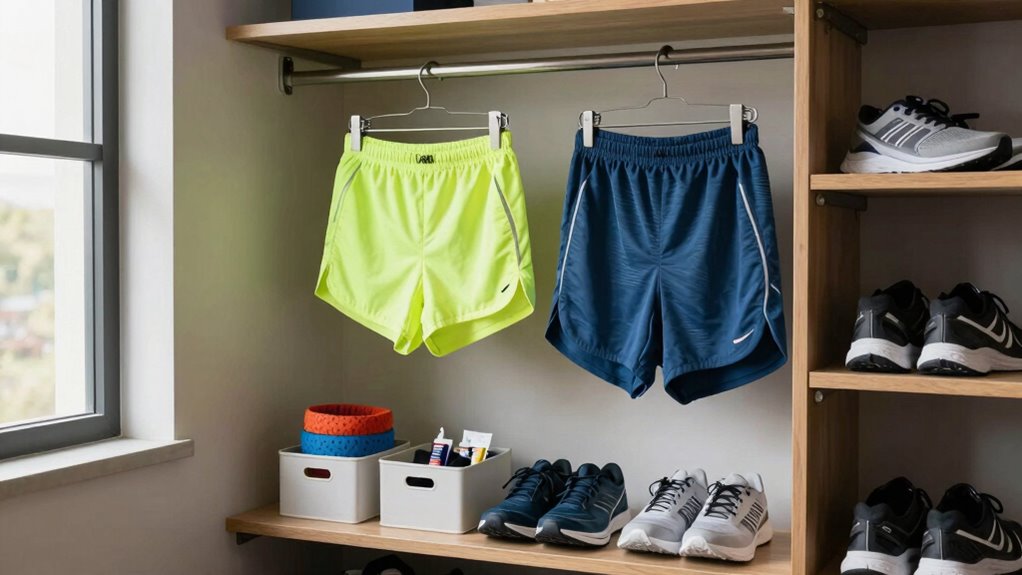

To save time every week, start by removing all your gear and sorting it into categories like shoes, apparel, and accessories. Use clear bins, labeled drawers, and dedicated racks to keep everything visible and easy to access. Store seasonal items separately and rotate them as needed. Dedicate a regular time each week to tidy up and return items to their spots. Keep your most-used gear at the front to streamline your routine—continue to explore how a simple reset can make a big difference.

Get workout gear delivered free with Prime
- Fast, free delivery on millions of items
- Prime Video, Amazon Music and more included
- Member-only deals all year
Key Takeaways
- Regularly assess and declutter gear to prevent buildup and maintain an organized space.
- Allocate specific spots for each item category to ensure quick, effortless access.
- Use labeled storage solutions and clear bins for easy identification and retrieval.
- Rotate seasonal gear to keep the closet current and reduce clutter.
- Dedicate a few minutes weekly to return items to their designated places and reassess gear needs.
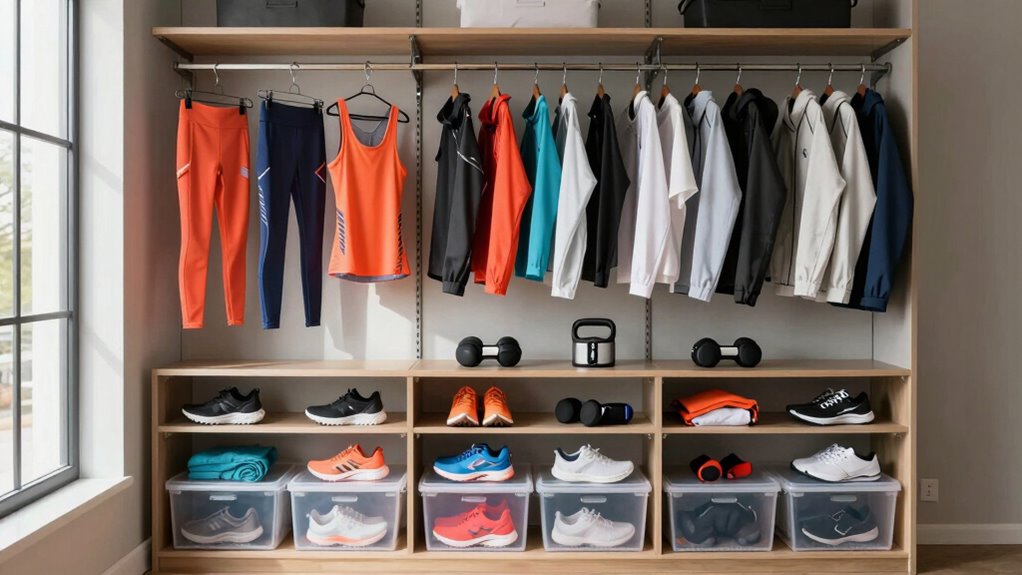
If your running closet has become cluttered or overwhelming, it’s time for a reset that can streamline your gear and boost your motivation. A well-organized running closet makes it easier to find what you need, when you need it, saving you time and frustration. Start by evaluating your current storage organization. Pull everything out and sort your gear into categories: shoes, tops, bottoms, accessories, and seasonal wardrobe items. This process helps you see exactly what you have and identify duplicates or items you no longer use.
Organize your running gear to save time, reduce stress, and stay motivated with a clutter-free closet.
When it comes to storage organization, think about smart ways to keep everything accessible and tidy. Use clear bins or baskets for accessories and small gear, so you can quickly see what’s inside. Invest in a sturdy shoe rack or dedicated shelves for your running shoes—keeping them separate prevents clutter and helps prolong their lifespan. Hang your tops and bottoms on uniform hangers, and consider using a labeled drawer or cubby system for smaller items like gloves, headbands, or gels. If space allows, installing wall-mounted hooks or racks can keep gear off the floor and within easy reach. Incorporating storage solutions that maximize your space can significantly improve your organization. Additionally, considering home organization strategies can help maintain your system and prevent future clutter. Regularly reassessing your gear and storage setup ensures your running closet remains functional and efficient over time. Incorporating clutter management techniques can further enhance your organization and make upkeep easier.
A key part of your reset involves managing your seasonal wardrobe. Many runners keep all their gear in one place year-round, but this can lead to clutter and confusion. Instead, designate a specific spot or bin for off-season apparel. For example, store your winter running gear in a separate bin or section of your closet during warmer months, and vice versa. This way, when the seasons change, you can quickly swap out your gear without rummaging through everything. Rotating your seasonal wardrobe also helps you keep only what you’re actively using, reducing clutter and making your running closet more manageable. Proper seasonal wardrobe management can further streamline your routine and keep your space organized year-round. Establishing a routine for seasonal swaps ensures your closet stays tidy and your gear stays in good condition. To make this process more effective, consider creating a dedicated storage space for off-season gear, which helps prevent clutter from accumulating in your main closet. Once you’ve sorted and reorganized, create a system to maintain it. Dedicate a few minutes each week to put things back in their designated spots after each run. Regularly appraising your gear—if you haven’t worn something in a year, it’s probably time to donate or replace it. Keep your most-used items front and center for quick access, and store less frequently used gear in less accessible spots. With a clean, organized running closet, finding your gear becomes effortless, and your weekly routine speeds up. This reset not only saves you time but also keeps you motivated, making your running experience more enjoyable and less stressful.
As an affiliate, we earn on qualifying purchases.
Frequently Asked Questions
How Often Should I Declutter My Running Closet?
You should declutter your running closet every 3 to 6 months to keep it organized and efficient. Regular running gear maintenance helps prevent buildup of unused items, so you stay aware of what you actually use. Incorporate closet organization tips like sorting gear by activity or frequency, and donate or recycle items you no longer need. This routine guarantees you’re always ready for your next run without wasting time searching through clutter.
What Are the Best Storage Solutions for Running Gear?
You might think storage containers are bulky, but they’re perfect for running gear maintenance and organization. Opt for clear, stackable bins or drawer dividers to keep shoes, socks, and accessories separated. Hanging shoe racks or wall-mounted cubbies also save space. These storage container options help you quickly find what you need, reduce clutter, and keep your running gear fresh and ready for your next workout.
How Do I Organize Seasonal Running Clothes?
To organize your seasonal running clothes, create a dedicated section in your running wardrobe for each season. During seasonal shift, store off-season gear in labeled bins or storage containers, making it easy to swap out. Keep frequently used items accessible and rotate clothing based on weather changes. This system simplifies your routine, saves time, and guarantees you’re always prepared for the current season’s running conditions.
What to Do With Unused or Outdated Running Gear?
Think of your outdated apparel as a garden’s overgrown weeds. You should gear recycling by donating or repurposing items that no longer serve you. Unused or damaged gear, like old running shoes or worn-out shirts, can be recycled or gifted. Not only does this free up space, but it also helps others. Clearing out outdated gear keeps your running closet fresh and ready for what’s next.
How Can I Prevent Clutter From Reaccumulating?
To prevent clutter from reaccumulating, prioritize running gear rotation and stick to closet maintenance tips. Regularly assess your gear, donating or discarding items you no longer need. Limit your collection to essentials, and store seasonal or seldom-used items separately. Keep your running closet organized by maintaining a consistent reset routine, which helps you stay mindful of what you own and avoids unnecessary clutter buildup over time.
Conclusion
Imagine slipping into a closet where everything’s perfectly in place, your favorite pieces ready to wear without hunting through chaos. With a quick running closet reset each week, you streamline your mornings, saving precious time for what truly matters. Feel the satisfying weight lift off your shoulders as your wardrobe becomes a sanctuary of order. Embrace this simple habit, and transform your mornings into a smooth, confident stride into each new day.
Halloween Picks
halloween
As an affiliate, we earn on qualifying purchases.