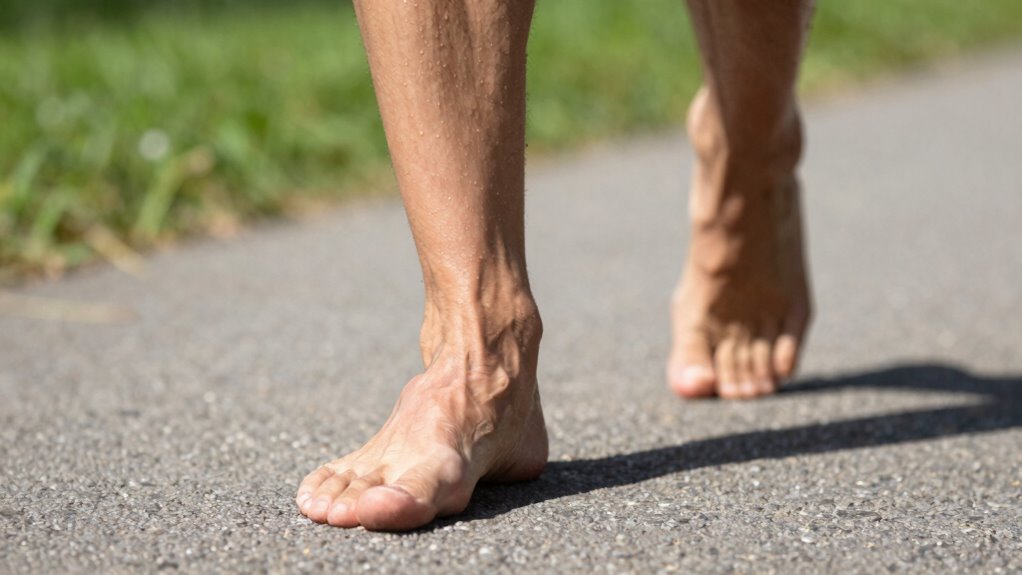

Many runners believe that landing on the midfoot prevents injury and boosts performance, but this oversimplifies what truly affects your running. Instead, focus on improving ankle flexibility and overall biomechanics. Shoe cushioning and proper body movement play bigger roles in injury prevention than foot strike alone. Strengthening your foot and ankle muscles, along with personalized adjustments, can make a real difference. Keep exploring how to optimize your form for safer, more efficient running.

Get workout gear delivered free with Prime
- Fast, free delivery on millions of items
- Prime Video, Amazon Music and more included
- Member-only deals all year
Key Takeaways
- Foot strike type alone doesn’t determine running efficiency; overall biomechanics and ankle flexibility are more impactful.
- Improving ankle mobility allows natural midfoot or forefoot landing without discomfort or injury risk.
- Shoe cushioning and support influence running mechanics more than foot strike position.
- Strengthening foot and ankle muscles enhances stability and reduces injury risk during any strike pattern.
- Personalized training focusing on biomechanics and body movement is more effective than fixating on foot placement.
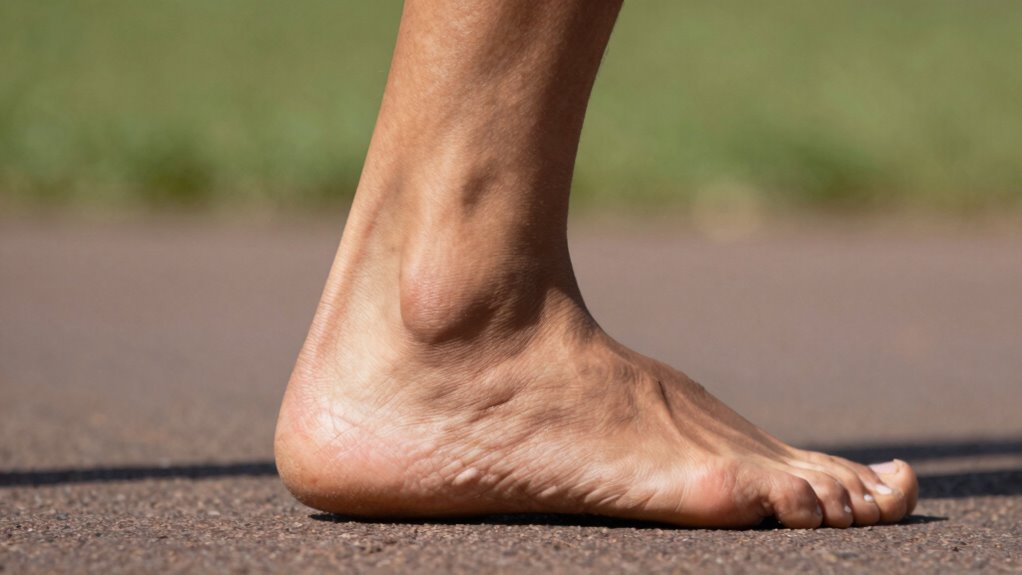
Many runners believe that landing on the midfoot is the key to injury-free, efficient running, but this common myth oversimplifies a complex biomechanical process. The idea suggests that by shifting your strike to the middle of your foot, you automatically reduce injury risk and improve performance. However, the reality is more nuanced. Your running form depends on a combination of factors, including ankle flexibility and the type of shoe cushioning you choose, rather than just where your foot lands.
Foot strike location alone doesn’t determine running efficiency or injury risk; flexibility and footwear matter more.
Ankle flexibility plays an essential role in how your foot interacts with the ground. If your ankles are stiff, forcing a midfoot strike might actually cause more strain, especially in your calves and Achilles tendons. Conversely, if you have good ankle mobility, you might naturally land midfoot or forefoot without feeling excessive discomfort. Improving ankle flexibility through targeted stretching and mobility exercises can help you adapt your running style more safely, regardless of whether you aim for a midfoot or heel strike. Incorporating biomechanical considerations into your training can further enhance your efficiency and reduce injury risk. Additionally, understanding your individual biomechanics can help you tailor your training plan more effectively, avoiding one-size-fits-all solutions. Recognizing the influence of body mechanics can lead to more personalized and effective adjustments. Paying attention to muscle engagement throughout your run can also contribute to better form and injury prevention. Developing awareness of your running economy can help you optimize your overall performance and reduce fatigue.
Shoe cushioning also influences your running mechanics more than the foot strike itself. Many runners believe that minimal shoes or barefoot running promote a midfoot strike, but the truth is that cushioning affects how your foot absorbs impact and how your muscles respond. Soft, well-cushioned shoes can allow you to land more comfortably on your heel or midfoot without risking injury, especially if your ankle flexibility supports that strike pattern. Conversely, overly cushioned shoes might encourage a heel strike, which is often linked to different injury risks. The key is to select footwear that complements your natural biomechanics and provides enough support to avoid overloading specific tissues.
Instead of fixating on where your foot hits the ground, focus on optimizing your overall running form. Strengthening your foot and ankle muscles, maintaining good ankle flexibility, and choosing appropriate shoe cushioning are more effective strategies. Remember, every runner’s body is different, and what works for someone else might not be ideal for you. Shifting to a midfoot strike isn’t simply about changing your foot placement; it’s about adapting your entire running system to work harmoniously.
In the end, the real fix isn’t just where your foot lands — it’s about understanding and improving how your body moves as a whole. By paying attention to ankle flexibility and selecting the right shoe cushioning, you can develop a more efficient, injury-resistant running style that suits your individual biomechanics. Recognizing the importance of biomechanical factors can help you make smarter, more personalized adjustments to your running approach.
ankle flexibility stretching exercises
As an affiliate, we earn on qualifying purchases.
As an affiliate, we earn on qualifying purchases.
Frequently Asked Questions
Is Midfoot Striking Suitable for All Runners?
Midfoot striking isn’t suitable for all runners because your running surface and foot arch play essential roles. If you run on hard surfaces like concrete, midfoot strikes can cause more impact than you need. Similarly, if you have a high or low foot arch, this affects how your foot absorbs shock. It’s best to analyze your gait and surface, then adjust your strike to prevent injury and improve comfort.
How Do I Identify if I Have a Midfoot Strike?
You identify if you have a midfoot strike by examining your foot placement during running. Focus on your strike pattern—are you landing on the middle of your foot rather than your heel or toes? To check, observe your landing in a mirror or record yourself running. If your foot hits the ground with the middle part, you’re likely using a midfoot strike. This can help you tailor your running form.
Can Changing My Running Form Prevent Injuries?
Yes, changing your running form can help prevent injuries. Adjusting your stride, incorporating proper foot placement, and using appropriate footwear technology all play roles in reducing impact forces. Running on softer surfaces can also lessen stress on your joints. Be mindful of your form, and consider consulting a professional to tailor adjustments suited to your body. These changes collectively lower injury risk and improve your overall running experience.
What Are the Risks of Overcorrecting My Stride?
Overcorrecting your stride can lead to ankle instability, increasing your risk of sprains or falls. It might also cause you to rely too heavily on rigid footwear, reducing flexibility and natural movement. When you change your running form too drastically, your muscles and tendons struggle to adapt, creating imbalances. Focus on gradual adjustments to maintain ankle stability and footwear flexibility, avoiding sudden overcorrections that could do more harm than good.
Does Shoe Choice Impact Midfoot Running Efficiency?
Yes, your shoe choice impacts midfoot running efficiency. Shoes with proper arch support help stabilize your foot, reducing unnecessary movement and energy loss. Additionally, cushioned shoes can absorb shock, preventing fatigue and injury. Select footwear that aligns with your foot’s arch and running style. Properly fitted shoes with adequate cushioning and support allow your midfoot to work naturally, improving efficiency and comfort during runs.
Conclusion
Now, picture yourself lacing up, feeling the ground steady beneath your midfoot, not as a myth but as your true anchor. Let go of outdated ideas and embrace the honest, natural strength of your stride. With each step, imagine shedding unnecessary doubts like leaves in the wind, revealing a more confident, resilient you. Your running journey becomes not just about distance, but about rediscovering the pure joy of moving forward—grounded, powerful, free.
Halloween Picks
halloween
As an affiliate, we earn on qualifying purchases.