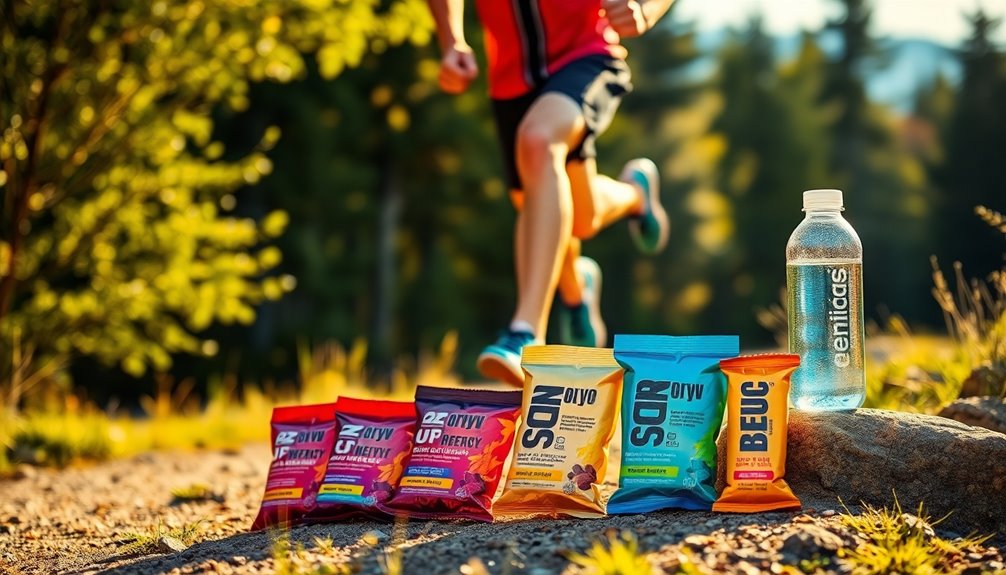
Energy supplements for runners vary most in how quickly they deliver carbohydrates, how easy they are to take on the move, and whether they add caffeine or electrolytes. I’d choose GU Energy Original Energy Gel as the best overall starting point for its straightforward gel format, while Clif BLOKS Energy Chews suit runners who prefer bite-sized fuel and Science in Sport GO Isotonic Gel stands out for runners who want a gel designed to be taken without water. The tradeoff is practical: gels are compact but can be hard to swallow, chews take longer to eat, and electrolyte capsules do not replace carbohydrate fuel. Your pace, stomach tolerance, and fueling plan matter more than a single format winning for everyone. Read on for the full breakdown and help matching each option to your runs.

Get workout gear delivered free with Prime
- Fast, free delivery on millions of items
- Prime Video, Amazon Music and more included
- Member-only deals all year
Complete the kit


Key Takeaways
- GU Energy Original Gel is the most straightforward all-around choice here; the lineup’s other gels add specific features, such as isotonic delivery, chia, or a higher-end endurance focus.
- Clif BLOKS and PROBAR Bolt show why chews suit runners who want to take fuel in smaller bites, though eating them can be less convenient at race pace than squeezing a gel.
- Science in Sport GO Isotonic Gel is the clearest fit for runners who want a gel format intended to be taken without water; that convenience does not replace a personal hydration plan.
- GU Roctane Electrolyte Capsules supply electrolytes rather than carbohydrate energy, so they serve a different role from gels and chews and should not be treated as a fueling substitute.
- The range of caffeine-free, caffeinated, and chia-based choices makes tolerance a deciding factor: a product that fits a training routine may be a poor first experiment on race day.


More Details on Our Top Picks
Clif BLOKS Energy Chews – Variety Pack – Non-GMO, Plant-Based, 12 Pack
Clif BLOKS Variety Pack is my most flexible pick for runners who want chewable fuel rather than a gel. The bite-sized format lets you spread carbohydrates across a long run, while the assorted flavors offer a change from carrying one flavor for every session. Each serving has 24 g of carbohydrates, making it a more substantial fuel option than the calorie-free GU Roctane Electrolyte Capsules, which provide electrolytes but no energy. Compared with the caffeinated BLOKS, this version avoids caffeine, so it fits evening runs and runners who already manage stimulant intake elsewhere. The tradeoff is that these chews supply sugar and carbohydrates, and chewing can feel less convenient than taking a GU Energy Original Gel while moving. Packaging may also vary, so the assortment may not always be predictable.
Pros:- 24 g of carbohydrates per serving provides a defined source of running fuel
- Bite-sized chews can be consumed gradually rather than all at once
- Plant-based, non-GMO ingredients suit some ingredient preferences
- Variety pack offers multiple flavors, including Black Cherry and Strawberry
Cons:- Sugar and carbohydrate content may not fit low-carbohydrate dietary plans
- Chewing can be less practical than a gel during faster running
- Packaging variation may make the assortment less consistent
Best for: Runners who want portable, caffeine-free chewable carbohydrates and like having multiple flavors for long training sessions
Not ideal for: Runners avoiding sugar or carbohydrates, or those who prefer a quick-to-swallow gel over chewing during a hard effort
- Packets:12
- Packet weight:2.12 oz.
- Calories:33 per cube
- Carbohydrates:24 g per serving
- Ingredients:Organic tapioca syrup and plant-based ingredients
- Dietary attributes:Plant-based, non-GMO
- Flavor options:Black Cherry, Strawberry, and more
Our verdict“Choose these if you want substantial, caffeine-free chewable fuel with flavor variety, and skip them if you prefer gels or avoid sugar.”
GU Energy Roctane Electrolyte Capsules – Sodium, Magnesium & Chloride (50 ct)
GU Roctane Electrolyte Capsules fill a different role from the gels and chews here: they add electrolytes without adding fuel. Each capsule supplies 140 mg of sodium and 125 mg of chloride, so runners can pair hydration support with their own preferred carbohydrate source, such as Clif BLOKS or the GU Roctane Ultra Endurance Gel. The capsules are calorie-free and contain no sugar or sweeteners, which may suit runners who do not want another flavored drink or snack. Compared with the higher-sodium Roctane gel, though, these capsules deliver less sodium per serving and provide no carbohydrates for energy. The suggested pace is one to two capsules per hour with water; runners with very high sweat losses may need a different hydration plan. A 50-capsule bottle can also go quickly during frequent long sessions.
Pros:- 140 mg sodium and 125 mg chloride per capsule
- Zero calories and zero sugar
- Small capsules are portable and can be taken with water
- Includes magnesium, vitamin D, vitamin B6, and ginger root powder
Cons:- Provides no carbohydrates or calories for running energy
- May not meet the electrolyte needs of very heavy sweaters in extreme heat
- A 50-capsule supply may be limited for frequent or multi-day use
Best for: Distance runners who already have a carbohydrate-fueling plan and want portable, sugar-free electrolyte capsules for hot or long workouts
Not ideal for: Runners looking for calories or carbohydrate energy in the same product, or heavy sweaters who need more sodium than the suggested capsule routine provides
- Capsules per bottle:50
- Sodium per capsule:140 mg
- Chloride per capsule:125 mg
- Magnesium per capsule:9 mg
- Vitamin D per capsule:75 IU
- Vitamin B6 per capsule:1 mg
- Ginger root powder per capsule:50 mg
- Calories and sugar:0 calories; 0 g sugar per capsule
- Suggested use:1–2 capsules per hour with water
Our verdict“Pick these to supplement an existing fueling plan with sugar-free electrolytes, not as a standalone energy source.”
CLIF BLOKS Energy Chews with Caffeine Variety Pack, Non-GMO, Plant-Based, 2.12 oz. Packets (8 Count)
For runners who want caffeine built into chewable fuel, CLIF BLOKS with Caffeine combine portable carbohydrates with a stimulant in an easy-to-carry format. The assorted flavors and bite-sized pieces let runners take fuel in stages, much like the non-caffeinated Clif BLOKS Variety Pack. The key difference is that this eight-packet version adds 25–50 mg of caffeine per serving; that may suit someone who wants a modest boost without carrying a separate caffeinated product. It also has fewer packets than the 12-count caffeine-free BLOKS, so it is less suited to stocking up for regular long runs. Caffeine levels vary, which makes intake harder to standardize, and the sweet, sticky texture may be less appealing than GU Energy Original Gel. Runners sensitive to caffeine should choose the non-caffeinated chews instead.
Pros:- Combines chewable carbohydrates with 25–50 mg caffeine per serving
- Bite-sized pieces support gradual fueling during endurance activity
- Plant-based, non-GMO ingredients
- Assorted flavors include Black Cherry, Tropical Punch, Orange, and Strawberry Lemonade
Cons:- Caffeine content varies from 25 to 50 mg per serving
- Sweet, sticky chews may be less comfortable to eat while running
- Eight packets provide fewer servings than the non-caffeinated 12-pack BLOKS
Best for: Runners who already tolerate caffeine and want chewable fuel with assorted flavors for long runs or cycling sessions
Not ideal for: Caffeine-sensitive runners, people avoiding stimulants, or anyone seeking a consistent caffeine dose across servings
- Packets:8
- Packet weight:2.12 oz.
- Calories:33 per cube
- Caffeine:25–50 mg per serving
- Ingredients:Organic tapioca syrup, electrolytes, and flavorings
- Dietary attributes:Plant-based, non-GMO
- Flavor options:Black Cherry, Tropical Punch, Orange, Strawberry Lemonade
Our verdict“Choose this version if you want caffeine and chewable fuel together, but opt for standard Clif BLOKS if you want to control caffeine separately.”
GU Energy Original Energy Gel Tri-Berry (8 count)
GU Energy Original Gel in Tri-Berry is a simple choice for runners who prefer a single-serve gel to chewing. Its blend of simple and complex carbohydrates delivers 21–23 g of carbs per serving, with 450 mg of BCAAs and 60–125 mg of sodium. The packet format is easier to consume quickly than Clif BLOKS, which can be useful when maintaining pace matters more than spreading fuel across several bites. It is also vegan, gluten-free, and kosher certified. Compared with GU Roctane Ultra Endurance Gel, however, the Original Gel provides less sodium and a smaller stated amino-acid blend, so it is the less specialized option for long efforts where runners want more sodium per packet. Flavor sweetness may put off some runners, and its sodium range may not be enough for athletes with high sweat losses.
Pros:- Provides 21–23 g of carbohydrates per serving
- Simple and complex carbohydrates are combined in one packet
- Includes 450 mg of BCAAs and 60–125 mg of sodium
- Vegan, gluten-free, and kosher certified
Cons:- Sodium may be insufficient for athletes with very high sweat rates
- Sweet flavor and gel texture may not suit every runner
- Eight packets offer fewer servings than the 24-count GU Roctane Ultra Endurance Gel
Best for: Runners who want a portable, single-serve carbohydrate gel with dietary certifications and do not need a higher-sodium formula
Not ideal for: High-sweat runners seeking more sodium per packet, or runners who dislike sweet gel textures and flavors
- Flavor:Tri-Berry
- Packets:8
- Carbohydrates per serving:21–23 g
- BCAAs per serving:450 mg
- Sodium per packet:60–125 mg
- Vegan:Yes
- Gluten-free:Yes
- Certification:Kosher certified
Our verdict“Pick this for portable, straightforward gel fuel; choose GU Roctane Ultra Endurance Gel if higher sodium and a larger amino-acid blend matter more.”
GU Energy Roctane Ultra Endurance Energy Gel – Assorted Flavors (24 Count)
GU Roctane Ultra Endurance Gel is the more specialized gel in this lineup for runners planning long efforts who want carbohydrates and more sodium in each packet. It provides 19–21 g of carbohydrates, 125–190 mg of sodium, and a stated 1,425 mg blend of BCAAs and amino acids. That sodium range is higher than the 60–125 mg in GU Energy Original Gel, while the 24-count supply is better suited to regular training than the Original Gel’s eight packets. The formula also includes taurine and beta-alanine and carries vegan, gluten-free, kosher, and Informed Choice certifications. The tradeoff is a thicker, potentially sweeter gel, and its carbohydrate amount is not higher than the Original despite the additional ingredients. Runners who only need basic fuel may find the standard GU gel a simpler fit.
Pros:- 125–190 mg of sodium per packet, above the stated range for GU Original Gel
- Dual-source carbohydrates provide 19–21 g per serving
- Includes a stated 1,425 mg BCAA and amino-acid blend, plus taurine and beta-alanine
- 24 packets with vegan, gluten-free, kosher, and Informed Choice certifications
Cons:- Gel may feel thick or overly sweet to some runners
- Carbohydrate content is 19–21 g per serving, not higher than the Original Gel
- A 24-packet supply may still be limiting for runners using gels throughout frequent training
Best for: Distance runners training for long sessions who want a higher-sodium gel, assorted flavors, and a larger packet supply
Not ideal for: Runners who dislike thick or sweet gels, want a simple carbohydrate-only option, or need more than 19–21 g of carbohydrates per packet
- Packets:24
- Calories per packet:100
- Carbohydrates per serving:19–21 g
- Sodium per serving:125–190 mg
- BCAAs and amino acids per serving:1,425 mg
- Carbohydrate format:Dual-source carbohydrates
- Electrolyte comparison:Three times the sodium of GU Original Gel
- Flavor:Assorted
- Dietary certifications:Vegan, gluten-free, kosher, Informed Choice Certified
Our verdict“Choose Roctane Ultra Endurance Gel for long runs where more sodium per gel and a larger supply outweigh a thicker texture and added formula complexity.”
PROBAR Bolt Energy Chews – Organic Sports Nutrition Gummies with Electrolytes & B Vitamins, Strawberry (12 pack)
PROBAR Bolt suits runners who want portable chewable fuel with electrolytes and B vitamins in the same product. Its organic, vegan, gluten-free, and non-GMO formulation gives it a broader dietary fit than some conventional endurance fuels, while the gummy format is easy to portion during a run. Compared with Skratch Labs Energy Chews, Bolt adds specified electrolytes and B6 and B12, but Skratch offers a glucose-and-fructose carbohydrate blend and is described as a mess-free gel alternative. Bolt’s main tradeoff is limited flavor choice: this pack is strawberry only. The 12-pack format is convenient for occasional training, though high-mileage runners may need to restock often. I’d choose it for a simple organic chew, not for a runner who needs varied flavors or detailed carbohydrate amounts per serving.
Pros:- Chewable format is portable and easy to carry in running gear.
- Includes electrolytes and vitamins B6 and B12.
- Organic ingredients with vegan, gluten-free, and non-GMO attributes.
- Strawberry flavor offers a straightforward alternative to mixed-fruit chews.
Cons:- Only strawberry flavor is specified.
- A 12-pack may require frequent restocking for high-volume training.
- Carbohydrates per serving are not stated in the supplied product details.
Best for: Runners seeking organic, vegan strawberry chews with electrolytes and B vitamins for training sessions.
Not ideal for: High-volume runners who want a larger supply or runners who prefer multiple flavors and clearly listed carbohydrate amounts per serving.
- Flavor:Strawberry
- Pack quantity:12
- Organic ingredients:Yes
- Vegan:Yes
- Gluten free:Yes
- Non-GMO:Yes
- Electrolytes:Included
- B vitamins:B6 and B12
Our verdict“Choose PROBAR Bolt if you want a pocketable organic strawberry chew with electrolytes and B vitamins, and skip it if flavor variety or a stated carb count is a priority.”
Honey Stinger Organic Fruit Smoothie Energy Chews – Gluten Free, Caffeine Free, 21.6 oz (Pack of 12)
Honey Stinger Organic Fruit Smoothie Chews make sense for runners who want a measured carbohydrate serving without caffeine. Each serving provides 23 g of carbohydrates, plus vitamin C and sodium as an electrolyte source, while the cherry, orange, and berry flavors add variety within the pack. Compared with PROBAR Bolt, this option states its carb amount and offers several fruit flavors; Bolt instead lists B vitamins and a strawberry-only flavor. The caffeine-free formula also separates it from caffeinated options such as Huma Plus, whose caffeine content varies by flavor. The tradeoff is that natural sweeteners may not suit every runner, and the supplied details do not specify sodium quantity. I’d pick these for straightforward, caffeine-free chew fuel, but not if precise electrolyte dosing is central to your plan.
Pros:- Provides 23 g of carbohydrates per serving.
- Cherry, orange, and berry flavors offer more variety than PROBAR Bolt’s specified strawberry option.
- Includes vitamin C and sodium as an electrolyte source.
- USDA organic, gluten-free, and caffeine-free.
Cons:- Natural sweeteners may not fit every runner’s dietary preferences.
- The sodium amount is not specified in the supplied details.
- Chews require chewing, which may be less convenient than a gel during a fast-paced run.
Best for: Runners who want a clearly stated 23 g carbohydrate serving, mixed fruit flavors, and no caffeine.
Not ideal for: Runners who need a specific sodium dose per serving or avoid products made with natural sweeteners.
- Net weight:21.6 oz
- Pack quantity:12
- Carbohydrates per serving:23 g
- Vitamin C:Included
- Sodium:Electrolyte source; amount not specified
- Gluten free:Yes
- Caffeine free:Yes
- Organic certification:USDA Organic
Our verdict“Choose Honey Stinger chews for mixed-fruit, caffeine-free fuel with a stated 23 g of carbs, but look elsewhere if you need a quantified sodium dose.”
Honey Stinger Organic Fruit Smoothie Energy Gel – Gluten Free, Caffeine Free – 12 Pack (13.2 oz)
For runners who prefer to swallow fuel rather than chew it, Honey Stinger Organic Fruit Smoothie Energy Gel offers 24 g of carbohydrates per gel in a lightweight, single-serving format. That makes it a more direct match for race-day fueling than the brand’s Fruit Smoothie Chews, which provide 23 g per serving but require chewing. The gel is caffeine-free and includes potassium, a useful distinction for runners who want to avoid stimulants while getting an electrolyte source. Compared with Huma Plus Chia Energy Gel, Honey Stinger keeps the ingredient profile caffeine-free, while Huma Plus lists sodium and a range of potassium amounts but can contain caffeine depending on flavor. Honey Stinger’s tradeoffs are limited flavor variety and no stated potassium quantity, so runners who carefully track electrolyte intake may prefer a more quantified option.
Pros:- Provides 24 g of carbohydrates per gel.
- Lightweight, single-serving format is easy to carry during runs.
- Includes potassium as an electrolyte source.
- USDA organic, gluten-free, and caffeine-free.
Cons:- Potassium quantity is not specified in the supplied details.
- Flavor variety within the pack is limited.
- Natural sweeteners may not suit runners avoiding added sugars.
Best for: Runners who prefer a portable, caffeine-free gel with a stated carbohydrate serving for workouts and race days.
Not ideal for: Runners who want quantified potassium or sodium amounts, or who prefer chewable fuel over gels.
- Total weight:13.2 oz
- Pack quantity:12 gels
- Serving size:1 gel
- Carbohydrates per serving:24 g
- Potassium:Included; amount not specified
- Gluten free:Yes
- Caffeine free:Yes
- Organic certification:USDA Organic
Our verdict“Choose this gel if you want caffeine-free, organic fuel with 24 g of carbs per serving, but pick Huma Plus if quantified sodium and potassium matter more.”
Huma Plus Chia Energy Gel – Original and Plus Variety 12 Count
Huma Plus Chia Energy Gel is the most electrolyte-specific pick in this group, listing 240 mg sodium and 50–145 mg potassium per gel. Fruit purees and powdered chia set it apart from the smoother, simpler Honey Stinger Fruit Smoothie Gel, while its vegan, gluten-free, and dairy-free formulation suits runners avoiding several common ingredients. The tradeoff is consistency: caffeine ranges from 0 to 100 mg depending on flavor, so runners need to check each packet rather than assume every gel is stimulant-free. The product also emphasizes real-food ingredients instead of a stated carbohydrate count in the supplied details, making it harder to compare fuel dose directly with Honey Stinger’s 24 g per gel. I’d choose Huma Plus for electrolyte detail and chia-based ingredients, not for uniform caffeine content or straightforward carb tracking.
Pros:- Lists 240 mg sodium and 50–145 mg potassium per gel.
- Uses fruit purees and powdered chia seeds rather than a conventional gel-only ingredient profile.
- Vegan, gluten-free, and dairy-free.
- PLUS formulas provide double the electrolytes of the original formula.
Cons:- Caffeine varies from 0 to 100 mg depending on flavor.
- The supplied product details do not state carbohydrates per gel.
- Potassium varies by gel, which can complicate consistent electrolyte planning.
Best for: Runners who want real-fruit-and-chia gels with listed sodium and potassium, and are willing to check caffeine by flavor.
Not ideal for: Runners who need a consistent caffeine dose or caffeine-free fueling across every packet in a variety pack.
- Count:12 gels
- Sodium:240 mg per gel
- Potassium:50–145 mg per gel
- Electrolytes:PLUS formulas provide double the original
- Caffeine:0–100 mg depending on flavor
- Key ingredients:Fruit purees and powdered chia seeds
- Dietary attributes:Vegan, gluten-free, and dairy-free
Our verdict“Choose Huma Plus if electrolyte amounts and chia-based ingredients are your priorities, but avoid the variety pack if you need consistent caffeine or carb dosing.”
Skratch Labs Energy Chews, Gel Alternative, Variety Pack, 10 Pack
Skratch Labs Energy Chews suit runners who want the portability of a chew without the sticky handling associated with gels. Each serving supplies 19 g of carbohydrates from glucose and fructose, a combination intended to provide quick, steady fuel. Compared with PROBAR Bolt, Skratch specifies its carbohydrate amount and source, while Bolt adds electrolytes and B vitamins; the supplied Skratch details do not list either. The real-fruit flavor and lack of artificial sweeteners may appeal to runners seeking a simpler flavor profile, though chew texture is personal and some runners will prefer a gel like Honey Stinger Fruit Smoothie Gel, which provides 24 g of carbs without chewing. The 10-pack is also smaller than the 12-count options here. I’d choose Skratch for a chewable gel substitute, not for runners prioritizing electrolyte content or maximum carbs per serving.
Pros:- Provides 19 g of carbohydrates per serving from glucose and fructose.
- Chewable format offers an alternative to liquid gels.
- Described as mess-free compared with traditional gels.
- Uses real fruit flavor without artificial sweeteners.
Cons:- Chewy texture may not suit runners who prefer liquid fuel.
- Electrolytes are not listed in the supplied product details.
- The 10-pack contains fewer units than the 12-count options in this roundup.
Best for: Runners who dislike sticky gels and want chewable fuel with a stated glucose-and-fructose carbohydrate serving.
Not ideal for: Runners who prefer liquid gels, need listed electrolytes, or want more than 19 g of carbohydrates per serving.
- Pack quantity:10
- Carbohydrates per serving:19 g
- Carbohydrate sources:Glucose and fructose
- Flavor:Real fruit
- Form:Chews
- Artificial sweeteners:None
Our verdict“Choose Skratch Labs if you want a real-fruit chew instead of a sticky gel, but choose Honey Stinger Gel for more carbs per serving or Huma Plus for listed electrolytes.”
Science in Sport GO Isotonic Energy Gel – Fast-Acting Liquid Carbohydrate Gel for Instant Energy – Lemon & Lime Flavor – 30 Count
I’d pick SiS GO Isotonic Energy Gel for runners who want a straightforward carbohydrate gel that’s described as easy to digest and ready to take during hard efforts. Its isotonic format is designed to be taken without extra water, which can simplify fueling when carrying a bottle or reaching a course aid station is inconvenient. Compared with Huma Chia Energy Gel, this is the more stripped-back choice: Huma offers fruit puree, chia, and a wider flavor range, while SiS centers on a conventional gel format and one listed flavor. The 30-packet count suits regular training, but the product data gives no carbohydrate quantity per packet, so runners planning long events should check the label and build a fueling plan rather than assume one sachet will cover an extended session. Lemon & Lime is the listed flavor, which may feel repetitive across a large supply.
Pros:- Isotonic gel format is designed for convenient use during exercise without needing extra water.
- Portable individual packets fit easily into a running belt or pocket.
- Listed as vegan and gluten-free.
- 30-count supply supports repeat training sessions.
Cons:- Only Lemon & Lime is listed, limiting flavor variety.
- The supplied product data does not state the carbohydrate amount per packet.
- Extended runs may call for multiple packets, adding to the amount a runner must carry.
Best for: Runners who want portable, vegan carbohydrate gels for workouts and races, especially those who prefer a simple format and plan to carry their own fuel.
Not ideal for: Runners seeking fruit-based ingredients, a broad flavor rotation, or detailed carbohydrate-per-packet information in the supplied product details.
- Product type:Isotonic energy gel
- Flavor:Lemon & Lime
- Count:30 packets
- Dietary:Gluten-free
- Dietary:Vegan
- Intended use:Energy during running and other endurance activities
- Format:Portable individual gel packets
Our verdict“Choose SiS GO for a simple, portable gel in a larger packet supply, but pick Huma if ingredient variety and multiple flavors matter more.”
Huma Chia Energy Gel, Variety, 12 Gels
Huma Chia Energy Gel is a strong fit for runners who prefer gels made with fruit puree, chia seeds, and brown rice syrup rather than a more conventional gel base. The variety of listed flavors gives runners room to rotate tastes across training sessions, and the range includes both caffeine and non-caffeine options. That flexibility is a contrast with SiS GO Isotonic Energy Gel, which lists only Lemon & Lime and emphasizes a simple, portable format. Huma’s 12-gel pack is a smaller supply than SiS’s 30-count box, so it makes more sense for trying flavors or stocking a limited set of race-day fuel than for frequent use. The fruit-and-chia ingredients may appeal to runners seeking a different texture and ingredient profile, but runners sensitive to grains should check the brown rice syrup, and caffeine-containing flavors require deliberate selection.
Pros:- Made with fruit puree, chia seeds, and brown rice syrup.
- Multiple listed flavors allow more variety than SiS GO’s single listed flavor.
- Includes caffeine and non-caffeine flavor options.
- Listed as gluten-free, dairy-free, and vegan.
Cons:- The 12-gel quantity is smaller than SiS GO’s 30-count supply.
- Some flavors contain caffeine, so flavor selection matters for caffeine-sensitive runners.
- Brown rice syrup may not suit runners sensitive to grains.
Best for: Runners who want fruit-based gels, a range of flavors, and the choice to select caffeine or caffeine-free options for training and race fueling.
Not ideal for: Runners who need a larger supply of one consistent flavor, avoid brown rice syrup, or want to avoid caffeine without checking individual flavor labels.
- Product type:Chia energy gel
- Quantity:12 gels
- Listed flavor options:Strawberries, Apples & Cinnamon, Blueberries, Mangoes, Chocolate, Mocha Doubleshot, Raspberries, and Lemonade
- Key ingredients:Fruit puree, chia seeds, and brown rice syrup
- Dietary:Gluten-free
- Dietary:Dairy-free
- Dietary:Vegan
- Caffeine options:Some flavors contain caffeine; non-caffeine options are also listed
Our verdict“Choose Huma if fruit-based ingredients and flavor choice are your priorities, and SiS GO if you want a larger supply of a simpler gel.”

How We Picked
I compared these products as running fuel, not as interchangeable snacks. The main criteria were format and ease of taking fuel while moving, the role each product plays in a fueling plan, and how clearly its stated features address a runner’s needs. I also considered versatility across training and race settings, including whether a product is a gel, chew, or electrolyte capsule and whether caffeine or other distinct ingredients could make it a more specialized choice.
The ranking puts versatile, straightforward options ahead of products that make more sense for a narrower use. Gels and chews rank according to their practical fit for carrying and consuming carbohydrate fuel; options with added caffeine, chia, or an endurance focus rank for runners who specifically want those differences. The electrolyte capsules rank separately because their function differs from energy gels and chews. Product descriptions do not establish individual tolerance or performance, so I treat those as personal factors rather than making promises about results.
Factors to Consider When Choosing Energy Supplements For Runners
Choosing running fuel is less about finding a universally best ingredient and more about matching delivery, timing, and tolerance to your run. I’d use these factors to narrow the options before buying a multipack.
Match the format to how you run
Think about what you can comfortably handle while breathing hard, not just what sounds appealing at home. A gel is compact and can be quick to take, while chews let you split a serving into smaller bites. That flexibility can help a runner who dislikes swallowing a full gel at once, but chewing may be awkward during a fast interval or race surge. Isotonic-style gels may appeal if you prefer a gel intended for use without water, but that does not mean you should ignore hydration. Try a format during ordinary training before relying on it in a key event, and check that its packaging is manageable with the clothes and gear you run in.
Separate carbohydrate fuel from electrolyte support
Energy gels and chews are primarily options for carbohydrate fuel, while electrolyte capsules address a different part of a long-run plan. Confusing the two can leave you with sodium or minerals but no planned carbohydrate intake. Equally, taking carbohydrate products does not automatically cover fluid or electrolyte needs. Match products to the job you need them to do, and avoid stacking several supplements just because each lists a useful-sounding ingredient. Sweat losses, weather, run duration, and your existing food and drink all affect what makes sense. For personalized guidance, especially if you have a medical condition or take medication, ask a qualified health professional.
Treat caffeine as a personal preference, not a bonus
Caffeine-containing options can be useful for runners who already know they tolerate caffeine during exercise, but they are not automatically better fuel. Your sensitivity, the timing of the run, and caffeine from coffee, tea, or other products all affect the total you consume. A caffeinated chew or gel can also make a poor first experiment before a race, when an unpleasant response could disrupt your plan. Check the product label for caffeine details rather than inferring the amount from the product name or flavor. If you prefer caffeine-free fueling, the lineup includes several choices that do not center on it. Keep your practice routine consistent so you can tell how your body responds.
Use run duration and intensity to guide your plan
A short, easy run may not call for the same fueling approach as a long run or race, and adding supplements out of habit can make carrying and timing fuel needlessly complicated. As distance and effort rise, a planned source of carbohydrate may become more useful, but the right amount and schedule vary by runner. Start by checking the nutrition information on the package and building a plan that suits the event, rather than assuming every gel or chew provides the same serving. Practice that plan on training runs similar to the event. Also account for food eaten before the run and any sports drink used along the way. A supplement should fit into your overall intake, not become an unexamined extra.
Choose for stomach tolerance and ingredients
Ingredient lists and textures can matter as much as the headline fuel format. Some runners prefer a smooth gel, while others find chews or chia-based options easier to manage; neither preference predicts what another runner will tolerate. Look at caffeine, allergens, sweeteners, and other listed ingredients if you have known sensitivities. A new product can also feel different when taken at race effort than during a relaxed run, so test it under realistic conditions. Avoid trying multiple new products at once, since that makes it harder to identify the cause of discomfort. If persistent digestive symptoms occur, stop experimenting and seek appropriate medical advice.
Compare pack size with how often you will use it
Multipacks can suit runners who have already settled on a flavor and format, but they are a poor way to discover whether a product agrees with you. Start with a smaller commitment when possible, or share trial options with a training partner if packaging and food-safety rules allow. Variety packs can reduce flavor fatigue, though they may include flavors you will not choose again. Check storage instructions and the package’s date information, particularly if you fuel only occasionally. Consider whether you need an everyday training option, a race-specific product, or both. Paying for a specialized formula makes most sense when its feature solves a real problem in your routine.
Frequently Asked Questions
Should I choose energy chews or a gel for a race?
Choose the format you can take reliably at your planned pace. Gels are compact and quick to consume, while chews allow smaller bites but take more time to chew. A gel may suit a runner who wants a simple, fast intake; chews may suit someone who dislikes the texture or feel of gels. Practice with the exact format during training, including opening the package while moving. Do not switch formats for the first time on race day.
Do electrolyte capsules provide the same fuel as gels?
No. Electrolyte capsules provide electrolytes, while gels and chews are the lineup’s carbohydrate-fueling formats. A capsule should not be counted as a replacement for planned carbohydrate intake during a longer run. Your need for electrolytes depends on factors such as conditions, sweat losses, and what you consume elsewhere. Check the label and plan fluids and fuel as separate parts of your approach rather than assuming one product covers both.
Is an isotonic gel a good choice if I do not want to carry water?
An isotonic gel can appeal to runners who want a gel designed to be taken without water, which is why the Science in Sport GO option stands out in this group. That feature does not mean water is unnecessary for the run itself. Hydration needs still depend on distance, weather, intensity, and your own routine. Read the label directions and try the product during training before using it in an event. If you usually take gels with water, keep that routine unless you have tested a change.
Should I buy a caffeinated energy supplement for running?
Only if caffeine fits your preferences and you already know how you respond to it. The caffeinated Clif BLOKS option gives runners a chew-format choice, while caffeine-free products in the roundup suit those avoiding it. Count caffeine from all sources, including drinks and other supplements, and check the package for the product’s specific information. A new caffeinated product is a poor race-day experiment, especially if you are sensitive to caffeine. Test timing and tolerance during training, or choose a caffeine-free option.
How should a beginner decide which product to try first?
Start with a format you are likely to tolerate and an uncomplicated product that fits the run you have planned. GU Energy Original Gel is the most direct gel starting point in this roundup, while Clif BLOKS may suit a beginner who prefers chewable fuel. Try one option on a familiar training run rather than combining a gel, chews, and electrolyte capsules at once. Check the serving information and ingredients before use, and keep a note of timing and comfort. This helps you make a more informed next choice without turning a race into a product trial.
Conclusion
For the broadest starting point, I’d pick GU Energy Original Energy Gel as best overall because it keeps the choice focused on straightforward gel fuel. Clif BLOKS Energy Chews are my best value-style pick for runners who prefer a chew format and want a multipack, while GU Energy Roctane Ultra Endurance Gel is the best premium-style option for runners seeking a more specialized endurance gel. Beginners who want bite-sized fuel may prefer Clif BLOKS; those who want a simple gel can start with GU Original. For specific needs, choose Science in Sport GO Isotonic Gel if you want an isotonic gel format, GU Roctane Electrolyte Capsules for electrolyte support rather than carbohydrate fuel, or a caffeine-free choice such as Honey Stinger’s gel or chews if you avoid caffeine. The best pick is the one you have practiced with and can use comfortably at your intended pace.