
Choosing resistance bands for home workouts usually comes down to two styles: loop resistance bands and tube resistance bands with handles. Both can provide adjustable resistance without taking up much space, but they suit different movements and routines. Loops are the simpler choice for glute, leg, mobility, and warm-up work; handled tubes are easier to grip for rows, presses, curls, and other upper-body exercises. The difference matters most if you want one set to cover a broad range of exercises. Choose loops for compact, lower-body-focused training, and choose tubes if your home routine needs gym-like handles and more ways to anchor the band.

Get workout gear delivered free with Prime
- Fast, free delivery on millions of items
- Prime Video, Amazon Music and more included
- Member-only deals all year

Resistance Bands with Handles, Exercise Bands Set for Working Out
- ✔ Brand: WHATAFIT
- ✔ Model: WT-RBNew01
- ✔ Band type: Five color-coded latex tubes

HPYGN Resistance Bands with Handles – 150 lb Exercise Bands for Home Workout
- ✔ Brand: HPYGN
- ✔ Band type: Five stackable natural latex bands
- ✔ Resistance: 10–50 lb per band; up to 150 lb combined

Pull Up Bands, Resistance Bands Set, Exercise Workout Bands for Men & Women, Ideal for Body Stretching, Physical Therapy and Musc…
- ✔ Brand: WSAKOUE
- ✔ Model: WLKM2-2
- ✔ Band type: Five pull-up loop bands
At a Glance
| Criteria | Loop resistance bands | Tube resistance bands with handles | Winner |
|---|---|---|---|
| Exercise range | Strong for lower-body, mobility, and activation work; some upper-body uses | Broad upper- and lower-body range, especially with handles and anchors | B |
| Grip and comfort | Simple band grip; can roll or pinch depending on fit and movement | Handles provide a familiar, secure grip for many exercises | B |
| Lower-body training | Excellent for glute and leg exercises | Useful, though some leg exercises need extra setup | A |
| Setup and anchoring | Minimal setup; loop around limbs or stable objects | Anchors and attachments expand options but need safe placement | A |
| Portability and storage | Very compact and light | Still portable, but bulkier than a simple loop set | A |
| Resistance progression | Often sold in sets with several resistance levels; short loops can limit range | Multiple tubes can be combined on some sets; stated resistance varies by setup | Depends |
| Durability and maintenance | Fewer parts to inspect, though thin bands can wear or snap | More connectors and attachments to check; tubes can degrade with use | A |
| Value | Usually the lower-cost way to add basic resistance training | Higher cost may pay off if the accessories get regular use | Depends |
Resistance Bands with Handles, Exercise Bands Set for Working Out
For a home routine that needs to cover more than one kind of movement, WHATAFIT is the most complete kit in this group. Its five 48-inch tubes are listed at 10 to 50 lb apiece and can be combined for up to 150 lb of resistance. Handles support presses, rows and curls; ankle straps add lower-body options; and the door anchor creates a fixed point for movements that are harder to replicate with a free loop band. That mix gives us the clearest path from one compact kit to a broad set of exercises.Compared with HPYGN, the overall format and stated resistance range are very similar. WHATAFIT separates itself in the supplied details through its explicit inclusion of ankle straps and dual-layer latex construction with reinforced fittings. Those additions make it the better-described choice for someone planning both upper- and lower-body sessions, though they do not prove it will outlast the alternatives. WSAKOUE is a different kind of tool: its loops work well for pull-up assistance and stretching, but they do not offer the same handle-and-anchor arrangement for cable-style exercises.The flexibility brings setup considerations. The door anchor needs a suitable, fully latched solid door and should be placed on its hinge side; homes without an appropriate door lose a central part of the kit’s value. The tubes also use natural latex, so this is not a fit for people with latex allergies. We would choose WHATAFIT when variety is the goal and the home setup can support anchored training.
Pros:
- Five stackable tubes offer listed resistance from 10 lb to 50 lb per tube and up to 150 lb combined.
- Handles, ankle straps and a door anchor support varied upper-body, lower-body and core exercises.
- The carry bag makes the set easier to store or bring along.
- The description specifies dual-layer natural latex and reinforced fittings.
Cons:
- Natural latex makes the set unsuitable for people with latex allergies.
- The door anchor requires a solid, fully latched door and hinge-side placement.
Best for: Home exercisers who want one kit for upper-body, lower-body and core movements, with stackable resistance and a suitable door for anchored exercises.
Not ideal for: People with latex allergies, households without a suitable solid door, or buyers who mainly want loop bands for pull-up assistance.
Bottom line: Choose WHATAFIT for the broadest described full-body home setup, provided latex and door-anchor requirements work for your household.
“Choose WHATAFIT for the broadest described full-body home setup, provided latex and door-anchor requirements work for your household.”
HPYGN Resistance Bands with Handles – 150 lb Exercise Bands for Home Workout
HPYGN is the close alternative for buyers who want a stackable handle system and value the grip and connector details called out in its description. Its five latex bands are each listed from 10 to 50 lb, with a combined maximum of 150 lb. The kit includes two handles, a door anchor and a travel bag, so the design can support anchored presses, rows and other full-body movements without requiring several separate pieces of equipment.Against WHATAFIT, HPYGN offers much the same core proposition: stacked tube resistance, handles and a door anchor. Its non-slip cushioned grips and steel buckles are the most prominent differentiators in the supplied product information. That may make it the more appealing pick for shoppers who prioritize the handle connection and grip description, while WHATAFIT is more explicit about including ankle straps and reinforced, dual-layer fittings. The listed details do not tell us how these components compare under long-term use, so we would treat that distinction as a feature emphasis, not a durability ranking.WSAKOUE is easier to understand as a complement or alternative for band-assisted pull-ups and stretching; HPYGN is the better match for routines modeled on cable machines. Its tradeoffs are straightforward: latex is a concern for allergy-sensitive users, and its door anchor still depends on a safe, compatible door. The provided included-items list does not mention ankle straps, so buyers who want dedicated leg attachments should favor WHATAFIT or confirm what is in the box before choosing.
Pros:
- Five stackable bands provide a stated range of 10–50 lb each and up to 150 lb combined.
- Cushioned, non-slip handles and steel buckles are specified for the grip and connections.
- Door anchor and travel bag support home use and portability.
- The handle-based format covers more anchored movements than a pull-up loop set.
Cons:
- The natural latex material may trigger reactions in users with latex sensitivity.
- A suitable door is needed to use the included anchor, and ankle straps are not listed among the included items.
Best for: People building a home strength routine around handle-based, door-anchored movements who prefer a stated non-slip grip design.
Not ideal for: Anyone with a latex allergy, anyone without a compatible door, or buyers who specifically need ankle straps included.
Bottom line: HPYGN is a sensible handle-set alternative to WHATAFIT when grip details matter more than the explicitly listed ankle straps.
“HPYGN is a sensible handle-set alternative to WHATAFIT when grip details matter more than the explicitly listed ankle straps.”
Pull Up Bands, Resistance Bands Set, Exercise Workout Bands for Men & Women, Ideal for Body Stretching, Physical Therapy and Musc…
WSAKOUE takes a simpler, loop-based route that suits pull-up assistance, stretching and bodyweight training. Its five bands are listed across a 5–125 lb range, and the included drawstring bag makes the set straightforward to carry or store. Without handles, ankle straps or a door anchor listed, this kit asks less of a home setup: there is no anchor to place, but exercises are shaped by the loop format.That distinction matters when comparing it with WHATAFIT and HPYGN. Both handle sets are designed for cable-style movements and can combine tubes to raise resistance in smaller steps from their listed 10–50 lb bands. WSAKOUE instead suits movements where a continuous loop is useful, such as assisting pull-ups or adding resistance to stretches and squats. Its listed maximum reaches 125 lb, but the figure alone does not make it a substitute for the handle sets; the included accessories determine which exercises are practical.The portability and simpler component list are appealing for buyers who already know they want loop bands, but five preset levels may feel limiting as training demands change. The description also does not provide a detailed resistance increment for every band or an accessory set for anchoring and gripping. As with the other picks, the natural latex material rules it out for latex-allergic users. We would pick WSAKOUE for pull-up and mobility work, and choose WHATAFIT or HPYGN when a more guided full-body strength setup is the priority.
Pros:
- Five loop bands cover a stated resistance range of 5–125 lb.
- The loop format suits pull-up assistance, stretching, squats and mobility work.
- A storage bag and compact set support portable workouts.
- The listed range accommodates a variety of training levels and uses.
Cons:
- Only five preset levels may limit finer progression for some advanced users.
- No handles, ankle straps or door anchor are listed, limiting cable-style exercise options.
- Natural latex is unsuitable for people with latex allergies.
Best for: People focused on pull-up assistance, stretching, mobility and bodyweight exercises who want a portable loop-band set.
Not ideal for: Buyers seeking handles, ankle straps or a door-anchor system for cable-style full-body workouts, or people with latex allergies.
Bottom line: Choose WSAKOUE when pull-up assistance and mobility are the main goals; choose a handle set for more anchored strength exercises.
“Choose WSAKOUE when pull-up assistance and mobility are the main goals; choose a handle set for more anchored strength exercises.”
As an Amazon Associate we earn from qualifying purchases.
Key Differences
The clearest difference is how each style meets your hands and body. A loop is one continuous band, so it is quick to position around thighs, ankles, or arms. That makes it particularly convenient for glute bridges, lateral walks, clamshells, and warm-up drills. Tube bands attach to handles, and many sets include a door anchor or ankle straps. Those parts make rows, presses, curls, and pulldowns easier to perform with a familiar grip, though each added attachment requires a suitable setup.
That versatility comes with a practical tradeoff. Loops are generally cheaper, lighter, and faster to store, but they are less comfortable for some pulling and pressing exercises and can roll when the fit or movement is awkward. Tube sets support a wider routine, but the useful resistance depends on band length, anchor position, and the manufacturer’s ratings. Neither format replaces good technique or makes every exercise equally convenient. Pay more for a handled set if you will use the extra grips and anchors often; otherwise, a loop set is the better value for focused, space-conscious training.
Detailed Comparison
Exercise range (Tube resistance bands with handles wins — moderate)
Handled tube bands win by a moderate margin for a whole-body routine. Their handles make rows, chest presses, curls, and overhead presses easier to organize, while anchors can add pulldown-style movements. Loops remain strong for leg work, mobility, and activation, and can be used for some arm and shoulder exercises. If you want one band set to cover many upper-body patterns, tubes are more practical; if your routine centers on legs and mobility, their extra options may sit unused.
Grip and comfort (Tube resistance bands with handles wins — moderate)
Tube bands win by a moderate margin for exercises that involve repeated pulling or pressing. A handle spreads pressure across the hand and gives a consistent place to grip. A loop has no handle, so it may press into the skin, roll, or need to be wrapped around the hand. That is less of a concern when the band sits around the thighs or ankles. For people with grip discomfort, tubes are usually the more comfortable choice for upper-body sets.
Lower-body training (Loop resistance bands wins — major)
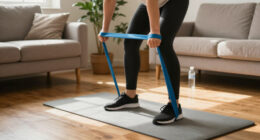
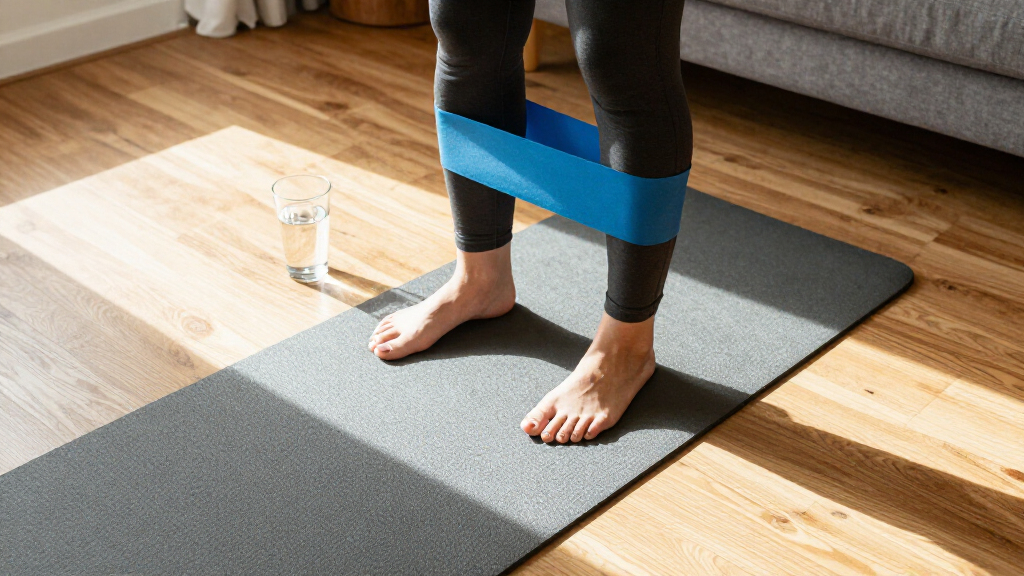
Loops win clearly for common glute and thigh drills. Their short, continuous shape makes it easy to position a band above the knees or around the ankles for bridges, squats, and lateral steps. Tube bands can handle leg exercises too, particularly when a set includes ankle cuffs, but attaching and routing the tube adds steps. The advantage is major for routines built around glute activation or compact leg circuits, and minor if lower-body movements are only a small part of training.
Setup and anchoring (Loop resistance bands wins — minor)
Loops win by a minor to moderate margin for exercises that do not need an anchor: place the band and begin. A tube set can require handles, clips, and a door anchor, and the anchor must be attached to a suitable, secure door. That setup expands exercise options, but it also adds checks and steps. If you do not have a safe anchoring point or want quick sessions with minimal equipment, loops are simpler. For anchored pulling movements, tubes justify the added setup.
Portability and storage (Loop resistance bands wins — minor)
Loops win by a minor margin. A few loops fit easily in a drawer, bag, or small travel kit. Tube sets still travel well compared with weights, but handles, clips, and anchors take more room and can tangle. At home, the difference is small unless storage space is very limited. For workouts on the road or equipment that needs to disappear between sessions, loops are the tidier option.
Resistance progression (moderate difference)
This depends on the set rather than the format alone. Both types are commonly sold in multiple resistance levels, and some tube kits let users combine tubes. Resistance labels are not always directly comparable between brands, and the force felt also changes with how far the band stretches. Compare the available levels, length, and instructions before buying. Neither style has a consistent advantage without checking the actual set.
Durability and maintenance (Loop resistance bands wins — minor)
Loops win by a minor margin because a basic loop has fewer connectors and handles to inspect. Both formats can wear, especially if stretched beyond their stated range, stored in heat or sunlight, or rubbed against sharp edges. Tube sets add clips and attachment points that should be checked before use. With either type, inspect for cracks, tears, or fraying and replace damaged bands. A simpler construction is an advantage, but careful use matters more than format.
Value (moderate difference)
Neither format is automatically the better value. Loops usually cost less and offer strong value when the goal is leg work, mobility, or a small backup kit. A handled tube set can be worth paying more for if its handles, resistance options, and anchor let you replace several pieces of home equipment in a routine you will actually follow. If those accessories are unlikely to leave the bag, the extra cost buys little practical benefit.
Loop resistance bands: Pros and Cons
Pros:
- Compact, lightweight, and quick to put on
- Especially convenient for glute, thigh, and mobility exercises
- Few parts and usually a lower purchase cost
Cons:
- Less comfortable to grip for many pulling and pressing movements
- Can roll or pinch depending on fit and exercise
- Typically offers fewer convenient anchored upper-body options
Tube resistance bands with handles: Pros and Cons
Pros:
- Handles make many upper-body exercises easier to perform
- Anchors and cuffs can expand the range of movements
- A useful choice for a more varied home routine
Cons:
- Costs more than a basic loop set in many cases
- Takes more room and requires managing multiple attachments
- Safe, suitable anchoring matters for door-based exercises
Who Should Choose What
Choose Loop resistance bands if:
- You mainly want glute, thigh, warm-up, or mobility exercises.
- You need the lightest, simplest kit for a small home or travel bag.
- You want basic resistance at a lower upfront cost.
Choose Tube resistance bands with handles if:
- You plan to do rows, presses, curls, and other upper-body exercises regularly.
- You want handles that are more comfortable than gripping a bare band.
- You have a safe anchoring point and will use the included accessories.
Skip both if: You need heavy, precisely measured resistance for progressive strength training, or you cannot use bands safely because of a relevant injury or movement limitation; seek equipment or guidance suited to those needs.
Value for Money
Pay more for tube bands only when their handles and attachments solve a real gap in your routine. For someone doing several upper-body exercises each week, the added cost can buy meaningful variety in a small kit. For lower-body circuits, warm-ups, and travel workouts, a loop set usually provides better value because its most useful movements are immediately available without extra hardware. Compare resistance levels and included accessories, and treat unusually broad resistance claims with care: actual tension changes as a band stretches.
Final Verdict
Choose loop resistance bands if your home workouts focus on glutes, legs, mobility, or quick sessions with minimal setup. They are the more convenient and usually less expensive option for that job. Choose tube resistance bands with handles if you want to train your upper body through rows, presses, and curls, and you will use the grips and anchors often. For most people choosing one set to support a varied home routine, handled tubes are the stronger pick; for a lower-body-focused routine or the smallest possible kit, loops are the better buy. The deciding factor is whether you will regularly use anchored, handle-based exercises.
Frequently Asked Questions
Are loop or tube resistance bands better for beginners?
Either can work for beginners. Loops are simpler for basic leg and glute movements, while handled tubes make many upper-body exercises easier to grip. Pick the format that matches the exercises you intend to learn, start with manageable tension, and follow the set’s instructions.
Can tube bands replace dumbbells for home workouts?
They can support many pulling and pressing movements, but their resistance changes as the band stretches and depends on setup. They are a compact substitute for some exercises, not a direct replacement for the feel or measurable loading of dumbbells.
Do loop bands work for upper-body exercises?
Yes. Loops can be used for shoulder, arm, and mobility drills, though the bare band may be less comfortable to hold. If upper-body pulling and pressing form a large part of your routine, handles on a tube set are usually more convenient.
Is a more expensive resistance band set worth it?
It can be if you will use its handles, anchors, cuffs, and range of resistance regularly. If you mainly need bands for leg work or warm-ups, a simpler loop set is often the better value.