
Looking too far down causes your head to tilt forward, which shifts your posture and disrupts your natural stride. This forward tilt makes you hunch your shoulders and lean your upper body, throwing off your balance. As a result, your hips tilt and your spine curves, leading to awkward landings and inefficient movement. Over time, these small misalignments can cause discomfort or injury. Keep watching to discover ways to maintain proper posture and improve your stride.

Get workout gear delivered free — and shop member deals
- Fast, free delivery on millions of items
- Access to Prime Big Deal Days deals on October 6–7
- Prime Video, Amazon Music and more included
Key Takeaways
- Looking downward causes the head and shoulders to tilt forward, disrupting overall posture.
- This misalignment shifts hips and spine, leading to an uneven, inefficient stride.
- Downward gaze reduces visual focus ahead, affecting balance and gait rhythm.
- Poor posture from looking down increases joint strain and risks injury over time.
- Maintaining a forward gaze helps keep body alignment, optimizing stride and movement efficiency.
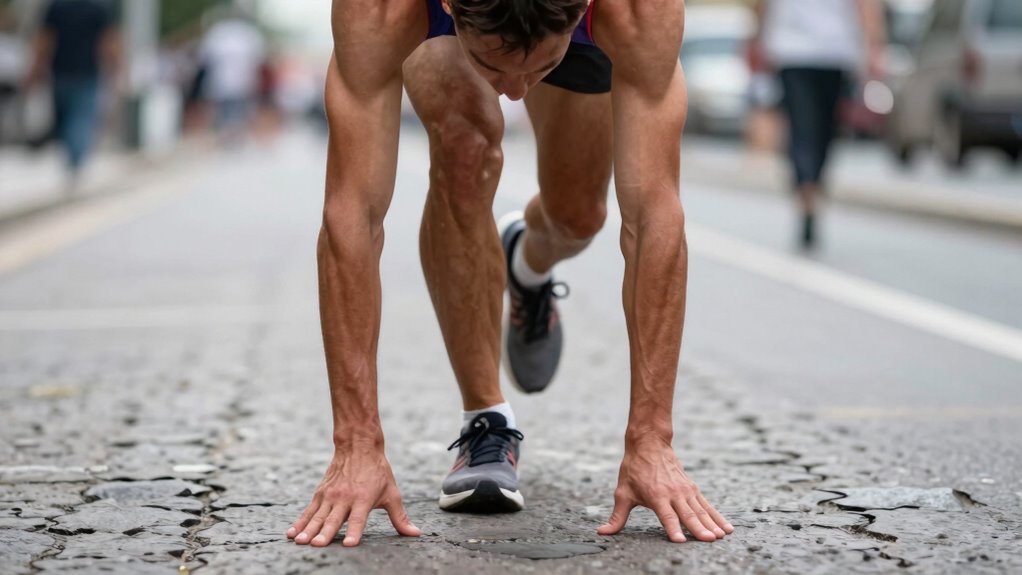
When you look too far down while walking or running, it can throw off your entire stride. Your posture alignment shifts, and suddenly, everything feels off. Instead of moving smoothly, you might find yourself stumbling or overcompensating with other muscles. The reason comes down to how your visual focus influences your body’s natural mechanics. When your gaze drops, your head tilts forward, causing your shoulders to hunch and your upper body to lean forward as well. This altered posture impacts your balance and rhythm, making your stride less efficient and more prone to strain.
Your visual focus plays a vital role here. When you look ahead, your body naturally aligns itself to support a balanced and fluid gait. But when your eyes are fixed downward, your mind subconsciously adjusts your posture to maintain that downward gaze, disrupting the ideal posture alignment. This misalignment can cause your hips to tilt, your spine to curve excessively, and your legs to land awkwardly. Over time, these small deviations can lead to discomfort, fatigue, or even injury because your body isn’t moving as it was designed to. Proper posture alignment is essential for maintaining efficient movement and preventing strain.
Looking downward disrupts posture, causing misalignment, fatigue, and potential injury over time. Keep your gaze forward for better movement.
Keeping your visual focus straight ahead helps you maintain proper posture alignment. It allows your head to stay in a neutral position, your shoulders to relax, and your core to engage properly. When your posture is aligned, your stride becomes more natural and efficient, conserving energy and reducing unnecessary stress on your joints. Instead of wasting effort trying to stabilize an unbalanced position, your body can focus on moving forward smoothly. This not only improves your overall performance but also minimizes the risk of discomfort and injury.
Training yourself to keep your eyes on the horizon might feel unnatural at first, especially if you’re used to looking down when tired or cautious. But it’s a simple habit that makes a substantial difference. It encourages better posture alignment, which in turn enhances your visual focus on the path ahead. With consistent practice, you’ll notice your stride becoming more relaxed, your balance improving, and your endurance increasing. Ultimately, looking too far down disrupts the harmony between your visual focus and posture, reducing your efficiency and increasing the likelihood of strain. By simply adjusting where you look, you can greatly improve how you move and feel during every walk or run.
As an affiliate, we earn on qualifying purchases.
Frequently Asked Questions
Can Looking Down Affect Your Balance During Running?
Yes, looking down can affect your balance during running. Gaze distraction from your usual forward vision focus causes you to lose spatial awareness, making it harder to maintain stability. When you fixate too much on the ground, your posture may shift, leading to a less efficient stride and increased risk of imbalance. Keep your eyes ahead to maintain proper balance, avoid unnecessary fatigue, and run more smoothly.
Does Height Influence How Much Your Stride Changes?
Yes, your height influences how your stride changes when you focus on posture awareness and gaze correction. Taller runners might naturally look further ahead, maintaining better balance, while shorter runners may need to be more mindful of their posture to avoid overcompensating. Adjusting your gaze correctly helps uphold proper posture, regardless of height. Being aware of these factors guarantees your stride remains efficient and reduces the risk of imbalance or injury.
How Can Athletes Maintain Proper Posture?
You can maintain proper posture by focusing on gait efficiency and neck flexibility. Some believe it’s complicated, but simple adjustments help. Keep your head aligned with your spine, avoiding excessive downward or upward tilt, which hampers stride. Regular stretching and strengthening exercises for your neck support better posture. Staying aware of your body position during activity guarantees you stay upright, efficient, and reduce injury risk, ultimately improving your overall performance.
Are There Exercises to Improve Head Alignment?
Yes, you can improve head alignment with specific exercises. Incorporate neck stretching to loosen tight muscles and posture correction techniques to align your head properly. Regularly perform gentle neck stretches, such as tilting your head side to side and forward, to increase flexibility. Focus on maintaining awareness of your posture throughout the day, and consider exercises like chin tucks to reinforce proper head positioning and prevent forward head posture.
What Are Common Mistakes When Adjusting Your Gaze?
When adjusting your gaze, a common mistake is letting your visual focus drift too far down or up, causing imbalance. You might also get mentally distracted, losing awareness of your overall posture. Instead, keep your gaze steady and level, focusing on a point ahead. This helps maintain proper alignment and stride. Avoid constantly shifting your visual focus, as it can disrupt your rhythm and lead to inefficient movement.
Conclusion
So, next time you find yourself glancing down too much, remember how it subtly shifts your stride. It’s funny how a simple habit can ripple through your entire walk, almost like a coincidence guiding your posture. Maybe it’s a reminder to lift your gaze, not just for better steps but for a clearer outlook. Sometimes, the tiniest change can make all the difference—just like catching a glimpse of the sky and realizing your stride feels lighter.
Halloween Picks
halloween
As an affiliate, we earn on qualifying purchases.