The best smart wearable devices for running depend on whether you need reliable GPS and run-focused tools or a simpler band for activity and wellness tracking. I rank the Garmin Forerunner 165 as the best overall because its GPS smartwatch design is built around running, while the Garmin vívoactive 5 suits runners who also want broader fitness features and the Xiaomi Mi Smart Band 10 is a simpler screen-based option. The main tradeoffs are GPS and training detail versus battery life, comfort, screen access, and the features you will actually use. Screenless trackers can feel less distracting, but they are not a direct substitute for a watch with an at-a-glance display and GPS. Read on for the full comparison and help matching a wearable to your running habits.

Get workout gear delivered free with Prime
- Fast, free delivery on millions of items
- Prime Video, Amazon Music and more included
- Member-only deals all year
Complete the kit


Key Takeaways
The Garmin Forerunner 165 leads for running-specific use: it is the lineup’s clearest choice for runners who want a GPS smartwatch rather than a general wellness band.
The vívoactive 5 favors range over a running-first focus: it pairs GPS with broader health and fitness use, making more sense for people who want one watch for runs and everyday activity.
Screenless options trade access for a lower-profile feel: WHOOP 5.0, Amazfit Helio Strap, and other screenless bands suit runners who prefer tracking without checking a watch mid-run.
Battery claims and sport-mode counts do not tell the whole story: runners should check whether a device has GPS, readable run data, and controls they can use while moving.
Many budget trackers emphasize wellness metrics: heart-rate, sleep, blood-oxygen, or blood-pressure labels are not the same as proven running accuracy or dedicated training guidance.
| SOUYIE Screenless Smart Fitness Bracelet with Health and Activity Tracking |  | Best for Minimalist Running | Weight: 19.4 g | Battery life: 10–15 days per charge | Water resistance: IP68; not recommended for swimming, diving, hot baths, or sauna use | VIEW ON AMAZON | See Our Full Breakdown |
| EnergyPort Fitness Tracker, Wearable Health Smart Bracelet Band with Blood Oxygen 170+ Sport Mode, 60-Day Battery, Lifetime Membership, Activity Tracking Heart Rate Sleep Monitor for Android iOS, 2 Bands |  | Best for Long Trips Between Charges | Battery life: 20–30 days regular use; 45–60 days standby, as claimed in the product description | Weight: 25 g | Sports modes: 170+ | VIEW ON AMAZON | See Our Full Breakdown |
| Fitness Tracker with Heart Rate, Blood Oxygen and Sleep Monitoring, 1.47-Inch OLED Display, 25 Sports Modes, IP68 Waterproof, Black |  | Best Budget-Style Entry with a Screen | Display: 1.47-inch OLED | Sports modes: 25 | Health monitoring: Heart rate, sleep stages, blood oxygen (SpO2), and blood pressure | VIEW ON AMAZON | See Our Full Breakdown |
| Xiaomi Mi Smart Band 10 (2025), Global Version, Midnight Black |  | Best Display and Battery Life | Display: 1.72-inch AMOLED touchscreen | Display brightness: Up to 1500 nits HBM | Battery life: Up to 21 days | VIEW ON AMAZON | See Our Full Breakdown |
| WHOOP 5.0 Screenless Fitness and Health Wearable with 12-Month Peak Membership |  | Best for Recovery-Focused Training | Device: WHOOP 5.0 screenless wearable | Membership: 12-month WHOOP Peak membership | Battery life: 14+ days | VIEW ON AMAZON | See Our Full Breakdown |
| Garmin Forerunner 165 Running Smartwatch with AMOLED Display and GPS |  | Best Overall for Dedicated Runners | Display: AMOLED touchscreen | Case size: 43 mm | Battery life: Up to 11 days in smartwatch mode; 19 hours in GPS mode | VIEW ON AMAZON | See Our Full Breakdown |
| MorePro Fitness Tracker for Women Men, Heart Rate, Blood Pressure, 2 Bands |  | Best for Everyday Wear and Run Variety | Display: 1.57-inch touchscreen | Sports modes: 112 | Battery life: Up to 7 days | VIEW ON AMAZON | See Our Full Breakdown |
| MorePro Fitness Tracker with Heart Rate, Blood Pressure, Blood Oxygen, Sleep Monitoring, and Waterproof Design |  | Best for Broad Wellness Tracking | Heart rate monitoring: 24/7 | Blood pressure monitoring: Yes | Blood oxygen monitoring: Yes | VIEW ON AMAZON | See Our Full Breakdown |
| Amazfit Helio Strap Screenless Activity Tracker |  | Best Screenless Running Companion | Display: Screenless | GPS: No built-in GPS | Battery life: Up to 10 days | VIEW ON AMAZON | See Our Full Breakdown |
| Smart Watch Fitness Tracker with Heart Rate, Blood Oxygen, Blood Pressure, Sleep Monitoring, 120 Sports Modes, IP68 Waterproof for Android and iPhone |  | Best for a Large Display and Everyday Features | Display: 1.58-inch high-resolution | Health monitoring: Heart rate, blood pressure, blood oxygen, and sleep stages | Exercise modes: 120+ | VIEW ON AMAZON | See Our Full Breakdown |
| Screenless Fitness Tracker Band with Sleep, Heart Rate, HRV and SpO2 Monitoring |  | Best Screenless Pick | App: QwatchPro | Battery: 180 mAh; stated 20–30 days of use | Weight: 25 g | VIEW ON AMAZON | See Our Full Breakdown |
| Fitness Tracker with 24/7 Heart Rate, Activity Trackers with Blood Pressure Sleep Monitor, 1.10″ AMOLED Screen Step Tracker, Waterproof Step Counter, Health Smart Watch Pedometer for Women Men |  | Best for On-Wrist Readability | Display: 1.10-inch AMOLED HD touchscreen | Sports modes: 25 | GPS: Connected GPS via smartphone | VIEW ON AMAZON | See Our Full Breakdown |
| Fitness Tracker with Health, Sleep, and Activity Monitoring |  | Best Entry-Level Touchscreen Tracker | Display: 1.1-inch AMOLED touchscreen, 126 × 294 | Sports modes: 25 | Health metrics: Heart rate, blood oxygen, blood pressure, and body temperature | VIEW ON AMAZON | See Our Full Breakdown |
| Garmin vívoactive 5 Health and Fitness GPS Smartwatch, AMOLED Display, Up to 11 Days Battery, Ivory |  | Best Premium Running Companion | Display: AMOLED | Battery life: Up to 11 days | Sports apps: Over 30 built-in indoor and GPS sports apps | VIEW ON AMAZON | See Our Full Breakdown |
| smart wearable devices for running | Battery life | Water resistance | Display | Sports modes |
|---|---|---|---|---|
| SOUYIE Screenless Smart Fitnes | 10–15 days per charge | IP68; not recommended for swimming, diving, hot baths, or sauna use | — | 170+ |
| EnergyPort Fitness Tracker | 20–30 days regular use; 45–60 days standby, as claimed in the product description | 1ATM; listing says suitable for showering and advises avoiding hot-water immersion | — | 170+ |
| Fitness Tracker with Heart Rat | Up to 7 days continuous use; 10–14 days regular use; up to 30 days standby | IP68 | 1.47-inch OLED | 25 |
| Xiaomi Mi Smart Band 10 | Up to 21 days | — | 1.72-inch AMOLED touchscreen | — |
| WHOOP 5.0 Screenless Fitness a | 14+ days | — | — | — |
| Garmin Forerunner 165 Running | Up to 11 days in smartwatch mode; 19 hours in GPS mode | 50 meters | AMOLED touchscreen | — |
| MorePro Fitness Tracker for Wo | Up to 7 days | IP68 | 1.57-inch touchscreen | 112 |
| MorePro Fitness Tracker with H | Up to 7 days normal use; up to 15 days standby | — | — | — |
| Amazfit Helio Strap Screenless | Up to 10 days | 50 meters | Screenless | 27 |
| Smart Watch Fitness Tracker wi | — | IP68 | 1.58-inch high-resolution | — |
| Screenless Fitness Tracker Ban | — | IP68 | — | 170+ |
| Fitness Tracker with 24/7 Hear | Up to 7 days; up to 15 days standby | IP68 | 1.10-inch AMOLED HD touchscreen | 25 |
| Fitness Tracker with Health | Up to 7–10 days regular use; up to 30 days standby | IP67; listed depth of 1 meter | 1.1-inch AMOLED touchscreen, 126 × 294 | 25 |
| Garmin vívoactive 5 Health and | Up to 11 days | — | AMOLED | — |
More Details on Our Top Picks
SOUYIE Screenless Smart Fitness Bracelet with Health and Activity Tracking
The SOUYIE Screenless Smart Fitness Bracelet suits runners who want lightweight tracking without a display competing for attention. At 19.4 g, it is the lightest-feeling choice on this list by listed weight, and its 10–15-day battery life means fewer charging interruptions than many display-based trackers. It logs more than 170 sports modes, but outdoor route tracking depends on your phone’s GPS, so it is better for tracking activity than for runners who want a standalone GPS watch. Compared with the Xiaomi Mi Smart Band 10, it gives up an at-a-glance screen and 50-meter water-resistance claim in favor of a screen-free design and two included strap styles. The IP68 rating is not a green light for swimming, hot baths, or sauna use; I’d choose it for everyday runs and app-based review, not pool training.
Pros:- Lightweight 19.4 g design with metal casing and silicone and nylon straps.
- Tracks more than 170 sports modes alongside activity, sleep, and health metrics.
- Battery life is listed at 10–15 days per charge.
- Vibration alerts provide discreet calls, text, and app reminders.
Cons:- No screen, so workout information and trends must be checked in the companion app.
- Outdoor route tracking requires a connected phone’s GPS.
- Not recommended for swimming, diving, hot baths, or sauna use.
Best for: Runners who prefer a light, screen-free band, review workout data in a phone app, and want long gaps between charges.
Not ideal for: Runners who need wrist-visible pace or route data, standalone GPS, or a wearable intended for swimming.
- Weight:19.4 g
- Battery life:10–15 days per charge
- Water resistance:IP68; not recommended for swimming, diving, hot baths, or sauna use
- Sports modes:170+
- Outdoor GPS:7 modes; requires phone GPS
- Tracked metrics:Heart rate, blood pressure, SpO2, HRV, stress, mood, steps, distance, calories, and sleep
- Included straps:Silicone and nylon
- Compatibility:Android 4.4+ and iOS 10.0+
Our verdict“Choose the SOUYIE if you want unobtrusive everyday running and app-based tracking, but skip it if you need live wrist data or built-in GPS.”
EnergyPort Fitness Tracker, Wearable Health Smart Bracelet Band with Blood Oxygen 170+ Sport Mode, 60-Day Battery, Lifetime Membership, Activity Tracking Heart Rate Sleep Monitor for Android iOS, 2 Bands
The EnergyPort Fitness Tracker is aimed at runners who want a basic training-and-wellness band they can leave on between workouts, especially on trips where charging is inconvenient. Its description claims 20–30 days of regular use and 45–60 days on standby, but that unusually long endurance claim is not accompanied by a detailed test condition, so I would treat it as a manufacturer estimate rather than a guaranteed running routine. Like the SOUYIE bracelet, it has no screen and relies on a phone app for information; the EnergyPort listing adds a stated shower-safe 1ATM rating, but advises against hot-water immersion. It offers 170+ modes and phone-synced GPS routes, not standalone GPS, so route recording still depends on carrying your phone. The listing also describes health readings as reference-only, making this a fitness tracker rather than a medical device.
Pros:- Listing claims 20–30 days of regular-use battery life and 45–60 days on standby.
- Includes nylon and silicone straps for different wear preferences.
- Offers more than 170 workout modes and phone-synced GPS route recording.
- Provides vibration alerts, silent alarms, and app access without a stated subscription.
Cons:- No screen, so runners must use the phone app to view workout information.
- GPS route recording relies on a connected phone rather than built-in GPS.
- Battery claims are unusually long and the listing does not provide detailed usage conditions.
Best for: Phone-carrying runners and travelers who want a screenless activity band, interchangeable straps, and fewer charging stops.
Not ideal for: Runners who want verified standalone GPS, live pace on the wrist, or clearly documented battery performance and water limits.
- Battery life:20–30 days regular use; 45–60 days standby, as claimed in the product description
- Weight:25 g
- Sports modes:170+
- GPS:Outdoor routes sync through the phone app; built-in GPS is not specified
- Water resistance:1ATM; listing says suitable for showering and advises avoiding hot-water immersion
- Health tracking:Heart rate, blood oxygen, blood pressure, and stress; readings are for reference only
- Included straps:Nylon and silicone
- Compatibility:Android and iOS
Our verdict“Pick the EnergyPort for a phone-dependent, low-charging routine, but choose a GPS watch if you run without your phone or need wrist-visible data.”
Fitness Tracker with Heart Rate, Blood Oxygen and Sleep Monitoring, 1.47-Inch OLED Display, 25 Sports Modes, IP68 Waterproof, Black
For runners who want to read basic information on the wrist, this 1.47-inch OLED tracker offers a more direct experience than the screenless SOUYIE or EnergyPort bands. It tracks 25 sports modes and common daily metrics, while notifications and music controls can reduce the need to reach for a phone during a run. The display is the key tradeoff: unlike the Xiaomi Mi Smart Band 10, whose listing specifies a larger AMOLED panel and up to 1500 nits HBM brightness, this model gives fewer details about outdoor visibility and does not list built-in GPS. Its battery information is also inconsistent, citing up to seven days of continuous use and 10–14 days of regular use, so I would not plan around the longest figure without checking actual settings. It works best as a simple wrist display for phone-connected runs, not as a dedicated route-tracking watch.
Pros:- 1.47-inch OLED screen makes basic information accessible without opening a phone app.
- Tracks 25 sports modes plus steps, distance, calories, and sleep stages.
- Bluetooth notifications, music controls, phone finding, and remote camera functions add everyday utility.
- IP68 rating and lightweight band support all-day wear.
Cons:- No built-in GPS is specified, limiting its usefulness for independent route tracking.
- Battery-life figures conflict between continuous-use and regular-use claims.
- The product description does not identify its phone app or explain how blood pressure readings are measured.
Best for: New runners who want an affordable-feeling wrist display for basic workout, activity, and phone-notification information.
Not ideal for: Runners who need standalone GPS, clearly documented battery expectations, or a more detailed running-focused feature set.
- Display:1.47-inch OLED
- Sports modes:25
- Health monitoring:Heart rate, sleep stages, blood oxygen (SpO2), and blood pressure
- Activity tracking:Steps, distance, and calories
- Water resistance:IP68
- Battery life:Up to 7 days continuous use; 10–14 days regular use; up to 30 days standby
- Connectivity:Bluetooth
- Compatibility:iOS and Android
Our verdict“Choose this tracker for a straightforward screen and basic phone-connected runs, but look elsewhere for standalone GPS or dependable battery guidance.”
Xiaomi Mi Smart Band 10 (2025), Global Version, Midnight Black
The Xiaomi Mi Smart Band 10 is the strongest pick here for runners who want a bright, readable touchscreen and long intervals between charges. Its 1.72-inch AMOLED display, rated up to 1500 nits HBM, gives it a clearer on-wrist information advantage over the smaller OLED tracker in this lineup. The claimed up to 21-day battery life also makes it a better fit for people who dislike frequent charging, though actual endurance will depend on use. Its 50-meter water-resistance depth and swimming-direction tracking support pool use, unlike the SOUYIE, which is not recommended for swimming. The main running limitation is decisive: there is no GPS, so it cannot record a route independently. I’d favor the Xiaomi for general fitness and phone-connected runs, but choose a GPS watch such as the Garmin Forerunner 165 if route tracking and run metrics are priorities.
Pros:- Large 1.72-inch AMOLED touchscreen with up to 1500 nits HBM brightness.
- Battery life is listed at up to 21 days, with a full charge taking about one hour.
- Water resistance to 50 meters and swimming-direction tracking support aquatic workouts.
- Compatible with Android and iOS devices.
Cons:- No GPS or GPS geotagging, so it cannot independently record running routes.
- Xiaomi Fit app supports metric units only; imperial units require a third-party connection.
Best for: Runners who want a large, bright screen, broad everyday fitness tracking, and a long claimed battery life while carrying a phone.
Not ideal for: Runners who want standalone GPS, GPS geotagging, or imperial-unit support directly in the Xiaomi Fit app.
- Display:1.72-inch AMOLED touchscreen
- Display brightness:Up to 1500 nits HBM
- Battery life:Up to 21 days
- Full charging time:About 1 hour
- Water resistance depth:50 meters
- GPS:No GPS; GPS geotagging is not available
- Connectivity:Bluetooth 5.4
- Compatibility:Android and iOS smartphones and tablets
Our verdict“Choose the Xiaomi for a bright screen and long battery life in a general fitness band, but pick a GPS watch for independent running routes.”
WHOOP 5.0 Screenless Fitness and Health Wearable with 12-Month Peak Membership
The WHOOP 5.0 takes a different approach from the display-first Xiaomi Mi Smart Band 10: it hides workout data on the wearable and puts the emphasis on sleep, recovery, activity, and coaching in its app. That makes it a more specialized option for runners who want to review trends and shape training around recovery rather than check pace at a glance. Its screenless build supports overnight wear, and the included wireless PowerPack can recharge it while it is worn; battery life is listed at 14 days or more. The tradeoff is ongoing commitment: this version includes a 12-month Peak membership, and its app-based features require a WHOOP membership. It also does not provide a screen for live run information, and built-in GPS is not specified in the supplied product data. Compared with the simpler SOUYIE, WHOOP places more emphasis on personalized coaching but ties that experience to a membership.
Pros:- Tracks a broad range of recovery and health measures, including HRV, resting heart rate, sleep, and stress.
- Screenless design supports discreet all-day and overnight wear.
- Included wireless PowerPack charges the wearable while it is worn.
- Lists integrations with services including Apple Health, Google Health Connect, Peloton, and Strava.
Cons:- App-based features require a WHOOP membership; this package includes a 12-month Peak membership.
- No screen for checking running information directly on the wearable.
- Built-in GPS is not specified in the supplied product information.
Best for: Runners who prioritize sleep, recovery, and training-pattern insights and are comfortable reviewing data in an app with a membership.
Not ideal for: Runners who want live on-device pace, route maps, a one-time purchase with no membership, or a standalone GPS watch.
- Device:WHOOP 5.0 screenless wearable
- Membership:12-month WHOOP Peak membership
- Battery life:14+ days
- Included accessories:SuperKnit band and Waterproof Wireless PowerPack
- Health tracking:Heart rate, resting heart rate, HRV, respiratory rate, blood oxygen, skin temperature, sleep, and stress
- PowerPack water resistance:IP68; up to 10 meters for 2 hours
- App integrations:Apple Health, Google Health Connect, Natural Cycles, Withings, Peloton, and Strava
Our verdict“Choose WHOOP if recovery insights and coaching matter more than live wrist data and you accept the membership requirement.”
Garmin Forerunner 165 Running Smartwatch with AMOLED Display and GPS
The Garmin Forerunner 165 is the clearest running-first choice in this group: built-in GPS records outdoor routes without relying on your phone, while recovery time and personalized training plans help turn runs into a more structured routine. Its bright AMOLED screen is easier to read at a glance than a screenless tracker such as the Amazfit Helio Strap, and it offers more run-specific guidance than either MorePro band. Battery life of up to 19 hours in GPS mode suits regular training, though frequent GPS use means charging more often than the 11-day smartwatch figure suggests. The tradeoff is that it costs more in complexity than a basic activity band: notifications and safety features need a connected phone, and setup may take time. I’d pick it for running data and coaching, not deep-water use.
Pros:- Built-in GPS tracks outdoor runs without carrying a phone for route recording.
- Training plans and recovery-time information support more structured running.
- AMOLED touchscreen makes workout and notification information easy to see.
- Incident detection and live location sharing add safety options when connected to a phone.
Cons:- Notifications and safety features depend on a smartphone connection.
- Up to 19 hours of GPS use is much shorter than its smartwatch-mode battery life.
- Setup and app connectivity may take more effort than with a basic activity tracker.
Best for: Runners who want built-in GPS, training guidance, recovery information, and safety features in one watch.
Not ideal for: People seeking a simple, screenless tracker or runners who want safety functions to work without a paired smartphone.
- Display:AMOLED touchscreen
- Case size:43 mm
- Battery life:Up to 11 days in smartwatch mode; 19 hours in GPS mode
- GPS:Built-in
- Water resistance:50 meters
- Heart rate:Wrist-based monitoring
- Activity profiles:25+
- Phone compatibility:Android and Apple smartphones
Our verdict“Choose the Forerunner 165 if running-focused GPS, coaching, and recovery tools matter more than a simpler, screenless design.”
MorePro Fitness Tracker for Women Men, Heart Rate, Blood Pressure, 2 Bands
The MorePro AIR2 suits runners who want a general-purpose watch with a broad menu of activities rather than a dedicated running instrument. Its 112 sports modes cover running alongside gym sessions and cycling, while call and message alerts make it more useful off the track than the screenless Amazfit Helio Strap. Two included bands also let buyers switch between silicone and breathable nylon for different routines. The key limitation for running is the missing built-in GPS specification: route tracking and distance details may depend on the connected phone, unlike the Garmin Forerunner 165, which records GPS independently. The listed blood-pressure and blood-oxygen tracking should be treated as general wellness information, not medical readings. I’d choose this for mixed workouts and daily notifications, but skip it if accurate phone-free run routes are the priority.
Pros:- 112 sports modes cover running and a wide range of non-running workouts.
- Includes silicone and breathable nylon bands for different wear preferences.
- Displays calls, texts, and supported app notifications.
- Up to 7 days of battery life reduces the need for frequent charging.
Cons:- Built-in GPS is not listed, so phone-free route recording is not established.
- Some tracking and notification features require app synchronization and a paired phone.
- Blood-pressure and blood-oxygen tracking is not a substitute for medical measurement.
Best for: Newer runners who also want a customizable everyday tracker for gym workouts, notifications, and varied activities.
Not ideal for: Runners who want built-in GPS and dedicated training or recovery guidance without depending on a smartphone.
- Display:1.57-inch touchscreen
- Sports modes:112
- Battery life:Up to 7 days
- Water resistance:IP68
- Health tracking:Heart rate, blood pressure, blood oxygen, and sleep
- Connectivity:Bluetooth LE 5.2
- Phone compatibility:Android 7.0+ and iOS 13.0+
- Bands:Silicone and nylon bands included
Our verdict“Pick the MorePro AIR2 if you want one customizable tracker for varied workouts and daily alerts, rather than a running watch with built-in GPS.”
MorePro Fitness Tracker with Heart Rate, Blood Pressure, Blood Oxygen, Sleep Monitoring, and Waterproof Design
This MorePro tracker’s strongest case is the range of daily wellness information it collects alongside workouts: heart rate, blood oxygen, blood pressure, and sleep stages are all listed, with more than 120 sport modes for activities that extend beyond running. For someone building a general movement habit, that breadth may be more useful than the running-specific training and recovery tools on the Garmin Forerunner 165. The tradeoff is that the supplied details do not specify a display size, GPS capability, or run-coaching features, so I wouldn’t choose it as a substitute for a dedicated GPS running watch. Its battery is listed for up to 7 days of normal use, with longer standby time, and the waterproof design supports everyday wear and swimming. Health readings are for general tracking, not diagnosis.
Pros:- Tracks heart rate, blood pressure, blood oxygen, and sleep stages.
- More than 120 sport modes extend its use beyond running.
- Waterproof design is suited to daily wear and swimming.
- Up to 7 days of normal-use battery life.
Cons:- Built-in GPS and running-specific coaching are not specified.
- Health measurements are not intended for medical diagnosis or treatment.
- Some features depend on a compatible smartphone and app synchronization.
Best for: Casual runners who want a broad wellness tracker for sleep, everyday activity, and multiple types of workouts.
Not ideal for: Runners who need verified built-in GPS, detailed run coaching, or clearly specified display and route-recording capabilities.
- Heart rate monitoring:24/7
- Blood pressure monitoring:Yes
- Blood oxygen monitoring:Yes
- Sleep tracking:Deep, light, and wake periods
- Sport modes:120+
- Battery life:Up to 7 days normal use; up to 15 days standby
- Phone compatibility:Android 7.0+ and iOS 13.0+
Our verdict“Choose this MorePro if broad everyday wellness tracking matters more than the GPS and running guidance offered by the Forerunner 165.”
Amazfit Helio Strap Screenless Activity Tracker
The Amazfit Helio Strap is for runners who prefer a low-distraction band over a watch face. It tracks heart rate, sleep, stress, and workouts, then sends insights to the Zepp app; the screenless design keeps attention on the run rather than on wrist notifications. Its 27 sports modes include strength training and HYROX, giving it a useful role for runners who also train in the gym. That simplicity comes with a major running limitation: there is no built-in GPS, unlike the Garmin Forerunner 165, so it is not the stronger pick for phone-free route recording. Battery life of up to 10 days and 50-meter water resistance make it easy to wear across training and recovery, but reviewing results means reaching for a compatible phone.
Pros:- Screenless format offers a less distracting alternative to a smartwatch.
- Tracks heart rate, blood oxygen, stress, sleep, and workout metrics.
- Up to 10 days of battery life supports extended wear between charges.
- 27 sport modes include strength training and HYROX.
Cons:- No built-in GPS for independent run-route recording.
- Requires a compatible smartphone and Zepp app to view insights.
- Without a screen, workout information is not available at a glance on the wrist.
Best for: Runners who want a lightweight, screenless band for workout and recovery tracking and are comfortable checking insights in an app.
Not ideal for: Runners who want route maps, live on-wrist data, or built-in GPS without carrying a compatible phone.
- Display:Screenless
- GPS:No built-in GPS
- Battery life:Up to 10 days
- Water resistance:50 meters
- Sports modes:27
- Metrics:Heart rate, sleep duration, step count, and stress
- Band:Nylon with hook-and-loop closure
- Phone compatibility:Android 7.0+ and iOS 15.0+
Our verdict“Pick the Helio Strap if you want low-distraction training and recovery tracking, but choose the Forerunner 165 for built-in GPS and on-wrist run information.”
Smart Watch Fitness Tracker with Heart Rate, Blood Oxygen, Blood Pressure, Sleep Monitoring, 120 Sports Modes, IP68 Waterproof for Android and iPhone
This smartwatch centers the experience on its 1.58-inch high-resolution display and broad daily-use tools, including call and message notifications, music control, and customizable watch faces. With more than 120 exercise modes and sleep tracking, it can cover casual runs as part of a wider activity routine. Compared with the Amazfit Helio Strap, it gives you a screen for checking information on your wrist; compared with the Garmin Forerunner 165, however, its GPS is only described as connected GPS, so the phone remains part of route tracking. Battery life is also not specified, making it harder to judge suitability for long training weeks. This is a better fit for someone seeking an affordable-feeling feature mix in a general smartwatch format than for a runner who prioritizes independent GPS and run-focused tools.
Pros:- 1.58-inch high-resolution display provides a large area for viewing information.
- More than 120 exercise modes support varied workouts.
- Includes call and message notifications plus music control.
- Replaceable, washable strap allows maintenance and personalization.
Cons:- GPS features require a smartphone connection rather than built-in GPS.
- Battery life is not specified, making charging needs difficult to predict.
- Feature availability may vary across phone models.
Best for: Casual runners who want a large, readable screen, notifications, and varied everyday fitness features on an Android or iPhone-compatible tracker.
Not ideal for: Runners who need built-in GPS, stated battery endurance, or dedicated run-training and recovery features.
- Display:1.58-inch high-resolution
- Health monitoring:Heart rate, blood pressure, blood oxygen, and sleep stages
- Exercise modes:120+
- Water resistance:IP68
- GPS:Connected GPS
- Phone compatibility:Android 4.4+ and iOS 8.4+
- Strap:Replaceable and washable
- Additional features:Music control, remote camera, weather display, sedentary reminder, menstrual reminder, and breath training
Our verdict“Choose this model for a large-screen everyday tracker, but favor the Forerunner 165 if phone-independent GPS and running guidance are your priorities.”
Screenless Fitness Tracker Band with Sleep, Heart Rate, HRV and SpO2 Monitoring
This band suits runners who want overnight and everyday tracking without a bright display on the wrist. Its stated 20–30-day battery life can mean fewer charging interruptions than the Garmin vívoactive 5, though Garmin offers a screen, built-in sports apps, music storage, and more developed running features. Here, the tradeoff is a simpler training setup: GPS depends on your phone, so runners who leave their phone at home won’t get independent route tracking. The 170+ sports modes and heart-rate, HRV, sleep, and stress trends add breadth, but the manufacturer says readings are for reference, not medical use. At 25 g, it is a light choice for overnight wear; its screenless design also means no on-wrist route or workout data display.
Pros:- Screenless, 25 g design is suited to overnight wear
- Stated 20–30-day battery life reduces charging frequency
- Tracks heart rate, HRV, SpO2, stress, sleep, and daily activity
- IP68 rating and a replaceable 22 mm quick-release strap
Cons:- Route tracking requires a connected smartphone
- No display for checking workout metrics while running
- Health readings are for reference only, not medical measurements
Best for: Runners who track sleep and general wellness, carry a phone on runs, and prefer a lightweight band with few charging stops.
Not ideal for: Runners who want on-wrist pace and route data or GPS tracking without carrying a smartphone.
- App:QwatchPro
- Battery:180 mAh; stated 20–30 days of use
- Weight:25 g
- Water resistance:IP68
- Sports modes:170+
- GPS:Connected GPS via smartphone
- Health tracking:Heart rate, SpO2, HRV, stress, sleep, and women’s health
- Compatibility:Android 4.4+; iOS 9.0+
Our verdict“Choose this band if long battery life and discreet wellness tracking matter more than an on-wrist screen or phone-free GPS.”
Fitness Tracker with 24/7 Heart Rate, Activity Trackers with Blood Pressure Sleep Monitor, 1.10″ AMOLED Screen Step Tracker, Waterproof Step Counter, Health Smart Watch Pedometer for Women Men
The 1.10-inch AMOLED touchscreen makes this a more practical glance-at-your-wrist option than the screenless QwatchPro band, particularly for runners who want to see notifications and workout summaries without reaching for a phone. It supports 25 sports modes and connected GPS, which can record a route when your phone is along. That phone dependency limits it as a dedicated running watch, and its mode count is much smaller than the QwatchPro’s 170+. Sleep tracking, continuous heart-rate monitoring, and breathing-rate and HRV data broaden its everyday use, while calls and message alerts keep it connected off the run. The stated battery life is up to seven days, shorter than the QwatchPro’s claim. Health metrics are presented as reference information, so I wouldn’t choose it for clinical readings.
Pros:- AMOLED touchscreen makes calls, messages, and watch information easy to view
- Connected GPS can record routes when paired with a phone
- Tracks heart rate, sleep stages, and 25 sports modes
- Includes weather, hydration, sedentary, and female health features
Cons:- GPS route tracking requires a connected smartphone
- Up to seven days of battery life is shorter than the QwatchPro band’s stated runtime
- Health readings are for reference and do not replace medical advice
Best for: Casual runners who want a color screen for notifications and basic workout tracking and typically carry a smartphone.
Not ideal for: Runners seeking standalone GPS, a large selection of workout modes, or long intervals between charges.
- Display:1.10-inch AMOLED HD touchscreen
- Sports modes:25
- GPS:Connected GPS via smartphone
- Battery life:Up to 7 days; up to 15 days standby
- Charging time:About 2 hours
- Water resistance:IP68
- Health tracking:Heart rate, HRV, breathing rate, sleep, and activity
- Compatibility:Android 5.0+; iOS 9.0+
Our verdict“Pick this tracker if a readable AMOLED screen and basic phone-connected run tracking matter more than long battery life or standalone GPS.”
Fitness Tracker with Health, Sleep, and Activity Monitoring
This is a straightforward choice for runners who want a compact AMOLED screen and basic activity records rather than a watch built around running workouts. Its 25 sports modes and phone-connected GPS cover casual sessions, but the GPS arrangement is less convenient than the Garmin vívoactive 5’s built-in GPS sports apps, since the phone must accompany you for route tracking. The 1.1-inch display shows notifications and workout information on the wrist; IP67 protection offers less water resistance than the IP68-rated QwatchPro and the previous touchscreen tracker. It also lists blood pressure and body temperature monitoring, but the product data gives no accuracy detail, so I would treat those figures as general wellness information. With up to 7–10 days of regular use, it sits between short-charge routines and the QwatchPro’s longer stated battery life.
Pros:- 1.1-inch AMOLED touchscreen supports at-a-glance access to notifications and workout information
- Tracks steps, distance, calories, sleep stages, and 25 sports modes
- Up to 7–10 days of regular-use battery life
- Includes cycle tracking, alarms, and remote photo control
Cons:- GPS tracking depends on a connected smartphone
- IP67 rating is below the IP68 ratings of the QwatchPro and B0H9DFXQZB trackers
- Accuracy details for listed blood pressure and body temperature metrics are not provided
Best for: New or casual runners who want an affordable-style feature set of basic sports modes, sleep tracking, and an AMOLED display, and run with a phone.
Not ideal for: Runners who need standalone GPS, stronger water-resistance information, or established detail about health-measurement accuracy.
- Display:1.1-inch AMOLED touchscreen, 126 × 294
- Sports modes:25
- Health metrics:Heart rate, blood oxygen, blood pressure, and body temperature
- GPS:Via connected smartphone
- Battery life:Up to 7–10 days regular use; up to 30 days standby
- Water resistance:IP67; listed depth of 1 meter
- Compatibility:iOS 9.0+ and Android 4.4+
- Connectivity:Bluetooth
Our verdict“This is a sensible starter tracker for phone-carrying runners who want a touchscreen and basic records without needing dedicated running-watch features.”
Garmin vívoactive 5 Health and Fitness GPS Smartwatch, AMOLED Display, Up to 11 Days Battery, Ivory
Among these four, the Garmin vívoactive 5 is the most capable choice for runners who want a smartwatch built around exercise as well as general wellness. Its over 30 built-in indoor and GPS sports apps make it a stronger fit for route-tracked workouts than the three trackers that rely on a connected phone for GPS. The AMOLED display and up to 11-day battery life add practical flexibility, while music storage lets compatible services play through wireless headphones. Compared with the simpler B0H9DFXQZB, this Garmin offers a broader training and sport experience, but it is more watch than a buyer seeking quiet, lightweight sleep tracking may need. Its health and activity data are estimates, and some features depend on a compatible smartphone, app integration, or a subscription.
Pros:- Over 30 built-in indoor and GPS sports apps
- AMOLED display and up to 11 days of battery life
- Music storage supports Spotify, Amazon Music, and Deezer
- Tracks heart rate, sleep, stress, and Body Battery
Cons:- Health and activity measurements are estimates and may vary
- Full feature access depends on a compatible smartphone
- Some advanced features may require subscriptions or app integration
Best for: Runners who want built-in GPS sports apps, on-wrist training features, and music storage in a smartwatch they can also use for everyday health tracking.
Not ideal for: Budget-conscious runners who only need basic phone-connected GPS and step tracking, or anyone seeking a screenless, minimal wearable.
- Display:AMOLED
- Battery life:Up to 11 days
- Sports apps:Over 30 built-in indoor and GPS sports apps
- Health monitoring:Heart rate, sleep, stress, Body Battery, menstrual cycle, and pregnancy
- Music:Storage; supports Spotify, Amazon Music, and Deezer
- Special modes:Wheelchair mode and nap detection
- App:Garmin Connect
- Color:Ivory
Our verdict“Choose the vívoactive 5 if you want a more complete GPS smartwatch for running and value built-in sports apps and music over a simpler tracker.”
How We Picked
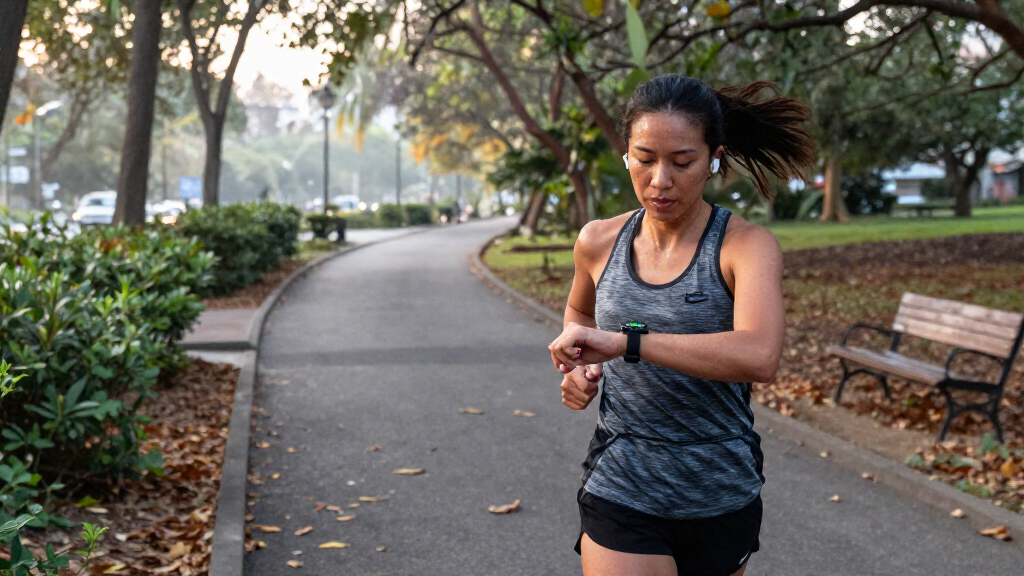
I compared these 14 devices as running wearables, not as a general list of health gadgets. The ranking gives more weight to whether a device can support a run directly: GPS availability, access to workout data, ease of use on the move, and a design suited to repeated training. I also weighed battery claims, comfort, water resistance, compatibility, and whether each product’s features offer a clear benefit for runners.
The Forerunner 165 ranks first because its GPS smartwatch format is the most directly aligned with running. The vívoactive 5 follows as a more versatile everyday fitness watch, while screenless and basic trackers rank lower for runners who need on-device information or run-focused functions. Products with feature-heavy names but limited detail about GPS or running tools are treated cautiously; I do not treat a long sport-mode list or wellness metric claims as proof of strong run tracking.
Factors to Consider When Choosing Smart Wearable Devices For Running
Before choosing a device, decide what you need during the run itself, not just which health metrics appear in the product title. These broader factors can help separate a useful running companion from a band that mainly records general activity.
Decide Whether You Need GPS Without Your Phone
A built-in GPS watch can record routes and pace without requiring your phone in your pocket, which matters for runners who want to travel light. Some wearables rely on a connected phone for location data, so a GPS label or activity-tracking feature alone may not tell you whether the device can record a route independently. Check the exact model’s GPS setup and whether it stores a workout when your phone is out of range. If you always carry your phone, connected GPS may be sufficient and can widen your choices. If you run phone-free, confirm standalone GPS before prioritizing sleep scores or sport-mode counts.
Choose Data You Can Use While Moving
Think about which information you actually check mid-run: pace, distance, elapsed time, heart rate, or navigation cues. A visible display makes quick checks easier, though it can add bulk and may draw your attention away from the route. A screenless band can reduce distractions, but it may leave you dependent on alerts, a phone, or post-run summaries. Try to distinguish between data that helps you make a decision during training and data that is mainly useful afterward. If you follow structured sessions, prioritize clear workout controls and readable run fields over a long list of general wellness measurements.
Treat Battery Life as a Use-Pattern Question
Battery performance depends on how often you record GPS workouts, use the display, receive notifications, and track health around the clock. A headline battery figure may reflect light use rather than frequent outdoor runs, so check whether the maker explains the testing conditions. Consider your longest run, weekly training frequency, and how often you are willing to charge. Screenless bands can be attractive if you want a low-maintenance tracker, while GPS watches offer more running information but may need charging more often under heavy use. Choose enough battery for your routine, rather than the largest claim on a product page.
Prioritize Fit and Comfort for Long Runs
A wearable that feels fine for a short workout can become distracting during a long run or overnight wear. Watch case size, band adjustment, weight, clasp security, and whether the material is comfortable against sweaty skin. A slim band may suit runners who dislike a watch face, while a larger display may be easier to read but more noticeable on the wrist. If you use heart-rate tracking, a stable fit matters because a loose sensor can affect readings. Check whether replacement bands are available and whether the device’s water resistance matches your likely exposure to rain, sweat, and washing.
Separate Training Tools from Wellness Claims
Heart-rate and sleep tracking can add context to a training routine, but a wellness dashboard is not automatically a running coach. Read the feature details to find out whether the wearable offers workout guidance, training summaries, route recording, or only general activity charts. Be cautious about treating blood-pressure or blood-oxygen readings from a consumer tracker as medical measurements. If you want to make training decisions from the data, favor clear explanations and useful trends over the number of metrics listed. Pay more for running-specific functions only if you expect to use them regularly.
Check Compatibility and Ongoing Commitments
Before buying, verify that the companion app works with your phone and that the features you want are available in your region. Some wearables tie deeper analysis to a membership, so check the length of included access and what remains available if you stop paying. App setup, syncing, and data export can shape your experience as much as the band itself. If you already use a training platform, confirm that your workouts and activity data can fit into that routine. A device with fewer features may be a better long-term choice if it avoids an unwanted subscription or a complicated app workflow.
Frequently Asked Questions
Do I need a built-in GPS watch if I already run with my phone?
Not necessarily. A phone can provide location data for a connected tracker, so runners who always carry one may not need standalone GPS. A watch with its own GPS is more convenient if you want to leave your phone at home or avoid carrying it on shorter runs. Check whether the specific wearable records routes independently; general activity tracking does not confirm this. Also compare how easy it is to review pace and distance on the device itself.
Is a screenless tracker a good choice for training runs?
It can work well if you mainly want activity and recovery information afterward and prefer not to check a display during a run. It is less suited to runners who regularly monitor pace, distance, or intervals while moving. Some screenless devices may also depend on an app or connected phone for more of the experience, so confirm how workouts are recorded and reviewed. Choose one for its lower-profile approach, not because it offers the same run-day access as a GPS watch.
Can I trust blood pressure or blood oxygen readings from a fitness band?
Use those readings as general wellness information rather than as a diagnosis or replacement for a medical device. Measurement methods and accuracy can vary, and a product listing alone does not establish clinical reliability. If you have a health concern or need measurements for care, ask a qualified clinician which equipment to use. For running decisions, GPS, workout usability, and consistent fit are usually more directly relevant than extra health metrics. Avoid choosing a wearable mainly because it lists the largest set of readings.
How much should I prioritize battery life over running features?
Start with your normal training pattern: run length, weekly frequency, whether you track GPS, and how often you can charge. If you record frequent GPS workouts or want a bright screen, real-world battery use may differ from a headline figure. A longer-lasting band can be convenient for continuous tracking, but it may not show run data as clearly as a watch. Decide which inconvenience matters more to you: charging more often or having fewer tools during a run. Check the maker’s battery conditions before comparing claims across brands.
Should I pay for a wearable membership if I mainly want run tracking?
Only if the membership provides features you will use beyond basic workout recording. Look at what is included during the trial or bundled period, what continues after it ends, and whether your data remains accessible without renewing. For runners who mainly need route, pace, and distance, a GPS watch may be a more straightforward fit than a membership-based wellness tracker. A subscription can make sense for people who value ongoing analysis and recovery insights. Compare the recurring commitment with the specific training decisions you expect it to support.
Conclusion
For most runners, I recommend the Garmin Forerunner 165 as the best overall because it is the most clearly built around GPS running. The best value-style choice for everyday use is the Xiaomi Mi Smart Band 10, though runners should verify whether its GPS setup meets their needs rather than assume it replaces a dedicated running watch. For a best premium, broader-fitness pick, consider the Garmin vívoactive 5; for beginners who want straightforward tracking, start with a simple screen-based band and prioritize clear workout basics over extra metrics. Runners who want less wrist-screen distraction can look at the WHOOP 5.0 or Amazfit Helio Strap, while those who need detailed run information on the wrist should favor the Forerunner. The right choice is the one whose GPS, display, battery, and ongoing app requirements match how you actually run.