

To keep your form efficient during faster cadence drills, focus on landing softly with a midfoot or forefoot strike beneath your hips, avoiding overstriding. Relax your arms with a steady, rhythmic swing close to your sides, and maintain a slight-forward lean from your ankles. Engage your core and breathe deeply to stay relaxed and energized. Stay aware of your mechanics and stay controlled, so your form stays solid as you speed up—continue to explore how to refine your technique even further.
Key Takeaways
- Focus on midfoot or forefoot striking to reduce impact and maintain a quick, natural cadence.
- Keep arms relaxed and swinging forward and back with elbows at about 90 degrees to support rhythm.
- Maintain a slight forward lean from the ankles and upright posture to optimize momentum and body alignment.
- Breathe deeply and engage your core to sustain energy and prevent tension during faster paces.
- Use controlled, fluid movements, avoiding overextension or tension to conserve energy and enhance efficiency.
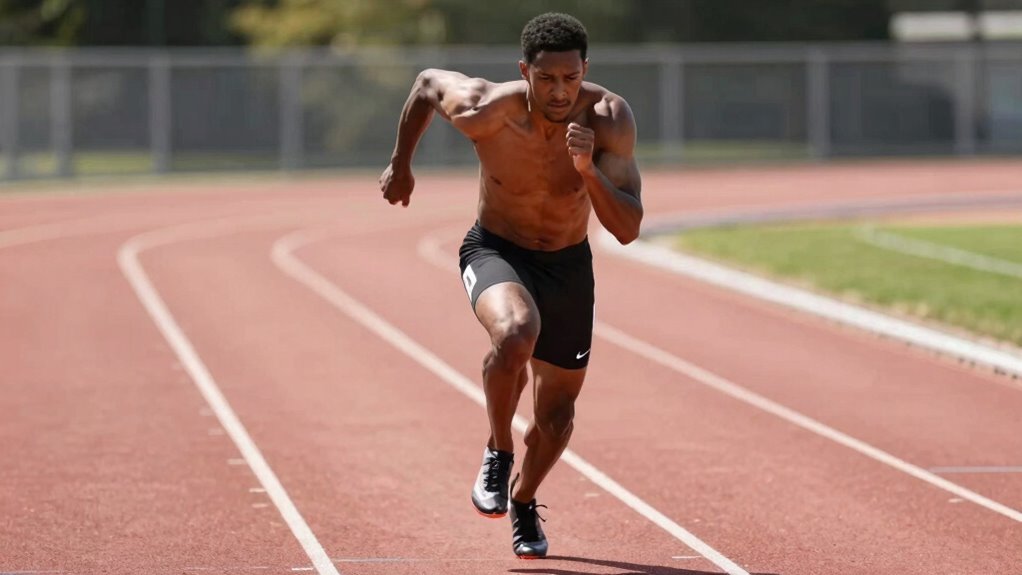
When you increase your running cadence during faster drills, maintaining proper form becomes even more critical to prevent injuries and improve efficiency. As your steps quicken, your foot strike naturally shifts, often leading to a lighter, more midfoot or forefoot landing. This change helps reduce impact forces on your joints but requires mindfulness to avoid overstriding or landing too heavily. Focus on landing softly beneath your hips, rather than overextending your stride, so you maintain that efficient, quick foot contact with the ground. Proper foot strike during high-cadence running minimizes braking forces and keeps your stride fluid, reducing fatigue and lowering injury risk.
Your arm swing plays a vital role in controlling your cadence and overall form. As your steps speed up, your arms should move efficiently, swinging forward and back in a relaxed, rhythmic motion. Keep your elbows close to your sides, at about a 90-degree angle, and avoid crossing your arms over your chest. A smooth, controlled arm swing helps drive your legs forward and maintains balance, preventing unnecessary side-to-side motion that wastes energy. When your arm movement is natural and consistent, it encourages your legs to follow a steady rhythm, making it easier to sustain faster cadences without losing form.
A relaxed, rhythmic arm swing drives momentum and maintains balance during faster running cadences.
It’s essential to stay conscious of your posture during these drills. Keep your chest open, shoulders relaxed, and gaze forward. As your cadence increases, it’s common to tense up or lean forward excessively, which can compromise your form. Instead, aim for a slight forward lean from the ankles, not the waist, to optimize momentum. This position encourages a quick, light foot strike and supports an efficient arm swing, both of which are crucial during faster drills. Additionally, maintaining proper biodiversity in your training environment can help prevent repetitive strain and promote overall physical resilience. Incorporating running biomechanics awareness into your routine can further enhance your form and efficiency.
Breathing patterns also influence your form at higher cadences. Focus on deep, rhythmic breaths to supply your muscles with oxygen and keep your core engaged. A stable core supports your posture and helps you maintain proper foot strike and arm swing mechanics. If you notice your shoulders rising or your breathing becoming shallow, slow down briefly to reset your form, then pick up the pace again with controlled mechanics. Incorporating breathing techniques can further enhance your running efficiency and endurance during these faster sessions. Developing awareness of your body alignment can also help you stay relaxed and prevent tension that hampers your performance.
running shoes for midfoot strike
As an affiliate, we earn on qualifying purchases.
As an affiliate, we earn on qualifying purchases.
Frequently Asked Questions
How Do I Prevent Injury During High-Speed Cadence Drills?
To prevent injury during high-speed cadence drills, focus on proper running biomechanics and incorporate regular stretching routines. Maintain a slight forward lean, keep your cadence quick but controlled, and land softly on your feet. Prioritize dynamic stretches before running to improve flexibility and reduce strain. Listen to your body, and don’t push through pain—rest if needed. Consistent attention to form and flexibility helps you stay injury-free during faster drills.
What Is the Ideal Cadence for Beginners?
Think of the ideal cadence for beginners like a gentle stream, flowing smoothly without rushing. Usually, a cadence between 150-170 steps per minute suits most beginners, supporting proper running biomechanics and reducing injury risk. Focus on gradual training progression, increasing your cadence as your strength and form improve. Keep your steps light and quick, avoiding overstriding, so you build a sustainable running habit that boosts efficiency and minimizes discomfort.
How Often Should I Incorporate Faster Cadence Drills?
You should incorporate faster cadence drills about once a week, balancing training intensity and recovery. Keep drill durations short, around 30 seconds to a minute, to prevent form breakdown and fatigue. Gradually increase frequency as your endurance and technique improve. Listen to your body, and don’t push too hard too often, ensuring you maintain proper form and avoid injury while enhancing your speed and efficiency.
Can Proper Footwear Improve Form During These Drills?
Wearing proper footwear is like giving your running biomechanics a solid foundation—crucial for maintaining good form during faster cadence drills. Shoe technology can enhance cushioning, stability, and support, helping you stay efficient and reduce injury risk. When your shoes fit well and suit your running style, they allow your body to move naturally, enabling you to focus on maintaining ideal form even as your cadence speeds up.
How Do I Recover After Intense Cadence Training?
After intense cadence training, you should prioritize recovery to combat muscle fatigue and restore mental focus. Hydrate well and consume protein-rich foods to aid muscle repair. Gentle stretching helps prevent stiffness, while rest allows your body to recover fully. Use deep breathing to regain mental clarity and reduce stress. Incorporate light activity like walking or foam rolling to promote blood flow, ensuring you’re ready for your next session.
Conclusion
Maintaining proper form during faster cadence drills boosts efficiency and reduces injury risk. Remember, runners who focus on form are 30% less likely to experience overuse injuries. Keep your posture upright, stay relaxed, and land softly to maintain speed without sacrificing technique. As you increase your cadence, stay mindful of your body’s signals. With consistent practice, you’ll find your stride becomes more efficient, helping you run faster and longer while staying injury-free.