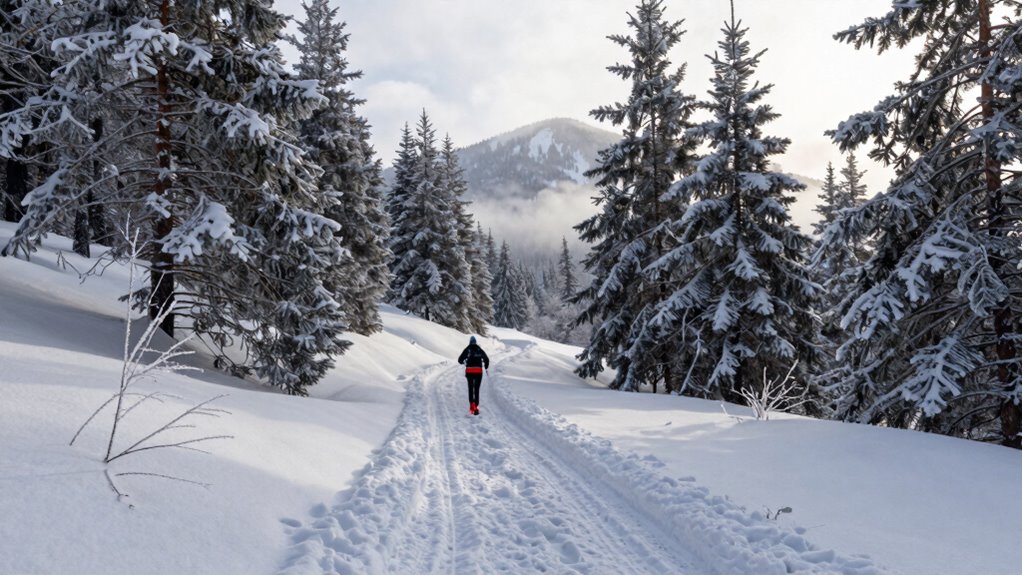

When you’re hitting the trails in winter, traction’s essential to avoid slips and injuries. Invest in specialized gear like microspikes or crampons for icy conditions, and choose footwear with good tread for better grip. Remember to adjust your stride, maintain a low center of gravity, and stay aware of your surroundings. Also, check trail conditions and weather updates before heading out. There’s more you should consider to guarantee your safety and enjoyment during winter runs.
Listen free for 30 days with Audible
Thousands of audiobooks and originals — cancel anytime.
As an affiliate, we earn on qualifying purchases.
Key Takeaways
- Invest in specialized traction gear like microspikes or crampons to enhance grip on icy trails.
- Use short, quick strides and maintain a low center of gravity for better stability on slick surfaces.
- Regularly check weather forecasts and trail conditions to plan safe running routes.
- Dress in layers and wear bright colors for visibility and temperature regulation during winter runs.
- Stay informed about trail maintenance updates to avoid hazardous, uncleared paths.
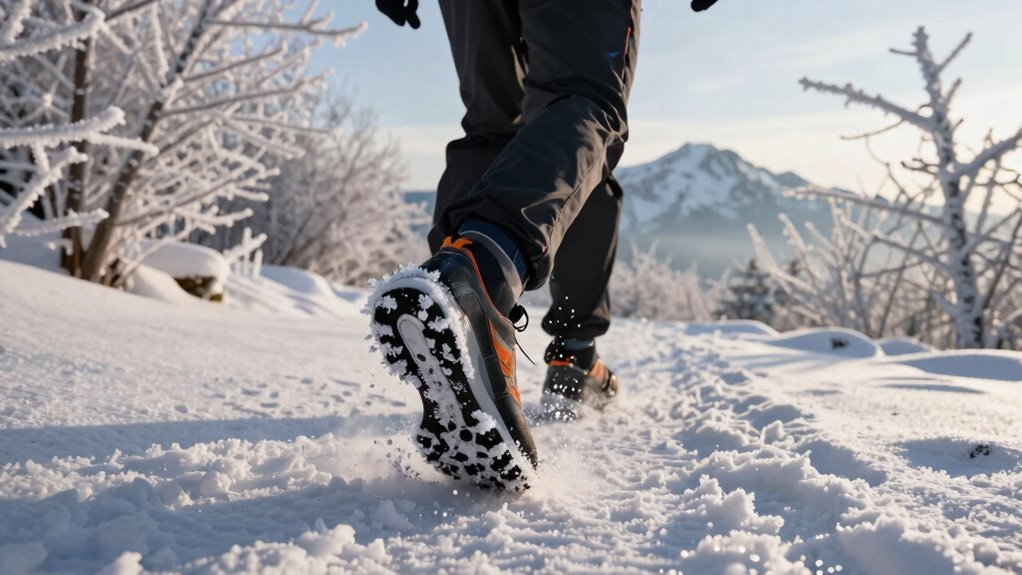
When winter blankets the trails in snow and ice, you might find your usual running routine challenged. Icy conditions can make even the most familiar paths treacherous, and it’s essential to plan ahead. Embracing the winter terrain means making smart choices about your gear and techniques to stay safe and enjoy your runs.
First, let’s talk about traction gear. Investing in proper equipment can drastically improve your experience. Look into specialized traction devices that attach to your footwear. These can provide the grip you need on slippery surfaces. There are various options, from microspikes to crampons, each offering different levels of traction suited for different conditions. Choosing the right footwear is also important. Trail running shoes with good tread can help, but in snowy and icy conditions, you may want to evaluate options designed specifically for those elements. Some brands offer shoes with built-in spikes, which can be a game-changer.
As you prepare for snow running, you’ll want to refine your grip techniques. Short, quick strides often work better on slick surfaces than long strides, which can lead to slips. Keep your center of gravity low, and lean slightly forward to maintain balance. This approach not only helps with traction but also reduces the risk of falls. Always stay aware of your surroundings and be ready to adjust your footing as needed. Additionally, understanding winter traction techniques can significantly enhance your safety and performance, especially when navigating unpredictable conditions. Properly assessing trail conditions and adapting your approach accordingly can make a big difference in your safety and enjoyment. Staying informed about trail maintenance can also help you choose safer routes and avoid hazards.
Safety tips are a must during winter runs. Always carry a phone and let someone know your route. Dress in layers to keep warm but avoid overheating, which can make you sweat and chill your body. Think about wearing bright colors to remain visible in low-light conditions. Trail maintenance is another aspect to keep in mind. Some trails might not be cleared of snow or ice, so check local resources for updates on trail conditions. Properly assessing trail conditions can prevent accidents and improve your overall experience.
Finally, don’t forget weather factors. Conditions can change rapidly in winter, so keep an eye on forecasts before heading out. If a storm is predicted, it’s better to postpone your run than to risk getting caught in dangerous weather. By planning ahead and being mindful of these elements, you can tackle the winter traction problem and enjoy your trail runs safely. Embrace the season, equip yourself well, and make the most of the beautiful winter landscape.
As an affiliate, we earn on qualifying purchases.
Frequently Asked Questions
What Are the Best Types of Shoes for Winter Trail Running?
For winter trail running, look for shoes with aggressive traction types like lugs or studs to grip icy surfaces. Choose models with insulation materials to keep your feet warm, and make sure they have water resistance to fend off slush and puddles. Fit adjustments are essential, so opt for a snug but comfortable fit. Finally, consider weight; lighter shoes can help maintain your speed while traversing challenging terrain.
How Can I Prevent Frostbite While Running in Cold Weather?
To prevent frostbite while running in cold weather, you should dress in layers and choose moisture-wicking fabrics. Pay attention to frostbite symptoms like numbness or discoloration in your extremities. Keep your feet dry and wear insulated, breathable shoes. Don’t forget to protect your ears and face with a hat or balaclava. Finally, stay hydrated and plan your route to avoid prolonged exposure to extreme cold, especially on windy days.
Are There Specific Warm-Up Exercises for Winter Trail Running?
You’d think warming up in winter feels like preparing for a polar expedition! Before hitting those snowy trails, incorporate dynamic stretches and mobility drills. Start with leg swings, arm circles, and high knees to get your blood pumping. Focus on your hips and ankles, as they’re essential for stability on slippery terrain. These exercises not only warm you up but also reduce the risk of injury, leaving you ready to conquer the cold!
What Should I Wear to Stay Warm During Winter Runs?
To stay warm during winter runs, focus on layering techniques. Start with a moisture-wicking base layer made from thermal fabrics to keep sweat away. Add an insulating layer, like fleece, for warmth, and top it off with a windproof, water-resistant jacket. Don’t forget thermal gloves, a hat, and warm socks to protect your extremities. With these layers, you’ll stay comfortable and focused on your run, no matter the chill in the air.
How Can I Safely Run on Icy Trails?
Running on icy trails can be intimidating, but you can do it safely with the right approach. First, invest in ice traction gear like microspikes or traction devices for your shoes. When you run, use shorter strides and focus on keeping your center of gravity low. Stay mindful of your surroundings, and consider sticking to familiar routes. If it feels too risky, don’t hesitate to switch to a safer surface. Safety’s key!
Conclusion
As you lace up for those winter trail runs, think of your shoes as a trusty pair of snowshoes, ready to tackle the frosty terrain. Just like a snowshoe spreads your weight to keep you afloat, investing in the right traction gear helps you grip the icy paths. Remember that 70% of trail runners face slipping in winter—don’t be part of that statistic. Equip yourself wisely, and let each run be an adventure, not a slip-and-slide.
NFL season / tailgating Picks
team gear
As an affiliate, we earn on qualifying purchases.